
A lush, green lawn is a point of pride for many homeowners. But sometimes, strange spots, patches, or discoloration begin to appear, leaving people confused and worried. In most cases, the culprit is lawn fungus—a common but often misunderstood problem. Knowing what lawn fungus looks like is the first step to treating it and keeping your grass healthy. This guide will help you identify, understand, and respond to common lawn fungi, so you can protect your yard and avoid costly mistakes.
What Is Lawn Fungus?
Lawn fungus refers to a group of diseases caused by different types of fungi that attack grass. These organisms thrive in moist, humid, or poorly drained conditions. Fungi can live in the soil or in grass thatch, waiting for the right environment to grow and spread. Unlike insects or animals, fungi are often invisible at first, but their damage can quickly become obvious.
Most lawn fungi are not dangerous to humans or pets, but they can destroy a beautiful lawn if left untreated. The key to solving the problem is recognizing the signs early and knowing what each type looks like.
Why Lawn Fungus Appears
Lawn fungi usually become a problem when grass is stressed. The most common triggers are:
- Too much moisture from rain, overwatering, or poor drainage
- High humidity and warm temperatures
- Low air circulation due to thick grass or thatch
- Nutrient deficiencies or too much fertilizer
- Cutting grass too short (scalping)
- Compacted soil that prevents roots from getting enough air
Many people don’t realize that even the healthiest lawns can get fungus if the weather turns wet and warm. Understanding these triggers helps you prevent outbreaks before they start.
Credit: www.georgedaviesturf.co.uk
How To Identify Lawn Fungus: Signs And Symptoms
Spotting lawn fungus is not always easy, especially for beginners. The symptoms can look like drought, pest damage, or simple neglect. Here’s what you should look for:
- Unusual spots or patches: Brown, yellow, or gray spots that do not go away after watering.
- Circular patterns: Many fungi create rings or circles on the lawn.
- Powdery, slimy, or web-like growth: Sometimes you’ll see white, gray, or black growth on the grass blades.
- Grass thinning or dying: Healthy grass begins to thin out, turn yellow, or die in patches.
- Sticky or greasy texture: Some fungal diseases make the grass feel slippery or sticky to the touch.
Let’s go deeper and look at specific types of lawn fungus and what they look like.
Common Types Of Lawn Fungus And Their Appearance
Different fungi cause different problems. Below are the most common types, with descriptions to help you spot each one.
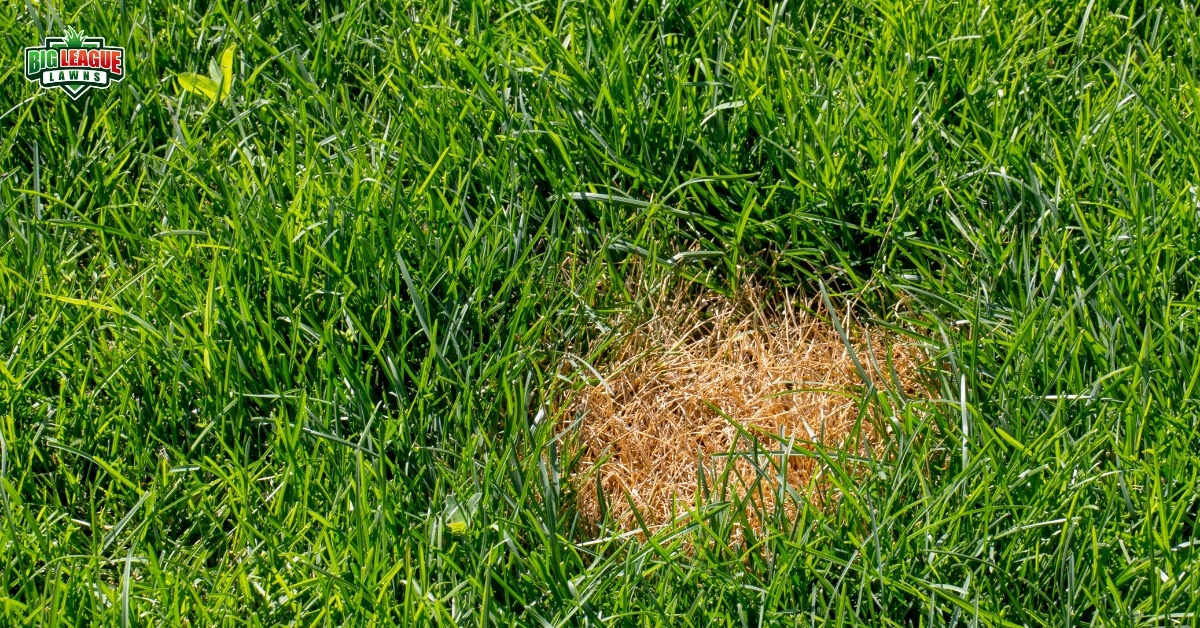
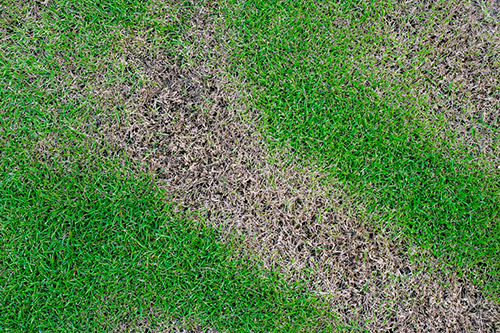
Brown Patch
Brown patch is one of the most widespread lawn diseases. It usually appears in summer when nights are warm and humid.
- What it looks like: Large, circular or irregular brown patches, often with a darker ring around the outside. The center may look healthy while the edge is yellow or brown.
- Size: Patches can range from a few inches to several feet wide.
- Key sign: The “smoke ring”—a thin, grayish border around the patch, especially early in the morning.
Dollar Spot
Dollar spot gets its name because the spots are about the size of a silver dollar (2-3 inches wide).
- What it looks like: Small, round, straw-colored spots scattered across the lawn.
- Special clue: Early in the day, you might see white, cobweb-like threads (mycelium) on the grass.
- Growth: Spots can merge, forming larger dead areas.
Red Thread
Red thread is common in cool, wet weather, especially in spring and fall.
- What it looks like: Pink or red threads growing from the tips of grass blades.
- Patch size: 4-8 inches across, sometimes larger.
- Grass color: Patches look faded or bleached, with visible reddish threads (like tiny needles).
Snow Mold
Snow mold appears after snow melts, especially in early spring.
- What it looks like: Circular, matted patches of dead grass, colored gray, white, or pink.
- Patch size: Can be small or several feet wide.
- Texture: Grass feels crusty or slimy.
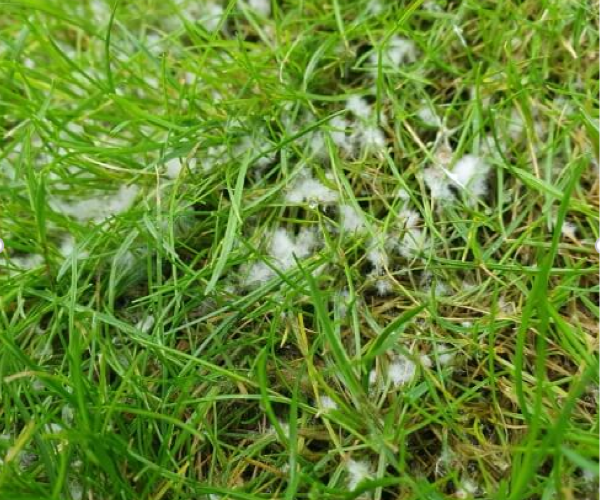
Powdery Mildew
Powdery mildew is easy to recognize.
- What it looks like: White or gray powder on grass blades, as if dusted with flour.
- Common areas: Shady, moist spots with poor air movement.
- Effect: Grass weakens and turns yellow if left untreated.
Rust Disease
Rust appears in late summer and fall, especially if the lawn is dry.
- What it looks like: Orange, yellow, or rust-colored powder on grass blades.
- Sign: Walking on the lawn leaves orange dust on your shoes.
- Grass health: Grass becomes thin and weak.
Fairy Ring
Fairy ring is famous for its mysterious circles.
- What it looks like: Dark green or brown rings or arcs, often with mushrooms around the edge.
- Ring width: Varies from a few inches to several feet.
- Center: May be greener, dead, or normal.
Pythium Blight
Pythium blight is also called “grease spot” because of the way it looks.
- What it looks like: Water-soaked, slimy patches that quickly turn brown.
- Conditions: Thrives in hot, humid weather.
- Spread: Patches can spread rapidly, especially after rain.
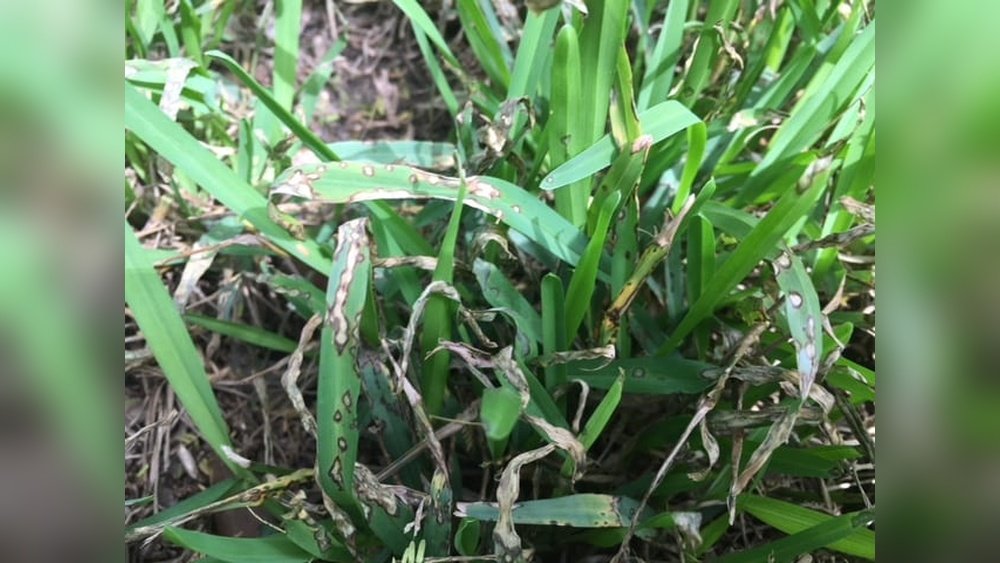
Leaf Spot
Leaf spot affects the blades, not just the ground.
- What it looks like: Small, oval, purple or brown spots with tan centers on grass blades.
- Progression: Spots merge, and whole blades die.
Slime Mold
Slime mold looks scary but is mostly harmless.
- What it looks like: Gray, white, or yellow slimy patches that sit on top of the grass.
- Texture: Feels powdery or greasy.
- Duration: Often disappears on its own.
Below is a comparison of the most common lawn fungi to help you recognize them at a glance.
| Fungus Name | Main Color | Shape/Pattern | Season |
|---|---|---|---|
| Brown Patch | Brown/yellow | Large circles, smoke ring | Summer |
| Dollar Spot | Straw/yellow | Small circles | Spring/Summer |
| Red Thread | Pink/red | Threads, small patches | Spring/Fall |
| Powdery Mildew | White/gray | Powder on blades | Spring/Fall |
| Rust | Orange/yellow | Dust on blades | Late Summer/Fall |
| Fairy Ring | Dark green/brown | Ring or arc | Any season |
Credit: gobigleague.com
How To Tell Fungus Apart From Other Problems
Lawn fungus is easy to confuse with drought, pests, or over-fertilization. Here are two clues that beginners often miss:
- Morning dew test: Fungal threads or growths are most visible early in the morning when dew is present. Look closely for web-like structures or slimy patches.
- Pattern matters: Fungal diseases usually create regular shapes—circles, rings, or arcs. Other problems, like grubs or pet urine, tend to make random or irregular dead spots.
If you’re unsure, use a magnifying glass to check for threads, spores, or colored powder on the blades. Take a photo and compare it to reliable online sources or consult a local extension office for help.
What To Do If You See Lawn Fungus
If you see signs of fungus, don’t panic. Quick action can save your lawn.
- Stop watering at night: Water early in the morning so grass dries before nightfall.
- Mow at the right height: Don’t scalp your lawn—longer grass resists disease better.
- Clear debris: Remove leaves, clippings, and thatch to improve air flow.
- Fertilize carefully: Too much or too little fertilizer can make fungus worse.
- Use fungicide if needed: For severe outbreaks, use a fungicide labeled for your grass and fungus type.
- Overseed thin areas: Fill in dead spots with fresh seed to prevent weeds and new infections.
It’s important to correctly identify the fungus before treating it, as not all fungicides work on every type.
Credit: www.domyown.com
Mistakes To Avoid
Many people make these common mistakes when dealing with lawn fungus:
- Ignoring the problem: Hoping it will go away can let the fungus spread.
- Overwatering: Fungus loves wet conditions—watering more often makes it worse.
- Mowing wet grass: This spreads spores to other parts of the lawn.
- Using the wrong fungicide: Not all products work for all fungi. Read labels carefully.
- Not fixing the cause: Fungicide alone won’t help if you don’t solve drainage, shade, or soil problems.
Prevention Tips
The best way to deal with lawn fungus is to prevent it. Here’s how:
- Water deeply but less often, early in the day.
- Aerate compacted soil every year.
- Mow at the recommended height for your grass type.
- Feed your lawn with balanced fertilizer (not too much nitrogen).
- Remove thatch buildup with a rake or dethatcher.
- Choose disease-resistant grass varieties for new lawns.
Below is a simple comparison of practices to help or harm your lawn’s health.
| Practice | Effect on Lawn |
|---|---|
| Watering in morning | Helps prevent fungus |
| Watering at night | Encourages fungus growth |
| Regular mowing | Keeps grass strong |
| Mowing too short | Weakens grass |
| Soil aeration | Improves root health |
| Ignoring thatch | Promotes fungal disease |
When To Call A Professional
Some fungal problems are hard to solve alone, especially if the lawn is large or the fungus keeps coming back. If you’ve tried good lawn care and fungicides with no luck, or if the patches keep growing, call a lawn care expert or extension agent.
They can test your soil, identify the fungus, and recommend a targeted treatment plan.
Extra Insights Beginners Miss
- Grass type matters: Some grass types are much more resistant to fungi than others. For example, Kentucky bluegrass is more likely to get leaf spot, while tall fescue resists red thread.
- Weather history counts: Fungal outbreaks often follow unusual weather patterns—like heavy rain or unexpected heat. Keeping a simple lawn journal can help you predict future problems.
For more scientific details about lawn fungi, you can visit the Turfgrass Pathology page on Wikipedia.
A healthy lawn is about balance. With the right knowledge, you can spot problems early and enjoy a beautiful, fungus-free yard all season long.
Frequently Asked Questions
What Does Lawn Fungus Look Like When It First Appears?
In the early stages, lawn fungus usually shows up as small, discolored spots—yellow, brown, gray, or even red. You might see fuzzy growth, powder, or threads, especially in the morning. The patterns are usually circular or ring-shaped.
Can Lawn Fungus Go Away On Its Own?
Mild cases sometimes improve if the weather dries out and you improve lawn care. But most fungal problems get worse without treatment, especially in wet or humid conditions. It’s best to address the cause and treat early.
Is Lawn Fungus Harmful To Pets Or Children?
Most lawn fungi are not dangerous to pets or children, but some can cause minor skin irritation. Always wash hands after touching affected grass, and follow label instructions if you use fungicides.
How Can I Tell The Difference Between Lawn Fungus And Grubs?
Grubs usually make irregular patches of brown grass that pull up easily like a carpet. Fungal diseases make more regular shapes—circles, rings, or spots—and grass roots stay attached. Checking under the soil helps confirm the cause.
Can I Prevent Lawn Fungus Without Chemicals?
Yes. Good lawn care—watering correctly, mowing at the right height, aerating, and avoiding too much fertilizer—can prevent most fungal outbreaks. Chemicals are only needed for severe or persistent cases.
A little observation and care go a long way. By knowing what lawn fungus looks like and how to respond, you can keep your grass healthy and green—season after season.