
Getting your Jeep stuck in sand can feel frustrating, especially if you’re miles from help and the sun is beating down. Whether you’re exploring a desert, driving along a sandy beach, or taking backcountry trails, soft sand poses unique challenges. But with the right knowledge, you can recover your Jeep safely and continue your adventure. This guide will show you clear, step-by-step tips to get your Jeep out of sand, help you understand why vehicles get bogged down, and share expert advice to avoid making things worse.
You don’t need to be a professional off-roader to use these recovery techniques. With some preparation, the correct tools, and careful driving, you’ll improve your chances of a quick recovery. Plus, these tips work for most 4×4 vehicles, not just Jeeps.
Let’s dive in and help you master sand recovery.
Why Jeeps Get Stuck In Sand
Understanding why your Jeep gets bogged down helps prevent it in the first place. Sand is tricky because it shifts under weight and offers little traction. When your tires spin, they dig deeper into the soft surface instead of moving forward. The heavier the vehicle or the more aggressive the throttle, the faster you sink.
Key factors that cause Jeeps to get stuck:
- Too much tire pressure – Hard tires “cut” into sand, causing the Jeep to sink.
- Sudden acceleration – Spinning wheels dig holes quickly.
- Stopping in soft areas – Momentum keeps you moving; stopping often leads to sinking.
- Inexperienced driving – Not recognizing soft patches or using the wrong gear can get you stuck.
Non-obvious insight: Many beginners think larger tires always help in sand. But without adjusting tire pressure, even big tires can dig in and get stuck.
Essential Equipment For Sand Recovery
Being prepared makes a huge difference. Before driving in sandy areas, make sure you have the right tools. Some can save hours of frustration or prevent damage to your Jeep.
Must-have recovery gear:
- Shovel: For digging around tires and clearing sand under the chassis.
- Recovery boards (traction mats): Provide grip for tires to climb out.
- Tire deflator and pressure gauge: For lowering tire pressure accurately.
- Tow strap (snatch strap): For pulling your Jeep with another vehicle.
- D-shackles or soft shackles: Safe connection points for tow straps.
- Air compressor: To reinflate tires after lowering pressure.
- Gloves: Protect hands while digging or handling straps.
Non-obvious insight: Carrying a portable sand anchor can be a lifesaver if you’re alone with no other vehicle nearby. It can provide a winch point when there’s no tree or rock.
Immediate Steps When Your Jeep Gets Stuck
The moment you realize your Jeep is bogged down, stop and assess. Acting quickly and calmly will prevent the situation from getting worse.
What to do first:
- Stop spinning the wheels. If you keep pressing the gas, you’ll dig deeper.
- Get out and inspect. Check how deep the tires are and look under the Jeep for contact with the sand.
- Clear a safe area. Remove passengers and gear from the vehicle if possible. It’s easier (and safer) to recover a lighter Jeep.
Common mistake: Many drivers immediately try to reverse without checking. This often makes the rut deeper and recovery harder.
Lowering Tire Pressure: The Most Effective Trick
Reducing your tire pressure is often the fastest way to get unstuck in sand. Lower pressure increases the surface area of your tire (the “footprint”), helping it float over sand instead of digging in.
How Much To Lower Tire Pressure
Most off-roaders start at 15-18 psi for sand. Some go as low as 10-12 psi for short distances. Never go below the tire manufacturer’s safe minimum.
How to lower pressure:
- Use a tire deflator or just the valve stem.
- Check with a pressure gauge—don’t guess.
- Lower all four tires evenly.
Risks And Tips
- Don’t drive fast on low pressure—sidewalls can come off the wheel (“de-bead”).
- After recovery, reinflate your tires before returning to pavement.
Pro tip: Write down your preferred sand pressures for your Jeep and tire size. Practice lowering and inflating at home, so you’re quick and confident on the trail.
Digging And Creating A Path
If lowering tire pressure doesn’t work immediately, it’s time to dig. Removing sand in front of and behind the tires makes it easier to drive out, especially if you’re stuck up to the axles.
Steps for effective digging:
- Clear sand from around the tires. Focus on the direction you plan to drive.
- Dig a gradual ramp. Don’t just dig straight down; create a smooth path for the tires to climb up.
- Remove sand from under the chassis and axles. If the Jeep is “high centered,” it means the belly is resting on sand with the wheels spinning freely.
Tip: Sometimes, moving small amounts of sand from under the diff or chassis can free the vehicle, even if the tires seem buried.
Extra insight: Use your recovery boards as a digging tool if you forgot your shovel.
Using Recovery Boards For Traction
Recovery boards (sometimes called “Maxtrax” or “traction mats”) are flat, tough panels with raised lugs. Placing them under your tires gives grip and helps the Jeep climb out of the rut.
How To Use Recovery Boards
- Clear sand in front of the stuck tires.
- Wedge the boards under the tire tread—as far under as possible.
- Get in the Jeep and use gentle throttle. Let the tires grip and climb onto the boards.
- Once moving, keep momentum and drive forward until you’re on firm ground.
Pro tip: If you have two boards, use them under the tires with the least grip. Four boards (one for each wheel) are ideal but not required.
Extra tip: After recovery, dig out your boards—they can get buried during the process.

Credit: www.amazon.ae
Rocking The Jeep: Gentle Forward And Backward Movements
If you don’t have recovery boards, or after using them, you can try rocking the Jeep. This method uses gentle forward and backward motion to slowly build momentum and pack the sand under your tires.
How to rock your Jeep:
- Shift between drive and reverse.
- Apply light throttle—don’t spin the wheels.
- Move a few feet forward, then back. Each time, try to go a little further.
- If you get movement, maintain slow, steady throttle.
Warning: Don’t overdo it. Aggressive rocking can overheat your transmission or dig you in deeper.
Real-world tip: If you have a manual transmission, use low-range 4WD and feather the clutch for better control.
Using A Tow Strap And A Second Vehicle
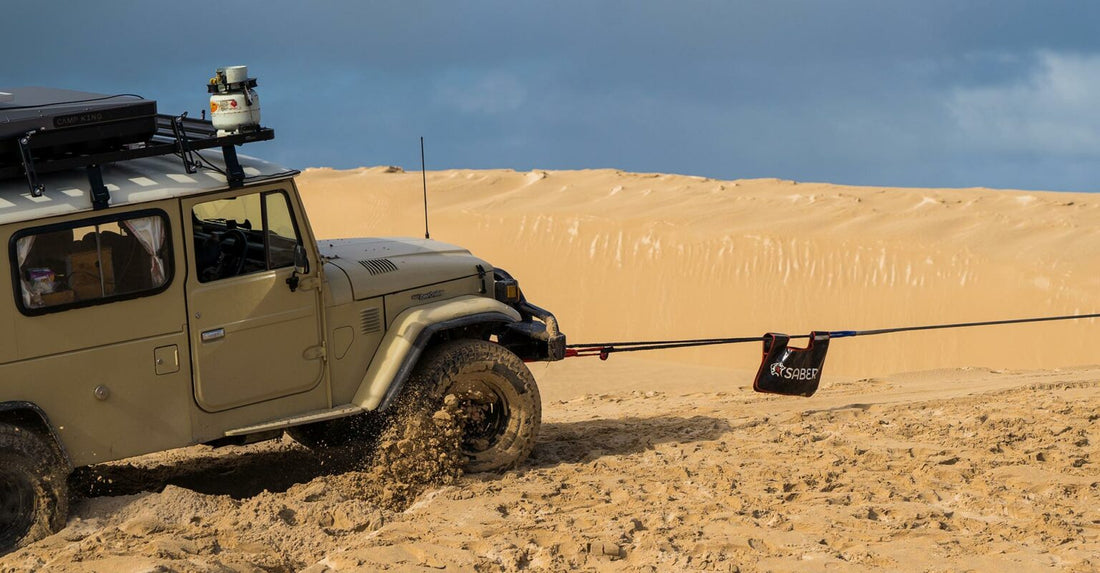
Sometimes, the only way out is with help from another vehicle. A tow strap (or “snatch strap”) connects your Jeep to a friend’s 4×4, letting them pull you out.
Safe Use Of Tow Straps
- Attach to rated recovery points only. Never use a bumper, hitch ball, or suspension parts.
- Lay out the strap flat—no knots or twists.
- Clear the area. Bystanders should stand far back in case the strap breaks.
- Communication is key. Use hand signals or radios.
Pulling Technique
- The recovery vehicle gently takes up slack.
- Apply steady, smooth power. No jerking or high-speed pulls.
- The stuck Jeep applies gentle throttle at the same time.
Pro tip: Place a heavy jacket or recovery damper over the strap’s middle to absorb energy if it snaps.
Extra insight: Soft shackles are lighter and safer than steel D-shackles for connecting straps.
Credit: saberoffroad.com.au
Using A Winch Or Sand Anchor
If you’re alone, a winch is invaluable. But what if there’s no tree or rock? That’s where a sand anchor comes in—a device you bury in the sand to create a winch point.
Winching Steps
- Secure the winch line to a strong anchor point.
- Use a tree protector strap if using a tree.
- Engage the winch slowly while gently applying throttle in the Jeep.
- Monitor the line and anchor—stop immediately if anything shifts.
Using A Sand Anchor
- Dig a deep hole and bury the anchor at the recommended angle.
- Attach the winch line securely.
- Tamp down the sand for maximum grip.
Tip: Sand anchors work best in fine, moist sand. Dry, loose sand may require a larger anchor.
Avoiding Common Sand Recovery Mistakes
Some mistakes can turn a simple recovery into a disaster. Here are the most frequent errors and how to avoid them:
- Spinning the wheels: This just digs deeper holes.
- Ignoring tire pressure: High pressure is the number one reason for getting stuck.
- Using weak recovery points: Can lead to serious injury or Jeep damage.
- Pulling too hard, too fast: Jerky movements break straps and damage vehicles.
- Not clearing under the chassis: High-centering means even 4WD won’t help.
Pro insight: Always check for hidden obstacles (like buried logs or rocks) before digging or pulling. Striking something under the sand can damage your Jeep’s underbody.

Credit: www.baremotion.com
Practical Tips For Driving On Sand
Knowing how to drive on sand can prevent getting stuck in the first place. Here are some practical tips to keep you moving smoothly.
- Keep momentum. Don’t stop in soft areas unless you have to.
- Use high-range 4WD. Low-range is good for recovery, but high-range provides more speed and keeps you “floating” on top.
- Steer gently. Sudden turns dig tires into the sand.
- Plan your route. Avoid deep ruts or very soft patches.
- Don’t follow too closely. Stay out of other vehicles’ ruts if possible.
Non-obvious tip: Early morning or late evening sand is often firmer, as moisture helps with traction.
Table: Tire Pressure And Sand Traction
Here’s a quick reference for how different tire pressures affect sand driving:
| Tire Pressure (psi) | Traction in Sand | Risk of De-beading |
|---|---|---|
| 35+ | Poor (sinks quickly) | None |
| 25-30 | Good for hard-packed sand | Low |
| 15-20 | Excellent flotation | Medium (careful on turns) |
| 10-14 | Best for very soft sand | Higher (avoid sharp turns or rocks) |
Tip: Always carry a quality air compressor to reinflate tires before returning to pavement.
Table: Common Sand Recovery Tools Comparison
Not all tools are created equal. Here’s how essential gear compares for sand recovery:
| Tool | Best Use | Pros | Cons |
|---|---|---|---|
| Shovel | Digging out tires/chassis | Light, cheap, versatile | Labor intensive |
| Recovery Boards | Traction under tires | Fast, reusable, easy | Can bury, pricey |
| Snatch Strap | With a second vehicle | Quick, strong | Needs another vehicle |
| Winch/Sand Anchor | Solo recovery | Works alone | Heavy, slow setup |
Insight: For solo trips, recovery boards and a shovel are your best friends.
Table: Rocking Vs. Winching Vs. Digging
When you’re choosing a recovery method, here’s a comparison:
| Method | Best Situation | Effort Level | Chance of Success |
|---|---|---|---|
| Rocking | Lightly stuck, firm base nearby | Low | Good |
| Digging | High centered, wheels buried | Medium to high | Very good |
| Winching | No other vehicle, deep stuck | High | Excellent (if anchor available) |
Tip: Combine methods for best results—dig first, then use boards or a winch.
What To Do After Recovery
Once your Jeep is free, take a few extra steps before driving away.
- Check for damage. Inspect under the chassis, axles, and tires.
- Reinflate your tires. Use your compressor to return to safe road pressure.
- Secure your gear. Make sure recovery tools are put away.
- Plan your exit. Avoid the area where you got stuck—look for firmer sand or tracks.
- Celebrate wisely. Getting stuck is part of the adventure, but learning from it makes you a better driver.
Pro tip: Make notes for next time—what worked, what didn’t, and what you wish you’d packed.
How To Prevent Getting Stuck In The First Place
The best recovery is prevention. Here’s how to avoid getting bogged down:
- Scout unknown areas on foot. Check for very soft or deep sand before driving.
- Travel with a buddy. Two vehicles mean quick recovery if one gets stuck.
- Stay on existing tracks where possible. These are usually firmer.
- Don’t overload your Jeep. Heavy gear increases the chance of sinking.
- Keep momentum but don’t overspeed. Fast driving can lead to loss of control.
Non-obvious tip: Learn to read the sand. Wet sand near water is often firmer, but beware of “sugar sand” (very fine, dry sand) which is easy to get stuck in.
When To Call For Help
Sometimes, despite your best efforts, self-recovery isn’t possible. Here are signs it’s time to seek outside help:
- No progress after multiple methods
- Vehicle damaged or unsafe
- Running low on water or supplies
- Nightfall approaching with no recovery in sight
Always carry a charged phone, emergency beacon, or satellite communicator in remote areas. Your safety is more important than your Jeep.
For more tips on off-road recovery and safety, check out the Tread Lightly! Off-Highway Driving Guide.
Frequently Asked Questions
What Tire Pressure Should I Use For Sand Driving In My Jeep?
Start with 15-18 psi for most sand conditions. For extremely soft sand, you can go as low as 10-12 psi, but be careful not to turn sharply or drive fast to avoid de-beading. Always carry an air compressor to reinflate your tires after leaving the sand.
Is It Better To Drive Fast Or Slow In Deep Sand?
Maintain steady momentum but don’t drive fast. Too much speed can cause you to lose control, while going too slow can make you sink. Find a balance where your Jeep is “floating” on the sand without spinning the tires.
Can I Recover My Jeep Alone If I Get Stuck In Sand?
Yes, but you’ll need the right gear. A shovel and recovery boards are essential for solo recovery. If you have a winch and a sand anchor, you can create your own recovery point. Always let someone know your route if you travel alone.
What’s The Biggest Mistake People Make Recovering A Jeep From Sand?
The most common mistake is spinning the wheels. This digs the vehicle deeper and makes recovery harder. Stop immediately, assess the situation, and use proper techniques like lowering tire pressure and digging.
Are All Jeeps Equally Good In Sand?
Not all Jeeps perform the same. Tire size, weight, drive type (4WD vs 2WD), and ground clearance all affect sand performance. Lighter Jeeps with wider tires and 4WD handle sand best. Still, even the best Jeep can get stuck without proper technique.
Getting stuck in sand is part of the off-road experience, but it doesn’t need to ruin your day. With the right knowledge and tools, you’ll recover your Jeep with confidence and get back to enjoying the adventure. Stay safe, prepare well, and always respect the environment you’re exploring.