
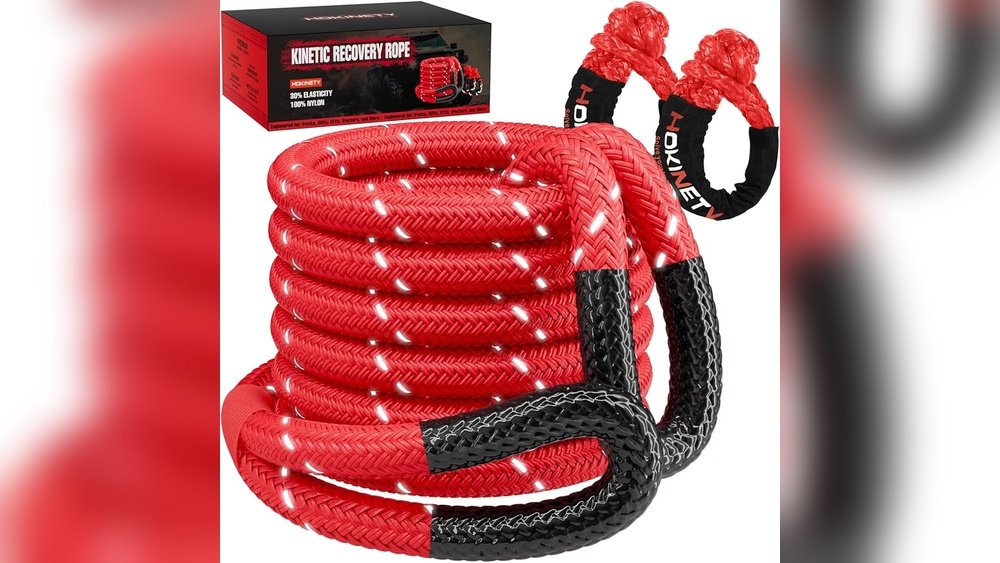
Driving a Jeep off-road brings adventure, challenge, and the risk of getting stuck. For many, getting out of mud, sand, or snow is part of the fun. But recovering a stuck Jeep requires the right skills and equipment. Among the most trusted tools is the kinetic recovery rope. Unlike traditional tow straps or chains, kinetic ropes use stored energy to smoothly pull a vehicle free. Using them incorrectly, however, can damage your Jeep or even cause injury. In this detailed guide, you’ll discover how to use a kinetic recovery rope safely and effectively, plus tips specific to Jeep owners. Whether you’re new to off-roading or just want to upgrade your recovery skills, these insights will help you get back on the trail with confidence.
What Is A Kinetic Recovery Rope?
A kinetic recovery rope is a strong, stretchy rope designed to help recover stuck vehicles. Made from nylon or similar materials, these ropes can stretch up to 30% of their length. This stretch stores kinetic energy, which is released to gently pull a stuck Jeep out of trouble. Unlike static tow straps or chains, kinetic ropes reduce sudden jerks. This protects both vehicles from damage.
How Kinetic Ropes Differ From Tow Straps And Chains
Kinetic ropes are not the same as regular tow straps or steel chains. Here’s how they compare:
| Recovery Tool | Main Material | Stretch (%) | Shock Absorption | Best Use |
|---|---|---|---|---|
| Kinetic Rope | Nylon | 20–30 | Excellent | Recovering stuck vehicles |
| Tow Strap | Polyester | 5–10 | Low | Towing on roads |
| Steel Chain | Steel | 0 | Poor | Heavy-duty pulling |
The main advantage of kinetic ropes is their ability to stretch and store energy. This makes recovery safer and smoother.
Why Use A Kinetic Recovery Rope With A Jeep?
Jeeps are built for off-road fun, but even the best drivers get stuck. Using a kinetic recovery rope offers several benefits:
- Smooth Recovery: The stretch in the rope absorbs shock, reducing stress on your Jeep’s frame and recovery points.
- Safer for Both Vehicles: Less force means less risk of breaking bumpers, tow hooks, or other parts.
- Better Results in Soft Terrain: The rope’s stored energy helps pull your Jeep out of deep mud, sand, or snow.
- Lighter and Easier to Store: Kinetic ropes are much lighter than chains and take up less space.
- Reduces Risk of Snapping: The rope’s flexibility lowers the chance of sudden breaks, which can be dangerous.
Many experienced Jeep owners prefer kinetic ropes because of these practical advantages. However, using them properly is essential for safety and success.
Choosing The Right Kinetic Recovery Rope For Your Jeep
Picking the correct kinetic recovery rope is critical. The wrong rope can be ineffective or even hazardous. Here’s what to consider:
1. Rope Size And Strength
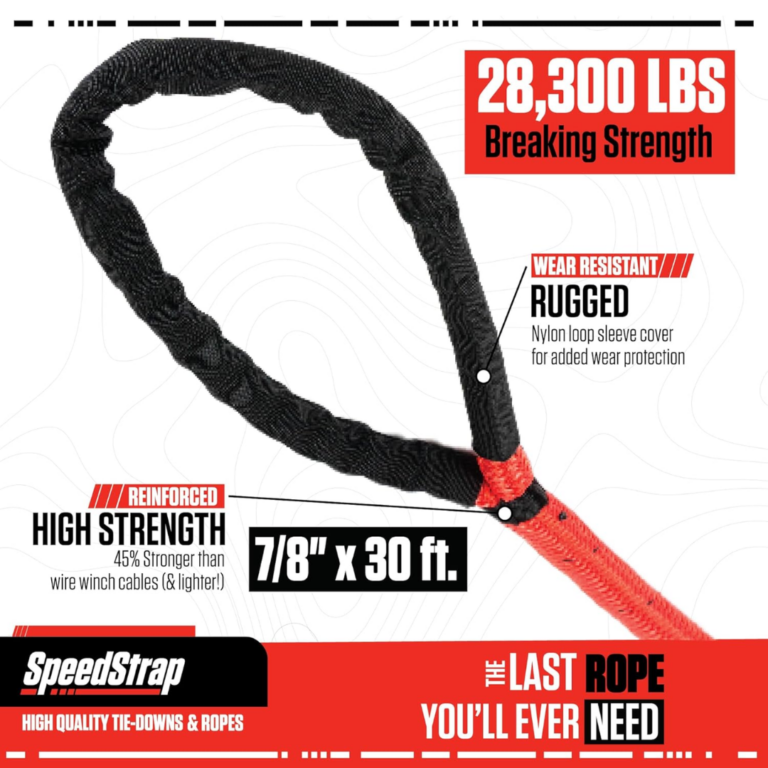
Always choose a rope rated for your Jeep’s weight. Recovery ropes are measured by their breaking strength (how much weight they can handle before snapping).
As a rule:
- The rope’s minimum breaking strength should be 2–3 times the weight of your Jeep.
- For most stock Jeeps (weighing 4,000–6,000 lbs), a rope rated at 20,000–30,000 lbs is ideal.
2. Rope Length
Standard ropes are 20–30 feet long. Shorter ropes give more control but less stretch. Longer ropes allow more distance between vehicles but can be harder to manage in tight spaces. For most Jeep recoveries, 20–25 feet is a good balance.
3. Rope Diameter
Thicker ropes are stronger but less flexible. Common sizes:
- 7/8 inch: Good for most Jeeps and light trucks.
- 1 inch or more: For heavily loaded or modified Jeeps.
4. Build Quality And Materials
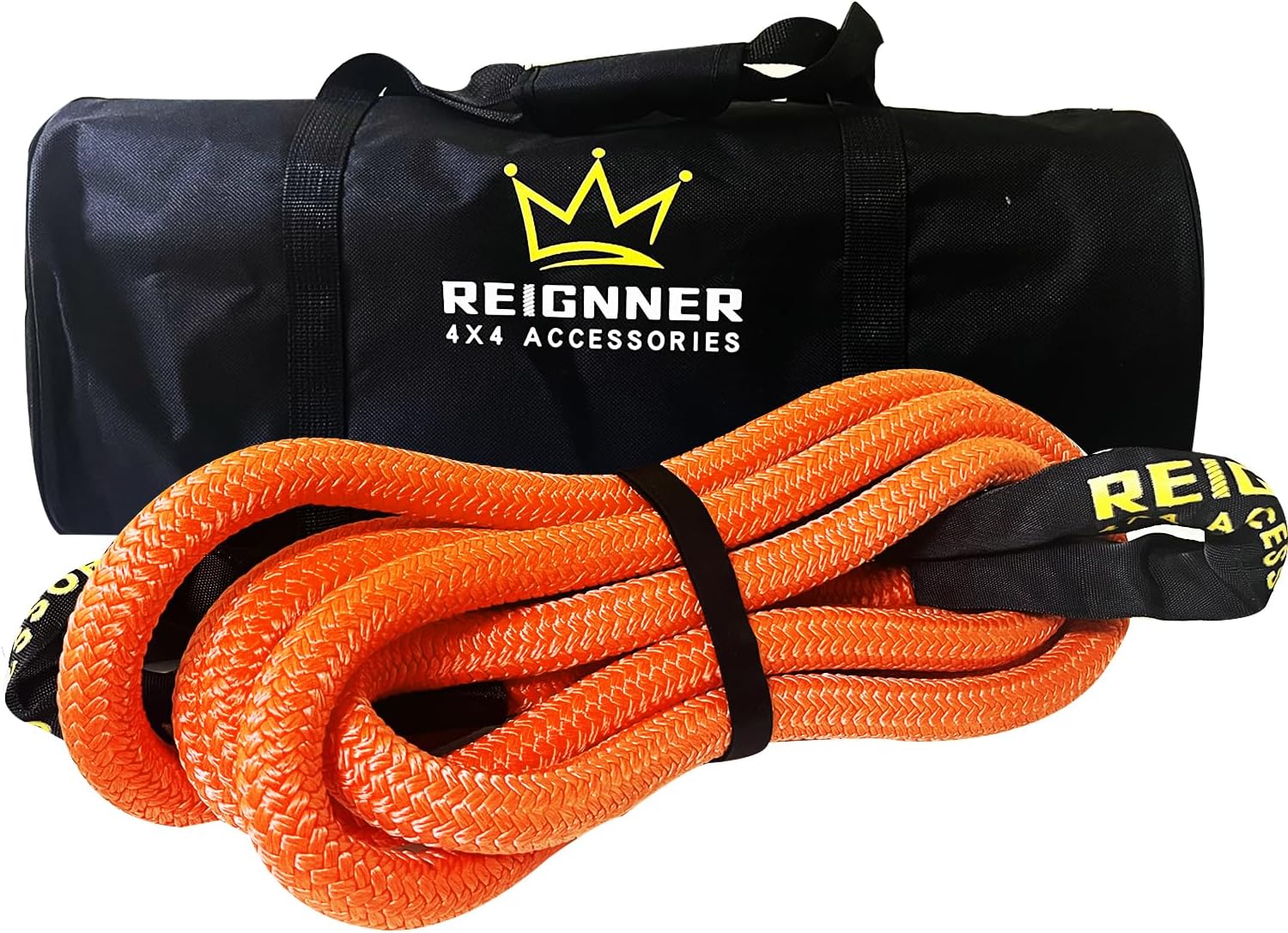
High-quality ropes use double-braided nylon with a protective sheath. Look for reinforced eye loops at each end. Avoid cheap ropes with thin or unprotected ends, as these can fray or break more easily.
5. Weather Resistance
If you off-road in wet or snowy conditions, pick a rope with UV and water-resistant coatings. Nylon absorbs water, so drying your rope after use is also important.
Common Buying Mistakes
- Choosing a rope that’s too thin or too short.
- Ignoring the weight rating.
- Buying cheap ropes from unknown brands (they may not meet safety standards).
- Forgetting to check for reinforced eye loops.
When in doubt, ask experienced off-roaders or consult resources like the Jeep Official Site for recommendations.
Essential Gear For Safe Jeep Recovery
A kinetic rope alone isn’t enough. Always carry the right recovery gear for your Jeep. Here’s what’s recommended:
- Rated recovery points: Factory tow hooks or aftermarket D-ring mounts bolted to the frame.
- Heavy-duty shackles: Soft shackles (synthetic) or steel D-rings rated for at least 3/4 of your Jeep’s weight.
- Gloves: Protect your hands from rope burns or pinches.
- Recovery damper: A heavy blanket or damper bag placed over the rope to absorb energy if it breaks.
- Traction boards: Useful for extra grip under tires.
- Snatch block: Helps change direction or double pulling power (if using a winch).
- First aid kit: Always important in any off-road kit.
Never use a hitch ball or bumper that isn’t designed for recovery. These can break off and become deadly projectiles.
How To Prepare For A Kinetic Recovery
Before you even attach the rope, take a few key steps to ensure a safe recovery. Preparation is often the difference between a quick rescue and a dangerous situation.
Assess The Situation
- Check for hazards: Look for rocks, logs, or deep holes around the stuck Jeep.
- Evaluate the terrain: Mud, sand, and snow all require different approaches.
- Decide on direction: Plan the best angle to pull the Jeep free.
Communicate Clearly
If you’re working with others, agree on signals before starting. Shouting can be hard to hear, so use hand signals or radios.
Inspect Your Equipment
- Check the kinetic rope for cuts, fraying, or worn spots.
- Inspect shackles and recovery points for cracks or rust.
- Make sure the rope is dry and free of knots.
Position Both Vehicles
- The recovery vehicle should be on solid ground, with room to move forward.
- Align both vehicles in a straight line, if possible.
- Leave enough slack in the rope (about 2–3 feet) to allow for the kinetic stretch.
Attach The Rope Properly
- Use rated recovery points (never tie around axles or suspension).
- Secure soft shackles or D-rings through the rope’s eye loops.
- Double-check all connections before starting.
Place A Recovery Damper
Lay a blanket, jacket, or purpose-built damper over the rope. If the rope snaps, this will help absorb energy and reduce risk.
Step-by-step: How To Use A Kinetic Recovery Rope With A Jeep
Now you’re ready to recover your Jeep. Here’s a detailed process, including tips for different terrains and common mistakes to avoid.
1. Clear The Area
Keep bystanders at least 1. 5 times the length of the rope away from both vehicles. This reduces risk if something breaks.
2. Attach The Rope
- Connect one end to the stuck Jeep’s recovery point.
- Connect the other end to the recovery vehicle’s recovery point.
- Use soft shackles or D-rings, never a hitch ball or bumper.
3. Lay Out The Rope
Allow some slack (about 2–3 feet) to build up kinetic energy. Make sure the rope is straight, with no knots or twists.
4. Communication
Use agreed signals to let everyone know you’re ready. Double-check that no one is standing near the rope.
5. Gentle Acceleration
The recovery vehicle should start moving slowly, then gently accelerate. Do not “floor it” or yank the rope. The kinetic rope will stretch, then pull the stuck Jeep forward as it contracts.
6. Repeat If Needed
If the Jeep doesn’t move on the first try, stop and reset. Try again, or adjust the angle. For deep mud or sand, a few gentle pulls are often better than one big jerk.
7. Unhook Safely
Once the Jeep is free, stop both vehicles. Carefully disconnect the rope and inspect for any damage.
Example: Recovering A Jeep From Deep Mud
Suppose your Jeep is stuck in a muddy rut. The recovery vehicle is a friend’s Jeep on firm ground. After attaching the rope, the recovery Jeep slowly accelerates. The rope stretches, then snaps back, pulling your Jeep free with a smooth motion.
No violent jerks, and both vehicles stay undamaged.
Common Mistakes To Avoid
- Using a kinetic rope with worn or damaged shackles.
- Attaching to weak points (like a bumper or trailer hitch ball).
- Driving too fast and causing a dangerous “slingshot” effect.
- Letting bystanders stand too close.
Special Tips For Jeep Owners
Jeeps have unique features and challenges when it comes to recovery. Here’s what every Jeep owner should know:
Use Factory Or Aftermarket Recovery Points
Stock Jeeps often come with factory tow hooks. These are strong enough for most recoveries. If you upgrade your bumper, make sure to add frame-mounted recovery points. Avoid using tie-down loops—they are not designed for recovery and can break.
Disconnect Sway Bars (if Needed)
If your Jeep is deeply stuck, disconnecting the sway bars can help your suspension flex and improve traction. This is especially helpful in rock or uneven terrain.
Watch For Accessories
Aftermarket bumpers, lights, and winches can get in the way. Make sure nothing blocks your recovery points or the path of the rope.
Automatic Vs. Manual Transmission
If you have a manual transmission, keep it in neutral during recovery. For automatics, use the gear recommended by your Jeep’s manual (usually neutral or low gear). Never stay in “park” during a kinetic recovery.
Air Down Tires
Lowering tire pressure (to 12–18 psi) increases traction and makes it easier to get unstuck. Just remember to air back up before driving on pavement.
Use Low-range 4wd
Engage low-range 4WD before attempting recovery. This allows your Jeep to move smoothly and with more control.
Example: Jeep Wrangler Recovery
A Jeep Wrangler stuck on a sandy hill was recovered using a 7/8” kinetic rope and soft shackles on frame-mounted hooks. The driver aired down the tires to 15 psi, engaged low-range 4WD, and was pulled free with two gentle tugs—no damage, no drama.
Kinetic Rope Maintenance And Inspection
A well-cared-for kinetic rope lasts longer and works more safely. After each use:
- Inspect for damage: Look for frayed fibers, cuts, or melted spots.
- Clean the rope: Rinse mud or sand off with fresh water. Avoid harsh chemicals.
- Dry before storage: Wet nylon can mildew. Hang the rope to dry fully.
- Store safely: Keep the rope in a cool, dry bag out of direct sunlight.
Replace any rope that shows serious wear or damage. Never use a rope with a cut deeper than 10% of its diameter.
Rope Lifespan
With good care, a quality kinetic recovery rope lasts 3–5 years or about 20–30 recoveries, depending on use. However, heavy mud and rough terrain can shorten its life.
Example: Rope Failure
A Jeep owner used an old, sun-damaged rope and it snapped during recovery, hitting the tailgate. Luckily, no one was hurt, but the lesson is clear—always inspect your gear before every use.
Comparing Kinetic Recovery Ropes: Key Features
With so many brands and types on the market, comparing ropes can be confusing. Here’s a helpful overview of key features:
| Brand | Breaking Strength | Diameter | Length | Protective Sheath |
|---|---|---|---|---|
| Bubba Rope | 28,600 lbs | 7/8″ | 20 ft | Yes |
| ARB Recovery Rope | 24,000 lbs | 7/8″ | 30 ft | Yes |
| Rhino USA | 30,580 lbs | 1″ | 20 ft | Yes |
| GearAmerica | 34,370 lbs | 1″ | 30 ft | Yes |
Always match the breaking strength and length to your Jeep’s needs.
Safety Tips For Kinetic Rope Recovery
Even the best equipment is only as safe as the person using it. Follow these rules every time:
- Use only rated recovery points and shackles.
- Keep all bystanders away from the recovery area.
- Lay a damper over the rope to reduce risk if it snaps.
- Avoid sudden, hard yanks—let the rope’s stretch do the work.
- Communicate with your team before and during recovery.
- Never use a damaged rope or shackle.
- Do not wrap the rope around sharp edges (like a bumper or axle).
- After recovery, inspect all gear for wear or damage.
Non-obvious Insight: Rope Orientation
Always attach the rope so the eye loops are straight, not twisted or at an angle. A twisted loop can weaken the rope and cause it to fail sooner.
Non-obvious Insight: Recovery In Extreme Cold
In very cold weather, kinetic ropes can become less flexible. Warm the rope in your vehicle before use for best performance.
Credit: babialitoplantilari.org
Real-world Recovery Scenarios
To give you a better idea of how kinetic ropes work in practice, here are a few scenarios:
Mud Pit Rescue
A Jeep Cherokee was stuck to its axles in deep mud. The recovery vehicle was a heavier Jeep Gladiator. Using a 1-inch kinetic rope, the Gladiator pulled slowly, allowing the rope to stretch. The stored energy popped the Cherokee free with minimal spinning or bouncing.
Snow Drift Pull-out
A Wrangler was buried in a snow drift. The recovery Jeep used a kinetic rope and soft shackles. After clearing snow from the wheels, the recovery Jeep pulled gently, and the rope’s stretch allowed a steady recovery without snapping.
Sand Dune Recovery
A Jeep Grand Cherokee bogged down on a sand dune. By airing down the tires and using a 30-foot kinetic rope, the recovery Jeep was able to give a smooth pull, avoiding the risk of digging deeper.
When Not To Use A Kinetic Recovery Rope
While kinetic ropes are great for most off-road recoveries, there are times when they are not the best choice:
- Vehicle cannot roll: If the stuck Jeep’s wheels are locked or brakes jammed, do not use a kinetic rope.
- Frame or suspension damage: If recovery points or the frame are bent, use a winch or call for professional help.
- Not enough space: Kinetic ropes need room to stretch. In tight quarters, a winch or come-along may be safer.
- Towing long distances: Kinetic ropes are for recovery, not for towing a Jeep down the road.
Credit: www.prpseats.com
Training And Practice: Improving Your Recovery Skills
Reading about recovery is helpful, but hands-on practice is better. Here’s how to build your skills:
- Join a Jeep club: Many clubs offer recovery training days.
- Practice in safe environments: Try using your kinetic rope in a field or empty lot before hitting tough trails.
- Watch expert videos: See how professionals use recovery ropes for different situations.
- Learn from mistakes: Every recovery teaches something new—share experiences with other Jeep owners.
Practice also helps you spot potential problems before they become real dangers.
Environmental Responsibility
Off-roading and vehicle recovery can harm the environment if done carelessly. Always:
- Stay on marked trails.
- Avoid spinning tires and creating deep ruts.
- Recover vehicles with minimal disturbance to plants and soil.
- Clean up all equipment and trash before leaving.
Responsible recovery helps keep trails open for everyone.
Credit: www.prpseats.com
Frequently Asked Questions
What Size Kinetic Recovery Rope Do I Need For My Jeep?
Choose a rope rated for at least 2–3 times the weight of your Jeep. For most stock Jeeps, a 7/8-inch diameter rope with a 20,000–30,000 lb breaking strength is suitable.
Can I Use A Kinetic Recovery Rope To Tow My Jeep On The Road?
No, kinetic ropes are for recovery, not towing. Their stretchiness can make highway towing dangerous. Use a proper tow strap or bar for road towing.
How Do I Clean And Store My Kinetic Recovery Rope?
Rinse the rope with clean water after use to remove mud or sand. Hang it to dry fully. Store in a cool, dry place out of direct sunlight. Avoid using harsh chemicals or bleach.
Are Soft Shackles Safe To Use With Kinetic Ropes?
Yes, high-quality soft shackles made from synthetic fibers are strong and safe when used properly. Make sure they are rated for your Jeep’s weight and always inspect for damage before use.
What Should I Do If My Kinetic Rope Gets Damaged?
If you see deep cuts, fraying, or melted spots, retire the rope immediately. Do not try to repair it. Using a damaged rope is dangerous and could lead to failure during recovery.
Getting stuck off-road is all part of the Jeep adventure, but recovering safely is what matters most. With the right kinetic recovery rope, proper gear, and good technique, you’ll be ready for almost anything the trail throws your way. Always inspect your equipment, use safe recovery points, and practice your skills regularly. Off-roading is more fun—and much safer—when you’re prepared.