
Laying new sod is an exciting step toward a beautiful, green lawn. But if you’re new to lawn care, your first mow can feel stressful. Cutting new sod too early, or the wrong way, can damage roots and set back growth.
But with the right timing and methods, mowing your new sod helps it establish strong, healthy grass. This guide will walk you through every step—when to mow, how to do it, and what details beginners often miss—so your new lawn looks great for years.
Understanding New Sod And Why First Mow Matters
New sod is living grass with a thin layer of soil, cut from a sod farm and placed in your yard. The roots are short and need time to grow into your soil. The first mowing is important because it removes old grass tips, encourages new shoots, and helps the sod grow thick. But cutting too early or too short can shock the grass, slow root growth, and even kill areas of your new lawn.
Many people don’t realize that mowing new sod is different from mowing established grass. You must watch for signs the sod is ready, and use special care with your mower’s settings. Getting this right gives your lawn a strong start.
When To Mow New Sod For The First Time
Timing is everything. If you mow too soon, you risk tearing up roots that are still weak. Most experts recommend waiting about 14 days after laying sod before the first cut. But this can vary by grass type, weather, and how well you care for the sod in those first weeks.
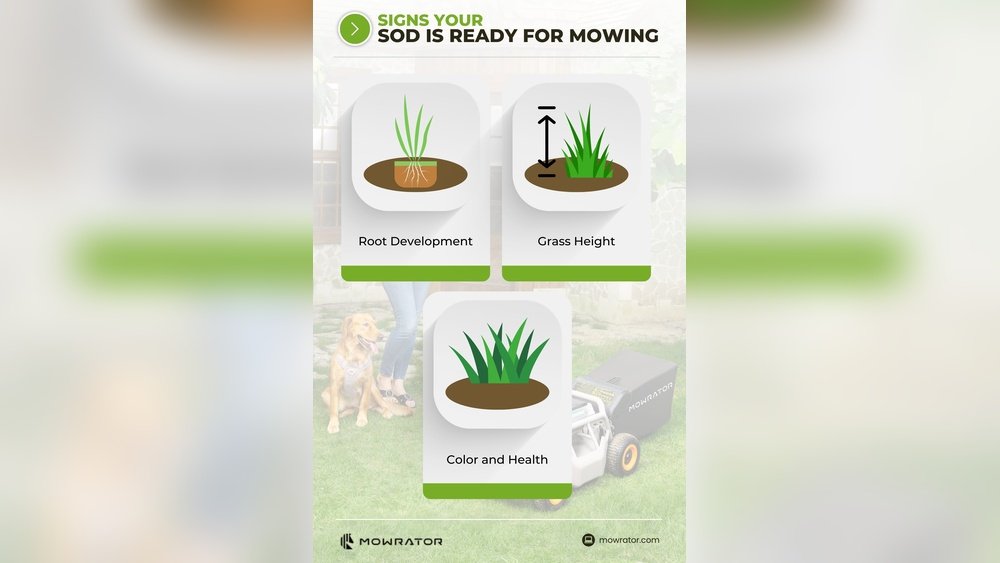
Here are the main signs your new sod is ready for mowing:
- Roots are established: Gently pull up a corner of sod. If there’s resistance, the roots are starting to grow into your soil.
- Grass height: The grass is about 3 to 4 inches tall. This usually happens in 2 to 3 weeks, but may be slower in cold weather.
- Soil is not too wet: Mowing when it’s soggy can cause ruts and damage roots.
Pro tip: If you see footprints remain after walking on your lawn, wait a few more days before mowing.
Preparing Your Lawn And Mower
Before you start mowing, a bit of prep work makes a big difference. Here’s what to check:
Clear The Lawn
Remove sticks, rocks, or debris left from sod installation. Even small objects can damage your mower or tear the grass.
Dry The Lawn
Mow when the grass is dry. Wet grass can clog the mower, cut unevenly, or leave ruts in soft soil. Try to water the day before, not the morning of mowing.
Set Your Mower Correctly
For the first mow, set your mower to its highest setting. This usually means cutting only the top third of the grass blades. Cutting too short stresses new sod and exposes roots to sun and heat.
Mower blade sharpness is critical. A dull blade tears the grass, leaving ragged edges that dry out and turn brown. Sharpen or replace your blade before mowing new sod.
Mower Type
A push mower with sharp blades is best for new sod. Heavy ride-on mowers can compact the soil and tear up sod if roots aren’t strong yet.
Here’s a simple comparison of mower types for new sod:
| Mower Type | Pros | Cons |
|---|---|---|
| Push (Rotary) | Gentle on sod, easy to control | Manual effort needed |
| Reel | Very clean cut, quiet | Not good for tall or thick grass |
| Ride-on | Fast, good for large lawns | Can damage weak roots, heavy |
How To Mow New Sod For The First Time
When your new sod is ready, follow these steps:
- Check mower settings: Set blades high (3 to 4 inches).
- Walk the lawn: Look for areas that feel soft or have gaps. Avoid mowing these spots if possible.
- Plan your path: Mow in straight lines, overlapping each pass slightly.
- Go slow: Mow at a slow walking speed. Rushing can tear up sod.
- Empty bag often: Fresh grass clippings are heavy; empty your mower bag before it’s full to avoid clumps.
- Inspect as you mow: If you notice sod shifting or tearing, stop and raise your blade or wait a few more days.
- Finish with edges: Use a string trimmer only if needed, and keep it high to avoid scalping.
Expert insight: Many beginners try to cut their new sod shorter for a “golf course” look. This damages young roots and can lead to brown spots. It’s always better to mow too high than too short, especially the first few times.
After The First Mow: Care And Watering
Your work isn’t done after the first mow. How you treat your lawn in the next few weeks is just as important.
- Leave clippings: If possible, let short clippings fall on the lawn. They return nutrients to the soil and help keep moisture in.
- Resume watering: New sod still needs frequent, deep watering for the first month. Water early in the morning to avoid disease and sunburn.
- Watch for stress: Brown tips, footprints, or rolled edges mean the sod is under stress. Adjust your watering and avoid heavy use until the lawn looks strong.
- Delay fertilizer: Do not fertilize immediately after mowing. Wait until 3–4 weeks after sod installation, unless your sod supplier gave different directions.
Mistakes To Avoid When Mowing New Sod
Even experienced gardeners can make mistakes with new sod. Here are the most common errors:
- Mowing too soon: If roots aren’t established, mowing can shift or tear sod.
- Cutting too short: “Scalping” exposes roots and dries out the grass.
- Using heavy equipment: Ride-on mowers or pulling carts can compact soil and damage grass.
- Ignoring blade sharpness: Dull blades rip the grass, leading to brown, unhealthy tips.
- Skipping cleanup: Leaving clumps of clippings or debris can smother new grass and create thin spots.
A surprising mistake is mowing in the same direction every time. Over time, this can cause the grass to lean and wear patterns into your lawn. Change your mowing direction each time you cut for the first month.

Credit: ipm.ucanr.edu
How Often To Mow After The First Time
After your first mow, let the grass recover for about a week. Watch for healthy growth—if the grass reaches 4 inches, mow again. As the roots strengthen (usually after 4–6 weeks), you can start a regular mowing schedule based on your grass type.
Here is a simple schedule for common grass types:
| Grass Type | Ideal Height | Mowing Frequency |
|---|---|---|
| Kentucky Bluegrass | 2.5–3.5 inches | Every 5–7 days |
| Bermuda | 1–2 inches | Every 3–5 days |
| Fescue | 3–4 inches | Every 7–10 days |
| St. Augustine | 2.5–4 inches | Every 7–10 days |
Insider tip: Don’t be afraid to let your new sod grow a little taller than usual in the first month. Taller grass shades roots, keeps soil cool, and supports deeper root growth.
Common Questions Beginners Have
Many first-time sod owners wonder about the details of mowing. Here are a few non-obvious insights:
- Should you bag or mulch clippings? For the first mow, bagging can help keep things tidy if you have a lot of long clippings. After that, mulching is usually better for your lawn.
- What if you have slopes? Mow across (side to side), not up and down, to avoid slipping and scalping the sod.
- Can you mow after rain? Wait until the grass is dry. Wet sod is fragile and can be damaged easily.
- What if you see weeds? Pull them by hand for the first month. Avoid weed killers until your sod is well established (about 2–3 months).

Credit: dracutlandscaping.com
Practical Tips To Make Mowing New Sod Easier
- Mow in the evening or early morning to avoid heat stress.
- Wear soft shoes to avoid making footprints or compacting the soil.
- Check for animal activity: Rabbits, birds, or pets can shift sod. Fix any gaps before mowing.
- Mark sprinkler heads or obstacles: This avoids accidents and keeps cuts even.
- Keep children and pets off for a few days after mowing to reduce stress on the new sod.
Hidden insight: Many people don’t realize that new sod may look “uneven” after the first mow. This is normal. As roots grow and you mow regularly, the lawn will even out.
Summary: Key Steps For Mowing New Sod For The First Time
- Wait until roots are established and grass is 3–4 inches tall.
- Mow only when the grass is dry.
- Set your mower to its highest setting.
- Use a sharp, clean blade.
- Go slow, mow carefully, and don’t cut too short.
- Leave clippings for nutrients, unless they are too long.
- Continue deep watering after mowing.
- Avoid heavy traffic on the lawn for another few weeks.
Taking these careful steps protects your investment and sets your new lawn up for years of beauty.
For more in-depth information on sod care, you can visit the Sod Solutions official guide.

Credit: www.youtube.com
Frequently Asked Questions
How Soon Can I Mow New Sod After Installation?
You should wait about 14 days after installation. Check that the roots are attached to the soil and grass is at least 3 inches tall before the first mow.
What Mowing Height Is Best For New Sod?
Set your mower to its highest setting (about 3–4 inches). Never remove more than one-third of the grass blade in a single cut.
Can I Use A Riding Mower For New Sod?
It’s best to use a lightweight push mower for the first few cuts. Ride-on mowers are heavy and can damage weak roots.
Should I Water My New Sod Before Or After Mowing?
Water your new sod after mowing, not before. Wet grass can clog the mower and damage the sod.
When Can I Start Mowing My New Sod Regularly?
After about 4–6 weeks, or once the sod is well rooted and growing strongly, you can begin a normal mowing routine based on your grass type.
With the right approach, mowing your new sod is simple and safe. Take your time, follow these tips, and soon you’ll enjoy a healthy, beautiful lawn.