
Moss can be a pesky problem in lawns. It makes grass look unhealthy and patchy. But don’t worry! We are here to help you control moss in your lawn.
What is Moss?
Moss is a small, green plant that grows in damp, shady areas. It does not have flowers or seeds. Instead, it spreads through spores. Moss thrives in places with low sunlight, compact soil, and poor drainage.
Why is Moss a Problem in Lawns?
Moss competes with grass for nutrients and water. It can take over areas where grass is weak. This creates uneven patches in your lawn. Moss also makes the lawn look unattractive.

Credit: www.youtube.com
Causes of Moss in Lawns
- Shady areas
- Poor soil drainage
- Low soil fertility
- Soil compaction
- Improper mowing
How to Control Moss in Your Lawn
Here are some simple steps to control moss in your lawn:
1. Improve Sunlight Exposure
Moss loves shade. Trim trees and bushes to let more sunlight reach your lawn. This will help grass grow better.
2. Improve Soil Drainage
Poor drainage leads to moss growth. Aerate your soil to improve drainage. You can use a garden fork or a lawn aerator. Make small holes in the soil to allow water to drain better.
3. Increase Soil Fertility
Healthy grass can outcompete moss. Use a balanced fertilizer to feed your lawn. This will provide essential nutrients to your grass. Apply fertilizer in the spring and fall for the best results.
4. Reduce Soil Compaction
Compacted soil creates a perfect environment for moss. Aerate your lawn to reduce compaction. This will allow grass roots to grow deeper and stronger.
5. Proper Mowing
Mow your lawn at the right height. Cutting grass too short weakens it and encourages moss growth. Keep your grass about 3 inches tall for the best results.
6. Remove Moss Manually
Use a rake to remove moss from your lawn. This will help grass grow better. Be gentle to avoid damaging the grass.
7. Use Moss Control Products
There are various moss control products available. These include moss killers and moss control sprays. Follow the instructions on the product label for best results.
8. Maintain A Healthy Lawn
A healthy lawn is less likely to have moss. Water your lawn regularly, but do not overwater. Fertilize your lawn as needed. Keep an eye on your lawn and address any issues promptly.
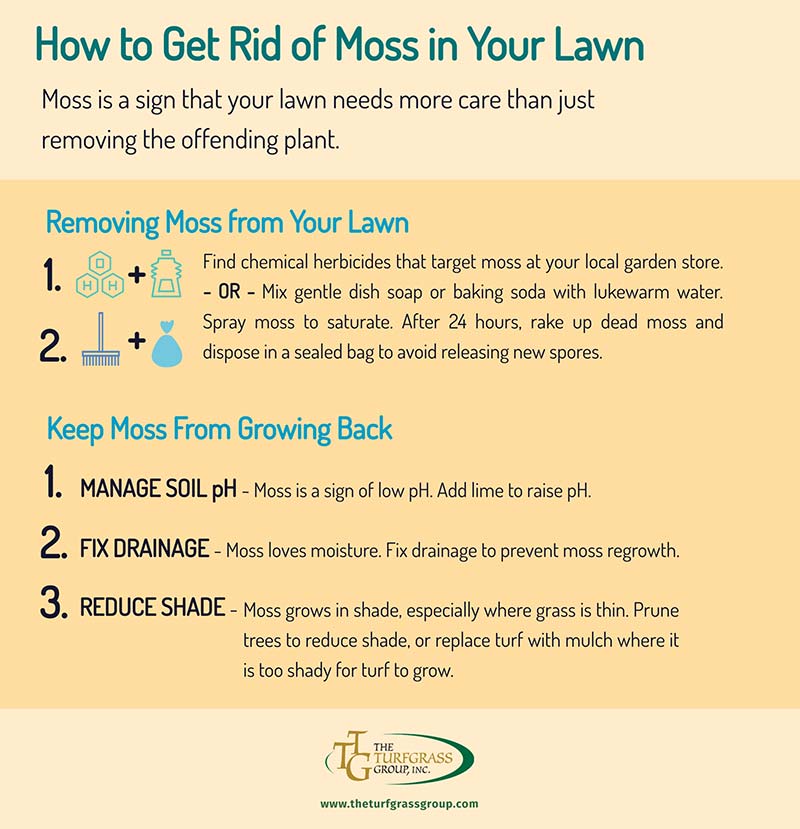
Credit: theturfgrassgroup.com
Preventing Moss in the Future
Prevention is better than cure. Follow these tips to prevent moss from coming back:
- Keep your lawn healthy with regular care.
- Aerate your lawn regularly.
- Maintain proper soil pH levels.
- Ensure good drainage.
- Keep your lawn well-fed with fertilizers.
Frequently Asked Questions
What Causes Moss To Grow In Lawns?
Moss thrives in damp, shady, and compacted soil conditions.
How Can I Prevent Moss In My Lawn?
Ensure proper drainage, aerate soil, and maintain sunlight exposure.
Is Moss Harmful To My Lawn?
Moss competes with grass, leading to a weaker, less healthy lawn.
Can I Use Vinegar To Kill Moss?
Yes, vinegar is an effective, natural moss killer.
Conclusion
Controlling moss in your lawn is possible with the right steps. Improve sunlight exposure, soil drainage, and soil fertility. Reduce soil compaction and mow properly. Remove moss manually and use moss control products if needed. Maintain a healthy lawn to prevent moss from returning. Follow these tips and enjoy a beautiful, moss-free lawn!