
Spring is a time when Bermuda grass usually comes back to life, but for many lawn owners, it brings a frustrating problem: Spring Dead Spot. This disease leaves unsightly patches of dead grass that ruin the look of even the healthiest lawns. If you see circular or irregular brown spots on your Bermuda lawn that don’t green up with the rest of the grass, you’re not alone. The truth is, Spring Dead Spot is one of the most stubborn problems for Bermuda grass, especially in regions with cool, wet winters and warm summers.
Knowing how to treat Spring Dead Spot Bermuda is not just about quick fixes. It’s about understanding the disease, preventing it, and taking the right steps to repair the damage. Many people make common mistakes—like over-watering, using the wrong fertilizer, or treating too late—which can make the problem worse.
This guide will walk you through everything you need to know, from why it happens to the best ways to restore your lawn and keep it healthy year after year.
What Is Spring Dead Spot?
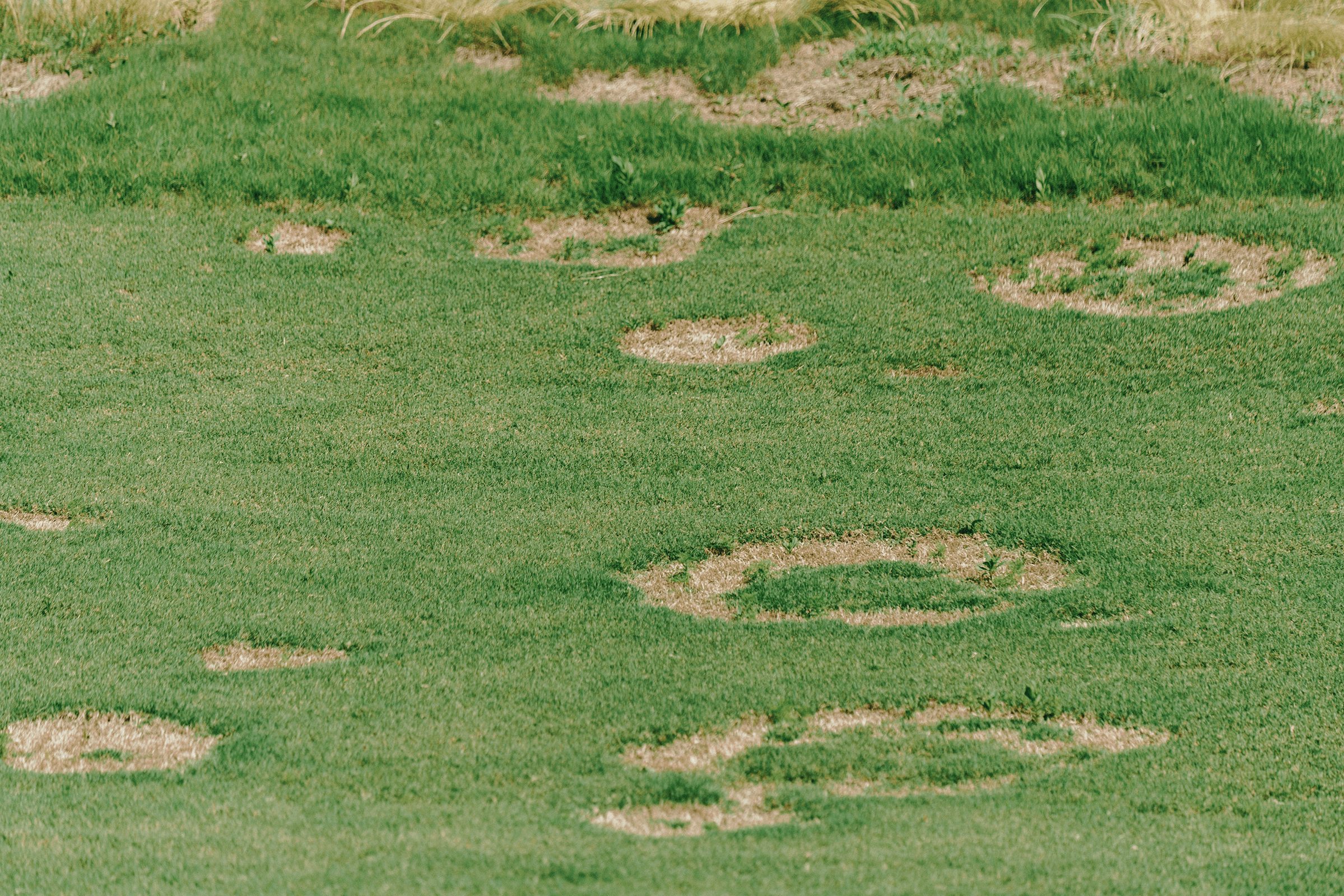
Spring Dead Spot (SDS) is a serious fungal disease caused by Ophiosphaerella species. It attacks the roots, stolons, and rhizomes of Bermuda grass during cool, wet periods. The disease does not kill the grass blades directly; instead, it destroys the underground parts, so the grass cannot recover in spring. The result: large brown or straw-colored spots that may remain bare for months.
Key Facts About Spring Dead Spot
- It mainly affects Bermuda grass (both common and hybrid types).
- Spots usually appear in spring as the grass comes out of dormancy.
- The patches can range from a few inches to several feet in diameter.
- The disease overwinters in the soil and returns year after year if not managed.
Why Does Spring Dead Spot Happen?
Many people think Spring Dead Spot is just a random problem, but there are clear reasons why it happens. The fungus thrives in certain conditions:
- Cool, wet weather in fall and early spring helps the fungus infect the grass.
- Poor soil drainage or compacted soil makes it easier for the disease to spread.
- Excessive thatch (a thick layer of dead grass and roots) provides a home for the fungus.
- High soil pH (above 6.5) and low potassium levels can increase the risk.
- Improper fertilization, especially too much nitrogen in late summer or fall, encourages disease.
Understanding these factors gives you a big advantage in both preventing and treating SDS.
Credit: betterturf.basf.us
How To Identify Spring Dead Spot On Bermuda Grass
It’s easy to confuse SDS with other lawn problems, but there are signs that make it unique:
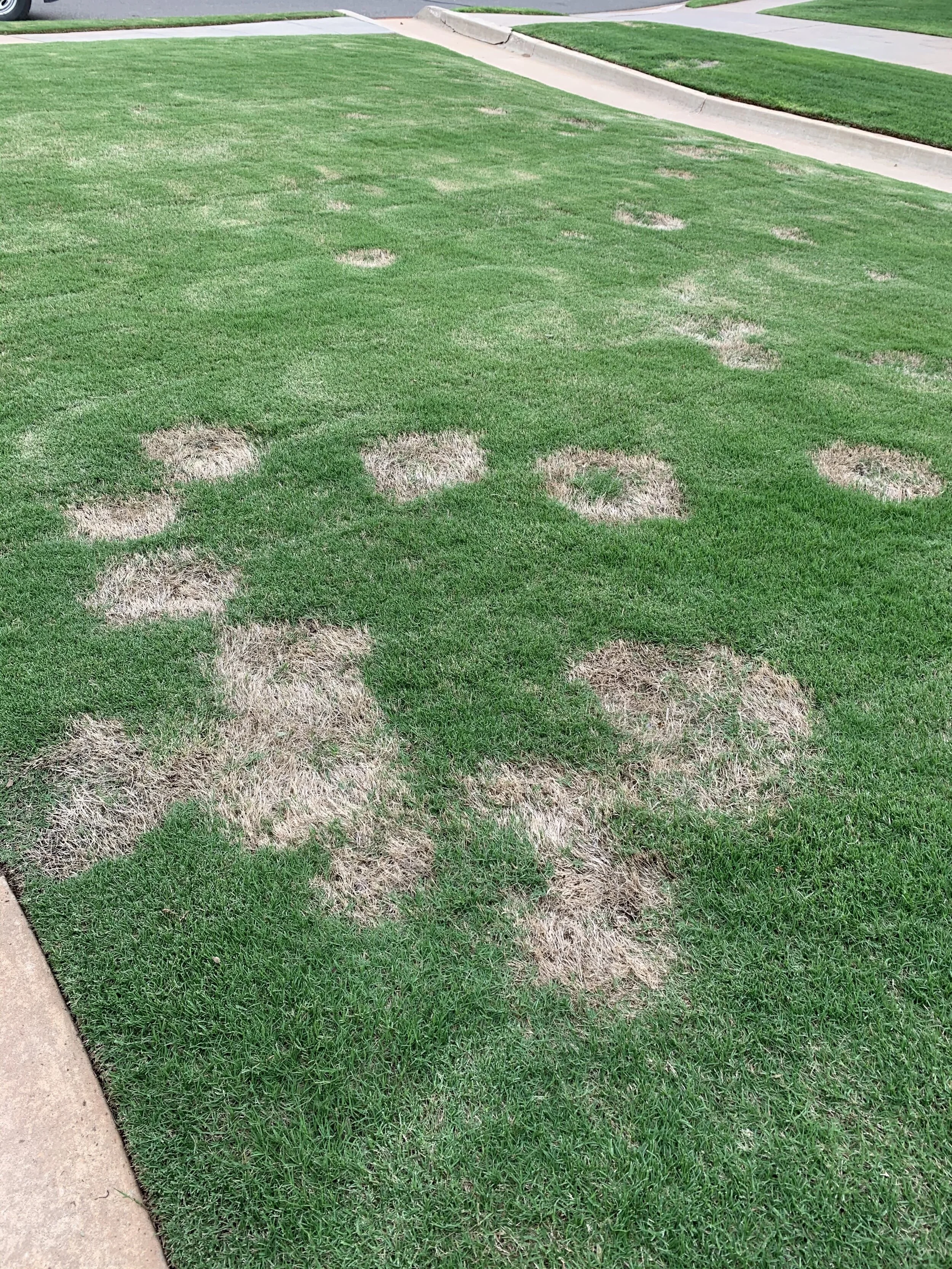
- Circular or irregular brown patches appear in spring.
- The affected areas do not green up, even when the rest of the lawn does.
- The dead grass can be easily pulled up, showing rotted roots or blackened stolons.
- In severe cases, the patches can join together, leaving large bare spots.
If you look closely, you may see a sharp border between healthy and dead grass. Sometimes, weeds grow quickly in these spots because the Bermuda is weak.
Treating Spring Dead Spot On Bermuda Grass
Fixing Spring Dead Spot is not just about applying a chemical. It requires a step-by-step approach that tackles both the cause and the symptoms. Here’s what works best:
1. Improve Soil Health
Start by improving the soil structure. Healthy soil helps grass recover and makes conditions less friendly for the fungus.
- Aerate the lawn in late spring or early summer. This reduces compaction and improves drainage.
- Add organic matter, like compost, to boost soil life.
- Test your soil pH. Aim for a pH between 6.0 and 6.5. If it’s too high, apply elemental sulfur to lower it.
- Avoid heavy nitrogen fertilizers in late summer or fall, as they make the grass more likely to get SDS.
2. Manage Thatch Levels
Too much thatch is a perfect place for the fungus. Thatch thicker than 0. 5 inch should be removed.
- Dethatch your lawn in late spring or early summer.
- Use a dethatching rake or a power rake for large lawns.
- After dethatching, water the lawn to help it recover.
3. Water Wisely
Overwatering is a common mistake. It keeps the soil wet and helps the fungus.
- Water deeply but less often (about 1 inch per week during dry periods).
- Water early in the morning, not at night.
- Make sure the soil dries out between waterings.
4. Fertilize Correctly
Balanced nutrition helps the grass resist disease. Potassium is especially important.
- Use a slow-release fertilizer with less nitrogen in late summer and more potassium.
- Avoid quick-release nitrogen fertilizers in fall.
- Apply potassium sulfate at 1-2 pounds per 1,000 square feet in late summer.
5. Use Fungicides (when Needed)
Fungicides can help, but timing is critical. They work best as a preventative, not a cure.
- Apply a fungicide containing azoxystrobin, propiconazole, or thiophanate-methyl in early fall.
- Repeat the application in 28 days for best results.
- Water the fungicide into the soil after applying (follow the label instructions carefully).
Example Fungicide Application Calendar
| Month | Action | Notes |
|---|---|---|
| September | Apply fungicide | Before soil temperatures drop below 70°F |
| October | Repeat fungicide | 28 days after first treatment |
6. Reseed Or Re-sod Damaged Areas
Bermuda grass does not spread quickly into large dead spots. You may need to reseed or lay new sod in bare areas.
- Remove dead grass and till the soil lightly.
- Add a thin layer of compost for better root growth.
- Use Bermuda grass seed for seeding, or lay sod for faster results.
- Keep the area moist until new growth appears.
7. Ongoing Lawn Care
Healthy grass is the best defense against disease. Follow these steps:
- Mow at the correct height (1 to 1.5 inches for Bermuda).
- Keep mower blades sharp to avoid injuring the grass.
- Avoid scalping or mowing too short, especially in fall.
- Fertilize according to soil test results, not just by guesswork.

Credit: www.greencastonline.com
Prevention: How To Keep Spring Dead Spot From Coming Back
SDS is hard to cure completely, so prevention is key. Here are the best ways to stop it from returning:
- Aerate regularly, at least once a year.
- Control thatch so it stays under 0.5 inch thick.
- Balance soil nutrients by testing soil every two years.
- Use disease-resistant Bermuda varieties if planting a new lawn.
- Rotate fungicides to avoid resistance (do not use the same fungicide every year).
Comparison: Disease-prone Vs. Disease-resistant Bermuda Varieties
| Variety | Disease Risk | Growth Speed |
|---|---|---|
| Common Bermuda | High | Fast |
| Tifway 419 | Moderate | Fast |
| TifTuf | Low | Moderate |
Two Non-obvious Insights
- Soil temperature matters more than air temperature. SDS infection happens mostly when soil temperatures are between 50°F and 70°F, even if days are warm. This is why fall fungicide timing is so critical.
- Fungicides alone rarely solve the problem. Many homeowners use chemicals but skip soil improvement and thatch control. Without these steps, SDS often comes back stronger.
Common Mistakes To Avoid
Many people waste time and money because they do not know what really works. Here are common errors to avoid:
- Treating only the visible symptoms and ignoring soil health.
- Applying fungicides in spring, after symptoms appear (they are preventative, not curative).
- Over-fertilizing with nitrogen late in the season.
- Skipping soil testing, which leads to wrong fertilizer or lime use.
- Ignoring thatch buildup, which can make the disease worse every year.
Credit: www.hallstewart.com
How Long Does It Take To Recover?
Recovery from Spring Dead Spot is not instant. Even with the best care, it can take one or two growing seasons for large patches to fill in completely. Fast-growing Bermuda types recover quicker, but soil health and weather play a big role.
Recovery Speed Factors
| Factor | Effect on Recovery |
|---|---|
| Grass variety | Faster with hybrid types |
| Soil quality | Better soil speeds up growth |
| Weather | Warm, wet springs help fill-in |
| Thatch control | Less thatch = faster recovery |
When To Call A Professional
If your efforts do not work after a year, or if the patches keep growing, it may be time to call a lawn care professional. They can test your soil, identify any hidden problems, and apply advanced treatments. This is especially important for large lawns or sports fields where appearance and recovery speed matter.
Key Takeaways
- Spring Dead Spot is a tough fungal disease, but it can be controlled with a full lawn care approach—not just chemicals.
- Focus on soil health, thatch management, and correct watering for long-term results.
- Fungicides help most when used preventively in the fall, not after you see dead spots.
- Be patient: It often takes more than one season to fully restore your Bermuda lawn.
If you want more technical details on the disease, the USDA National Turfgrass Evaluation Program offers research-based information: NTEP Bermuda Grass Report.
Frequently Asked Questions
What Is The Best Time To Treat Spring Dead Spot On Bermuda Grass?
The best time is in early fall, before soil temperatures drop below 70°F. This is when the fungus is most active, and preventive fungicides are most effective.
Can Spring Dead Spot Kill My Entire Bermuda Lawn?
No, it usually does not kill the whole lawn, but it can cause large dead patches that take months or even years to fill in if not treated.
Are There Any Bermuda Grass Types That Resist Spring Dead Spot?
Yes, newer hybrids like TifTuf and Celebration are more resistant than common Bermuda. Choosing a resistant type reduces your risk but does not guarantee you will avoid the disease.
Do I Need To Remove Dead Grass Before Repairing Spots?
Yes. Remove the dead material and loosen the soil before reseeding or laying new sod. This helps the new grass establish quickly.
Will Spring Dead Spot Come Back Every Year?
It can come back if you do not address the causes—like poor soil, thatch, or wrong fertilization. Regular lawn care and preventive fungicide help break the cycle.
Taking action now puts you ahead of the problem and helps your Bermuda lawn stay green and healthy every spring. With the right steps and some patience, you can beat Spring Dead Spot and enjoy a beautiful yard year after year.