

Last updated: October 2026 · Specs are taken from manufacturer listings on Amazon; prices and availability change, so always confirm on the product page.
The electric snow shovel vs snow blower decision is mostly about where the snow lands. An electric (or cordless) snow shovel is a light, narrow tool that excels on decks, steps, porches and walkways. A snow blower clears a much wider, deeper path and throws snow far, which makes it the right tool for driveways. Many homes end up with both, but if you only buy one, match it to the area you clear most.
The quick answer
- Electric snow shovel: best for decks, steps, walkways, small patios and light storms. Light, cheap, easy to store.
- Snow blower: best for driveways and long sidewalks, deeper snow and anyone who wants the job done in one or two passes.
- Both: the most comfortable setup for homes with a driveway plus stairs, decks or long paths.
What is an electric snow shovel?
An electric snow shovel, often called a power shovel, is essentially a small single-stage auger mounted on a pole with a handle. A paddle or auger spins at the front, scoops snow and throws it a few feet forward or to the side. Corded versions plug into an outlet; cordless versions run on a battery, often the same battery as the brand's leaf blowers and trimmers.
Two examples from our best cordless snow blower round-up show the category well. Snow Joe's 24V-SS13 clears a 13-inch wide, 6-inch deep path and is rated to move up to 1,620 lb of snow per charge. VOLTASK's 24V shovel is listed at just 9.3 lb with a 13-inch path. Both are light enough to carry up and down stairs.
What is a snow blower?
A snow blower is a walk-behind machine with a wider auger housing, usually 18-22 inches on single-stage models and 24 inches or more on two-stage machines. Single-stage blowers scoop and throw snow in one motion and suit paved driveways. Two-stage blowers add an impeller for deep, heavy snow and gravel. If you are still deciding between those two, see single-stage vs two-stage snow blower.
Electric snow shovel vs snow blower: side-by-side
| Factor | Electric snow shovel | Snow blower (single-stage) |
|---|---|---|
| Clearing width | About 10-13 in | About 18-22 in |
| Comfortable snow depth per pass | About 4-6 in | About 8-12 in |
| Typical weight | Roughly 9-16 lb | Roughly 25-60 lb+ |
| Best surfaces | Decks, steps, walkways, porches | Driveways and long sidewalks |
| Throw distance | Short | Much farther |
| Storage | Hangs on a wall hook | Needs floor space |
| Price | Lower | Higher |
| Wet, heavy snow | Struggles | Copes better (two-stage best) |
Where an electric snow shovel wins
Steps, stoops and porches
A blower simply cannot climb stairs. A power shovel can clear each step in a few seconds, then move to the next. This is where it earns its keep.
Decks
Snow blowers are heavy, and their augers and scraper bars can gouge wood or composite boards. A light power shovel set to skim the surface is much kinder to decking. Lift it slightly so the paddle does not grind the boards.
Narrow paths and tight spaces
Paths between garden beds, side yards and spaces between cars are awkward for a 21-inch machine. A 13-inch shovel threads through easily.
Light, frequent snowfalls
If your area gets many 1-4 inch snowfalls rather than big storms, a power shovel clears them quickly without pulling a heavier machine out of the garage.
Storage and price
A power shovel hangs on a wall hook and costs a fraction of a snow blower. For apartments, townhouses and small homes, that alone can decide it.
Where a snow blower wins
Driveways
A two-car driveway takes many narrow passes with a 13-inch shovel. A 21-inch blower covers the same area in roughly half the passes and throws the snow well clear of the edges, so you are not building walls you have to deal with later.
Deeper snow
Power shovels are comfortable at about 4-6 inches per pass. Beyond that you clear in layers, which doubles the work. Single-stage blowers handle around 8-12 inches, and two-stage machines go deeper still.
Wet, heavy snow
Dense, wet snow overwhelms small augers. Larger blowers cope better, and two-stage machines are built for it.
Throw distance
A shovel tosses snow a few feet; a blower can throw it 20-40 feet or more. On a wide driveway, that matters, because you need somewhere to put the snow.
Time and effort by area
| Area | Electric shovel | Single-stage blower |
|---|---|---|
| Front steps and stoop | Fast and precise | Awkward or impossible |
| Deck (wood or composite) | Ideal | Too heavy; risk of damage |
| 30 ft walkway, 4 in snow | Comfortable | Quick |
| Two-car driveway, 4 in | Slow, many passes | Comfortable |
| Two-car driveway, 10 in | Impractical | Workable in partial passes |
| End-of-drive plow ridge | Not suitable | Difficult; two-stage better |
Health and comfort
Clearing snow by hand is hard exercise, especially in the cold. The American Heart Association has long warned that shoveling snow can put real strain on the heart and advises caution and frequent breaks, particularly for people with existing heart conditions. Both power shovels and snow blowers reduce lifting, which is a major benefit.
A power shovel still requires you to push and guide it, but you are not lifting full loads of snow. A snow blower takes even more effort out of the job, though heavy machines can be tiring to steer and turn. If you do shovel by hand, use good technique: our guide on how to shovel snow without hurting your back covers posture and pacing.
Corded vs cordless
Corded power shovels and electric blowers are cheap and never run out of power, but the cord limits range and is a tripping and cutting hazard in snow. Cordless models remove that hassle. Runtime depends on battery size, and cold reduces capacity, so store batteries indoors. The best value comes from staying on one battery platform: if your blower, shovel and summer tools share batteries, you get more use from each pack. Our article on whether battery snow blowers are worth it goes deeper on battery trade-offs.
Buying both: the most practical setup
For many homes, the right answer is not either-or. A blower for the driveway and a power shovel for steps, decks and walkways means each tool does what it is best at. If both run on the same battery system, the cost and storage overhead is small, and a big storm becomes two quick jobs instead of one long slog.
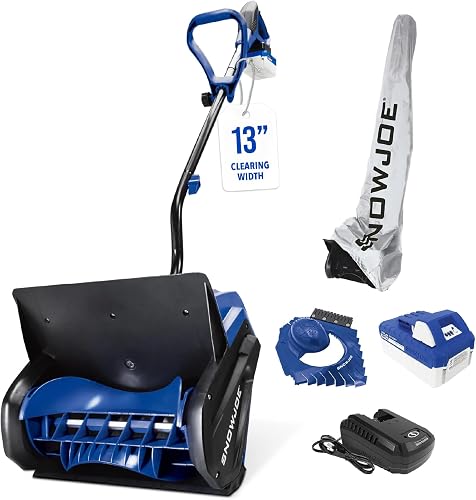
Snow Joe 24V-SS13 Cordless Snow Shovel Kit
The Snow Joe 24V-SS13 kit clears a 13-inch by 6-inch path with a 400W motor and includes a 4.0Ah battery, charger, cover and ice scraper. It is a strong companion tool for steps and decks.

EGO Power+ SNT2112 21-inch Single-Stage
For the driveway itself, the EGO SNT2112 is a 21-inch single-stage blower with a steel auger and two 56V batteries in the box.
Four real homes, four answers
A condo with a second-floor deck and a short shared walkway. An electric snow shovel is all that is needed. It handles the deck without damaging the boards, clears the stairs, and hangs in a closet when spring arrives.
A townhouse with a one-car driveway and front steps. This is the closest call. In a mild-winter area, a power shovel can manage both, one pass at a time. In a snowier area, a compact single-stage blower for the driveway plus a hand shovel for the steps is quicker.
A suburban home with a two-car driveway, porch steps and a back deck. Both tools. The blower clears the driveway in minutes; the power shovel handles the porch, deck and the path to the trash cans.
A rural property with a long gravel drive. A two-stage snow blower or a plow service for the drive, with a power shovel for steps and decks. A single-stage blower or shovel will not cope with the length or the gravel.
Which should you choose?
Choose an electric snow shovel if: you live in a townhouse or condo with steps and a short walk, you mostly get light snow, you have a deck to protect, or storage is tight.
Choose a snow blower if: you have a driveway longer than a car length or two, your storms regularly exceed 6 inches, or you want to finish quickly.
Choose both if: you have a driveway plus steps, decks or long paths, and you want each area cleared efficiently.
Tips for using a power shovel well
- Go out early and often during long storms; a few inches at a time is ideal.
- Push with the tool, rather than lifting it, and let the auger do the work.
- Work downwind so snow is not blown back onto cleared areas.
- On decks, skim slightly above the boards to avoid scuffing.
- Never clear a jam with your hand. Turn it off and remove the battery first.
- Pre-treat walkways to prevent ice; our guide on how to prevent ice on the driveway works for paths too.
Tips for using a snow blower well
- Clear the area of hoses, mats and toys before you start.
- Overlap passes slightly and throw snow downwind.
- Clear in stages during heavy storms rather than waiting for the end.
- Use a shovel or power shovel for the steps and edges.
- Keep the chute clear of ice buildup; see how to fix snow blower clogging for safe methods.
Common questions about storage and upkeep
Power shovels need almost nothing: wipe them dry, store the battery indoors, and check the paddle for wear each season. Snow blowers need a little more attention, especially gas models, which require fuel management and seasonal servicing. Battery blowers sit in the middle: keep them clean and dry, store batteries properly, and check the auger and scraper bar before winter.
Ready to compare models?
Our cordless snow blower guide compares 21-inch single-stage blowers, a two-stage battery machine and two powered shovels side by side.
The bottom line
In the electric snow shovel vs snow blower matchup, the winner depends on your space. Power shovels are the best tool for steps, decks and walkways and a smart buy for light snow and small homes. Snow blowers are the right tool for driveways and deeper storms. If you have both kinds of space, owning both, ideally on one battery platform, makes winter mornings far easier.
Frequently Asked Questions
Is an electric snow shovel worth it?
Yes if you mainly clear decks, steps, porches and walkways, or you get light, frequent snowfalls. It is light, cheap, easy to store and saves your back. It is not a replacement for a snow blower on a driveway with regular deeper snow.
Can an electric snow shovel clear a driveway?
It can clear a short driveway in light snow, but it takes many passes because the path is only about 10-13 inches wide and 4-6 inches deep. For most driveways, a snow blower is far faster.
How deep of snow can a cordless snow shovel handle?
Most are designed for about 4-6 inches per pass. Snow Joe rates its 24V-SS13 for a 6-inch-deep path, and VOLTASK lists about 6.5 inches as optimal for its 13-inch model. Deeper snow can be cleared in layers.
Can I use a snow blower on a deck?
Most snow blowers are too heavy and the auger or scraper can damage deck boards. A powered shovel or a plastic hand shovel is the safer choice on decks.
Should I buy both an electric shovel and a snow blower?
Many homeowners do. The blower handles the driveway, and the electric shovel handles steps, decks and paths, especially if both run on the same battery platform.