
Planting bulbs in fall is one of the most rewarding ways to create a colorful, lively spring garden with minimal effort. You dig, tuck a bulb into the earth, and months later, the first blooms appear when the world still feels cold and gray.
But if you’ve never planted bulbs before, or you want better results, it pays to know the right timing, methods, and insider secrets. This guide walks you through everything you need to know to plant bulbs successfully in fall, from picking the right varieties to expert tips that even seasoned gardeners sometimes overlook.
Why Plant Bulbs In Fall?
Autumn is the best time for planting spring-flowering bulbs like tulips, daffodils, crocuses, and hyacinths. This is because bulbs need a period of cold dormancy, called vernalization, to trigger blooming. By planting in fall, you give them enough time underground to develop strong roots before winter sets in.
Not all bulbs are the same, though. Some, like lilies and alliums, also benefit from fall planting, while others, such as gladiolus and dahlias, need to be planted in spring. The big payoff with fall bulbs is seeing your garden come alive before most other plants wake up.
Early color lifts spirits and signals the start of another gardening season.
Choosing The Right Bulbs
The first step is choosing quality bulbs suited to your climate and garden space. Bulbs come in many sizes, shapes, and colors, each with its own needs.
Popular Fall-planted Bulbs
- Tulips: Famous for their bright colors and variety.
- Daffodils: Hardy, cheerful, and resistant to pests.
- Crocus: Small but striking, often the first to bloom.
- Hyacinths: Known for strong fragrance and bold colors.
- Alliums: Unique, globe-like flowers that attract pollinators.
- Snowdrops: Delicate white blooms in very early spring.
How To Select Quality Bulbs
When shopping for bulbs, look for ones that are firm and heavy for their size. Avoid bulbs that feel soft, shriveled, or have mold spots. Size matters: larger bulbs often produce bigger, stronger blooms.
Where you live affects your choices. For example, tulips need a long cold period, so in warm climates they may not perform as well unless pre-chilled. Daffodils and alliums, on the other hand, are more adaptable.
Comparing Bulb Types
Below, see how some popular bulbs stack up for beginners:
| Bulb Type | Hardiness | Bloom Time | Sun Requirements | Notes |
|---|---|---|---|---|
| Tulip | Zones 3-8 | Mid-late spring | Full sun | Needs cold; may not return yearly in warm climates |
| Daffodil | Zones 3-9 | Early-mid spring | Full-part sun | Reliable; often naturalizes (multiplies) |
| Crocus | Zones 3-8 | Late winter–early spring | Full-part sun | Great for lawns and rock gardens |
| Allium | Zones 4-9 | Late spring–early summer | Full sun | Good for pollinators; deer resistant |
When To Plant Bulbs In Fall
Timing is everything. If you plant too early, bulbs may sprout before winter, risking frost damage. If you plant too late, they might not root well before the ground freezes.
Ideal Planting Window
Plant bulbs when soil temperature drops to 50°F (10°C) or below, but before the ground freezes solid. For most US regions, this means:
- Northern areas (Zones 3–5): Late September to October.
- Mid regions (Zones 6–7): October to early November.
- Southern areas (Zones 8–10): November to early December (pre-chill some bulbs if winters are mild).
You can use a soil thermometer to check the temperature, or consult local garden centers for your area’s best timing.
Early Vs. Late Planting
If you plant too early, bulbs can start to grow shoots, which may then freeze. If you plant too late, they may not develop strong roots. But a little flexibility is possible; bulbs are resilient. If you’re running late, plant them anyway—the worst outcome is usually fewer or smaller blooms.
Preparing The Planting Site
A little preparation before planting bulbs goes a long way toward healthy blooms.
Choosing The Right Location
Most spring bulbs need full sun to partial shade. Full sun means at least 6 hours of sunlight per day. Keep in mind that trees may not have leaves in early spring, so areas that are shaded in summer may be sunnier in spring.
Good drainage is crucial—bulbs rot easily in soggy soil. Avoid low spots where water collects after rain.
Improving Your Soil
Bulbs do best in loose, fertile soil. Heavy clay holds too much water, while sandy soils can dry out quickly. Here’s how to prepare:
- Loosen the soil to at least 8–12 inches deep using a spade or garden fork.
- Add organic matter like compost or well-rotted manure to improve drainage and fertility.
- Check pH: Most bulbs prefer slightly acidic to neutral soil (pH 6–7). If needed, add lime to raise pH or sulfur to lower it.
Soil Amendments Comparison
To see how different amendments help, review this comparison:
| Amendment | Benefit | Best For |
|---|---|---|
| Compost | Improves fertility, structure, drainage | All soil types |
| Sand | Improves drainage | Heavy clay soils |
| Peat moss | Improves structure, retains some moisture | Sandy soils |
| Bone meal | Boosts root growth (phosphorus) | All bulbs, especially poor soils |
How Deep To Plant Bulbs
A common mistake is planting bulbs too shallow or too deep. Both can lead to weak growth or no blooms.
The Basic Rule
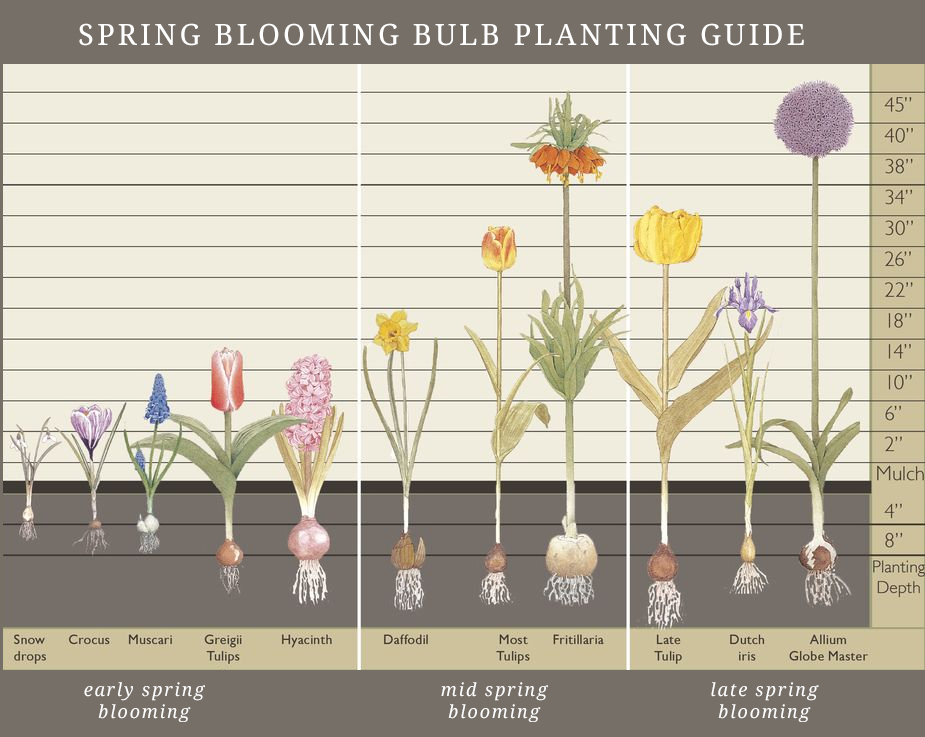
Most bulbs should be planted at a depth three times their height. For example, a bulb 2 inches tall should go 6 inches deep. This keeps the bulb protected from frost and animals.
- Small bulbs (crocus, snowdrops): 3–4 inches deep.
- Medium bulbs (tulips, daffodils): 6–8 inches deep.
- Large bulbs (alliums, lilies): 8–10 inches deep.
If your soil is heavy clay, plant bulbs a little shallower. In sandy soil, go a bit deeper.
Spacing Bulbs
Give bulbs enough room to grow and multiply:
- Small bulbs: 2–3 inches apart
- Medium bulbs: 4–6 inches apart
- Large bulbs: 6–8 inches apart
Plant in groups or clusters for natural-looking, colorful displays. Avoid single rows unless you want a formal look.
Step-by-step: How To Plant Bulbs In Fall
Planting bulbs is simple once you have the basics. Here’s a step-by-step guide:
- Choose your site: Pick a spot with good sun and drainage.
- Prepare the soil: Dig and loosen the soil to at least 8 inches, mix in compost.
- Plan your layout: Arrange bulbs in clusters or drifts for the best display.
- Dig the holes: Use a trowel, bulb planter, or shovel to make holes at the right depth.
- Add fertilizer (optional): Sprinkle a handful of bone meal or bulb food at the bottom, mix slightly.
- Place bulbs: Set bulbs with the pointed end up, root plate down.
- Cover with soil: Backfill gently, firming the soil lightly.
- Water well: Give the area a good soak to settle the soil and start root growth.
- Mulch (optional): Add a 2–3 inch layer of mulch to keep soil moist and protect from temperature swings.
Planting In Containers
Bulbs also thrive in pots or containers. Use a good-quality potting mix, plant at the same depth as in the ground, and ensure pots have drainage holes. In cold climates, keep pots in a sheltered spot or bury them in the ground for winter protection.
Credit: mahoneysgarden.com
Common Mistakes To Avoid
Even experienced gardeners sometimes make these errors when planting bulbs in fall. Avoiding them helps ensure a colorful, healthy spring garden.
Planting Upside Down
Bulbs have a clear top and bottom. The pointy end is the shoot; the flatter, wider side is where roots grow. Planting upside down can delay or stop growth.
Overcrowding Bulbs
If bulbs are too close, they compete for nutrients and may not bloom well. Give them room to spread.
Ignoring Soil Drainage
Wet soil causes bulbs to rot. Improve drainage with compost, sand, or raised beds if needed.
Not Watering After Planting
Even if rain is coming, water bulbs well after planting. This helps settle the soil and triggers root growth.
Using Too Much Fertilizer
Bulbs don’t need a lot of fertilizer. Too much nitrogen can encourage leaves, not flowers. A little bone meal or bulb food is enough.
Leaving Bulbs Exposed
Bulbs left on the surface can dry out or be eaten by animals. Plant them right after you buy them for best results.
Caring For Bulbs After Planting
Once bulbs are in the ground, they need little attention. However, a few simple steps can make a big difference.
Watering
If fall is dry, water the bulbs once a week until the ground freezes. After that, nature takes over. Overwatering is more harmful than underwatering.
Mulching
A layer of mulch helps keep soil temperatures steady and protects bulbs from freeze-thaw cycles. Use straw, shredded leaves, or bark.
Protecting From Pests
Squirrels and mice sometimes dig up bulbs. Lay wire mesh (like chicken wire) over the planting area and cover with soil if animals are a problem.
Marking Your Spots
It’s easy to forget where bulbs are planted. Use markers or snap a photo with your phone to remember.
Best Practices For Maximizing Blooms
To get the most from your bulbs, use these proven techniques:
- Plant in groups of odd numbers (5, 7, 9) for more natural displays.
- Combine early, mid, and late blooming varieties for a longer season of flowers.
- Layer bulbs in the same hole (lasagna planting): Place large bulbs deep, add soil, then smaller bulbs above.
- Mix with perennials: As bulbs fade, perennial leaves hide dying bulb foliage.
- Deadhead spent flowers in spring, but let leaves die back naturally (they feed the bulb for next year).
Naturalizing Bulbs
Some bulbs, like daffodils and crocuses, multiply and return year after year. This is called naturalizing. To encourage this, choose varieties labeled as good for naturalizing, plant in informal drifts, and avoid mowing or cutting leaves until they yellow and die back.
Bulbs For Different Climates
Not all bulbs perform the same everywhere. Match bulbs to your region for best results.
Cold Climates (zones 3–5)
Most spring bulbs thrive in cold winters. Tulips and daffodils do especially well. Mulch to protect from deep freezes.
Mild Climates (zones 8–10)
Some bulbs, like tulips, need artificial chilling. Store in the fridge for 8–12 weeks before planting. Daffodils, ranunculus, and anemones are better adapted.
Wet Climates
Choose bulbs that tolerate moist conditions, such as camassia or leucojum. Avoid bulbs that rot easily.
Dry Climates
Plant bulbs deeper and mulch well to retain moisture. Alliums and species tulips are drought-tolerant.
Designing With Bulbs
Bulbs offer a world of design options. Here are a few ideas to inspire you:
- Borders and Edging: Line walkways with crocuses or grape hyacinths.
- Naturalized Lawns: Scatter early bulbs like crocuses or snowdrops in grass.
- Woodland Gardens: Under trees, plant shade-tolerant bulbs like bluebells or scilla.
- Formal Beds: Use strong colors and single varieties for a bold look.
- Containers: Mix bulbs with pansies or violas for portable spring color.
Example: Mixed Bulb Container
Combine tulips, daffodils, and crocuses in a large pot. Plant daffodils at the bottom, cover with soil, add tulips, then crocuses near the top. This layers bloom times for a long-lasting display.
Dealing With Pests And Problems
Pests and diseases can sometimes spoil your bulb garden, but most issues are preventable.
Animal Pests
- Squirrels and chipmunks: Lay wire mesh over beds, or plant bulbs deeper.
- Moles and voles: Try planting bulbs in wire cages or using repellents.
Insect Pests
- Bulb flies: Rare, but can cause bulbs to rot. Remove and destroy affected bulbs.
- Slugs and snails: Target emerging shoots in spring. Use barriers or organic slug bait.
Diseases
- Fungal rot: Caused by overwatering or poor drainage. Always plant in well-drained soil.
- Viruses: Leaves may show streaks or mottling. Remove and discard infected bulbs.
Non-obvious Tip
If you’ve had a problem with rot or fungus, don’t replant bulbs in the same spot the next year. Rotate planting locations to reduce risk.
Saving And Dividing Bulbs
Some bulbs, like tulips, fade after a few years; others, like daffodils, multiply and become crowded. Here’s how to keep them going strong:
- Lift and divide daffodils every 3–5 years, in late spring or early summer when leaves yellow.
- Tulips often do best when replanted with fresh bulbs every few years.
- Store lifted bulbs in a cool, dry place until fall planting.
Environmental Benefits Of Planting Bulbs
Planting bulbs does more than beautify your yard. Early bulbs provide nectar for pollinators like bees, which are active before many other flowers open. Bulb displays also reduce soil erosion over winter and help suppress weeds in spring.
Bulb Planting Tools And Gadgets
While a simple trowel is often enough, some tools can make planting bulbs easier:
- Bulb planter: A tool that removes a plug of soil to the right depth.
- Garden auger: Attaches to a drill for planting lots of bulbs quickly.
- Soil thermometer: Ensures you plant at the right temperature.
- Kneeling pad: Saves your knees during long planting sessions.
Credit: www.pesches.com
Bulb Planting Calendar By Region
To help you plan, here’s a quick calendar for common US regions:
| Region | Best Planting Time | Special Notes |
|---|---|---|
| Northeast & Midwest | Mid-September to late October | Mulch well for cold protection |
| Pacific Northwest | October to early November | Ensure good drainage due to rain |
| South (Zones 8–10) | November to early December | Chill tulips before planting |
| Rocky Mountains | September to early October | Plant deeper for extra cold |
Pro Tips For Spectacular Results
Some advice you won’t find on most bulb packages:
- Mix bulb sizes: Plant large and small bulbs together for waves of color.
- Try species bulbs: These “wild” types are often more reliable and longer-lived.
- Refrigerate bulbs in warm climates: Store in paper bags, not plastic.
- Soak bulbs briefly if they look shriveled before planting.
- Mark your bulb beds with stakes or garden art to avoid digging them up when planting other things.
Resources For Further Learning
For detailed information on specific bulbs, regional planting advice, and troubleshooting, visit the Gardenia Bulb Planting Guide. They offer charts, examples, and expert advice beyond the basics.
Final Thoughts
Planting bulbs in fall is a small effort for a huge reward. Whether you’re filling a border, tucking bulbs into containers, or naturalizing a lawn, following these guidelines gives you the best chance for a dazzling spring show. Remember, bulbs are forgiving—if you make a mistake, nature often finds a way to surprise you.
With good planning, care, and a few insider tricks, you’ll enjoy color, fragrance, and life in your garden long before most plants awaken.

Credit: www.thegrowingplace.com
Frequently Asked Questions
When Is The Best Month To Plant Bulbs In Fall?
The best month varies by region. In most areas, plant bulbs when the soil cools to 50°F (10°C) but before hard freezes. For northern US, late September to October works best; for southern regions, plant as late as November or early December.
Can I Plant Bulbs After The First Frost?
Yes, as long as the ground is not frozen solid, you can plant bulbs. They need a few weeks to root before deep winter, so plant as soon as possible after the first frost.
Do Bulbs Need Fertilizer When Planting?
Bulbs benefit from a small amount of low-nitrogen fertilizer or bone meal mixed into the planting hole. Too much fertilizer can harm bulbs. If your soil is rich, you may not need extra fertilizer.
How Do I Protect Bulbs From Squirrels And Mice?
Lay wire mesh over the planting area, plant bulbs deeper, or use animal repellents. Some bulbs, like daffodils, are naturally resistant to pests.
Will Bulbs Bloom The First Year After Planting?
Yes, healthy bulbs should bloom the first spring after fall planting, provided they receive enough cold and are planted at the right depth. Some bulbs, like daffodils, improve and multiply each year.
With these tips and techniques, you’re set to transform your garden with bold, beautiful blooms—just by planting bulbs in fall.