
Building a raised garden bed is exciting, but filling it can feel expensive and confusing. Many new gardeners think they must buy bags of fancy soil to grow healthy plants. The truth is, you can fill a raised garden bed cheaply and still get great results.
With a little planning and smart choices, you can turn almost any empty bed into a productive space—without draining your wallet.
Let’s break down the best methods, materials, and practical tips to fill your raised bed on a budget. You’ll learn how to use free or cheap resources, avoid common mistakes, and create soil that helps your vegetables, flowers, or herbs thrive.
Whether you’re a beginner or have some experience, this guide will give you confidence to start your garden project without overspending.
Why Filling A Raised Garden Bed Can Be Expensive
Many gardeners are surprised by the cost of filling a raised bed. A typical garden bed is 4 feet by 8 feet and 12–24 inches deep. That’s about 16–32 cubic feet of space. Standard bagged soil can cost $5–$8 per cubic foot, so filling one bed could cost $80–$250 just for soil.
If you want several beds, the cost adds up quickly.
Bagged mixes from garden stores often include compost, peat moss, and vermiculite. These are good for plants, but you don’t always need to fill the whole bed with expensive materials. Most plants only use the top 6–12 inches for roots. The lower layers can be filled with cheaper, natural materials.
The Layered Approach: Cheap And Effective
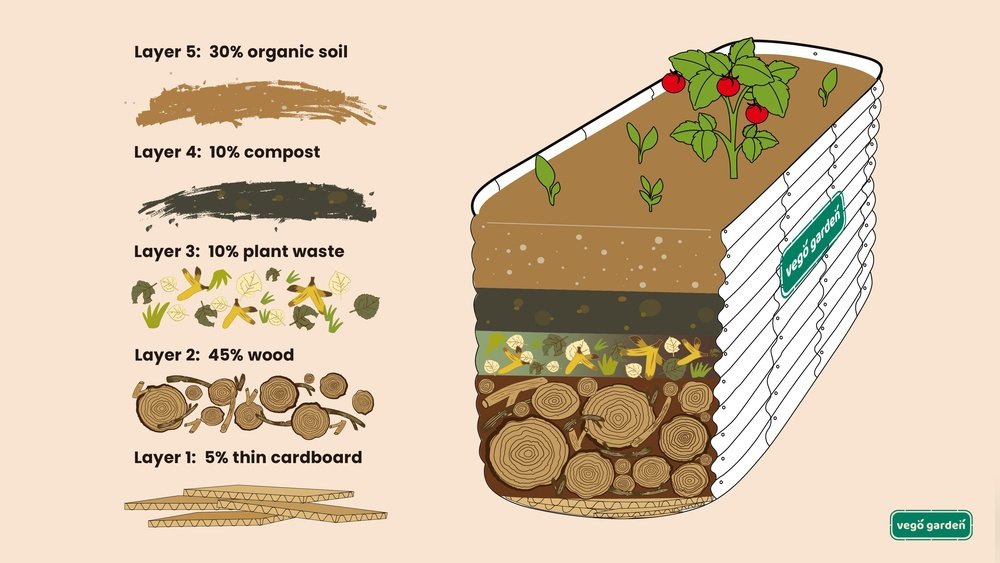
The best way to fill a raised bed cheaply is to use a layered method. This approach uses different materials stacked in layers, so you only spend money on the top soil where plants grow. The bottom layers provide drainage and slowly break down into rich soil.
How Layering Works
Layering is inspired by a method called Hugelkultur. In Hugelkultur, gardeners use logs, branches, leaves, and compost in layers. Over time, these materials decompose and create fertile soil.
You don’t need to follow Hugelkultur exactly, but you can use the idea for your raised bed. Start with bulky, cheap materials at the bottom, and finish with higher-quality soil on top.
Typical Layers
- Bottom Layer: Logs, branches, wood chips, or thick sticks.
- Middle Layer: Grass clippings, leaves, straw, cardboard, or newspaper.
- Top Layer: Compost, topsoil, or a soil mix for planting.
By using free or low-cost materials for the lower layers, you cut your expenses. The top layer is where you invest a little money, since it’s where roots grow and nutrients matter most.
Sourcing Cheap And Free Materials
Finding the right materials is key. Many are available for free or at low cost if you know where to look.
Wood Materials
- Logs and branches: Ask neighbors, check local parks, or look for tree trimming services.
- Wood chips: City mulch yards, arborists, or landscaping companies often give them away.
Organic Matter
- Leaves: Collect from your yard or ask neighbors.
- Grass clippings: Use your own or ask local lawn care companies.
- Straw: Often cheap at feed stores. Avoid hay, which has seeds.
- Cardboard and newspaper: Save boxes and papers; remove tape and glossy parts.
Soil And Compost
- Topsoil: Buy in bulk from landscape suppliers. It’s much cheaper than bagged soil.
- Compost: Make your own, or check city compost facilities. Some towns offer free compost.
Comparing Bagged Vs Bulk Soil
Here’s a comparison of costs to help you decide:
| Material | Bagged Price (per cubic foot) | Bulk Price (per cubic foot) | Typical Quality |
|---|---|---|---|
| Topsoil | $5–$8 | $1–$2 | Good, varies by supplier |
| Compost | $7–$10 | $2–$3 | Excellent, rich in nutrients |
| Garden Mix | $8–$12 | $2–$5 | Very good, often includes compost |
Buying in bulk saves money, especially for large beds.
Step-by-step: Filling Your Raised Bed Cheaply
Let’s walk through the process, from empty bed to ready-to-plant.
1. Prepare The Bed
Clear the area where your bed will sit. Remove weeds and grass. If you want to prevent weeds, lay down a layer of cardboard or newspaper at the bottom. This blocks sunlight and slows weed growth.
2. Add The Bottom Layer
Use logs, thick branches, or wood chips. Place them loosely so there are gaps for drainage. If you don’t have wood, use large rocks or bricks, but wood is better for breaking down into soil.
Aim for 25–40% of the bed’s depth. For a 12-inch bed, fill the bottom 3–5 inches.
3. Add The Middle Layer
Pile on leaves, grass clippings, straw, shredded paper, or more cardboard. This layer helps hold moisture and provides food for soil microbes.
Fill another 3–5 inches, depending on bed depth.
4. Add The Top Layer
Finish with 4–8 inches of compost, topsoil, or a garden soil mix. Mix compost and topsoil for best results. This is where your plants’ roots will grow.
If your bed is very deep (over 24 inches), you can use thicker bottom and middle layers.
Example: Filling A 4×8 Foot Bed
- Bed size: 4 ft x 8 ft x 12 in = 32 cubic feet
- Bottom layer: 12 cubic feet (logs, branches)
- Middle layer: 8 cubic feet (leaves, grass)
- Top layer: 12 cubic feet (compost, topsoil)
This means you only need to buy 12 cubic feet of good soil, saving money.

Credit: chalkingupsuccess.com
What Materials Should You Avoid?
Not everything is safe for garden beds. Some materials cause problems.
- Treated wood: Contains chemicals that can leach into soil.
- Hay: Has weed seeds.
- Glossy paper: May have toxic inks.
- Pet waste: Can spread disease.
- Plastic: Doesn’t break down and blocks roots.
Stick to natural materials that decompose safely.
Common Mistakes And How To Avoid Them
Beginner gardeners often make mistakes that can waste money or harm plants. Here are some to watch for:
- Filling the bed entirely with bagged soil: It’s expensive and unnecessary.
- Using too much wood on top: Wood chips should be at the bottom or middle. They can rob soil of nitrogen if mixed into the top layer.
- Not enough drainage: Beds need gaps between materials for water to flow.
- Ignoring local resources: Many free materials are available nearby.
- Overlooking soil depth: Most vegetables need only 6–12 inches of rich soil.
Alternatives To Raised Bed Soil Mixes
Store-bought soil mixes are convenient, but you can make your own for less.
Diy Soil Mix Recipe
Mix these for a budget-friendly top layer:
- 1 part compost
- 1 part topsoil
- 1 part peat moss or coconut coir (optional, improves moisture)
If you skip peat moss, just use compost and topsoil. For most gardens, this mix works well and costs less than pre-made bags.
Comparing Diy Mix Vs Store-bought Mix
| Mix Type | Cost (per cubic foot) | Water Retention | Plant Growth |
|---|---|---|---|
| DIY Mix | $2–$4 | Good, can adjust ingredients | Excellent with compost |
| Store-Bought Mix | $8–$12 | Very good, includes peat moss | Very good, but expensive |
DIY mixes give you control and save money.
Tips For Finding Free Materials Locally
Many communities have resources for gardeners. Here’s how to find them:
- City compost yards: Many towns offer free or cheap compost and wood chips.
- Tree trimmers: Ask local arborists for wood chips or branches.
- Online classifieds: Sites like Craigslist or Facebook Marketplace often have free leaves, soil, or materials.
- Neighbors: Offer to take leaves or grass clippings after yard cleanups.
If you live in a city, check with local gardening groups—they often share resources.
How Much Soil Do You Really Need?
You don’t need to fill the entire bed with expensive soil. Most vegetables only need the top 6–12 inches. If your bed is deeper, use cheap materials for the lower layers.
Soil Depth By Plant Type
| Plant Type | Minimum Root Depth | Suggested Soil Depth |
|---|---|---|
| Lettuce, spinach | 6–8 inches | 8–10 inches |
| Tomatoes, peppers | 12–18 inches | 12–18 inches |
| Carrots, beets | 12 inches | 12–14 inches |
| Potatoes | 10–12 inches | 12–16 inches |
If your bed is deeper, use the lower layers for filler.
How To Improve Cheap Soil For Better Results
Cheap soil may lack nutrients or have poor structure. Here’s how to boost it:
- Add compost: Mix into the top layer for nutrients.
- Use organic fertilizers: Fish emulsion, bone meal, or blood meal are affordable.
- Mulch: Cover soil with straw or leaves to hold moisture and prevent weeds.
- Rotate crops: Plant different vegetables each year to maintain soil health.
Even if your soil is basic, regular composting and mulching will improve it over time.
Non-obvious Insights For Budget Gardeners
- Look for seasonal deals: Garden centers often discount soil and compost at the end of spring or fall. Stock up when prices drop.
- Save kitchen scraps: Start a small compost bin with vegetable peels and coffee grounds. Over time, this gives you free, rich compost.
- Use coffee grounds: Local cafes give away used grounds, which help soil structure and add nitrogen.
- Collect rainwater: If you save water, you’ll need less soil amendment for moisture retention.
These tricks help stretch your gardening budget further.
Building The Bed: Should You Go Higher?
Some gardeners build beds up to 24–36 inches tall. This is great for accessibility, but makes filling expensive. If you need a tall bed, use more filler in the bottom:
- Logs, bricks, rocks: Fill up to half the depth.
- Leaves, straw: Add another quarter.
- Topsoil/compost: Use only the top 8–12 inches.
If you want to grow deep-rooted plants, make sure the top layer is thick enough.

Credit: heritagerevived.com
What About Raised Bed Liners?
Some people use liners to protect the bed from weeds or soil loss. Liners can be plastic, landscape fabric, or cardboard.
- Cardboard: Cheap and decomposes over time.
- Landscape fabric: Blocks weeds but allows water through.
- Plastic: Not recommended—blocks drainage and can overheat soil.
If you use a liner, make sure it allows water to drain. Cardboard is best for budget beds.
Practical Example: Filling A Raised Bed For Under $50
Let’s see how you can fill a typical 4×8 foot bed for less than $50:
- Bottom layer: Logs and branches (free from local tree trimming)
- Middle layer: Leaves and grass clippings (free from your yard)
- Top layer: 12 cubic feet of bulk topsoil and compost (costs $35–$45)
- Cardboard liner: Free from boxes
By using free materials for most of the bed, you only need to buy the top layer. This method works in most climates and for most vegetables.
Maintaining Your Raised Bed Soil Over Time
Cheap soils need care to stay productive. Here’s how to maintain your bed:
- Add compost each season: Spread 1–2 inches on top before planting.
- Mulch with leaves or straw: Helps prevent weeds and keeps moisture.
- Avoid compacting the soil: Don’t walk in the bed.
- Remove weeds quickly: Prevents competition for nutrients.
- Test soil every 2–3 years: Check for pH and nutrient balance. Adjust with lime, sulfur, or organic fertilizers as needed.
Healthy soil grows better plants and saves money in the long run.
Comparing Raised Bed Filling Methods
Let’s compare three popular methods for filling raised beds:
| Method | Cost | Effort | Long-Term Benefits |
|---|---|---|---|
| Bagged Soil Only | High ($80–$250 per bed) | Low | Instant results, but expensive |
| Layered Approach | Low ($30–$70 per bed) | Medium | Builds soil over time, very healthy |
| Bulk Soil Mix | Medium ($50–$100 per bed) | Medium | Good results, less expensive than bags |
The layered approach is best for budget gardeners and offers great soil in the long term.

Credit: christinamariablog.com
How To Fill Very Large Raised Beds Cheaply
If you plan to build a bed larger than 4×8 feet, costs rise. Use more filler:
- Logs, rocks, bricks: Fill bottom 30–50%
- Leaves, straw, grass: Fill middle 20–30%
- Bulk topsoil and compost: Top 20–30%
Ask local suppliers for bulk prices. Sometimes, you can get soil delivered for less per cubic foot.
Should You Use Manure?
Manure is rich in nutrients and cheap, but use it carefully:
- Composted manure: Best for raised beds. It’s less likely to burn plants.
- Fresh manure: Can harm plants and may contain pathogens.
Mix composted manure into the top layer, but don’t use too much. About 10–20% of the top layer is enough.
The Role Of Mulch In Cheap Raised Beds
Mulch helps soil retain moisture and keeps weeds down. Use leaves, straw, grass clippings, or wood chips as mulch. Spread a 2–3 inch layer after planting. This reduces watering and makes your soil healthier.
Is It Worth Filling A Bed Cheaply?
Some gardeners worry that cheap methods won’t grow good plants. The truth is, using local, natural materials builds strong soil over time. You may see slower growth in the first year, but by year two, your garden will be thriving.
The layered approach and bulk mixes are both proven methods. Many community gardens use these to keep costs low.
Useful Resources For Budget Gardeners
For more information on sustainable gardening and soil health, check out the Hugelkultur Wikipedia page. This method is used around the world to build healthy, affordable garden beds.
Frequently Asked Questions
How Deep Should The Soil Be In A Raised Garden Bed?
Most vegetables do well with 8–12 inches of rich soil. Deep-rooted plants like tomatoes may need up to 18 inches. If your bed is deeper, use filler materials for the bottom.
Can I Use Only Compost To Fill My Raised Bed?
Pure compost is too rich and may hold too much water. Mix compost with topsoil for best results. About 50–60% compost and 40–50% topsoil works well.
What Is The Best Cheap Material For The Bottom Layer?
Logs and branches are ideal if you have them. They break down slowly and improve soil over time. Large rocks or bricks are also good if wood isn’t available.
Should I Use Landscape Fabric As A Liner?
Landscape fabric can block weeds but may limit drainage. Cardboard is cheaper and decomposes over time, making it a better budget option.
How Long Does It Take For The Lower Layers To Break Down?
The bottom layers—logs, branches, leaves—start to break down in 1–2 years. As they decompose, they release nutrients into the soil. Your bed will get richer each season.
Filling a raised garden bed cheaply doesn’t mean sacrificing plant health. With the layered approach, smart sourcing, and regular maintenance, you’ll enjoy a productive garden for years—without spending a fortune. Start small, use what you have, and let your garden grow.