
Last updated: October 2026 · Written by the LawnVibe editorial team.
On a big lawn, raking out thatch by hand or with a small electric machine can take days. A tow behind dethatcher hitches to your riding mower, lawn tractor or ATV and combs the whole lawn in a few slow laps. The spring steel tines lift dead grass, matted thatch and debris to the surface, letting air, water and fertilizer reach the roots again. The best tow behind dethatcher has strong tines, a sturdy frame, a way to add weight and enough width to match your mower.
This guide compares ten pull-behind dethatchers, from 40 inch models for lawn tractors to 48 inch dual-row units and a 60 inch acreage rake, plus bundles that pair a dethatcher with a lawn sweeper, roller or spike aerator. You will also learn how to set them up, how much weight to add and how to clean up afterward.
| # | Product | Best for | Link |
|---|---|---|---|
| 1 | Agri-Fab 45-0294 40″ Tow Behind Dethatcher | Lawn tractors | Check price |
| 2 | Garvee 48″ Pull Behind Lawn Dethatcher | Large lawns | Check price |
| 3 | 48″ Tow Behind Dethatcher with 24 Dual-Row Tines | Large lawns | Check price |
| 4 | Yard Tuff 40″ Pull-Behind Lawn Dethatcher | Medium to large lawns | Check price |
| 5 | Suchtale 40″ Tow Behind Lawn Dethatcher | Budget setups | Check price |
| 6 | Yard Tuff 60″ Acreage Rake | Fields and estates | Check price |
| 7 | Brinly STS-42BHDK 42″ Lawn Sweeper + Dethatcher | Dethatch and collect | Check price |
| 8 | Brinly 40″ Spike Aerator + Agri-Fab 48″ Dethatcher | Seeding prep | Check price |
| 9 | CRAFTSMAN 40″ Tow Dethatcher + 36″ Tow Spike Aerator | Lawn renovation | Check price |
| 10 | Brinly 485 lb Poly Lawn Roller + Agri-Fab 48″ Dethatcher | After seeding | Check price |
How We Chose the Best Tow Behind Dethatcher
We did not run hands-on field tests. We compared these dethatchers on published specifications and features that matter in real use: working width, number and type of tines, single or dual tine rows, frame construction, weight tray capacity, wheels, hitch type and how easily tines can be raised for transport. We also weighed common owner feedback themes, including assembly time, tine breakage and how well each model follows uneven ground.
Specifications change between model years, so confirm the current listing before you buy.
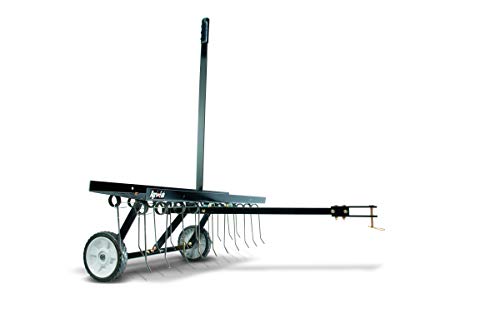
Agri-Fab 45-0294 40" Tow Behind Dethatcher
Best for: Lawn tractors
A 40 inch pull-behind dethatcher with 20 spring steel tines, a heavy gauge steel deck and drawbar, and 7 inch semi-pneumatic tires.
- Proven design
- Heavy gauge steel deck
- Fits most lawn tractors
- Some assembly required
- No collection

Garvee 48" Pull Behind Lawn Dethatcher
Best for: Large lawns
A 48 inch carbon steel frame with 24 spring steel tines in double rows, a universal pin hitch and a ballast tray listed at up to 330 lbs.
- Wide 48 inch path
- Double tine rows
- Large ballast tray
- Heavy when loaded
- Newer brand

48" Tow Behind Dethatcher with 24 Dual-Row Tines
Best for: Large lawns
A 48 inch dethatcher with 24 heat-treated spring steel tines in two independently flexing rows and a pin-style universal hitch for ATVs, UTVs and tractors.
- Dual-row coverage
- Heat-treated tines
- Universal hitch
- Generic brand
- Collection not included

Yard Tuff 40" Pull-Behind Lawn Dethatcher
Best for: Medium to large lawns
A 40 inch dethatcher with two independent rows of 20 heat-treated spring steel tines, 7 inch poly wheels and a universal pin hitch.
- Two tine rows
- Steel frame
- Fits mowers and ATVs
- Narrower than 48 inch units
- Light without added weight

Suchtale 40" Tow Behind Lawn Dethatcher
Best for: Budget setups
A 40 inch dethatcher rake with 20 heat-treated, rust-resistant spring tines, a reinforced steel frame and bearing-supported wheels.
- Affordable
- Rust-resistant tines
- Bearing-supported wheels
- Single tine row
- Basic tray

Yard Tuff 60" Acreage Rake
Best for: Fields and estates
A 5 foot tow-behind rake with six 20 inch tine reels on bearings, 12 inch pneumatic tires and a pin-style hitch for ATVs, UTVs and tractors.
- Very wide 60 inch path
- Pneumatic tires
- Rakes leaves and grass too
- Too wide for small lawns
- Needs storage space

Brinly STS-42BHDK 42" Lawn Sweeper + Dethatcher
Best for: Dethatch and collect
A 2-in-1 that dethatches and sweeps at once, with a 20 cubic ft hamper, dethatcher tines that raise with an adjustment handle, and a magnetic hitch pin.
- Dethatch and collect together
- Large 20 cu ft hamper
- Tines lift when not needed
- Larger to store
- Sweeper adds weight

Brinly 40" Spike Aerator + Agri-Fab 48" Dethatcher
Best for: Seeding prep
A bundle pairing a 40 inch spike aerator with 3D tines and a 110 lb weight tray with a 48 inch Agri-Fab dethatcher with 24 rust-proof spring tines.
- Dethatch and aerate in one purchase
- Wide dethatcher
- Independent tine stars
- Two tools to store
- Spike aeration only

CRAFTSMAN 40" Tow Dethatcher + 36" Tow Spike Aerator
Best for: Lawn renovation
A bundle with a 40 inch tow dethatcher with automatic raking action and a weight tray holding up to 70 lbs, plus a 36 inch tow spike aerator with a 10-gauge steel frame.
- Two tools together
- Weight tray
- Durable steel frame
- Two assemblies
- Spike-only aeration

Brinly 485 lb Poly Lawn Roller + Agri-Fab 48" Dethatcher
Best for: After seeding
A set with a 48 inch poly roller holding up to 485 lbs and an Agri-Fab 48 inch dethatcher with 24 replaceable, rust-proof, heat-treated spring tines.
- Roll seed in after dethatching
- Wide 48 inch tools
- Replaceable tines
- Large storage footprint
- Roller is heavy when filled
Tow Behind Dethatcher vs Electric Dethatcher
| Factor | Tow-behind dethatcher | Electric dethatcher |
|---|---|---|
| Power source | Your mower or ATV | Motor, corded or battery |
| Width | 40 to 60 inches | 13 to 16 inches |
| Action | Spring tines rake the surface | Spinning tines or blades |
| Aggressiveness | Gentle to moderate | Moderate to aggressive |
| Thatch collection | None, needs sweeping | Usually has a bag |
| Best for | Large lawns and acreage | Small to medium lawns |
Tow-behind dethatchers are gentler than powered reels, so they suit routine thatch control on large properties. For heavy thatch on a smaller lawn, compare our picks for the best electric lawn dethatcher.
Signs a Large Lawn Needs Dethatching
Look for a spongy feel underfoot, grass that dries out quickly even after watering, and fertilizer that seems to have little effect. To check directly, cut a small wedge of turf with a spade and measure the brown, fibrous layer between the green blades and the soil. A thin layer is healthy and even protective, but once it passes about half an inch, it starts holding water and nutrients away from the roots. Thatch tends to build up fastest on lawns that are heavily fertilized, watered often but shallowly, or planted with spreading grasses such as Kentucky bluegrass and Bermuda.
Matching the Dethatcher to Your Mower
Your towing vehicle sets the limits. Check the hitch type, the hitch height and the towing capacity in your mower manual. Lawn tractors with a rear hitch plate are usually the easiest match for 40 to 48 inch dethatchers. Many zero turn mowers lack a hitch or have low towing limits, so confirm compatibility before buying. ATVs and UTVs handle wider acreage rakes well, especially on rough ground. A loaded weight tray adds to the load your mower must pull, so stay within its towing guidance, particularly on slopes.
Tow Behind Dethatcher Buying Guide
Working width
Match the width to your mower and property. A 40 inch dethatcher suits most lawn tractors and fits through standard gates. A 48 inch unit covers more ground per pass, and a 60 inch acreage rake is built for fields and estate lawns towed by ATVs or tractors.
Tine count and rows
More tines mean more raking action per pass. Dual-row designs place two rows of independently flexing tines so the second row catches what the first misses. Heat-treated spring steel tines resist bending and snapping.
Weight tray
A weight tray lets you press tines deeper into the thatch. Trays on some models are rated for very heavy loads, but more weight is not always better; too much can tear healthy turf.
Frame and wheels
A welded steel frame resists flexing when tines hit roots or bumps. Semi-pneumatic, poly or pneumatic wheels roll smoothly; bigger tires handle rough ground better.
Hitch and tine lift
A universal pin hitch fits most lawn tractors, ATVs and UTVs. A lift handle or adjustment lever raises tines for transport and turns, protecting both the tines and your lawn.
Bundles
Bundles pair a dethatcher with a sweeper, roller or aerator. A sweeper picks up the thatch you loosen, saving a lot of raking. An aerator and dethatcher bundle prepares the lawn for overseeding in one session.
How to Use a Tow Behind Dethatcher
- Mow first at a slightly lower height than usual.
- Check soil moisture. The ground should be moist but not soggy.
- Walk the lawn and remove sticks, stones and toys.
- Set the tines to just touch the soil and add light weight.
- Drive slowly in straight lines, overlapping slightly, and lift tines for turns.
- Make a second pass at an angle for heavy thatch.
- Collect the debris with a lawn sweeper, bagging mower or rake.
- Overseed and fertilize while the surface is open.
Our full guide on how to dethatch a lawn covers timing and technique, and why dethatching matters explains the benefits for grass health.
When to Use a Tow Behind Dethatcher
Dethatch when grass is actively growing so it can recover quickly. Early fall is ideal for cool-season lawns, with early spring as a lighter alternative. Warm-season lawns are best dethatched in late spring or early summer. Avoid dethatching during summer heat, drought, or when the ground is waterlogged. Many large lawns only need tow dethatching once a year; light passes in spring can also clear winter debris.
Dethatching, Aerating and Overseeding Large Lawns
Thatch removal, aeration and overseeding work best as a sequence. Dethatch first to clear the surface, then aerate to open compacted soil, then spread seed and fertilizer. Our guides to the best tow behind aerator and the best aerator and overseeder combo help you build a complete tow-behind setup. Kansas State University Research and Extension explains why aeration matters in its guide to aerating your lawn. After seeding, follow our tips on overseeding after dethatching.
Using a Tow Dethatcher on Uneven Ground
Bumpy lawns can cause tines to skip high spots and dig into hollows. Drive slower than usual, use moderate weight, and make passes in two directions so tines reach more of the surface. Dual-row dethatchers and models with independently flexing tines follow contours better than single-row designs. If the lawn is very uneven, consider topdressing low spots with soil or compost after dethatching and overseeding.
Spring Cleanup and Leaf Raking
Tow dethatchers are also handy outside of dethatching season. A light spring pass clears winter debris, matted grass and leftover leaves, and in fall a wide acreage rake can gather leaves into rows for pickup.
Cleaning Up After Dethatching
Tow dethatchers leave a surprising amount of loose thatch on the surface. Leaving it in place can smother grass and block seed. A tow-behind lawn sweeper is the fastest way to collect it on a large lawn, which is why sweeper and dethatcher bundles are popular. A bagging mower set high also works. Compost the debris rather than burning or dumping it.
How Long Does Tow Dethatching Take?
Time depends on lawn size, dethatcher width and how many passes you make. A wider dethatcher means fewer laps, but heavy thatch may still need two passes in different directions. Plan extra time for emptying a sweeper or raking up debris, which often takes longer than the dethatching itself.
Maintenance Tips
After use, brush soil and grass from the tines and frame and let the dethatcher dry. Check for bent or broken tines and replace them; many models use replaceable spring tines. Tighten bolts, check wheel bearings and lubricate pivot points if the manual recommends it. Remove weights and store the dethatcher under cover to reduce rust.
Do Tow Dethatchers Damage Grass?
Used correctly, spring-tine dethatchers are gentle. Damage usually comes from too much weight, dry soil or turning with tines down. Start light, work on moist ground and lift tines for every turn.
Safety Tips
- Follow your mower's towing limits and do not exceed the weight tray rating.
- Drive slowly, especially on slopes, and avoid steep hills.
- Lift tines before reversing or crossing pavement.
- Never ride on the dethatcher or let anyone stand near it while moving.
- Wear gloves when handling tines and weights.
Common Mistakes
Adding too much weight on the first pass is a common mistake that tears up healthy grass. Others include dethatching dry, hard ground, driving too fast, skipping cleanup and dethatching during heat stress. Forgetting to lift tines on tight turns can also damage both tines and turf.
Final Verdict: Which Tow Behind Dethatcher Should You Buy?
The best tow behind dethatcher depends on your lawn size and how you plan to clean up afterward.
- Best overall 40 inch: the Agri-Fab 45-0294 with 20 spring steel tines and a heavy gauge steel deck.
- Best 48 inch: the Garvee 48 inch with 24 tines in double rows and a weight tray, or the 48 inch dual-row heat-treated model.
- Best dual-row 40 inch: the Yard Tuff 40 inch with 20 heat-treated tines.
- Best value 40 inch: the Suchtale 40 inch with 20 spring tines.
- Best for acreage: the Yard Tuff 60 inch acreage rake with six tine reels.
- Best cleanup bundle: the Brinly 42 inch lawn sweeper and dethatcher.
- Best renovation bundles: the Brinly 40 inch spike aerator with the Agri-Fab 48 inch dethatcher, the CRAFTSMAN dethatcher and spike aerator bundle, or the Brinly roller and Agri-Fab dethatcher set.
Dethatch when grass is growing, start with light weight and collect the debris, and a tow-behind dethatcher will keep a big lawn healthy with far less effort.
Frequently Asked Questions
What is the best tow behind dethatcher?
For most lawn tractors, a 40 to 48 inch spring-tine dethatcher with a weight tray, such as the Agri-Fab 45-0294 or a 48 inch dual-row model, is the best choice. For acreage, a wide acreage rake covers more ground.
Do tow behind dethatchers work?
Yes, for loose thatch, dead grass and leaves. Spring-tine tow dethatchers rake the surface; they are gentler than powered scarifiers and best for light to moderate thatch on large lawns.
How much weight should I add to a tow behind dethatcher?
Add enough weight for the tines to reach the thatch layer without gouging soil. Start light and increase gradually, staying within the tray rating and your mower's towing guidance.
Can I use a tow behind dethatcher with a zero turn mower?
Some zero turn mowers have a hitch point, but many do not. Check your mower manual for towing capacity and hitch compatibility before buying.
When should I dethatch with a tow behind dethatcher?
Dethatch when grass is actively growing: early fall or early spring for cool-season grasses and late spring for warm-season grasses. Avoid drought, heat or very wet conditions.
Should I sweep after tow dethatching?
Yes. Tow dethatchers leave loosened thatch on the surface. A lawn sweeper, bagging mower or rake removes it so it does not smother the grass.