

Last updated: October 2026 · Written by the LawnVibe editorial team.
If you mow with a riding mower or lawn tractor, aerating by hand or with a rented walk-behind machine can take all weekend. A tow behind aerator turns the job into a couple of slow laps around the property. The best tow behind aerator pulls deep, clean plugs, carries enough weight to penetrate firm soil, and lifts out of the ground easily for turns and driveways. For large lawns and acreage, it is the most efficient way to relieve compaction without paying for a lawn service.
This guide compares ten tow-behind aerators, including plug aerators from Agri-Fab, Brinly, VEVOR and Garvee, a 60 inch three-point hitch model for compact tractors, and spike and spiker-seeder models for lighter jobs. You will also learn how to size the aerator to your mower, how much weight to add, and how to get even coverage on big properties.
| # | Product | Best for | Link |
|---|---|---|---|
| 1 | Agri-Fab 48″ Tow Behind Plug Aerator | 1 to 3 acres | Check price |
| 2 | Brinly 40″ Tow Behind Plug Aerator | Half to 1 acre | Check price |
| 3 | VEVOR 40″ Tow Behind Plug Aerator | Half to 1 acre | Check price |
| 4 | Garvee 48″ Tow Behind Core Aerator | Large lawns | Check price |
| 5 | 60″ 3-Point Plug Aerator | Acreage | Check price |
| 6 | CRAFTSMAN 40″ Tow Plug Aerator + 110 lb Tow Broadcast Spreader | Aerate and feed | Check price |
| 7 | Brinly SAT2-40BH-P 40″ Tow Spike Aerator | Light compaction | Check price |
| 8 | CRAFTSMAN 36″ Tow Spike Aerator | Sandy or loamy lawns | Check price |
| 9 | VEVOR 32″ Tow Behind Spike Aerator | Medium to large lawns | Check price |
| 10 | Agri-Fab Tow Behind Spiker Seeder | Overseeding | Check price |
How We Chose the Best Tow Behind Aerator
We did not run hands-on field tests. We compared tow-behind aerators on published specifications and features that matter in real use: plug or spike design, number and type of tines, working width, aeration depth, weight tray capacity, hitch type, tire type, transport mode and frame construction. We also weighed common owner feedback themes, including assembly time, tine durability, and how well each model handles turns and uneven ground.
Specifications change between model years, so check the current listing before you buy.
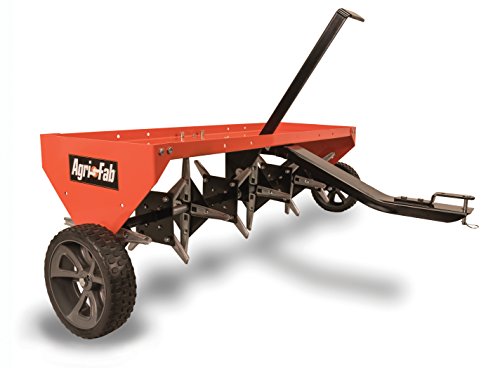
Agri-Fab 48" Tow Behind Plug Aerator
Best for: 1 to 3 acres
A 48 inch plug aerator with 32 galvanized self-sharpening knives that pull plugs up to 3 inches deep, a weight tray rated up to 175 lbs, flat-free tires and a universal hitch.
- Wide 48 inch coverage
- Up to 3 inch plugs
- Flat-free tires
- Large to store
- Needs a capable lawn tractor

Brinly 40" Tow Behind Plug Aerator
Best for: Half to 1 acre
A 40 inch all-steel plug aerator with 24 heat-treated plugging spoons, an enclosed tray for up to 150 lbs, a single transport lever and three independently rotating tine sections.
- Independent sections reduce turf damage
- Enclosed weight tray
- Universal single-pin hitch
- Narrower than 48 inch models
- Assembly takes time
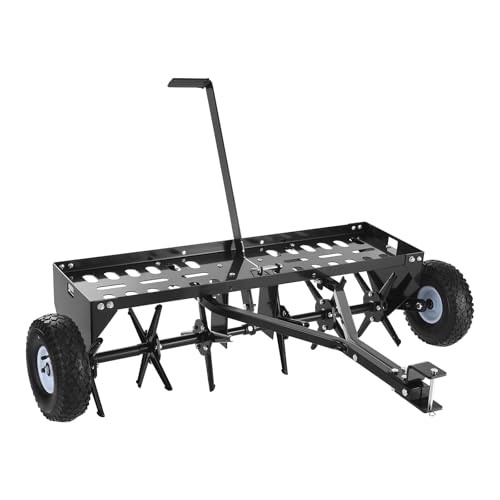
VEVOR 40" Tow Behind Plug Aerator
Best for: Half to 1 acre
A 40 inch tow core aerator with tines rated to about 3 inches deep, a 120 lb weight tray, a welded steel frame and 10.6 inch pneumatic tires.
- Strong value for width
- Pneumatic tires
- Universal hitch
- Lower tray capacity
- Newer brand in aerators

Garvee 48" Tow Behind Core Aerator
Best for: Large lawns
A 48 inch all-steel core aerator with 3 inch spikes, a tray for up to 150 lbs and inflatable wheels, with a universal hitch for ATVs, UTVs and garden tractors.
- 48 inch coverage
- Handles clay with weight
- Inflatable wheels
- Newer brand
- Heavy unit

60" 3-Point Plug Aerator
Best for: Acreage
A 60 inch three-point aerator with 66 replaceable coring plugs, up to 3 inch depth, a 225 lb weight tray and retractable feet. Fits Category 0 and 1 tractors.
- Very wide coverage
- 225 lb weight capacity
- Replaceable plugs
- Requires a 3-point tractor
- Not for lawn tractors

CRAFTSMAN 40" Tow Plug Aerator + 110 lb Tow Broadcast Spreader
Best for: Aerate and feed
A bundle with a 40 inch plug aerator using 24 galvanized coring points up to 3 inches deep, plus a 110 lb tow broadcast spreader with up to a 10 ft spread width.
- Aerate and spread with one purchase
- Pneumatic tires on spreader
- Good for fall renovation
- Two units to assemble
- Spike-free design needs weight
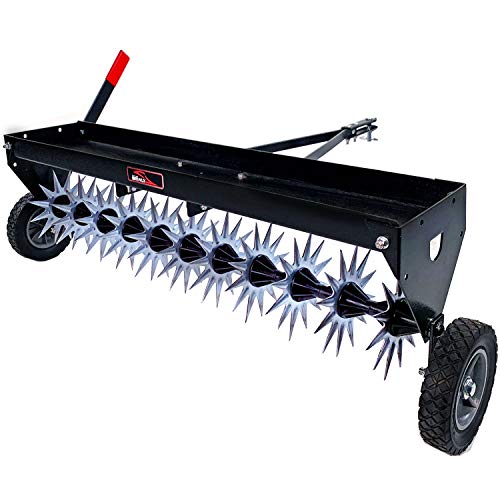
Brinly SAT2-40BH-P 40" Tow Spike Aerator
Best for: Light compaction
A 40 inch spike aerator with 11 tine stars of 12 spike tips each, 3D galvanized tines, a 150 lb weight tray and turf-tread transport wheels.
- Wide 40 inch coverage
- Rust-resistant 3D tines
- Transport mode
- Spikes do not remove soil
- About 2 inch depth

CRAFTSMAN 36" Tow Spike Aerator
Best for: Sandy or loamy lawns
A 36 inch spike aerator with nine galvanized steel disks, a 10-gauge steel frame and an enclosed weight tray, with a universal design for riding mowers and tractors.
- Sturdy 10-gauge frame
- Enclosed tray
- Universal fit
- Not for heavy clay
- No transport wheels

VEVOR 32" Tow Behind Spike Aerator
Best for: Medium to large lawns
A 32 inch spike aerator with a universal hitch, a weight tray for up to about 100 lbs, folded tray edges and a welded steel frame.
- Low cost
- Folded tray edges hold weight
- Easy hitching
- Narrower width
- Spike-only aeration

Agri-Fab Tow Behind Spiker Seeder
Best for: Overseeding
A 32 inch spiker with a 100 lb drop spreader that spikes and drops seed or fertilizer in one pass, and spreads salt or ice melt in winter.
- Two jobs in one pass
- Year-round use
- 100 lb hopper
- Drop pattern needs careful overlap
- Spikes, not plugs
Tow Behind Plug vs Spike Aerators
| Factor | Tow-behind plug aerator | Tow-behind spike aerator |
|---|---|---|
| How it works | Pulls soil plugs out | Pushes solid spikes in |
| Best soil | Clay, compacted, high traffic | Sandy, loamy, light compaction |
| Typical depth | Up to about 3 inches | Around 2 inches |
| Price | Higher | Lower |
| Mess | Cores left on the lawn | None |
| Best use | Annual deep aeration | Maintenance and seeding prep |
University extension guidance generally favors core aeration for compacted lawns; Kansas State University Research and Extension explains why in its guide to aerating your lawn. If you want spikes for lighter soil, our guide to the best spike aerator covers push and tow spikers in more detail, and our best core aerator guide compares coring tools of every size.
Tow Behind Aerator Buying Guide
Working width
Wider aerators cover more ground per pass. A 40 inch model is a good match for most lawn tractors, while 48 inch units speed up large properties further. Sixty inch three-point models are built for compact tractors and acreage. Make sure the aerator fits through your gates and into your storage space.
Plugging tines, spoons or knives
Plug aerators use hollow tines, spoons or knife-style coring blades. Galvanized or heat-treated steel resists rust and wear. More tines per row usually means more holes per pass, which improves results without extra laps.
Weight tray capacity
Weight drives tines into the soil. Trays on these models are rated from roughly 120 to 225 lbs. Concrete blocks and sandbags are the most common choices. An enclosed tray keeps weight from sliding off on slopes.
Hitch compatibility
Most tow-behind aerators use a universal single-pin hitch that fits lawn tractors and many ATVs and UTVs. Some zero turn mowers lack a suitable hitch point. Three-point hitch aerators require a compact tractor with a Category 0 or 1 hitch. Always check your mower or tractor manual for towing limits.
Tires and transport mode
Pneumatic or flat-free tires roll smoothly over lawns and pavement. A transport lever lifts the tines so you can cross driveways, sidewalks and roots without damage, and it makes turning easier.
Turning behavior
Aerators with independently rotating tine sections tear less turf on turns. Even so, lift the tines before tight turns to avoid scuffing the lawn.
Matching the Aerator to Your Lawn Size
About half an acre to one acre
A 40 inch plug aerator such as the Brinly or VEVOR model hitched to a lawn tractor is a sensible match. Two passes in different directions give good hole density.
One to three acres
A 48 inch plug aerator, such as the Agri-Fab or Garvee model, cuts the number of laps significantly. Pair it with a tow-behind spreader to overseed or fertilize the same day.
Acreage and small farms
A 60 inch three-point plug aerator on a compact tractor covers fields, pastures and estate lawns efficiently. For more on powered options for big properties, read our guide on how to select a gas-powered aerator for large lawns and compare the best gas powered aerator picks.
How to Use a Tow Behind Aerator
- Water first. Soil should be moist a few inches down. Water deeply a day or two before aerating if there has been no rain.
- Mow the lawn slightly shorter than usual.
- Flag hazards. Mark sprinkler heads, shallow pipes, invisible dog fence wires and septic lines.
- Load the tray. Start with moderate weight and add more if plugs are short or patchy.
- Drive slowly in straight lines. Overlap passes slightly, then make a second pass at an angle.
- Lift for turns and pavement. Use the transport lever to raise the tines.
- Leave the plugs. Cores break down and return soil and microbes to the surface.
- Overseed and fertilize. Spread seed and fertilizer right after aerating so it settles into the holes.
If tines are not going deep enough, see our troubleshooting guide on how to fix a core aerator that is not penetrating the soil. For slopes and bumpy areas, read how to use an aerator and overseeder on uneven ground.
Best Gas Powered Aerator Options: Walk-Behind vs Tow-Behind
When people search for a gas powered aerator, they usually mean a self-propelled walk-behind core aerator of the kind lawn services and rental shops use. Those machines, from brands such as Billy Goat, Ryan and Classen, are mostly sold through equipment dealers and rental centers rather than general online stores, and they are heavy, expensive and built for commercial use.
For a homeowner, the practical gas-powered route is usually a tow-behind plug aerator pulled by a gas riding mower, lawn tractor or ATV. The engine you already own does the work, and the aerator itself has no engine to maintain. If you only need deep aeration once in a while, renting a walk-behind machine can make sense; if you aerate every year and already ride your mower, a tow-behind model is the more economical choice. For tips on choosing powered equipment, see how to select a gas-powered aerator for large lawns, and if a rental machine keeps stalling, read how to fix a gas-powered aerator that is stalling.
Tow Behind Aerator vs Renting a Walk-Behind Machine
Renting a gas walk-behind core aerator is a common alternative. Rental machines pull deep plugs, but they are heavy, hard to transport and tiring to steer for hours across a big lawn. You also pay every time you rent, and the busiest fall weekends often have no machines left. A tow-behind aerator costs more upfront, but it uses the riding mower or tractor you already own, lets you aerate exactly when soil conditions are right, and can be reused every season for years. For lawns of half an acre or more, owning a tow-behind model usually makes more practical sense than renting repeatedly.
Preparing a Large Lawn Before Aerating
Good preparation makes a big difference on large properties. Walk the lawn first and remove sticks, stones and toys that could damage tines. If thatch is thicker than about half an inch, dethatch before aerating so tines reach the soil; see how to dethatch a lawn. Plan your route in long, straight lanes, and decide where you will turn so the tines can be lifted on firm ground rather than in the middle of the lawn.
Timing and Frequency
Aerate when the grass is actively growing. Cool-season lawns respond best to early fall or spring aeration; warm-season lawns prefer late spring to early summer. Avoid drought, extreme heat and frozen or waterlogged ground. Most large lawns benefit from aerating about once a year, and heavily compacted or high-traffic areas may need it more often. Our article on how often you should aerate your lawn explains how soil type changes the schedule.
Combining Aeration With Overseeding
Large lawns get the biggest return when aeration is followed immediately by overseeding. The holes give seed good soil contact and protection. A spiker seeder combines both jobs, while a separate spreader gives more control over seed rates. Our guide to the best aerator and overseeder combo compares combination tools.
Maintenance Tips
After each use, knock soil out of the tines and rinse the aerator, then let it dry. Check tire pressure, bolts and the hitch pin. Grease bearings if the manual calls for it. Inspect tines for wear and replace bent or broken ones. Remove the weights before storage and keep the aerator under cover to reduce rust. Our guide on how to adjust a lawn aerator for different terrains covers setup for slopes and rough ground.
Safety Tips
- Follow your mower's towing limits and never exceed the weight tray rating.
- Avoid steep slopes, and drive straight up and down only if your mower manual allows it.
- Never ride on the aerator or let anyone stand near it while it moves.
- Lift tines before reversing to avoid jackknifing or damage.
- Wear gloves and lift weights carefully when loading and unloading the tray.
Common Mistakes to Avoid
The biggest mistake is aerating dry soil, which leaves shallow plugs no matter how much weight you add. Driving too fast is another, because tines skip instead of plugging. Many owners also make a single pass and leave too few holes, overload the tray beyond its rating, or forget to lift tines on turns and tear the turf. Finally, skipping overseeding after aeration wastes the best moment to thicken a large lawn.
Final Verdict: Which Tow Behind Aerator Should You Buy?
The best tow behind aerator depends on your lawn size, soil and towing vehicle.
- Best overall plug aerator: the Agri-Fab 48 inch tow plug aerator with 32 galvanized knives and a 175 lb weight tray.
- Best 40 inch plug aerator: the Brinly 40 inch tow plug aerator, with independent tine sections for cleaner turns.
- Best value plug aerator: the VEVOR 40 inch tow plug aerator with pneumatic tires.
- Best heavy-duty 48 inch alternative: the Garvee 48 inch tow core aerator.
- Best for compact tractors: the 60 inch three-point plug aerator.
- Best plug aerator bundle: the CRAFTSMAN 40 inch plug aerator with a 110 lb broadcast spreader.
- Best spike options: the Brinly SAT2-40, CRAFTSMAN 36 inch or VEVOR 32 inch tow spike aerators for lighter soil.
- Best spike-and-seed tool: the Agri-Fab tow-behind spiker seeder.
Match the width to your mower, add enough weight, aerate moist soil and follow up with seed, and a tow-behind aerator will keep a large lawn healthy with far less effort.
Frequently Asked Questions
What is the best tow behind aerator?
For most large lawns with compacted soil, a 40 to 48 inch tow-behind plug aerator with a weight tray, such as the Agri-Fab 48 inch or Brinly 40 inch, is the best choice. Spike models cost less but do not remove soil.
Is a tow behind plug aerator better than a spike aerator?
For compaction, yes. Plug aerators pull cores out of the soil, which relieves compaction. Spike aerators push holes and are better for light maintenance on sandy or loamy soil.
How much weight should I put on a tow behind aerator?
Start with a modest load and add weight until the tines penetrate consistently. Many trays are rated for roughly 120 to 225 lbs depending on the model. Do not exceed the tray rating or your mower's towing guidance.
Will a tow behind aerator work with a zero turn mower?
Many universal pin hitches fit lawn tractors and some zero turn mowers, but not all ZTRs have a suitable hitch point. Check your mower manual and the aerator's compatibility notes before buying.
How fast should I drive when towing an aerator?
Drive slowly and steadily, roughly walking pace, so tines can penetrate and pull clean plugs. Raise the tines with the transport lever before turning sharply or crossing pavement.
What size lawn needs a tow behind aerator?
Tow-behind aerators make the most sense on lawns of about half an acre or more, or anywhere you already mow with a riding mower or tractor. Smaller yards are usually better served by push or manual aerators.