
Last updated: October 2026 · Written by the LawnVibe editorial team.
Thatch is the layer of dead grass stems and roots that builds up between the green blades and the soil. A thin layer is normal, but once it gets thick, it blocks water, air and fertilizer from reaching the roots and gives disease and insects a place to hide. The best electric lawn dethatcher pulls that layer out quickly and quietly, without the fuel and maintenance of a gas power rake, and most models double as a scarifier for deeper work.
This guide compares ten electric dethatchers, including cordless models from Greenworks, CRAFTSMAN and Sun Joe and corded 2-in-1 machines from WEN, BILT HARD, TIECTOWN, Westinghouse and Sun Joe. You will also learn the difference between dethatching and scarifying, how deep to set the blades, and how to help your lawn recover afterward.
| # | Product | Best for | Link |
|---|---|---|---|
| 1 | Greenworks 40V 15″ Dethatcher/Scarifier (Tool Only) | Battery platform owners | Check price |
| 2 | CRAFTSMAN 2 x V20 Brushless Dethatcher and Scarifier (Tool Only) | Medium lawns | Check price |
| 3 | Sun Joe 24V-X2-DTS15 Cordless Scarifier and Dethatcher | Starting fresh | Check price |
| 4 | WEN DT1516 16″ 15-Amp Dethatcher and Scarifier | Thick thatch | Check price |
| 5 | BILT HARD 16″ 15-Amp Dethatcher Scarifier | Bigger lawns | Check price |
| 6 | TIECTOWN 16″ 15.5A Electric Dethatcher and Scarifier | Medium to large lawns | Check price |
| 7 | Sun Joe AJ805E 15″ Dethatcher with Scarifier Reel | Medium lawns | Check price |
| 8 | Sun Joe AJ801E Electric Dethatcher and Scarifier | Small to medium lawns | Check price |
| 9 | Westinghouse 13″ 12-Amp Dethatcher and Scarifier | Small yards | Check price |
| 10 | BILT HARD 13″ 12-Amp Dethatcher Scarifier | Small lawns | Check price |
How We Chose the Best Electric Lawn Dethatcher
We did not run hands-on field tests. We compared electric dethatchers on published specifications and features that matter in real use: motor power or battery voltage, working width, number and type of tines and blades, depth adjustment range, collection bag size, wheel type, weight, storage design and whether both dethatching and scarifying heads are included. We also weighed common owner feedback themes, such as bags filling quickly, cords tripping overload protection, and how easy it is to swap heads.
Specifications change between model years, so confirm the current listing before you buy.

Greenworks 40V 15" Dethatcher/Scarifier (Tool Only)
Best for: Battery platform owners
A cordless 2-in-1 with quick-swap dethatcher and scarifier reels, a 14 inch dethatching path and 5-position depth adjustment for both heads.
- Quick reel swaps
- No cord to manage
- Wide depth range
- Battery sold separately
- Runtime limited in heavy thatch

CRAFTSMAN 2 x V20 Brushless Dethatcher and Scarifier (Tool Only)
Best for: Medium lawns
A brushless cordless dethatcher and scarifier with a 14 inch deck, up to 45 minutes of runtime per the maker, a foldable handle and a 50L collection bag.
- Brushless motor
- Large 50L bag
- Folding handle
- Needs two V20 batteries
- Tool only

Sun Joe 24V-X2-DTS15 Cordless Scarifier and Dethatcher
Best for: Starting fresh
A 48V cordless kit using two 24V 4.0Ah batteries, with a 24-tine dethatching cylinder, AirBoost pickup, 5 depth positions and a 10.6 gallon bag.
- Batteries included
- Large bag
- 5 depth positions
- Heavier with batteries
- Charge time between sessions

WEN DT1516 16" 15-Amp Dethatcher and Scarifier
Best for: Thick thatch
A 15 amp corded 2-in-1 with a 16 inch path, up to 3300 RPM, a 24-tine dethatching head, a 20-blade scarifying head and automatic overload shutdown.
- Strong 15 amp motor
- Both heads included
- Overload protection
- Cord management
- Bag fills fast
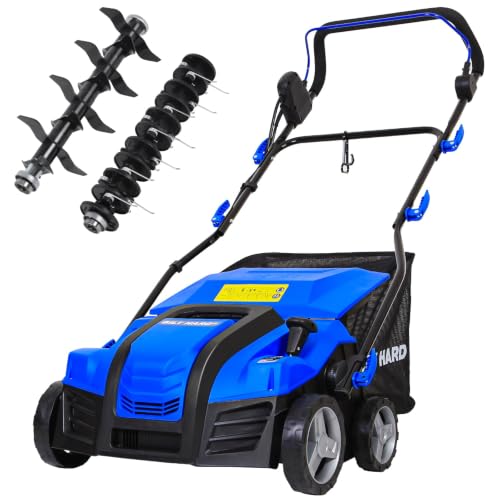
BILT HARD 16" 15-Amp Dethatcher Scarifier
Best for: Bigger lawns
A 15 amp copper motor 2-in-1 with a 16 inch path, a 16-blade scarifier roller, 5-position depth lever, flat-free wheels and a 14.5 gallon bag.
- Big 14.5 gal bag
- Flat-free wheels
- Tool-free quick lock
- Heavier than compact models
- Corded

TIECTOWN 16" 15.5A Electric Dethatcher and Scarifier
Best for: Medium to large lawns
A 16 inch 2-in-1 with a quick-release blade system, 5-position depth control, a 15A motor (15.5A peak), a waterproof plug and a weight of about 30 lbs.
- Quick blade release
- Light for its size
- Cord clip included
- Newer brand
- Corded

Sun Joe AJ805E 15" Dethatcher with Scarifier Reel
Best for: Medium lawns
A 13 amp corded dethatcher with a scarifier blade reel, a 5-position depth control, a removable collection bag and four easy-glide wheels.
- 13 amp motor
- Scarifier reel included
- Easy to maneuver
- Corded range
- Bag needs frequent emptying

Sun Joe AJ801E Electric Dethatcher and Scarifier
Best for: Small to medium lawns
A 12 amp corded 2-in-1 with 5-position height settings, AirBoost spring steel tines and an 8 gallon bag.
- Affordable
- 2-in-1 design
- AirBoost pickup
- Smaller bag
- Less power than 15 amp models

Westinghouse 13" 12-Amp Dethatcher and Scarifier
Best for: Small yards
A 13 inch 2-in-1 with 20 spring tines and a 16-blade scarifier head, 4 depth settings, an 8 gallon bag and a weight of about 22.9 lbs. 2-year limited warranty.
- Very light
- Easy around beds
- 2-year warranty
- Narrower path
- 4 depth settings

BILT HARD 13" 12-Amp Dethatcher Scarifier
Best for: Small lawns
A 12 amp copper motor 2-in-1 with a 13 inch raking width, 4-position depth adjustment, flat-free wheels and an 8 gallon bag.
- Flat-free wheels
- Compact width
- 2-in-1 heads
- Smaller bag
- Corded
Dethatcher vs Scarifier: What Is the Difference?
| Feature | Dethatcher (spring tines) | Scarifier (fixed blades) |
|---|---|---|
| Action | Rakes and lifts loose thatch | Cuts into the soil surface |
| Depth | Above or just at soil level | Slightly below soil level |
| Best for | Light to moderate thatch | Heavy thatch and moss |
| Effect on lawn | Gentle | Aggressive; lawn looks rough after |
| How often | Up to once or twice a year | Usually once a year or less |
Many electric machines sold as 2-in-1 tools include both heads, so you can start with the gentler dethatching reel and switch to the scarifying blades only if needed.
Dethatcher vs Aerator
A dethatcher or scarifier removes organic material from the surface. A core aerator pulls plugs of soil to relieve compaction. They solve different problems, and many lawns benefit from both. Some product listings describe scarifiers as aerators, but they do not remove soil cores. University extension services explain that core aeration is the main fix for compaction; Kansas State University Research and Extension covers it in its guide to aerating your lawn. If compaction is the bigger issue, see our guides to the best core aerator and the best electric aerator.
What Causes Thatch Buildup?
Thatch builds up when organic material accumulates faster than soil microbes can break it down. Common causes include heavy nitrogen fertilizing, frequent shallow watering, compacted or acidic soil that slows decomposition, and grass types that spread by stolons and rhizomes, such as Kentucky bluegrass, Bermuda and zoysia. Grass clippings from regular mowing are not usually a major cause, because they break down quickly. Fixing the underlying causes, such as watering deeply but less often and aerating compacted soil, helps keep thatch from coming back.
Gas Power Rake vs Electric Dethatcher
Gas power rakes are heavy commercial machines with flail blades, often rented by the day. They handle very thick thatch on large properties. For most residential lawns, an electric dethatcher is lighter, quieter, easier to store and needs almost no maintenance. If you have acreage, a tow-behind dethatcher pulled by a riding mower may suit you better; see our guide to the best tow behind dethatcher.
Electric Dethatcher Buying Guide
Corded vs cordless
Corded dethatchers typically use 12 to 15 amp motors and run as long as they are plugged in, which suits thick thatch and larger lawns within cord reach. Cordless models avoid cord management and are easy to move around obstacles, but heavy thatch drains batteries faster. If you already own batteries from Greenworks, CRAFTSMAN or Sun Joe, a tool-only cordless dethatcher can be good value.
Working width
Most electric dethatchers have a 13 to 16 inch path. Narrower machines are lighter and easier to steer around beds; wider machines finish open lawns faster.
Depth adjustment
Look for a lever with four or five positions spanning from above the surface to about half an inch below. Start shallow and lower only if the machine is not lifting enough thatch.
Tines and blades
Spring steel tines handle general dethatching. Fixed scarifier blades cut deeper for moss and heavy thatch. More tines generally mean more thorough pickup per pass.
Collection bag
A bag collects thatch as you work, saving raking later. Larger bags mean fewer stops, but they get heavy. Expect to empty the bag often on a thatchy lawn.
Weight and storage
Lighter machines around 20 to 30 lbs are easier to push and lift. Folding handles save space in a garage or shed.
How to Dethatch a Lawn With an Electric Dethatcher
- Check thatch depth. Cut a small wedge of turf and measure the spongy layer. More than about half an inch usually means it is time.
- Mow short a day or two before so the machine reaches the thatch layer.
- Water lightly if the soil is very dry, but avoid working on soggy ground.
- Mark sprinkler heads and remove debris.
- Start with the shallowest setting and the dethatching reel. Make a pass and check the result.
- Lower the depth or switch to scarifying blades if thatch remains.
- Work in straight lines, then make a second pass at an angle for heavy thatch.
- Rake up and compost the debris the bag misses.
- Overseed and fertilize right away while the soil surface is open.
Our full guide on how to dethatch a lawn covers timing and technique in more detail, and why dethatching matters for lawn health explains what thatch does to your grass.
When to Dethatch
Dethatch only when the lawn is actively growing so it can recover quickly. For cool-season grasses, early fall is ideal and early spring is a second option. For warm-season grasses, late spring to early summer works best. Avoid dethatching during summer heat, drought or dormancy, and do not dethatch new lawns.
After Dethatching: Help the Lawn Recover
A freshly dethatched lawn can look rough for a couple of weeks. This is the perfect moment to overseed, because seed reaches the soil easily. Spread seed at the label's overseeding rate, apply a suitable fertilizer, and keep the surface moist until seed germinates. Our guide on overseeding after dethatching explains timing and seed rates, and the best overseeder guide helps you choose a spreader.
Dethatching Moss-Covered Lawns
Moss often grows where grass struggles, such as in shade, damp soil or compacted areas. A scarifier head is effective for pulling moss out, but moss usually returns unless you improve the conditions that favor it. Improve drainage, increase light where possible, and overseed with a shade-tolerant grass blend after scarifying.
Electric Dethatcher Safety Tips
- Unplug or remove the battery before clearing the reel, changing heads or adjusting depth.
- Keep the cord behind you and use an outdoor-rated extension cord of the gauge the maker recommends.
- Wear closed shoes, long pants and eye protection, as debris can be thrown.
- Do not use on wet grass, which clogs the machine and raises electrical risk.
- Keep children and pets away while working.
Simple Test: Does Your Lawn Need Dethatching?
Push your fingers into the turf. If it feels spongy and you cannot easily reach soil, thatch is likely thick. For a more accurate check, cut a small plug with a trowel and measure the brown layer between the green blades and the soil. If it is thicker than about half an inch, dethatching will help.
Maintenance Tips
Clear grass and thatch from the reel and housing after each use. Empty and shake out the collection bag, and let it dry before storage. Check tines and blades for wear or bending and replace them as needed. Store batteries indoors at the charge level the maker recommends, and inspect cords for damage before each use.
Extension Cord Tips for Corded Dethatchers
Corded dethatchers draw a lot of current, so the cord matters. Use an outdoor-rated cord of the gauge and length the manual recommends; a cord that is too thin or too long can cause power loss, overheating and nuisance overload shutdowns. Plug into a GFCI-protected outlet and inspect the cord for damage before every use.
Common Dethatching Mistakes
Setting the blades too deep on the first pass is the most common mistake, tearing out healthy grass along with thatch. Others include dethatching during heat or drought, working on wet grass, skipping overseeding afterward, and dethatching more often than the lawn needs. Using a scarifier on a lawn with little thatch can do more harm than good.
Final Verdict: Which Electric Dethatcher Should You Buy?
The best electric lawn dethatcher depends on your lawn size, thatch level and battery platform.
- Best cordless overall: the Greenworks 40V 15 inch dethatcher and scarifier with quick-swap reels.
- Best cordless brushless: the CRAFTSMAN V20 brushless dethatcher and scarifier with a 50L bag.
- Best cordless kit: the Sun Joe 24V-X2-DTS15 with two 4.0Ah batteries.
- Best corded overall: the WEN DT1516 16 inch 15 amp 2-in-1 dethatcher and scarifier.
- Best large bag: the BILT HARD 16 inch with a 14.5 gallon bag.
- Best value 16 inch: the TIECTOWN 16 inch 15.5A model.
- Best compact: the Westinghouse 13 inch at about 22.9 lbs, or the BILT HARD 13 inch.
- Best Sun Joe corded: the AJ805E 15 inch or the AJ801E with an 8 gallon bag.
Dethatch only when needed, start shallow and overseed right after, and an electric dethatcher will keep your lawn breathing freely.
Frequently Asked Questions
What is the best electric lawn dethatcher?
For most homeowners, a 2-in-1 electric dethatcher and scarifier with a 14 to 16 inch path and a collection bag is the best fit. Cordless models like the Greenworks 40V or CRAFTSMAN V20 avoid the cord, while corded models such as the WEN DT1516 offer strong power for less money.
What is the difference between a dethatcher and a scarifier?
A dethatcher uses spring tines to rake out loose thatch and dead grass near the surface. A scarifier uses fixed blades that cut slightly into the soil to remove deeper thatch and moss. Many electric machines include both heads.
Is an electric dethatcher the same as an aerator?
No. Dethatchers and scarifiers remove thatch and slice the surface, while core aerators pull plugs of soil to relieve compaction. Some listings call scarifiers aerators, but they do not remove soil cores.
When should I dethatch my lawn?
Dethatch when grass is actively growing so it can recover: early fall or early spring for cool-season grasses and late spring to early summer for warm-season grasses. Avoid dethatching during heat or drought stress.
How often should I dethatch?
Only when thatch builds up beyond about half an inch. Many lawns need it once a year or less. Light raking with a dethatcher head can be done more often than deep scarifying.
Corded or cordless dethatcher?
Corded dethatchers are usually cheaper and run without time limits. Cordless models are easier to maneuver and suit owners already on a battery platform, but runtime depends on battery capacity and thatch thickness.