
You want a lawn that’s lush, green, and free of stubborn weeds, right? Applying a weed and feed product is one of the easiest ways to achieve that.
But if you’re unsure how to do it correctly, you might not get the results you’re hoping for. In this guide, you’ll learn simple steps to apply weed and feed like a pro, so your lawn gets the nutrients it needs while weeds disappear.
Follow along, and soon you’ll enjoy a healthier, more beautiful lawn that stands out in your Austin neighborhood. Ready to get started? Let’s dive in!

Credit: bioadvanced.com
Choosing The Right Weed And Feed
Choosing the right weed and feed product is key for a healthy lawn. The right choice targets weeds effectively and nourishes your grass. Knowing your lawn type and the product features helps avoid damage and ensures good growth.
Types Of Weed And Feed Products
Weed and feed products come in granules and liquids. Granules spread easily with a spreader and release nutrients slowly. Liquids often work faster and need a sprayer for even coverage. Some products target broadleaf weeds, while others also control grassy weeds. Choose based on the weeds you want to remove.
Matching Product To Lawn Type
Different lawns need different care. Some products suit cool-season grasses like fescue or ryegrass. Others fit warm-season grasses such as Bermuda or zoysia. Using the wrong product can harm your lawn. Check your grass type before buying to keep it healthy and green.
Reading Product Labels
Labels contain important details about the product. Look for the types of weeds controlled and the nutrients provided. Note the application instructions and safety warnings. Pay attention to the timing for best results. Follow the label exactly to protect your lawn and the environment.
Credit: www.youtube.com
Preparing Your Lawn
Preparing your lawn“>Preparing your lawn properly sets the stage for effective weed and feed application. It helps the product work better and keeps your grass healthy. Take time to get your lawn ready before spreading any weed and feed product. Follow these simple steps to prepare your lawn for the best results.
Mowing Tips Before Application
Mow your lawn a few days before applying weed and feed. Keep the grass height around 2 to 3 inches. Avoid cutting too short as it may stress the grass. Remove clippings to ensure even product contact with the soil and weeds. A well-mowed lawn improves the product’s effectiveness.
Watering Guidelines
Water your lawn lightly before application to dampen the grass. Wet grass helps the weed and feed granules stick better to the leaves. Avoid soaking the lawn to prevent runoff of the product. After application, wait at least 24 hours before watering again. This allows the product to absorb and work properly.
Clearing Debris And Leaves
Remove leaves, sticks, and other debris from your lawn. Clear debris ensures the weed and feed reaches the grass and weeds directly. Use a rake or leaf blower for best results. A clean lawn surface improves the product’s contact and coverage. This step helps achieve a healthier, weed-free lawn.
Application Tools And Techniques
Applying weed and feed products correctly ensures a healthy, green lawn free of weeds. Choosing the right tools and techniques helps distribute the product evenly and effectively. Proper application prevents damage to your grass and maximizes weed control.
Using Rotary Vs Drop Spreaders
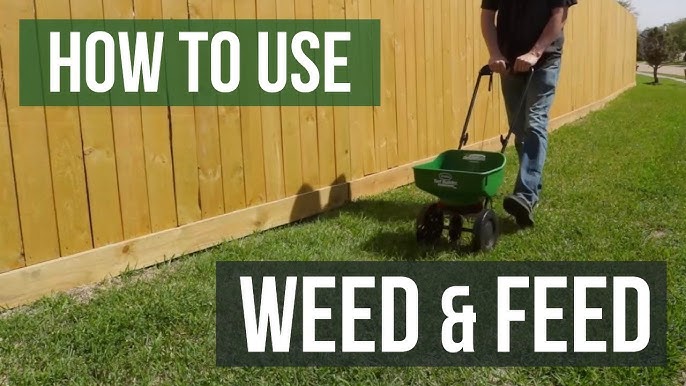
Rotary spreaders throw granules in a wide pattern. They cover large areas quickly but may scatter product beyond the lawn. Drop spreaders release granules directly below in a narrow band. They provide precise application and reduce waste. Choose a rotary spreader for large lawns and a drop spreader for small or delicate areas.
Setting The Correct Spreader Rate
Check the product label for the recommended spreader setting. Too much fertilizer can burn your lawn. Too little reduces effectiveness. Calibrate your spreader by measuring how much product it distributes over a set area. Adjust the setting until it matches the label’s instructions exactly.
Ensuring Even Coverage
Walk at a steady pace while spreading. Overlap passes slightly to avoid gaps. Use a consistent pattern, such as mowing in parallel lines. Avoid stopping suddenly, which can cause clumps. After spreading, lightly water the lawn to help the product settle and start working.

Credit: www.youtube.com
When To Apply
Knowing the right time to apply weed and feed helps protect your lawn. Timing affects how well the product works. Applying at the wrong time can reduce results and harm grass.
Choose the right moment carefully to get the best results. Consider the time of day, weather, and season for maximum effect.
Best Time Of Day
Apply weed and feed early in the morning or late in the afternoon. Avoid the heat of midday to prevent burning your grass. Cooler temperatures help the product work better and stay on the leaves.
Early morning dew can help the granules stick to weeds. Late afternoon application allows the product to absorb before evening moisture.
Ideal Weather Conditions
Choose a calm, dry day with mild temperatures. Avoid windy days to prevent product drift. Rain can wash away the product before it works.
Light rain or watering after application helps activate the product. Do not apply if heavy rain is expected within 24 hours.
Seasonal Timing For Maximum Effectiveness
Apply weed and feed during active weed growth seasons. Spring and fall are the best times for most lawns. Weeds absorb the product faster when they grow actively.
Do not apply during drought or extreme heat. Grass may be stressed and less able to recover from treatment.
Post-application Care
Proper post-application care is essential after applying a weed and feed product. It ensures the treatment works effectively and helps your lawn recover quickly. Following simple steps after application can improve results and keep your grass healthy.
Watering After Application
Water your lawn lightly after applying the product. This helps the weed killer soak into the soil and reach weed roots. Avoid heavy watering for at least 24 hours to prevent washing away the product. A gentle watering is enough to activate the fertilizer and weed control.
Avoiding Lawn Traffic
Keep off your lawn for at least 24 to 48 hours after application. Walking or playing on the grass too soon can reduce the product’s effectiveness. It also prevents damaging the treated grass. Limit any lawn traffic until the product has settled properly.
Monitoring Lawn For Results
Watch your lawn closely over the next few weeks. You will notice weeds turning brown and dying. Healthy grass should start to grow stronger and greener. If weeds persist, consider a second application following the product instructions. Regular monitoring helps maintain a lush, weed-free lawn.
Common Mistakes To Avoid
Applying weed and feed products correctly is crucial for a healthy lawn. Avoiding common mistakes saves your grass from damage and boosts effectiveness. Knowing what not to do helps keep your lawn green and weed-free.
Over-application Risks
Using too much weed and feed harms your grass. It can cause burning and kill healthy plants. Over-application also wastes product and money. Always measure carefully and follow the recommended amount. Less is often better than too much.
Applying During Drought Or Heat
Applying weed and feed in hot or dry weather stresses your lawn. The chemicals can burn grass leaves under these conditions. Water your lawn before application if the soil is dry. Choose cooler days or early mornings for best results.
Ignoring Label Instructions
Labels contain important safety and application information. Ignoring them risks poor results and lawn damage. Read all instructions before use. Follow timing, amount, and weather guidelines exactly. Labels help protect your lawn and environment.
Safety Tips
Applying weed and feed products requires care to keep yourself and the environment safe. These products contain chemicals that can irritate skin, eyes, and lungs. Following safety tips reduces health risks and protects your lawn and garden. Wear the right gear, store products carefully, and dispose of leftovers properly. These steps help you apply weed and feed without harm.
Protective Gear Recommendations
Wear long sleeves and pants to cover your skin. Use gloves made of rubber or nitrile to protect your hands. Put on safety goggles to shield your eyes from splashes. A mask or respirator helps avoid breathing in dust or fumes. Closed shoes protect your feet from contact with chemicals. Always check the product label for specific gear advice.
Safe Storage Of Products
Store weed and feed products in a cool, dry place away from children and pets. Keep containers tightly closed to prevent spills and contamination. Avoid storing near food, water sources, or heat. Place products on high shelves or locked cabinets to limit access. Clear labeling helps identify contents and hazards quickly. Regularly inspect containers for leaks or damage.
Disposal Guidelines
Dispose of empty containers according to local rules and regulations. Do not reuse containers for other purposes. Avoid pouring leftover product down drains, onto soil, or into water bodies. Contact your local waste facility for hazardous waste disposal options. Proper disposal prevents pollution and protects wildlife. Follow label instructions to minimize environmental impact.
Frequently Asked Questions
What Is The Best Way To Apply Weed And Feed To Your Lawn?
Use a drop or rotary spreader for even granule distribution. Apply to damp grass after rain or light watering. Follow label instructions carefully. Avoid watering for 2-4 days post-application to let it work effectively. Apply during mild weather, not in extreme heat or drought.
Do I Apply Weed And Feed To Wet Or Dry Grass?
Apply weed and feed to damp grass for best results. Wet leaves help the product stick and target weeds effectively. Avoid applying on dry grass.
Do You Put Down Weed And Feed Before Or After Rain?
Apply weed and feed after rain or on damp grass to help the product stick to weeds. Avoid watering for 2-4 days after application.
When’s The Best Time To Put Down Weed And Feed On Your Lawn?
Apply weed and feed in early spring or fall when weeds actively grow. Ensure grass is damp for better product adhesion. Avoid hot, dry weather and rain for 2-4 days after application to maximize effectiveness.
Conclusion
Applying weed and feed properly keeps your lawn healthy and green. Always follow the product label carefully for best results. Water your lawn lightly before applying to help the product stick. Avoid mowing for a few days after application to let it work well.
Regular care and timely treatments will reduce weeds and nourish grass. A well-maintained lawn makes your yard look neat and inviting. Simple steps lead to a beautiful lawn all season long.