

Last updated: October 2026 · Written by the LawnVibe editorial team.
For long fence lines, ditch banks, overgrown corners and rural lots, nothing beats the run-all-day power of gas. The best gas trimmer cuts through thick weeds and tall grass without worrying about battery runtime, and a quick refill gets you back to work in seconds. Gas trimmers do need more care than electric models, so choosing a well-designed engine and the right shaft style makes a big difference.
This guide compares eight gas trimmers and gas multi-tool kits, from compact Husqvarna trimmers for homeowners to brush-cutting kits for heavy clearing. Below the picks you will find advice on 2-cycle versus 4-cycle engines, engine size, shaft style, fuel and maintenance.
| # | Product | Best for | Link |
|---|---|---|---|
| 1 | Husqvarna 130L Straight Shaft Gas String Trimmer | Large lawns and fence lines | Check price |
| 2 | Husqvarna 122L Gas String Trimmer | Homeowners who want easy starting | Check price |
| 3 | Ryobi RY34007 Expand-It 4-Cycle 30cc Trimmer Power Head | No fuel mixing | Check price |
| 4 | WILD BADGER POWER 26cc 3-in-1 Gas Trimmer/Edger with Brush Cutter | Tall weeds and light brush | Check price |
| 5 | WILD BADGER POWER 52cc 3-in-1 Gas Trimmer Kit | Dense overgrowth and clearing | Check price |
| 6 | WILD BADGER POWER 26cc 4-in-1 Gas Multi-Tool | Several yard jobs | Check price |
| 7 | PRORUN 25.4cc 2-Cycle 4-in-1 Combo Unit (PPCK1) | Owners who want a modular system | Check price |
| 8 | PROYAMA 42.7cc 5-in-1 Gas Multi-Tool | Big properties with varied jobs | Check price |
How We Chose the Best Gas Trimmer
We did not run hands-on tests. We compared these trimmers on published specifications and features: engine type and displacement, cutting swath, shaft style, starting aids, included attachments, weight class and brand support. We also considered common owner feedback themes such as ease of starting and vibration.
Specifications and kit contents change, so confirm current details on the listing before you buy.

Husqvarna 130L Straight Shaft Gas String Trimmer
Best for: Large lawns and fence lines
A straight-shaft gas trimmer with a 28cc engine and an 18 inch cutting width, built for long trimming sessions and reaching under shrubs.
- 18 inch cutting width
- Straight shaft reach
- Respected Husqvarna engine
- Needs 2-cycle fuel mix
- Louder than cordless

Husqvarna 122L Gas String Trimmer
Best for: Homeowners who want easy starting
A lighter Husqvarna gas trimmer with Smart Start and an air purge primer, designed so the engine starts quickly with less effort.
- Easy-start features
- Lighter to carry
- Good dealer support
- Smaller engine than 130L
- 2-cycle fuel mix

Ryobi RY34007 Expand-It 4-Cycle 30cc Trimmer Power Head
Best for: No fuel mixing
A 30cc 4-cycle power head that runs on straight gasoline and accepts Expand-It and many universal-fit attachments. Check the listing for which attachments are included.
- No gas-oil mixing
- Lower noise than many 2-cycles
- Attachment capable
- Heavier than 2-cycle trimmers
- Needs oil changes

WILD BADGER POWER 26cc 3-in-1 Gas Trimmer/Edger with Brush Cutter
Best for: Tall weeds and light brush
A 26cc 2-cycle kit with a 17 inch string trimmer and edger head, a 10 inch brush cutter blade and a shoulder strap for tougher growth.
- Brush cutter blade included
- Shoulder strap
- Good value
- Less established brand
- 2-cycle fuel mix
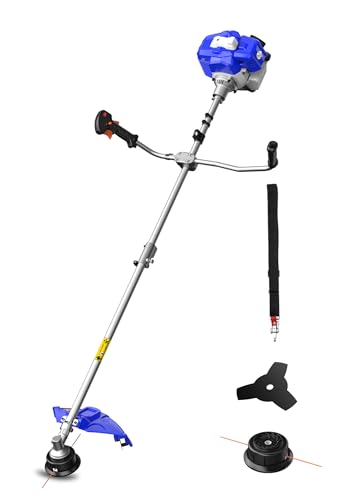
WILD BADGER POWER 52cc 3-in-1 Gas Trimmer Kit
Best for: Dense overgrowth and clearing
A 52cc 2-cycle kit with an 18 inch trimmer swath and a 10 inch brush cutter blade for tall weeds, dense growth and brush.
- Large 52cc engine
- 18 inch swath
- Brush blade for woody growth
- Heavy and high vibration
- More fuel use

WILD BADGER POWER 26cc 4-in-1 Gas Multi-Tool
Best for: Several yard jobs
A 26cc kit with a 17 inch string trimmer/edger, pole saw, hedge trimmer and brush cutter, covering trimming, pruning and clearing with one engine.
- Four tools in one kit
- Saves storage space
- Brush cutter included
- Swapping attachments takes time
- Heavier with attachments fitted

PRORUN 25.4cc 2-Cycle 4-in-1 Combo Unit (PPCK1)
Best for: Owners who want a modular system
An attachment-capable 25.4cc power head kit combining a string trimmer, brush cutter, pole saw and hedge trimmer.
- Modular power head
- Four functions
- Compact engine
- Newer brand
- 2-cycle fuel mix

PROYAMA 42.7cc 5-in-1 Gas Multi-Tool
Best for: Big properties with varied jobs
A 42.7cc multi-tool with trimmer head, brush cutter, pole saw, hedge trimmer and extension pole for tackling many outdoor jobs.
- Five-in-one versatility
- Large 42.7cc engine
- Extension pole included
- Heavy
- Less established brand
2-Cycle vs 4-Cycle Gas Trimmers
Most gas trimmers use 2-cycle engines. They are light, compact and powerful for their size, which makes them comfortable to carry. The trade-off is fuel: you must mix gasoline with 2-cycle oil at the ratio the manufacturer specifies. Mixing the wrong ratio can damage the engine, and 2-cycle engines tend to produce more smoke and noise.
4-cycle engines keep oil in a separate crankcase and run on straight gasoline, just like a lawn mower. They usually run a little quieter, produce less smoke and offer strong low-end torque. They are also heavier and need periodic oil changes. If you dislike mixing fuel, a 4-cycle trimmer is worth considering.
| Factor | 2-cycle | 4-cycle |
|---|---|---|
| Fuel | Gas and oil mix | Straight gasoline |
| Weight | Lighter | Heavier |
| Noise and smoke | More | Less |
| Maintenance | Simpler engine | Oil changes needed |
| Best for | Light handling, general trimming | Users who dislike mixing fuel |
Gas Trimmer Buying Guide
Engine size
For most residential trimming, an engine of about 25cc to 30cc is plenty. Larger engines in the 40cc to 50cc range give more torque for brush blades and dense overgrowth, but add weight and vibration. Match engine size to the toughest job you do regularly, not the toughest job you might do once a year.
Straight vs curved shaft
Straight shafts reach further under shrubs, decks and fences, keep debris further from your feet and suit taller users. They are also more likely to accept attachments and brush blades. Curved shafts are shorter and lighter but less suited to heavy work. For most gas trimmer buyers, a straight shaft is the more versatile choice.
Starting aids
Pull-starting is the most common complaint about gas trimmers. Look for features such as a primer bulb, an air purge system, an easy-start recoil and a clear choke control. Our guide on how to start a string trimmer without flooding it explains the right sequence.
Cutting swath and line
A 17 to 18 inch swath covers ground quickly and is common on gas trimmers. Most use thicker line, often 0.080 to 0.095 inch, which cuts tougher weeds and breaks less often.
Attachments and brush blades
Many gas kits include brush cutter blades, hedge trimmer heads and pole saws. A brush blade turns a trimmer into a tool for woody weeds and saplings, but use one only if your trimmer is designed for it and always fit the correct guard and harness.
Weight, harness and vibration
Gas trimmers are heavier than electric models, so a shoulder strap or harness is a real comfort upgrade, especially on brush-cutting kits. Anti-vibration handles also reduce fatigue on long sessions.
Best Gas Trimmer by Job
Routine trimming on a large lawn
A 25cc to 30cc straight-shaft trimmer with a 17 to 18 inch swath is the sweet spot. It is powerful enough for long fence lines and tall grass, but still light enough to carry for an hour. Look for easy-start features so the first pull of the day is not a struggle.
Clearing brush, saplings and woody weeds
Choose a kit that includes a brush cutter blade and a shoulder harness, ideally with a larger engine. A blade cuts woody stems that would shred trimmer line, but it demands more care: keep the guard fitted, maintain a firm stance and keep bystanders far away. For more options built for tough growth, see our guide to the best trimmer for thick brush.
Several yard jobs with one engine
Attachment-capable power heads and multi-tool kits let one engine drive a trimmer, edger, pole saw and hedge trimmer. They save storage space and can save money, though swapping attachments takes a minute and dedicated tools often perform each task a little better.
Occasional use
If you trim only a few times a season, a compact gas trimmer is easy to store, but fuel management matters more. Use pre-mixed canned fuel or a stabiliser so stale fuel does not cause starting trouble the next time you need it.
Common Gas Trimmer Problems
Hard starting is the most common complaint. It usually comes down to stale fuel, a flooded engine, a dirty air filter or a worn spark plug. Surging or stalling at idle often points to a partially clogged carburetor or fuel line. Excessive smoke on a 2-cycle engine can mean too much oil in the mix. If the line will not feed, check that the spool is wound neatly and that the line has not fused from heat. Working through these causes in order fixes most issues without a trip to the repair shop.
Gas vs Cordless Trimmers
Gas trimmers still make the most sense for large properties, long trimming sessions and dense growth, especially where charging batteries is inconvenient. Cordless trimmers have closed much of the gap and are quieter, lighter and almost maintenance free, which makes them a better fit for most suburban yards. If you are undecided, our guide on how to choose between a gas-powered and electric trimmer walks through the decision, and our best cordless trimmer guide covers strong battery models. For a full overview of every power type, see our guide to the best string trimmer.
Fuel Tips for Gas Trimmers
Fuel causes more gas trimmer problems than anything else. Gasoline degrades over time, and old fuel can gum up the carburetor and make starting difficult. Buy fuel in small quantities, use it within a few weeks, and add a fuel stabiliser if it will sit longer. For 2-cycle engines, always mix at the ratio printed on the trimmer or in the manual, using a quality 2-cycle oil. Pre-mixed canned fuel costs more but is convenient and stable for long periods, which suits occasional users.
Small engines in outdoor power equipment are covered by the U.S. Environmental Protection Agency's emission standards for small nonroad spark-ignition engines, which is one reason modern trimmers use cleaner-running designs.
Gas Trimmer Maintenance
A gas trimmer stays reliable with a few simple habits. Clean or replace the air filter regularly, because a clogged filter causes hard starting and poor power. Check the spark plug each season and replace it if it is worn or fouled. Keep the cooling fins and the area around the engine free of grass and dust. Replace line before it gets too short and clean the trimmer head after each use.
Before long storage, either run the fuel tank empty or add stabiliser and run the engine briefly so treated fuel reaches the carburetor. If your trimmer starts poorly or stalls, our guide on how to clean the carburetor of a gas trimmer covers the most common fix.
How to Trim Efficiently With a Gas Trimmer
Let the engine reach working speed before you start cutting, and use the tip of the line rather than burying the head in grass. For tall weeds, cut the top first and then work down in stages. Sweep the trimmer in smooth arcs and walk forward steadily. On long fence lines, angle the head so debris is thrown away from you and the fence. Our guide on how to use a gas-powered trimmer for yard work covers technique in more detail, and how to choose a gas-powered trimmer for residential use helps if you are still comparing models.
What About Commercial Gas Trimmers?
Professional landscapers usually buy commercial-grade gas trimmers from outdoor power equipment dealers rather than online marketplaces. Those models emphasise durability, anti-vibration systems, lighter power-to-weight ratios and dealer service. For homeowners, the trimmers in this guide offer more than enough power. If you trim daily for work, visit a local dealer to compare commercial models in person and ask about service plans.
Gas Trimmer Safety
Gas trimmers are loud and throw debris at high speed. Wear safety glasses, hearing protection, long pants, gloves and sturdy shoes every time. Keep bystanders and pets well away. Refuel only when the engine is off and cool, and do it outdoors away from ignition sources. When using a brush blade, always fit the correct guard and harness, and never use a blade on a trimmer that is not designed for one.
Final Verdict: Which Gas Trimmer Should You Buy?
The best gas trimmer depends on your property size, the toughness of the growth and whether you want extra attachments.
- Best overall gas trimmer: the Husqvarna 130L straight shaft with an 18 inch swath.
- Best compact gas trimmer: the Husqvarna 122L with easy-start features.
- Best 4-cycle option: the Ryobi RY34007 Expand-It 30cc power head, for no fuel mixing.
- Best value brush-cutting kit: the WILD BADGER POWER 26cc 3-in-1.
- Most powerful kit: the WILD BADGER POWER 52cc 3-in-1.
- Best multi-tool kits: the WILD BADGER POWER 26cc 4-in-1, PRORUN 25.4cc 4-in-1 and PROYAMA 42.7cc 5-in-1.
Choose the engine type and shaft style that suit your work, keep fuel fresh, and a gas trimmer will handle the toughest corners of your property.
Frequently Asked Questions
Is a 2-cycle or 4-cycle gas trimmer better?
Two-cycle trimmers are lighter and simpler but need fuel mixed with oil. Four-cycle trimmers run on straight gasoline with oil in a separate crankcase, are usually quieter and produce less smoke, but they weigh more. Most homeowners choose based on weight versus fuel convenience.
What engine size do I need?
Around 25cc to 30cc is plenty for most homeowner trimming. Engines of 40cc and above help with brush cutting and dense overgrowth, but they are heavier and use more fuel.
What fuel mix does a 2-cycle trimmer use?
Follow the ratio printed in your trimmer's manual or on the fuel cap. Use fresh gasoline and a quality 2-cycle oil, and mix only as much fuel as you will use within a few weeks.
Are gas trimmers better than cordless?
Gas trimmers are better for very large properties, long trimming sessions and thick weeds, because refuelling is quick. Cordless trimmers are quieter, lighter and lower maintenance, which suits most suburban yards.
Can I add attachments to a gas trimmer?
Many straight-shaft and attachment-capable trimmers accept edgers, brush cutters, pole saws and hedge trimmers. Check the model's compatibility before buying attachments.