

Last updated: October 2026 · Written by the LawnVibe editorial team.
Thick brush, brambles, woody weeds and young saplings will shred ordinary trimmer line in seconds. The best trimmer for thick brush uses a metal blade, a strong engine or high-voltage motor and a proper harness, turning a frustrating job into steady, controlled clearing. Choosing the right tool also matters for safety, because a blade-equipped trimmer is far more dangerous than a string trimmer if misused.
This guide compares nine options for clearing thick brush: gas brush cutter kits, a 4-cycle attachment-capable power head and blade attachments for EGO and Greenworks systems. You will also find advice on blade types, harnesses and safe technique. For grass-only overgrowth, our guide to the best trimmer for tall grass may be a better fit.
| # | Product | Best for | Link |
|---|---|---|---|
| 1 | WILD BADGER POWER 52cc 3-in-1 Gas Trimmer Kit | Dense brush and big clearing jobs | Check price |
| 2 | WILD BADGER POWER 26cc 3-in-1 Gas Trimmer with Brush Cutter | Mixed weeds and light brush | Check price |
| 3 | WILD BADGER POWER 26cc 4-in-1 Gas Multi-Tool | Brush plus pruning | Check price |
| 4 | PROYAMA 42.7cc 5-in-1 Gas Multi-Tool | Large overgrown lots | Check price |
| 5 | 4-in-1 52cc Gas Pole Saw, Brush Cutter, Hedge Trimmer and Trimmer | Brush plus high branches | Check price |
| 6 | PRORUN 25.4cc 4-in-1 Combo Unit (PPCK1) | Flexible attachment system | Check price |
| 7 | Ryobi RY34007 Expand-It 4-Cycle 30cc Power Head | No fuel mixing | Check price |
| 8 | EGO POWER+ BCA1220 12 inch Brush Cutter Attachment | EGO battery owners | Check price |
| 9 | Greenworks 10 inch Brush Cutter Attachment | Greenworks attachment-capable trimmers | Check price |
How We Chose the Best Trimmer for Thick Brush
We did not run hands-on tests. We focused on tools that are designed to use a brush blade, comparing engine displacement or battery platform, blade size and type, shaft design, included harness or strap, and attachment flexibility. We also looked at whether the product clearly states blade compatibility, because using an unapproved blade is unsafe.
Specifications and kit contents change, so confirm details on the listing and in the owner's manual before you buy.
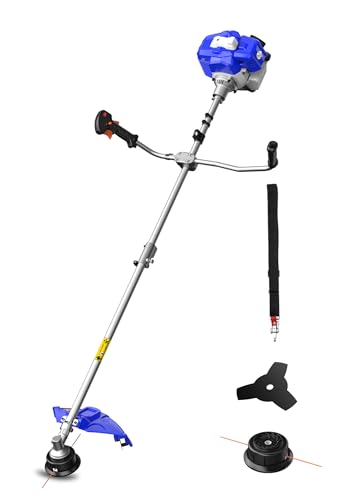
WILD BADGER POWER 52cc 3-in-1 Gas Trimmer Kit
Best for: Dense brush and big clearing jobs
A 52cc 2-cycle kit with an 18 inch trimmer swath and a 10 inch brush cutter blade, plus a shoulder strap for heavy clearing.
- Large 52cc engine
- Brush blade included
- Shoulder strap
- Heavy
- High vibration

WILD BADGER POWER 26cc 3-in-1 Gas Trimmer with Brush Cutter
Best for: Mixed weeds and light brush
A 26cc kit with a 17 inch trimmer and edger head plus a 10 inch brush blade and strap, a value way to add blade capability.
- Brush blade and string head
- Shoulder strap
- Good value
- Less established brand
- 2-cycle fuel mix

WILD BADGER POWER 26cc 4-in-1 Gas Multi-Tool
Best for: Brush plus pruning
A 26cc kit with string trimmer/edger, brush cutter, pole saw and hedge trimmer, covering brush clearing and pruning with one engine.
- Four tools
- Brush cutter included
- Space-saving
- Attachment swaps take time
- Heavier with attachments

PROYAMA 42.7cc 5-in-1 Gas Multi-Tool
Best for: Large overgrown lots
A 42.7cc multi-tool with brush cutter, trimmer head, pole saw, hedge trimmer and extension pole for large clearing and pruning jobs.
- Strong 42.7cc engine
- Five functions
- Extension pole
- Heavy
- Newer brand

4-in-1 52cc Gas Pole Saw, Brush Cutter, Hedge Trimmer and Trimmer
Best for: Brush plus high branches
A 51.7cc 2-stroke kit advertised with EPA certification that combines brush cutter, string trimmer, hedge trimmer and pole saw.
- Big 52cc engine
- Pole saw included
- EPA certified per listing
- Generic brand
- Heavy and loud

PRORUN 25.4cc 4-in-1 Combo Unit (PPCK1)
Best for: Flexible attachment system
An attachment-capable 25.4cc power head with string trimmer, brush cutter, pole saw and hedge trimmer attachments.
- Modular power head
- Brush cutter included
- Compact engine
- Smaller engine for heavy brush
- Newer brand

Ryobi RY34007 Expand-It 4-Cycle 30cc Power Head
Best for: No fuel mixing
A 30cc 4-cycle power head that runs on straight gas and accepts Expand-It and many universal attachments. Add a compatible brush cutter attachment for blade work.
- No gas-oil mixing
- Attachment capable
- Lower noise than many 2-cycles
- Brush attachment may be separate
- Needs oil changes

EGO POWER+ BCA1220 12 inch Brush Cutter Attachment
Best for: EGO battery owners
A 3-tooth, 12 inch steel blade attachment for the EGO Multi-Head System power head PH1420, designed for overgrown brush and stalky growth.
- Quiet battery operation
- 12 inch steel blade
- Fits EGO Multi-Head System
- Power head sold separately
- Runtime depends on battery
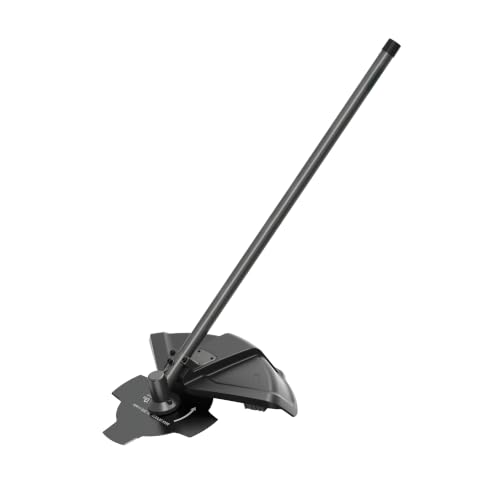
Greenworks 10 inch Brush Cutter Attachment
Best for: Greenworks attachment-capable trimmers
A 10 inch, 4-tooth hardened steel blade attachment for Greenworks attachment-capable trimmers, for thick grass, weeds and dense growth.
- Hardened steel blade
- Turns a trimmer into a brush cutter
- Battery-powered quiet
- Requires compatible power head
- Not for large saplings
String Trimmer vs Brush Cutter
A string trimmer uses flexible nylon line. It is perfect for grass and soft weeds along edges, but line shreds quickly on woody stems and brambles. A brush cutter uses a rigid metal blade, usually on a straight shaft with a bike-style or loop handle and a harness. It slices through thick weeds, brambles and small saplings that line simply cannot handle.
Many modern gas trimmers and attachment systems can do both, swapping between a string head for edges and a blade for brush. That flexibility is why most of our picks are kits or attachment-capable tools. If you mainly trim grass and only occasionally tackle brush, a combination tool is usually the best value.
Choosing the Right Brush Blade
Brush blades come in several styles. Three- and four-tooth blades are good for thick weeds, tall grass and soft brush. Multi-tooth blades with many small teeth cut denser brush and light woody growth more smoothly. Chisel-tooth or saw-tooth blades are designed for small saplings and woody stems. Always follow the manufacturer's list of approved blades for your machine, check the arbor size and rotation direction, and fit the correct blade guard.
Keep blades sharp and inspect them before each use. Replace any blade that is cracked, bent or missing teeth. Our guide on how to sharpen a string trimmer blade covers sharpening, but never sharpen beyond the limits the manufacturer specifies.
Brush Cutter Buying Guide
Engine or motor power
Brush clearing needs torque. For gas, engines from about 26cc handle mixed weeds and light brush, while 40cc to 52cc engines give more grunt for dense, woody growth. For battery systems, high-voltage platforms with dedicated brush cutter attachments are the best choice.
Straight shaft and handle
A straight shaft is essential for blade work, keeping the blade at a safe distance from your legs. Bike-style handles give the most control for sweeping cuts, while loop handles are lighter and suit mixed trimming.
Harness
A harness spreads weight across your shoulders, keeps the blade at a controlled height and reduces fatigue. Many brush cutter kits include a shoulder strap; full double-shoulder harnesses are more comfortable for long jobs.
Attachment systems
Attachment-capable power heads let one engine or battery drive a string trimmer, brush cutter, pole saw, edger and more. They save storage space and money, but make sure the brush cutter attachment is specifically designed and approved for your power head.
2-cycle vs 4-cycle
Two-cycle engines are lighter and need fuel mixed with oil. Four-cycle engines run on straight gasoline and need oil changes, but avoid mixing. Small gas engines are covered by U.S. Environmental Protection Agency emission standards for small nonroad spark-ignition engines, and many kits advertise EPA certification. For a full breakdown, see our guide to the best gas trimmer.
Gas vs Battery for Brush Clearing
Gas brush cutters remain the default choice for serious clearing. They run as long as you have fuel, deliver strong torque at the blade and handle long sessions on large properties, field edges and overgrown fence lines. The downsides are noise, vibration, fuel handling and regular engine maintenance. A good harness and anti-vibration handles make a big difference to comfort on gas machines.
Battery systems have improved quickly, and high-voltage power heads with dedicated brush cutter attachments can clear thick weeds and light woody growth surprisingly well. They start instantly, are much quieter and need almost no maintenance. The trade-off is runtime: blade work under load drains batteries faster than string trimming, so larger jobs need high-capacity or spare batteries. If you already own a compatible battery power head, adding a brush cutter attachment is an economical way to tackle occasional brush.
Best Brush Cutter by Job
Overgrown fence lines and field edges
A 26cc to 42cc gas kit with a three- or four-tooth blade and a shoulder strap handles mixed brush and tall weeds well. Switch back to the string head for neat edges once the heavy growth is gone.
Brambles, blackberries and dense thickets
Use a multi-tooth or chisel-tooth blade and work in small sections, cutting stems near the base and pulling cut material away as you go. Heavy gloves and leg protection are essential.
Small saplings and woody stems
A powerful engine, a saw-type blade rated for woody growth and a full harness give the most control. Check the maximum stem diameter in the manual, and use a pruning saw or chainsaw for anything larger.
Occasional brush on a suburban property
An attachment for a battery power head you already own, or a value gas kit, is usually enough. You will not need the largest engine, and storage is easier.
How to Clear Thick Brush Safely
Before you start, walk the area and remove wire, stones, glass and other hidden debris. Mark stumps, posts and anything the blade could strike. Put on safety glasses or a face shield, hearing protection, heavy gloves, long pants, sturdy boots and, ideally, leg protection.
Clip into the harness and adjust it so the blade hovers just above the ground when you stand relaxed. Cut with a smooth side-to-side sweeping motion, letting the blade do the work. Most brush cutters cut best on one side of the blade's rotation; cutting on the wrong side can cause the blade to kick. Watch out for blade thrust, a sudden sideways kick that can happen when the blade hits solid material. Keep bystanders at least the distance recommended in the manual, which is often 50 feet or more for blade work, and stop the engine before clearing debris from the blade.
For dense weed patches rather than woody brush, our guide on how to trim thick weeds with a string trimmer explains line-based technique, and how to use a trimmer for weed control covers ongoing weed management.
Planning a Brush Clearing Job
Large clearing jobs go faster with a plan. Start by deciding what you want to keep: mark young trees, shrubs and plants you want to protect with bright tape. Clear a working path first so you can move safely, then tackle the brush in strips, working from the outside in. Cut stems near the base and drag cut material to a pile as you go, rather than leaving it underfoot where it becomes a trip hazard.
Think about timing as well. Late autumn and winter can be good times to clear brush in many regions, when growth has slowed and nesting birds are less active. Check local rules before clearing near waterways, protected habitats or property boundaries. After clearing, regular mowing or trimming keeps regrowth manageable, and mulching or planting the cleared area helps prevent brush from returning.
Maintenance After Brush Clearing
Brush work is hard on any machine. After each session, clean sap and debris from the blade, gearhead and guard. Check blade fasteners for tightness. On gas machines, clean the air filter, which clogs quickly in dusty brush, and check the cooling fins. Grease the gearhead if your machine requires it. If a gas brush cutter starts poorly after heavy use, our guide on how to clean the carburetor of a gas trimmer can help.
Common Brush Cutter Mistakes
The most dangerous mistake is fitting a blade to a trimmer that is not designed for one. Curved-shaft trimmers and light-duty string trimmers lack the gearhead, guard and handle needed for blade work. Another common mistake is skipping the harness, which leads to tired arms, poor control and a blade that drifts too close to your legs. Many users also try to cut stems that are too thick, causing the blade to bind or kick. Finally, forgetting to clear hidden wire, rocks and metal before starting can damage the blade and send debris flying.
Final Verdict: Which Trimmer Is Best for Thick Brush?
The best trimmer for thick brush uses a proper blade, enough power and a harness that keeps you in control.
- Most powerful brush cutter kit: the WILD BADGER POWER 52cc 3-in-1 with brush blade.
- Best value brush-cutting kit: the WILD BADGER POWER 26cc 3-in-1.
- Best 4-in-1 kit: the WILD BADGER POWER 26cc 4-in-1.
- Best 5-in-1 for big properties: the PROYAMA 42.7cc multi-tool.
- Best 52cc pole saw and brush cutter combo: the 4-in-1 52cc EPA-certified kit.
- Best modular gas kit: the PRORUN 25.4cc 4-in-1 combo.
- Best 4-cycle power head: the Ryobi RY34007 Expand-It 30cc.
- Best battery brush cutter: the EGO POWER+ BCA1220 12 inch attachment for the EGO power head.
- Best Greenworks option: the Greenworks 10 inch brush cutter attachment.
Choose a blade-rated tool, wear a harness and full protection, and thick brush becomes a manageable job.
Frequently Asked Questions
Can a string trimmer cut thick brush?
String line struggles with woody stems and brambles. For thick brush, use a trimmer designed to accept a metal brush blade, or a dedicated brush cutter. Never fit a blade to a trimmer that is not rated for one.
What blade is best for brush?
Three- or four-tooth blades handle thick weeds and grassy brush. Multi-tooth and chisel-tooth saw blades cut woody saplings. Follow the trimmer maker's guidance on approved blade types and sizes.
Do I need a harness for a brush cutter?
A shoulder strap or harness is strongly recommended, and often required, when using a blade. It supports the weight and keeps the blade at a controlled height and distance from your body.
Gas or battery for brush clearing?
Gas brush cutters offer long runtime and strong torque for big clearing jobs. High-voltage battery systems with brush cutter attachments are quieter and lower maintenance, but runtime depends on battery capacity.
How thick a stem can a brush cutter handle?
It depends on the blade and the machine. Some attachments state a maximum stem diameter, for example around one inch. Check the specification and never force a blade through material it was not designed for.