
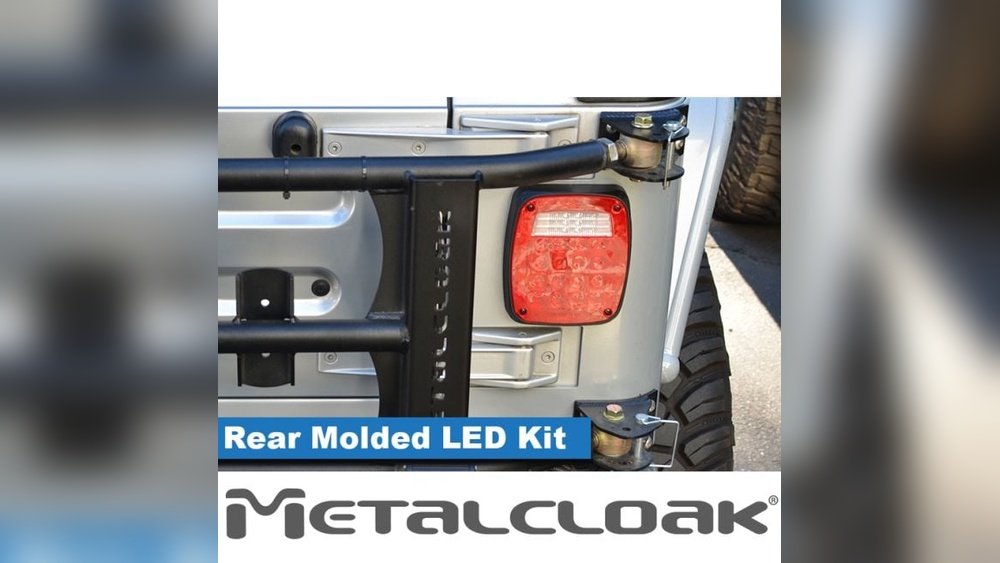
Upgrading your Jeep Wrangler’s tail lights is one of the most popular modifications among owners. It’s not just about looks—better tail lights can improve visibility, increase safety, and help your Jeep stand out both on and off the road. Whether you drive a classic YJ, a rugged TJ, or the modern JL, upgrading tail lights is an achievable DIY project.
This guide walks you through every step, from choosing the right lights to installation, troubleshooting, and legal considerations. By the end, you’ll know exactly how to make your Wrangler’s rear end safer and sharper.
Why Upgrade Jeep Wrangler Tail Lights?
Most stock tail lights on older Jeep Wranglers are basic incandescent bulbs. They can be dim, slow to react, and less visible in bad weather. Even newer models don’t always come with the best available lighting. Here’s why upgrading matters:
- Improved safety: Brighter tail lights make your Jeep more visible to other drivers, reducing the risk of rear-end accidents.
- Modern appearance: LED tail lights and custom designs give your Wrangler a sleek, updated look.
- Better durability: LEDs last much longer than traditional bulbs, often outliving the vehicle itself.
- Off-road benefits: Enhanced lighting helps you stay visible during night rides, foggy conditions, or trail events.
Many Jeep owners overlook the importance of tail lights, focusing instead on headlights or auxiliary lights. But rear visibility is just as critical—especially when you’re braking or turning on busy roads or unpredictable trails.
Types Of Jeep Wrangler Tail Lights
There are several options when upgrading tail lights, each with its own benefits and style. Let’s break down the main types:
Led Tail Lights
LED (light-emitting diode) tail lights are now the most popular upgrade. They’re bright, energy-efficient, and available in many designs. LEDs react faster than incandescent bulbs, making braking signals more visible.
Halo Tail Lights
Halo tail lights include a ring of LED lights around the main bulb. This creates a unique look, often seen on custom or show Jeeps. Halos can be red, white, or multi-colored, depending on your preference.
Smoked Tail Lights
Smoked tail lights feature a tinted lens, giving your Jeep a darker, stealthier appearance. While stylish, smoked lights must still meet visibility laws. Always check local regulations before choosing this option.
Aftermarket Custom Designs
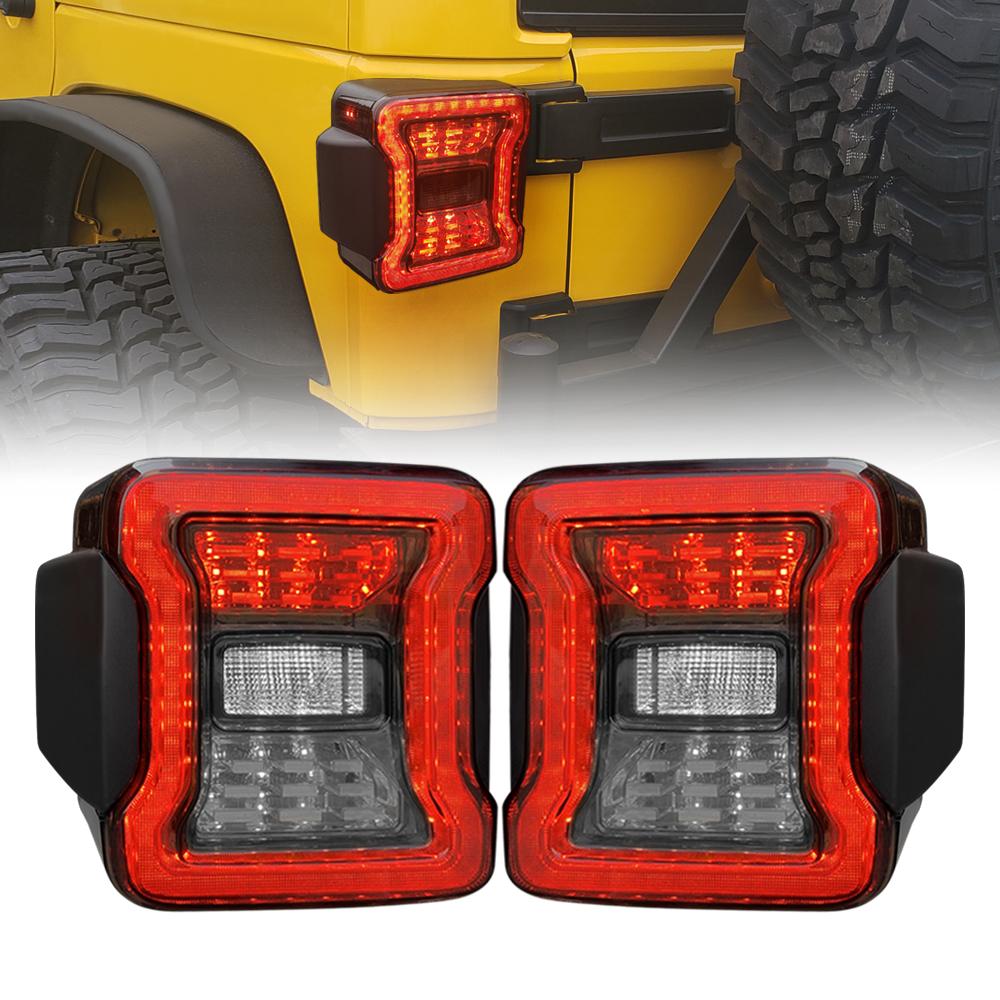
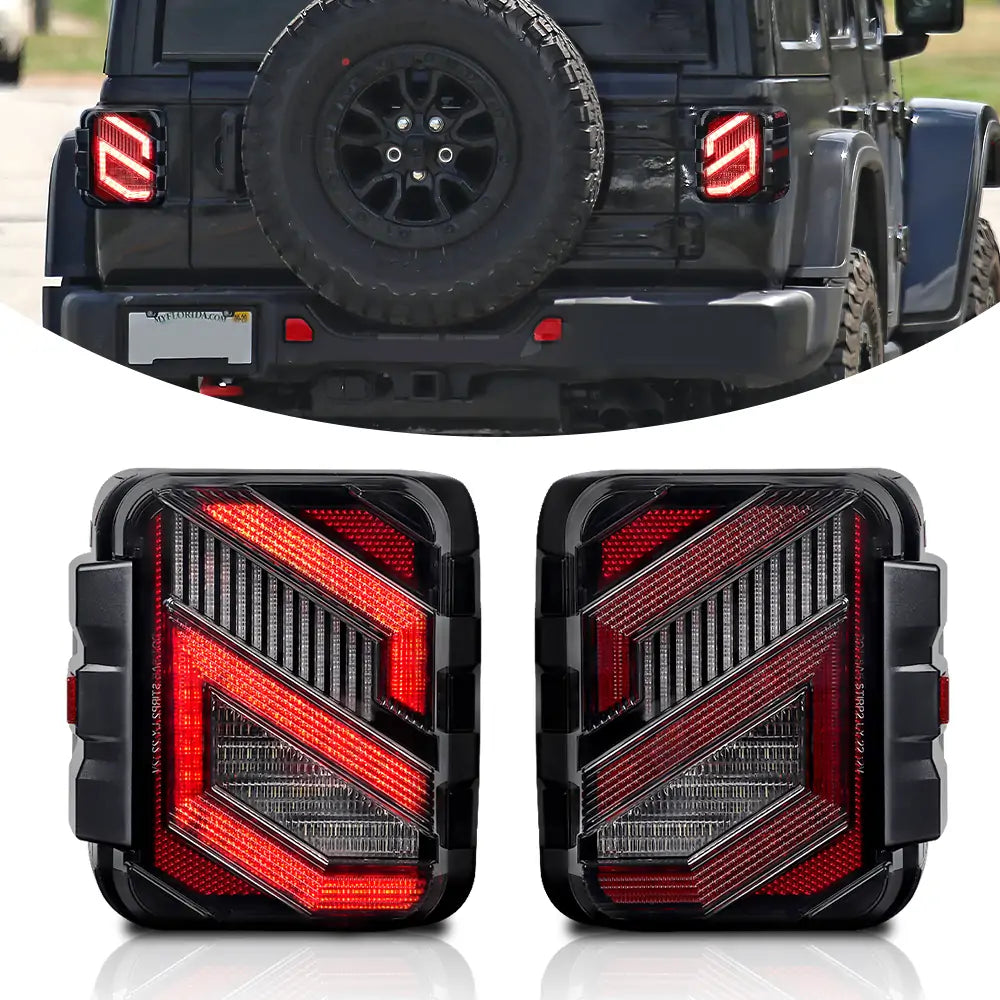
Many brands offer tail lights with built-in patterns, animations, or unique shapes. These are great for personalizing your Wrangler, but make sure they meet legal standards.
Comparison Table: Tail Light Types
Here’s a quick comparison of the most common tail light upgrades:
| Type | Brightness | Durability | Legal Compliance | Style Options |
|---|---|---|---|---|
| LED | High | Excellent | Usually compliant | Many |
| Halo | Medium-High | Very good | Check local laws | Customizable |
| Smoked | Medium | Good | Often restricted | Dark, stealthy |
| Custom Aftermarket | Varies | Varies | Varies | Unlimited |
Choosing The Right Tail Lights For Your Jeep Wrangler
Picking the best tail lights depends on your Wrangler model, budget, style, and legal requirements. Here’s what to consider:
Compatibility
Wranglers come in different generations—YJ, TJ, JK, JL, and Gladiator. Tail lights are not universal. Always check that the lights fit your Jeep’s year and body style.
Quality And Brand
Choose brands known for quality, like Mopar, Spyder, or JW Speaker. Cheap knockoffs may fail quickly or cause electrical problems.
Features
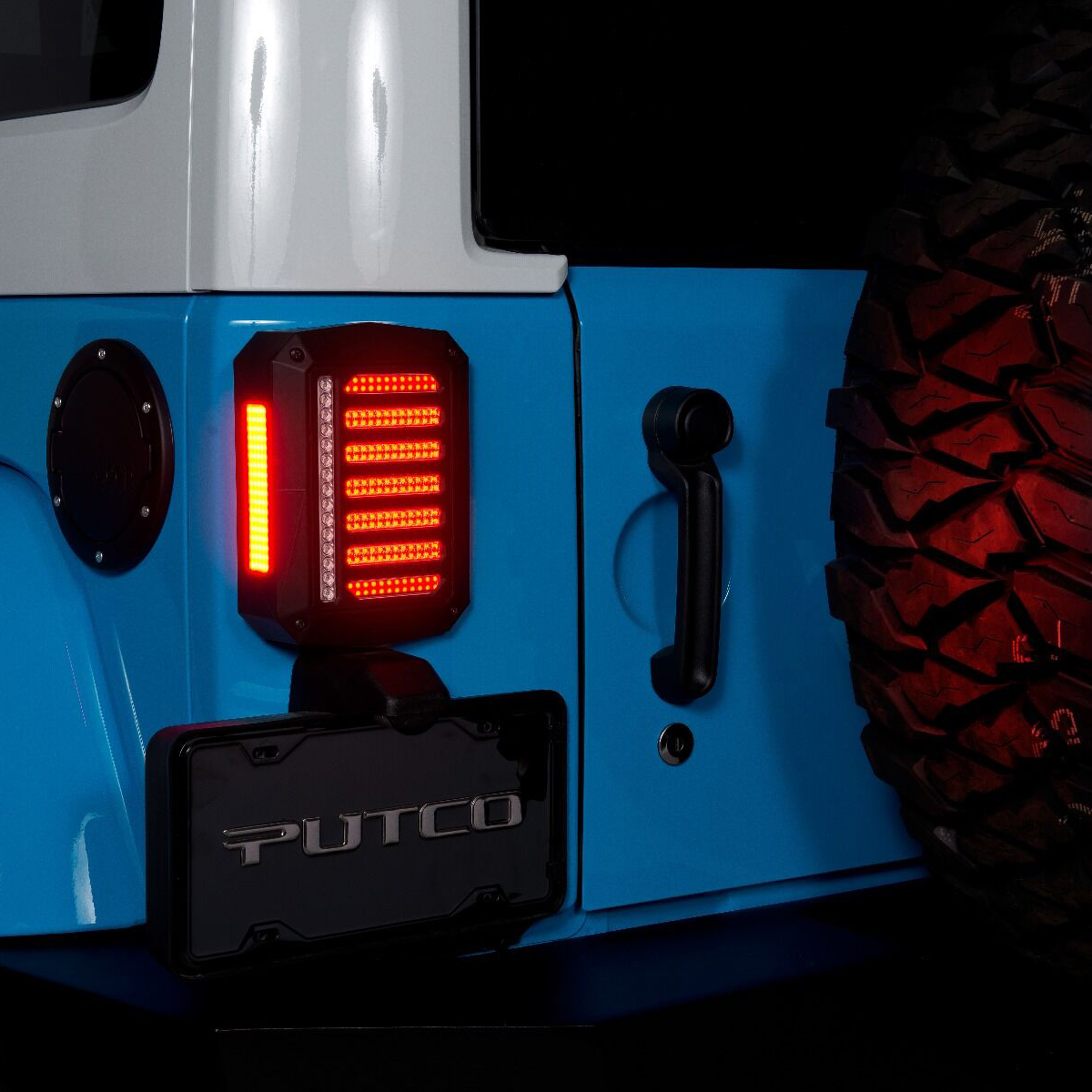
Some tail lights offer extra functions like sequential turn signals, built-in reverse lights, or strobe modes. Decide which features matter most to you.
Budget
Prices range from $70 (basic LED) to $500+ (premium custom). Balance your budget with desired features and durability.
Legal Compliance
Tail lights must meet DOT (Department of Transportation) standards in the US. Some states ban certain colors or smoked lenses. Check laws before buying.
Table: Wrangler Model Compatibility
Here’s a quick guide to which tail light types fit each Wrangler generation:
| Model | Year Range | Common Tail Light Shape | Upgrade Options |
|---|---|---|---|
| YJ | 1987–1995 | Square | LED, Custom, Smoked |
| TJ | 1997–2006 | Rectangular | LED, Halo, Custom |
| JK | 2007–2018 | Rectangular | LED, Halo, Smoked |
| JL | 2018–present | Modern, angular | LED, Custom, Sequential |
| Gladiator | 2020–present | Rectangular | LED, Custom |
Non-obvious insight: Some aftermarket lights claim “JK/JL compatible,” but wiring connectors differ between models. Always double-check plug style and mounting holes.
Tools And Materials Needed
Upgrading tail lights is simple, but having the right tools makes the job easier and safer:
- Screwdriver set (Philips and flathead)
- Socket wrench (usually 8mm or 10mm)
- Trim removal tool (to avoid scratching paint)
- Electrical tape (for securing wires)
- Wire connectors (if splicing wires)
- Gloves (protect hands)
- New tail lights (chosen for your model)
- Owner’s manual (for wiring diagrams)
If your tail lights require wiring changes (like adding resistors), you may also need a multimeter to test voltage and continuity.
Credit: amoffroad.com
Preparing For Installation
Before starting, park your Jeep on a flat surface and turn off the ignition. Make sure you have enough light to work safely.
- Disconnect the battery: Always remove the negative terminal to prevent shocks and avoid short-circuiting electrical parts.
- Gather tools: Keep everything within reach to avoid unnecessary movement.
- Check new tail lights: Inspect them for cracks, missing parts, or wrong connectors.
- Read instructions: Many aftermarket lights come with guides. Read them fully—some steps may differ from stock installation.
Pro tip: Take photos of the wiring before removing old tail lights. This helps avoid mistakes when connecting new lights.
Removing Old Tail Lights
Let’s walk through the steps for most Wrangler models:
- Open the tailgate: This gives access to screws on the tail light housing.
- Remove screws: Use the correct screwdriver or socket. Most Wranglers have two or four screws holding the light.
- Pull out the housing: Gently remove the light. If it sticks, use a trim tool to avoid damage.
- Disconnect wiring: Unplug the connector or, on older models, untwist the bulb socket.
- Inspect wiring: Check for corrosion or frayed wires. Repair as needed before installing new lights.
Some models have extra screws or clips. Always check your manual or the light manufacturer’s website for specifics.
Non-obvious insight: Older Jeeps (YJ, TJ) often have brittle wiring due to age. If you see greenish corrosion, clean with electrical contact cleaner before installing new lights.
Installing New Tail Lights
Now, let’s install the new lights. The process is similar for most aftermarket options, but here are the key steps:
- Connect wiring: Plug in the new connector, or splice wires if needed. Match colors (red to red, black to black, etc. ).
- Secure the housing: Place the new light in the old location. Check for proper fit—some aftermarket lights need minor adjustments.
- Install screws: Tighten screws, but don’t overtighten. Plastic housings can crack easily.
- Test the lights: Reconnect the battery and turn on the ignition. Check brake, reverse, and turn signals to ensure all functions work.
- Check for error codes: Newer Wranglers (JK, JL) may show “bulb out” warnings if the LEDs draw less power. If so, install a load resistor or anti-flicker module.
Troubleshooting Common Issues
- Lights don’t turn on: Check wiring connections and battery terminals.
- Error messages: Install resistors or consult the manufacturer.
- Flickering: Usually caused by power mismatch—use anti-flicker adapters.
- Water leaks: Ensure rubber seals are intact and screws are tight.
Pro tip: If you notice condensation inside the new lights after installation, remove them and dry thoroughly before resealing. Water can quickly damage LEDs.
Upgrading To Sequential Or Animated Tail Lights
Some modern tail lights offer sequential turn signals or animated brake lights. These features are eye-catching and often seen on newer cars. Here’s how to add them:
- Buy compatible lights: Sequential signals require special circuits. Choose lights labeled for your Wrangler model.
- Install as usual: Follow standard steps, but watch for extra wires or modules.
- Connect modules: Some kits include a small control box. Mount it securely and connect as instructed.
- Test all functions: Check turn signals, brake, and hazard lights. Sequential lights should “sweep” from one side to the other.
Non-obvious insight: Some sequential lights use a microcontroller that must be mounted away from heat or vibration. If your kit includes a box, avoid placing it near exhaust or moving parts.
Legal And Safety Considerations
Upgrading tail lights isn’t just about style. You must follow state and federal laws to avoid tickets and keep your Jeep safe.
Dot Approval
Most states require tail lights to be DOT-approved. Look for a DOT or SAE stamp on the lens or packaging. If your lights lack this stamp, you may fail inspection.
Color Restrictions
- Brake lights: Must be red.
- Turn signals: Amber or red, depending on model.
- Reverse lights: White.
- Smoked or tinted lenses: Some states ban or limit darkness. Check your local DMV or police website.
Brightness Limits
Tail lights must be bright enough to be seen from at least 500 feet at night. Some aftermarket LEDs are so powerful they cause glare. Choose lights that meet standards.
Table: Us State Tail Light Restrictions
A quick overview of common state rules:
| State | Tinted/Smoked Allowed | Non-DOT Lights | Color Restrictions |
|---|---|---|---|
| California | Limited | No | Red only |
| Texas | Yes | No | Red only |
| New York | No | No | Red only |
| Florida | Yes (mild) | No | Red only |
| Illinois | Limited | No | Red only |
Friendly reminder: Even if your lights look cool, illegal mods can lead to fines or failed inspections. Always check before you buy.
Maintaining Your Upgraded Tail Lights
Once you’ve installed new tail lights, keep them in top shape:
- Clean regularly: Dirt or mud can block light. Use a soft cloth and mild cleaner.
- Check seals: Inspect rubber gaskets for cracks. Replace if needed to prevent water leaks.
- Test functions: Monthly, check brake, turn, and reverse lights. Early detection prevents safety issues.
- Watch for condensation: If you see fog inside the lens, dry and reseal. Moisture damages LEDs fast.
- Update software: Some high-end lights have firmware updates. Follow manufacturer instructions.
Experience-based tip: Many Jeep owners notice tail light wiring issues after heavy off-roading. Mud, water, and vibration can loosen connectors. After every trail ride, check your wiring and seals.
Common Mistakes When Upgrading Jeep Tail Lights
Even simple upgrades can go wrong. Avoid these mistakes:
- Buying the wrong model: Always double-check year, model, and connector type.
- Ignoring error codes: Modern Jeeps need correct power load. Install resistors if needed.
- Over-tinting lenses: Smoked lights are stylish, but can be illegal or unsafe.
- Poor wiring: Loose or exposed wires can cause shorts or fires. Always secure and tape connections.
- Skipping battery disconnect: Working with live wires risks injury and Jeep damage.
- Using cheap lights: Low-quality LEDs may fail or melt. Invest in reputable brands.
Non-obvious insight: Some tail light upgrades interfere with trailer wiring. If you tow, test all lights with your trailer attached before hitting the road.
Jeep Wrangler Tail Light Upgrade: Real-life Examples
Let’s look at a few real stories:
Tj Owner Upgrade
Mike owns a 2002 Wrangler TJ. He upgraded to LED tail lights from JW Speaker. Installation took less than an hour. The LEDs were much brighter—his friends noticed improved visibility even in daylight. Mike had to install a resistor to clear the dash warning, but it was a quick fix.
Jl Custom Animation
Sarah drives a 2021 JL. She chose sequential animated lights from Oracle Lighting. The new lights fit perfectly, and the animated turn signals drew compliments at local Jeep events. Sarah’s only challenge was mounting the control box securely, but she found space behind the tailgate trim.
Yj Smoked Tail Lights
Carlos upgraded his classic YJ to smoked LED tail lights. Installation was easy, but he failed state inspection due to darkness. He replaced them with DOT-approved clear LED lights, keeping the smoked ones for off-road events only.
How Upgraded Tail Lights Affect Off-roading
Better tail lights aren’t just for city driving. Off-roaders benefit in several ways:
- Visibility: Brighter lights help others see your Jeep in dust, mud, or fog.
- Durability: LEDs survive vibration, water, and impacts better than bulbs.
- Customization: Sequential or colored lights help group members identify your Jeep in convoy runs.
- Safety: Quick-reacting brake lights warn others on steep descents or sudden stops.
Experience-based tip: Some aftermarket lights include built-in reverse flood lights. This is a huge help when backing up in darkness or navigating tight trails.
Jeep Wrangler Tail Light Upgrade: Cost Breakdown
How much should you expect to spend? Here’s a general range:
- Basic LED tail lights: $70–$150 per pair
- Premium LED/Sequential: $200–$500 per pair
- Installation tools/supplies: $20–$50
- Load resistors/anti-flicker: $10–$30 (if needed)
Most owners can install themselves. If you hire a shop, labor costs average $50–$150.
Non-obvious insight: Some insurance companies offer discounts for safety upgrades. Ask your agent if brighter tail lights qualify.
Credit: www.putco.com
Upgrading Jeep Wrangler Tail Lights: Step-by-step Summary
Here’s a quick recap for DIYers:
- Choose compatible lights for your Wrangler model.
- Gather tools and disconnect the battery.
- Remove old tail lights by unscrewing and unplugging.
- Check and repair wiring as needed.
- Install new lights—plug in, mount, and secure.
- Test all functions (brake, turn, reverse).
- Install resistors if your Jeep shows error codes.
- Inspect seals to prevent leaks.
- Check legal compliance before driving.
Friendly tip: Keep your old tail lights as backups. If your new lights fail or are not street legal, you can reinstall originals quickly.
Where To Buy Jeep Wrangler Tail Lights
Buy tail lights from trusted sources:
- Official Jeep dealers: Guaranteed compatibility and DOT approval.
- Reputable online retailers: Sites like Quadratec, ExtremeTerrain, and Amazon offer a wide range.
- Local auto parts stores: Good for immediate needs and warranty support.
Avoid buying from unknown sellers or auction sites. Warranty and support may be limited.
For more details on vehicle lighting laws and DOT requirements, check the official NHTSA Lighting Standards.
Credit: loyo-led.com
Frequently Asked Questions
How Long Does It Take To Upgrade Jeep Wrangler Tail Lights?
Most installations take 30–60 minutes for DIYers. If you’re new to car wiring, plan for extra time to check connections and test functions.
Do Upgraded Tail Lights Void My Jeep’s Warranty?
No, as long as you use DOT-approved lights and avoid damaging wiring. However, electrical failures caused by improper installation may affect coverage. Always keep your original parts.
Will Upgraded Tail Lights Work With Factory Trailer Wiring?
Usually yes, but some LED upgrades cause trailer wiring errors. Test your Jeep with a trailer attached after installation to ensure all signals work.
Are Smoked Tail Lights Legal Everywhere?
No. Many states limit or ban smoked lenses. Check your local DMV or police website before installing. If unsure, use clear or lightly tinted lights.
What Should I Do If My Tail Lights Show An Error Message?
Install a load resistor or anti-flicker module. Most aftermarket LED kits include these. If not, buy separately and follow instructions. If errors persist, consult your Jeep dealer.
Upgrading your Jeep Wrangler tail lights is one of the best ways to boost safety, style, and off-road performance. With the right tools, careful installation, and attention to legal details, you’ll enjoy brighter, longer-lasting lights that turn heads and keep you visible wherever you drive.
Whether you’re a DIY beginner or a seasoned Jeep owner, this guide ensures your upgrade goes smoothly—so you can focus on the adventure ahead.