
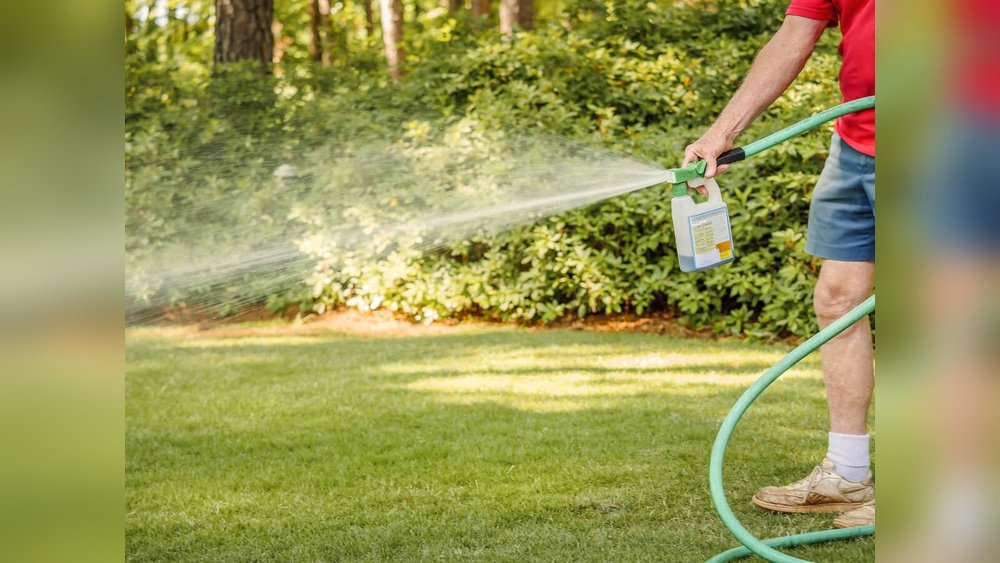
Applying liquid fertilizer to your lawn can transform a patchy, dull yard into a lush, green carpet. Many homeowners want that golf-course look, but they feel confused by all the products, methods, and timing options. If you’re new to liquid fertilizers, you might wonder: Is it safe for kids and pets? Will it burn your grass? Is it better than granular fertilizer? This guide answers all those questions and more, using simple, clear language.
We’ll walk through everything you need to know, from choosing the right fertilizer and preparing your lawn, to applying it like a pro and avoiding common mistakes. You’ll also find tables comparing liquid with granular fertilizers, detailed instructions, and practical tips that even many experienced gardeners miss.
Why Choose Liquid Fertilizer For Lawns?
Liquid fertilizer is popular because it offers quick results and is easy to apply. Unlike granular fertilizer, which releases nutrients slowly, liquid fertilizer is absorbed through both the roots and leaves. This means your lawn gets a fast boost, often showing greener color within days.
Key Advantages
- Fast-acting: Results can be seen in as little as 24–72 hours.
- Even application: It’s easier to cover the whole lawn evenly.
- Adjustable dosage: You can dilute for young grass or spot-treat struggling areas.
- Versatile use: Works well for both established lawns and newly seeded areas.
But liquid fertilizers also have some drawbacks, especially if used incorrectly. They can burn your grass if applied too heavily, and they require more frequent applications than granular types.
Comparing Liquid Vs. Granular Fertilizer
Here’s a quick look at how liquid and granular fertilizers stack up:
| Feature | Liquid Fertilizer | Granular Fertilizer |
|---|---|---|
| Speed of Results | 1–3 days | 7–21 days |
| Application Frequency | Every 2–4 weeks | Every 6–8 weeks |
| Ease of Application | Easy with hose or sprayer | Spread with a spreader |
| Cost per Application | Usually higher | Usually lower |
| Best For | Quick fixes, young grass | Long-term feeding |
Understanding Lawn Nutrient Needs
Every lawn needs a balance of nutrients, but not every lawn is the same. Grass type, soil quality, weather, and recent lawn care all affect what your yard needs. The three main nutrients in lawn fertilizers are nitrogen (N), phosphorus (P), and potassium (K). You’ll often see numbers like 20-5-10 on fertilizer bottles. These show the percentage of each nutrient.
- Nitrogen (N): Promotes green color and leafy growth.
- Phosphorus (P): Supports root development.
- Potassium (K): Improves overall strength and resistance to disease.
When Liquid Fertilizer Makes Sense
- After heavy rain: Nutrients may have washed away.
- Signs of yellowing: Grass needs a quick nutrient boost.
- High-traffic lawns: Extra feeding for recovery.
- Sandy soils: Nutrients leach away faster.
If you’re not sure what your lawn needs, a soil test helps avoid over-fertilizing and wasting money. Many hardware stores sell simple soil test kits.
Selecting The Right Liquid Fertilizer
Choosing the best liquid fertilizer depends on your goals, grass type, and the season. Here’s how to make the right choice.
Check The N-p-k Ratio
- High-nitrogen (e.g., 30-0-0): For lush, green growth in spring and summer.
- Balanced (e.g., 20-20-20): For overall health, especially in stressed lawns.
- High-phosphorus (e.g., 10-20-10): For new seeding or after damage.
Synthetic Vs. Organic Options
- Synthetic fertilizers: Work quickly, are usually less expensive, and offer precise nutrient ratios.
- Organic fertilizers: Slower release, improve soil health, less risk of burning grass.
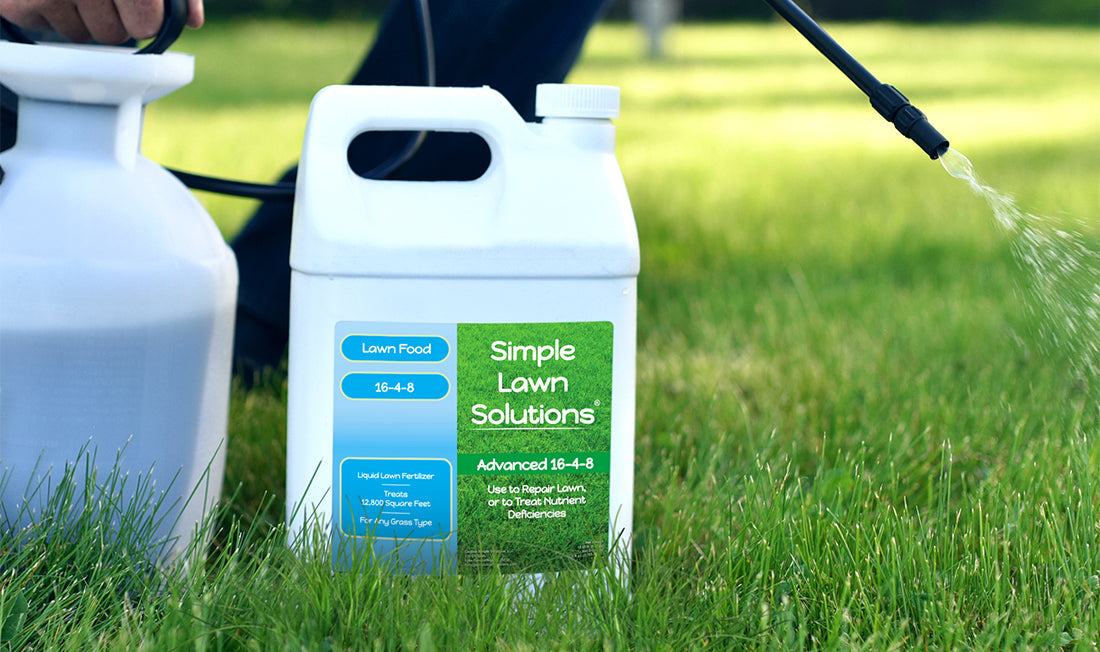
Ready-to-use Vs. Concentrate
- Ready-to-use: Comes in spray bottles you attach to your hose. Good for small lawns.
- Concentrate: Needs mixing with water, but more cost-effective for larger yards.
Lawn Size And Equipment
If you have a small lawn (under 2,000 sq ft), a ready-to-spray bottle is often enough. For larger lawns, a tank sprayer or hose-end sprayer will save time and effort.
Preparing Your Lawn For Application
Getting your lawn ready is just as important as applying the fertilizer itself. The steps below help you avoid patchy results or wasted fertilizer.
1. Mow The Lawn
Cut your grass to its normal height 1–2 days before fertilizing. This makes sure the fertilizer reaches the soil and is not blocked by tall grass.
2. Remove Debris
Pick up sticks, leaves, or toys. Anything left on the lawn can block fertilizer and cause uneven results.
3. Water If Needed
If the soil is dry and hard, water your lawn deeply a day before applying fertilizer. This helps nutrients soak in and reduces the risk of burning.
4. Check The Weather
Apply fertilizer when the weather is calm, not windy. Avoid applying right before heavy rain, which can wash fertilizer away.
How To Mix And Prepare Liquid Fertilizer
Most mistakes happen during mixing. If you mix too strong, you risk burning your lawn. Too weak, and you waste time and money.
Reading The Label
Always start by reading the product label. It will list:
- How much fertilizer to use per gallon of water
- How many square feet it will cover
- Special safety instructions
Tools You’ll Need
- Measuring cup or spoon: For precise mixing.
- Clean bucket: For mixing concentrate.
- Sprayer: Hose-end, backpack, or handheld sprayer.
Mixing Steps
- Fill your sprayer or bucket with the right amount of water.
- Measure the fertilizer carefully.
- Pour the fertilizer into the water (not the other way around, to avoid splashing).
- Stir or shake well to mix.
Example Mixing Calculation
Suppose your product says: “Mix 3 ounces per gallon of water. Covers 1,000 sq ft.”
- For a 2,000 sq ft lawn: Use 6 ounces in 2 gallons of water.
Safety Tip
Wear gloves and safety glasses. Even organic fertilizers can irritate skin or eyes.
Step-by-step Guide To Applying Liquid Fertilizer
Here’s how to apply liquid fertilizer for best results.
1. Choose The Right Sprayer
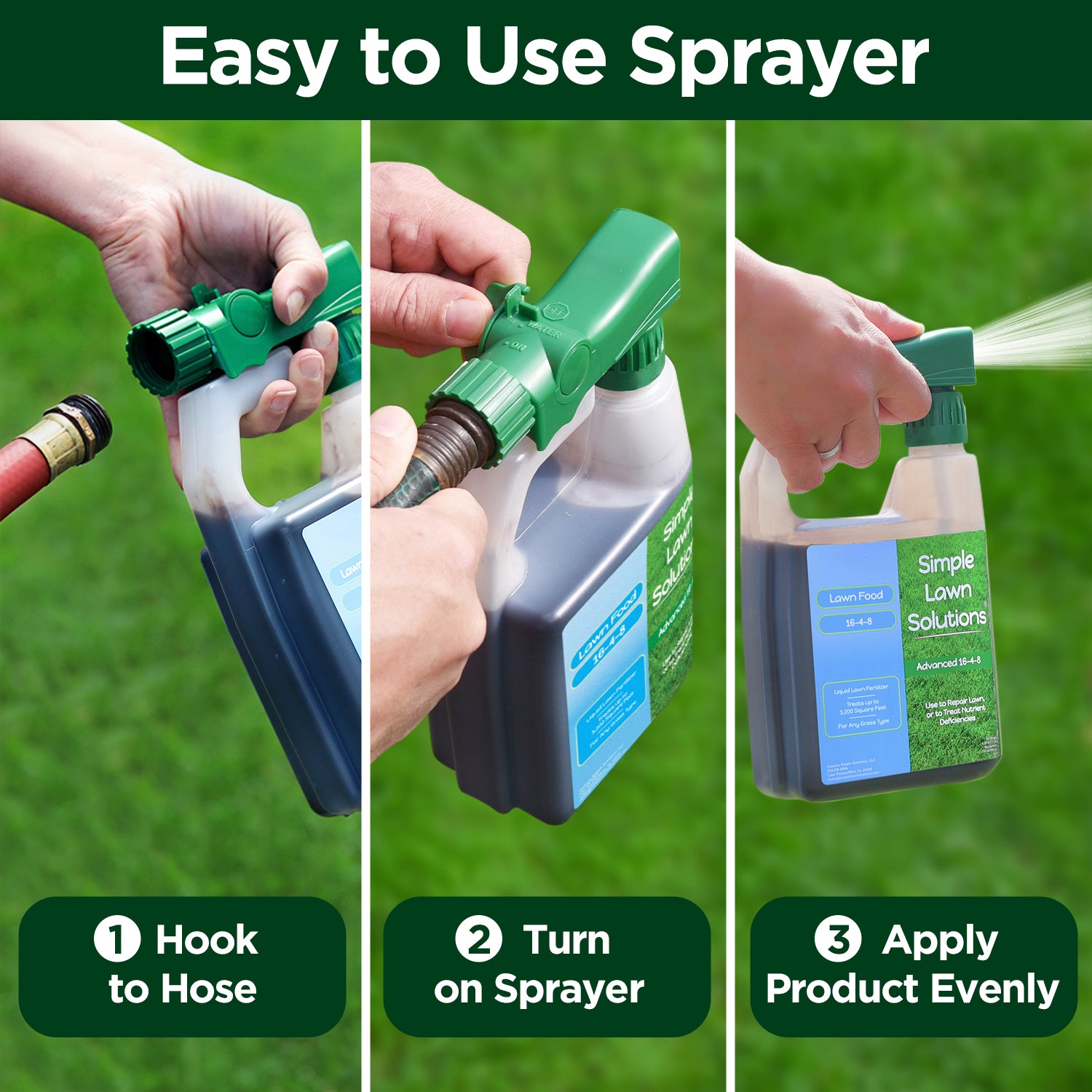
- Hose-end sprayer: Good for medium to large lawns. Connects to your garden hose.
- Backpack sprayer: Good for even coverage, but needs manual pumping.
- Handheld sprayer: Best for spot-treating small areas.
2. Set The Sprayer Correctly
Adjust the nozzle for a fine mist. This helps the fertilizer stick to grass blades and reach the soil.
3. Walk At A Steady Pace
Walk back and forth across your lawn in straight lines, overlapping each pass by about 6–8 inches. This prevents missed spots.
4. Apply Evenly
Move your arm or the sprayer side to side at a steady speed. Don’t stop in one spot or you’ll over-fertilize that area.
5. Watch For Signs Of Coverage
Grass should look damp but not soaked. If you see puddles, you’re applying too much.
6. Avoid Overlapping Too Much
Extra layers can burn grass. If you’re unsure, it’s better to apply a little less and repeat in 2–3 weeks.
7. Clean Up
Rinse your sprayer and tools with clean water. Store leftover fertilizer safely, away from kids and pets.
Credit: simplelawnsolutions.com
Application Timing: When To Fertilize
Timing is key for the healthiest lawn. Apply at the wrong time, and you may waste fertilizer or even harm your grass.
Best Seasons
- Cool-season grasses (e.g., Kentucky bluegrass, fescue): Fertilize in early spring and fall.
- Warm-season grasses (e.g., Bermuda, zoysia, St. Augustine): Fertilize in late spring and summer.
Ideal Conditions
- Morning or late afternoon: Temperatures are cooler, reducing evaporation.
- No rain expected for 24 hours: Prevents runoff.
- Lawn is dry: Wet grass can cause fertilizer to stick and burn spots.
How Often Should You Apply?
Most liquid fertilizers are applied every 3–4 weeks during the growing season. Do not fertilize dormant grass or during heat waves.
Table: Application Frequency By Grass Type
| Grass Type | Application Frequency | Best Months |
|---|---|---|
| Cool-season | Every 4 weeks | March–May, September–October |
| Warm-season | Every 3 weeks | May–August |
| Newly seeded | Once after sprouting | Anytime grass is growing |
Watering After Application
How and when you water after fertilizing is critical. Many beginners make mistakes here.
Should You Water After Liquid Fertilizer?
- Usually, no: Most liquid fertilizers are absorbed through leaves. Wait at least 24 hours before watering unless the label says otherwise.
- Exception: Some products recommend light watering to move nutrients into the root zone, especially in hot weather.
Avoid Heavy Rain
If heavy rain is expected, wait to fertilize. Too much water can wash fertilizer off your lawn and into storm drains.
Signs You’ve Watered Correctly
- Grass stays moist but not soggy for 24 hours.
- No puddles or runoff.
- Color begins to improve within 2–3 days.
Safety Tips And Environmental Concerns
Liquid fertilizers are safe if used correctly, but they can harm pets, kids, and the environment if misused.
Keep Pets And Kids Off The Lawn
Wait at least 24–48 hours after applying fertilizer before letting pets or children on the lawn.
Don’t Overapply
Too much fertilizer can burn grass, kill beneficial soil microbes, or pollute local waterways.
Store Fertilizer Safely
Keep bottles tightly sealed and out of reach of children.
Protect Waterways
Never apply fertilizer near storm drains, sidewalks, or streams. Use a buffer zone of at least 10 feet.
Proper Cleanup
Rinse sprayers and tools over grass, not driveways. This lets any leftover nutrients feed your lawn instead of washing into sewers.
Common Mistakes And How To Avoid Them
Even experienced gardeners make mistakes with liquid fertilizer. Here’s how to avoid the most common problems.
1. Mixing Incorrectly
Guessing or “eyeballing” the amount of fertilizer leads to burns or weak results. Always measure and mix as directed.
2. Overlapping Passes
Doubling up on fertilizer in some areas causes brown spots. Walk in straight, overlapping lines, but don’t go over the same spot twice.
3. Fertilizing In Hot Weather
Applying during midday or heat waves increases evaporation and can burn the lawn. Fertilize in the morning or evening when it’s cooler.
4. Not Checking Weather Forecast
Rain right after application can wash away nutrients. Wait for a dry, calm day.
5. Ignoring Soil Tests
Without testing, you might add nutrients your lawn doesn’t need, wasting money and harming soil health.
Credit: simplelawnsolutions.com
Troubleshooting: If Something Goes Wrong
If you make a mistake or see problems after fertilizing, here’s what to do.
Burnt Patches
If you notice brown or yellow patches:
- Water the area deeply to dilute excess fertilizer.
- Avoid reapplying until the grass recovers (usually 2–3 weeks).
No Improvement
If your lawn doesn’t green up:
- Check your mixing and application method.
- Consider a soil test—your lawn may need a different nutrient.
Streaks Or Uneven Color
This usually means uneven coverage. Next time, walk slower and overlap passes more carefully.
Advanced Tips For Better Results
Ready to go beyond the basics? These expert tips can make your lawn care even more effective.
Use A Surfactant
Adding a surfactant (a wetting agent) to your mix helps fertilizer spread over the leaf surface and absorb better. Some products include this; others sell it separately.
Alternate Fertilizer Types
Switch between liquid and granular fertilizers during the season. For example, use granular in early spring for slow feeding, then liquid for a quick summer boost.
Spot-treat Problem Areas
Don’t waste fertilizer on healthy grass. Use a handheld sprayer to treat yellow spots, pet urine burns, or areas recovering from disease.
Record Your Results
Keep a notebook or use a lawn care app to record what you used, when you applied it, and the weather conditions. This helps you improve year after year.
Table: Best Application Methods By Lawn Size
| Lawn Size | Recommended Sprayer | Application Time |
|---|---|---|
| <1,000 sq ft | Handheld or ready-to-spray | 15–20 minutes |
| 1,000–5,000 sq ft | Hose-end sprayer | 30–45 minutes |
| >5,000 sq ft | Backpack sprayer | 45–60 minutes |
Liquid Fertilizer For Special Lawn Situations
Some lawns have extra needs. Here’s how to adapt your routine.
Newly Seeded Lawns
Wait until grass seedlings are 2–3 inches tall before the first fertilizer application. Use a gentle, balanced formula.
Drought-stressed Lawns
Don’t fertilize during drought. Wait until rain returns and grass starts growing again, then use a diluted mix.
Shady Lawns
Grass in shade needs less fertilizer. Reduce the amount by 25% to avoid burning.
High-traffic Lawns
Yards used by kids, pets, or for sports benefit from a little extra potassium. Look for a fertilizer with a higher K number.
Monitoring And Maintaining Results
Applying fertilizer is just one step. Keeping your lawn lush and healthy requires ongoing attention.
Watch For Changes
- Color: Healthy grass is a deep, even green.
- Growth rate: Too much fertilizer leads to rapid growth and more mowing.
- Weeds and pests: A thick, healthy lawn crowds out weeds naturally.
Adjust As Needed
If you see poor color or growth, adjust your fertilizer schedule or try a different product next time.
Aerate Annually
Compacted soil blocks nutrients. Aerate your lawn once a year to keep roots healthy.
Overseed Thin Spots
In early fall or spring, add new seed to thin areas. Fertilize lightly to help new grass establish.

Credit: turfgator.com
Environmental And Local Law Regulations
Many cities and states have rules about lawn fertilizer to protect water quality. Before you start, check local guidelines.
- Some areas ban phosphorus fertilizers except for new lawns.
- Buffer zones may be required near lakes, streams, or wetlands.
- Avoid fertilizing within 24–48 hours of heavy rain.
For more on responsible fertilizing, see the EPA’s Lawn and Garden Nutrient Pollution page.
Frequently Asked Questions
How Soon Can I Mow After Applying Liquid Fertilizer?
Wait at least 24–48 hours after application. This allows the fertilizer to be absorbed through the leaves and roots. Mowing too soon can reduce effectiveness and remove nutrients before they soak in.
Is Liquid Fertilizer Safe For Pets And Children?
Yes, but keep pets and kids off the lawn for 24–48 hours after application. Once the grass is dry and the fertilizer has been absorbed, normal activity is safe.
Can I Mix Weed Killer And Liquid Fertilizer?
Some products are “weed and feed” formulas, but mixing your own can be risky. Always check labels for compatibility. If unsure, apply fertilizer and weed killer separately, waiting at least a week between treatments.
What If It Rains Soon After I Apply Liquid Fertilizer?
Light rain usually isn’t a problem, but heavy rain can wash nutrients away. If this happens, wait a week and check your lawn’s color. You may need to reapply a lighter dose.
How Do I Know If I Used Enough Fertilizer?
Healthy grass should green up within 2–5 days. If not, check your mixing rate and application method. Too much or too little fertilizer both cause poor results, so always follow label directions.
Bringing your lawn to life with liquid fertilizer is easier than you might think. With the right product, good timing, and a careful approach, you’ll see rapid improvements. Avoid common mistakes, watch for signs of progress, and adjust as needed.
In just a few weeks, you can enjoy a thick, green lawn that’s the envy of your neighborhood—without the confusion or stress.