

Bermuda grass is famous for its tough nature, fast growth, and lush green color. You see it in golf courses, sports fields, and yards across the warm southern United States. But even the strongest grass needs the right care. If you want your Bermuda grass to thrive, fertilizing correctly is essential.
Many homeowners struggle—too much fertilizer burns the grass, too little leaves it thin and pale. Let’s break down how to fertilize Bermuda grass correctly, so you can enjoy a healthy, vibrant lawn year-round.
Understanding Bermuda Grass Needs
Bermuda grass is a warm-season grass. It grows best when temperatures are between 75°F and 95°F, usually from late spring to early fall. Its roots go deep, making it drought-resistant. But it’s a heavy feeder—meaning it needs plenty of nutrients to stay thick and green. Even though it can survive heat and dry spells, Bermuda grass will not show its best color or density without good nutrition.
Some varieties of Bermuda grass, like ‘Tifway’ or ‘Common Bermuda’, are used for different purposes. Tifway is popular for sports fields because it recovers quickly from damage. Common Bermuda spreads easily and fills bare spots, but may not be as fine-textured.
Regardless of variety, the basic nutrient needs remain the same.
Main Nutrients Required
Bermuda grass mainly needs nitrogen, but also benefits from phosphorus and potassium. Think of these as the “big three” in lawn care:
- Nitrogen (N): Promotes green color and rapid growth. Without enough nitrogen, Bermuda grass turns pale and grows slowly.
- Phosphorus (P): Helps root development and seedling strength. This is especially important after overseeding or when establishing new sod.
- Potassium (K): Improves stress resistance and disease tolerance. Potassium helps Bermuda grass survive heat, drought, and foot traffic.
Each nutrient plays a role. If you only feed nitrogen, your grass may look good but have weak roots or be prone to disease. A balanced approach keeps the lawn healthy both above and below the soil.
Growth Cycle And Timing
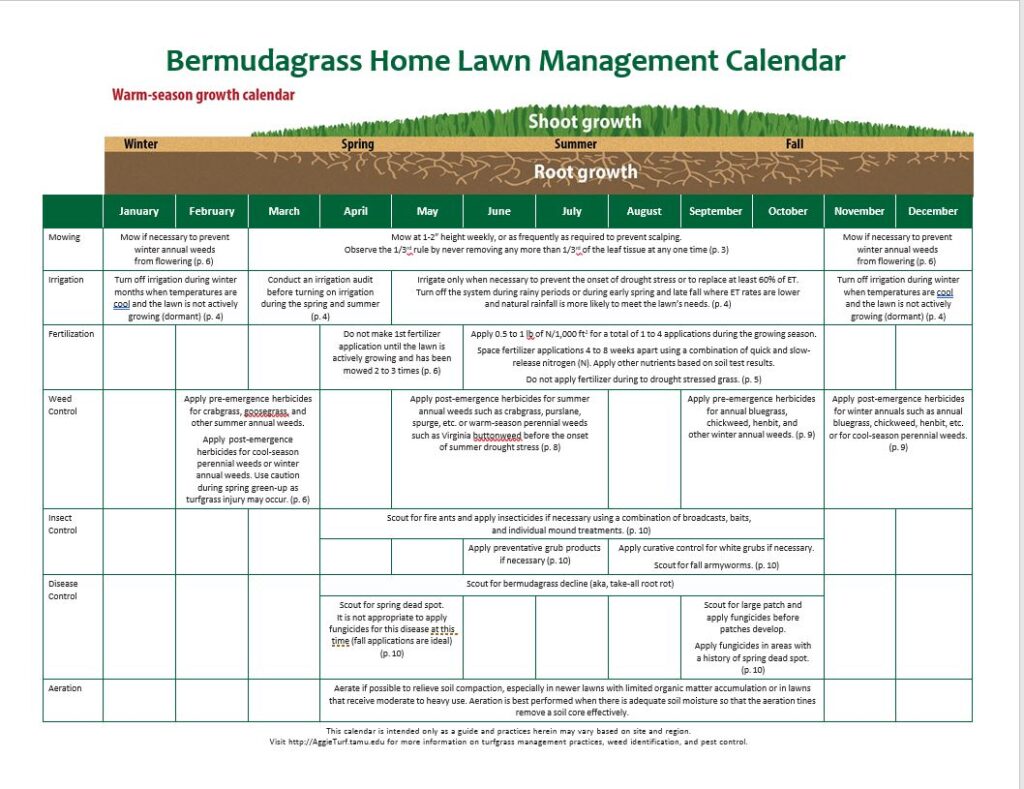
Bermuda grass has a seasonal growth pattern. It wakes up in late spring, peaks in summer, then slows down in fall. Fertilizing at the wrong time is a common mistake. For best results, feed during active growth—late April to early September in most southern states.
In cooler regions, Bermuda grass might start growing later and go dormant earlier. You should always adjust your schedule to your local climate. If you fertilize too early, you risk feeding weeds instead of grass. Too late, and the nutrients may not be fully used before dormancy.
Soil Testing: The Starting Point
Before you buy fertilizer, start with a soil test. This step is often skipped, but it makes a huge difference. A soil test tells you:
- The pH of your soil (Bermuda grass prefers 6.0–7.0)
- Levels of nitrogen, phosphorus, potassium
- Any micronutrient deficiencies (like iron or magnesium)
Most university extension offices offer affordable soil testing. It’s simple: collect soil samples from different spots in your yard, mix them, and send to the lab. Results come in a week or two. Some garden centers also sell DIY kits, but lab tests are more accurate.
Why Soil Testing Matters
If your soil is too acidic or lacks phosphorus, even the best fertilizer won’t help. Adjusting pH or adding missing nutrients before the main fertilizer is often needed. For example, if your soil is below pH 6. 0, apply lime to raise it.
If above 7. 0, sulfur can lower it.
A soil test can also reveal problems like high salt content or poor drainage, which affect Bermuda grass health. Fixing these issues early makes fertilizing much more effective. Many homeowners are surprised to find their soil needs basic improvement before any fertilizer can work.
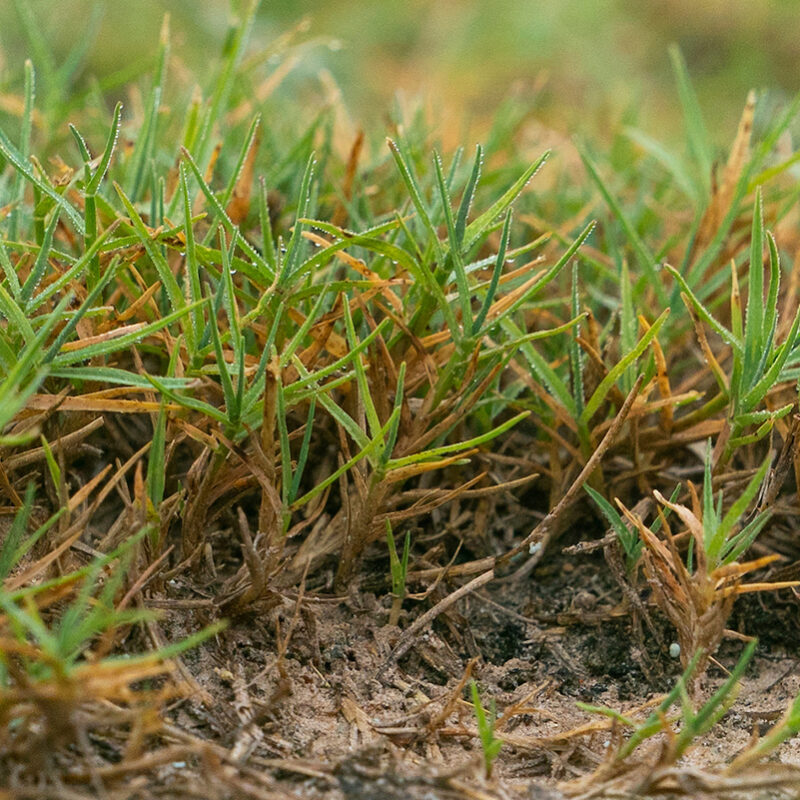
Credit: agrilifeextension.tamu.edu
Choosing The Right Fertilizer
With your soil test results in hand, you can select the best fertilizer. Fertilizers come in many forms, but for Bermuda grass, the focus is on N-P-K ratio. This is the set of three numbers on every fertilizer bag.
N-p-k Ratio Explained
If a bag says 16-4-8, it means:
- 16% nitrogen
- 4% phosphorus
- 8% potassium
For Bermuda grass, high-nitrogen fertilizers are best during the growing season. But you still need some phosphorus and potassium—especially if your soil test shows deficiencies.
Some brands offer “lawn starter” fertilizers with more phosphorus. These are good for new sod or seed but not needed every year. Always match your choice to your soil’s needs, not just the label.
Types Of Fertilizers
There are two main types:
- Granular: Easy to spread, lasts longer, good for bigger lawns. Granular fertilizer comes in small pellets that dissolve slowly, feeding your lawn over weeks.
- Liquid: Fast acting, good for quick green-up, often used for spot treatment. Liquid fertilizers can be mixed with water and sprayed, giving results in days.
Most homeowners prefer granular because it’s simple to apply and doesn’t need special equipment. However, if you have small bare spots or need a quick boost after stress, liquid fertilizer can help. For larger lawns, granular is more practical and cost-effective.
Synthetic Vs Organic
Synthetic fertilizers deliver nutrients quickly. Organic fertilizers, like compost or manure, release nutrients slowly and improve soil health. Both work for Bermuda grass, but synthetic is more predictable. Organic is better if you want long-term soil improvement.
Organic products often contain beneficial microbes that help roots absorb nutrients. Over time, organic fertilizers make your soil richer and more resilient. Synthetic fertilizers give fast, visible results but don’t improve soil structure.
Comparison Table: Granular Vs Liquid Fertilizer
| Feature | Granular Fertilizer | Liquid Fertilizer |
|---|---|---|
| Application | Spread with broadcaster | Spray with hose or sprayer |
| Duration | Slow release (weeks) | Fast release (days) |
| Coverage | Good for large areas | Good for small areas or quick fixes |
| Cost | Usually cheaper | Often more expensive |
| Ease of Use | Easy for beginners | Requires equipment |
When And How Often To Fertilize
Timing is crucial. Fertilizing at the wrong time wastes money and can even harm your lawn.
Main Fertilizing Windows
- First Application: Late spring, when grass starts growing (soil temp above 65°F). This wakes up the lawn and encourages strong early growth.
- Second Application: Early summer, 6–8 weeks after first. As temperatures rise, Bermuda grass becomes more active and needs more food.
- Third Application: Late summer, again 6–8 weeks later. This keeps your lawn thick and green into the hottest months.
- Optional Fourth: Early fall, if needed, but stop before grass goes dormant. This helps roots store energy for winter, but heavy feeding is not necessary.
Most lawns need 2–3 applications per year. Over-fertilizing leads to rapid growth, thatch buildup, and risk of disease. If you see thatch—a layer of dead stems and roots—cut back on fertilizer and consider aeration.
Monthly Fertilization Schedule Example
| Month | Fertilizer Type | Recommended Rate |
|---|---|---|
| April | High Nitrogen (16-4-8) | 1 lb N per 1,000 sq ft |
| June | Balanced (10-10-10) | 0.5–1 lb N per 1,000 sq ft |
| August | High Nitrogen (21-0-0) | 1 lb N per 1,000 sq ft |
| September (optional) | Low Nitrogen (6-0-0) | 0.5 lb N per 1,000 sq ft |
This schedule works for most southern yards, but you should always adjust for your climate. For example, in coastal areas where temperatures stay higher longer, you might extend feeding into early October.
Calculating How Much Fertilizer To Apply
Applying the right amount matters. Too much burns the grass; too little doesn’t help. Here’s a simple method:
- Know your lawn size: Measure length × width. Most bags give rates per 1,000 sq ft. If your yard is oddly shaped, break it into rectangles and add them up.
- Check fertilizer bag: The N-P-K ratio tells you how much actual nitrogen is in the bag.
- Calculate needed fertilizer: For example, if you want to apply 1 lb nitrogen per 1,000 sq ft, and your fertilizer is 16-4-8 (16% nitrogen):
- Divide 1 by 0.16 = 6.25 lbs of fertilizer per 1,000 sq ft
- Adjust for your lawn: If your lawn is 3,000 sq ft, multiply 6.25 × 3 = 18.75 lbs total.
This calculation prevents overuse and gives your Bermuda grass exactly what it needs.
If you’re unsure, start with a lower rate and see how your lawn responds. You can always apply more, but you cannot undo a burn.
Best Practices For Application
How you apply fertilizer affects results. The following tips help avoid common mistakes:
Spreader Tips
- Use a broadcast spreader for even coverage. Rotary spreaders throw fertilizer wide, while drop spreaders are more precise.
- Calibrate the spreader—too much or too little wastes fertilizer. Always test on a driveway or sidewalk first.
- Walk at a steady pace; overlap slightly to avoid stripes. Empty the spreader over the lawn, not on concrete.
Watering
- Water lightly after applying fertilizer, unless it’s slow-release. Watering dissolves the pellets and moves nutrients to the roots.
- Never apply on dry, stressed grass—wait for rain or irrigate first. Dry grass can burn easily, and fertilizer won’t absorb well.
- Avoid applying before heavy rain; nutrients may wash away. Try to fertilize when light rain is forecast or use irrigation.
Safety
- Keep fertilizer off driveways and sidewalks—sweep up spills. Fertilizer can stain and pollute water.
- Store fertilizer in a dry, cool place. Moisture ruins fertilizer, making it clump or lose potency.
- Wear gloves to protect your skin. Some fertilizers can irritate hands or eyes.
Addressing Common Issues
Bermuda grass is tough, but problems still happen. Here’s how to deal with them:
Yellowing Or Pale Grass
Usually a sign of nitrogen deficiency. If soil test confirms low nitrogen, apply a high-nitrogen fertilizer. Sometimes yellowing means iron deficiency; use an iron supplement if needed.
In shaded areas, Bermuda grass may stay pale even with good nutrition. Consider removing obstacles or switching to shade-tolerant grass if needed.
Thin Or Patchy Lawn
Could be from poor soil, low phosphorus, or incorrect mowing. Fertilize with a balanced product and overseed if needed. Aerate soil every couple of years.
Compacted soil is another hidden cause. If you see puddles after rain or difficulty pushing a shovel, aerate your lawn before fertilizing.
Burned Grass
If you see brown spots after fertilizing, you may have applied too much or not watered enough. Water deeply to dilute fertilizer. Use slow-release next time.
Check the weather forecast before application. If temperatures are above 95°F, wait until cooler weather to fertilize.
Weeds
Fertilizer encourages grass, but also weeds if your lawn is thin. Keep Bermuda grass thick to crowd out weeds. Use pre-emergent herbicides in early spring.
Mow Bermuda grass short to reduce weed growth. Never fertilize when weeds are present—feed the grass after weeds are controlled.
Seasonal Adjustments
Bermuda grass needs change as the year goes on. Adjust your approach for the best results.
Spring
- Apply starter fertilizer when grass starts growing.
- Use a balanced product with some phosphorus if soil is low.
Spring is also the best time to repair bare spots and aerate. Fertilizer applied after aeration reaches roots more easily.
Summer
- Focus on high-nitrogen for lush growth.
- Water regularly; drought reduces fertilizer effectiveness.
Keep mowing height low, but never scalp the lawn. Bermuda grass recovers quickly but prefers regular cutting.
Fall
- Use low-nitrogen; help roots prepare for winter.
- Avoid heavy feeding—grass slows down, and excess nitrogen can cause disease.
Fall is a good time to add potassium, which helps Bermuda grass handle winter stress.
Winter
- Stop fertilizing—Bermuda grass goes dormant.
- If you see yellow color, it’s normal. Don’t try to “fix” with fertilizer.
Instead, focus on cleaning up leaves and debris, which prevents mold and pest problems.
Organic Options For Bermuda Grass
Organic fertilizers are gaining popularity. They improve soil health, support earthworms, and reduce chemical runoff.
Common Organic Fertilizers
- Compost: Rich in nutrients, improves soil texture. Apply a thin layer (¼ inch) each spring.
- Manure: Cow or chicken manure works well, but must be aged. Raw manure can burn grass and smell.
- Blood meal: High in nitrogen, good for quick green-up. Sprinkle lightly to avoid overfeeding.
- Bone meal: Adds phosphorus, supports root growth. Useful after seeding or sod installation.
- Seaweed extracts: Provide trace minerals. Spray on leaves for fast absorption.
Organic fertilizers release nutrients slowly, so results take time. They’re ideal for long-term soil health.
Organic Vs Synthetic Fertilizer Table
| Feature | Organic Fertilizer | Synthetic Fertilizer |
|---|---|---|
| Release Speed | Slow | Fast |
| Soil Improvement | Yes | No |
| Cost | Varies | Usually lower |
| Environmental Impact | Low | Higher |
| Predictability | Less predictable | Highly predictable |
Micronutrients: The Hidden Helpers
Most focus on nitrogen, but micronutrients matter too. Bermuda grass sometimes needs:
- Iron: Prevents yellowing, especially in alkaline soils.
- Magnesium: Helps chlorophyll production.
- Zinc and manganese: Support enzyme activity.
If your soil test shows deficiencies, use a micronutrient mix or foliar spray.
Micronutrients are often overlooked because their effects are subtle. However, the right balance can make your grass deeper green and more resilient to disease. Some specialty fertilizers include these extras.
Iron Deficiency Example
Bermuda grass often turns yellow in alkaline (high pH) soils. An iron supplement fixes this quickly. Apply iron sulfate or chelated iron as a spray. It works best when temperatures are warm.
Repeated iron treatments are sometimes needed, especially in sandy soils. Foliar sprays are fast, but granular iron lasts longer.
Avoiding Common Fertilizing Mistakes
Many lawn owners make the same errors. Here’s how to avoid them:
- Skipping soil test: You waste money and risk problems if you don’t know your soil’s needs.
- Over-fertilizing: More isn’t always better. Stick to recommended rates.
- Wrong timing: Fertilize during active growth, not when grass is dormant.
- Ignoring watering: Fertilizer needs water to reach roots.
- Using the wrong spreader: Cheap spreaders give uneven results.
- Not cleaning up: Fertilizer left on concrete stains and pollutes water.
- Neglecting micronutrients: Iron, magnesium, and others are vital for color and health.
Another mistake is using the same fertilizer every season without checking soil changes. Lawn needs can shift over years, especially after heavy rain, drought, or construction.
Real-life Example: A Year In Bermuda Grass Care
Let’s look at a typical year for a homeowner in Texas:
- April: Soil test shows pH 6.5, low phosphorus. Apply balanced fertilizer (10-10-10), 1 lb per 1,000 sq ft. Water lightly.
- June: Grass is green but thin in spots. Overseed with Bermuda seed, apply high-nitrogen fertilizer (21-0-0), 1 lb per 1,000 sq ft.
- August: Lawn shows yellow patches. Use iron supplement spray. Mow weekly, water regularly.
- September: Growth slows. Apply low-nitrogen fertilizer (6-0-0) to support roots.
- October–March: Stop fertilizing. Lawn goes dormant. Clean up leaves and debris.
This routine keeps Bermuda grass healthy, thick, and green. Adjust based on your climate and soil.
If the lawn recovers slowly after summer heat, consider aeration and a fall potassium application. Not every year is the same—watch for changes and adapt your plan.
Credit: www.pennington.com
Practical Tips For Best Results
Some simple tricks can make a big difference:
- Mow often: Bermuda grass likes to be cut short (1–2 inches). Cutting too high encourages weeds; too low stresses the grass.
- Aerate soil: Every 2–3 years, to improve fertilizer uptake. Aeration breaks up compacted soil and lets roots breathe.
- Watch weather: Apply fertilizer before light rain, not heavy storms.
- Rotate products: Change fertilizer brands sometimes; prevents nutrient imbalance.
- Use mulch: Grass clippings return nutrients to the soil.
If you use a mulching mower, you may be able to reduce fertilizer applications. Clippings decompose and feed the lawn naturally.
Two Non-obvious Insights
- Split applications: Instead of applying all fertilizer at once, split into two or three smaller doses. This reduces risk of burning and keeps grass fed longer.
- Foliar feeding: For quick fixes, spray liquid fertilizer directly on leaves. The grass absorbs nutrients fast—helpful for iron or magnesium deficiency.
Many homeowners think fertilizing is only about the product, but timing and method are just as important. Even small changes can boost results.
Environmental Considerations
Fertilizer is good for lawns, but bad for rivers and lakes if misused. Here’s how to protect the environment:
- Sweep up spills: Never let fertilizer wash into storm drains.
- Use slow-release products: Less runoff, safer for wildlife.
- Fertilize only when needed: Excess fertilizer pollutes water.
For more guidance, see EPA Nutrient Pollution.
Another tip: leave a buffer zone near streams or ponds. Don’t fertilize within 10 feet to prevent runoff.
Credit: agrilifeextension.tamu.edu
Frequently Asked Questions
How Often Should I Fertilize Bermuda Grass?
You should fertilize Bermuda grass 2–3 times per year during its growing season. Start in late spring, repeat in early and late summer. Avoid fertilizing during winter dormancy.
If your lawn gets heavy use or shows signs of stress, a fourth application in early fall may help.
What Is The Best Fertilizer For Bermuda Grass?
A high-nitrogen fertilizer works best, such as 16-4-8 or 21-0-0. Pick one based on your soil test results. If your soil is low in phosphorus or potassium, use a balanced fertilizer.
Some brands offer slow-release formulas, which are safer for beginners and reduce the risk of burning.
Can I Use Organic Fertilizer For Bermuda Grass?
Yes, organic fertilizers like compost or aged manure help Bermuda grass. They improve soil health and add nutrients slowly. For quick green-up, synthetic fertilizer is faster.
If you switch to organic, expect gradual improvement. It may take a full season to see the best results.
Why Is My Bermuda Grass Yellow After Fertilizing?
Yellow grass may be from iron deficiency, over-fertilization, or drought. Check your soil pH and watering routine. Apply iron supplement if needed and avoid overuse of nitrogen.
Sometimes, yellowing is normal after dormancy. If the lawn stays yellow for weeks, test soil and adjust as needed.
Should I Fertilize Before Or After Mowing?
Fertilize after mowing for best results. Short grass allows fertilizer to reach the soil easily. Water lightly after fertilizing to help nutrients reach the roots.
If you use a mulching mower, fertilizer can be applied less often, since clippings feed the lawn.
A well-fertilized Bermuda grass lawn brings beauty, comfort, and pride. By understanding your soil, choosing the right fertilizer, and following smart practices, you can achieve a lush green yard. Remember, healthy soil and proper timing are the keys. Don’t be afraid to experiment and learn from your results.
With patience and care, your Bermuda grass will reward you year after year.