
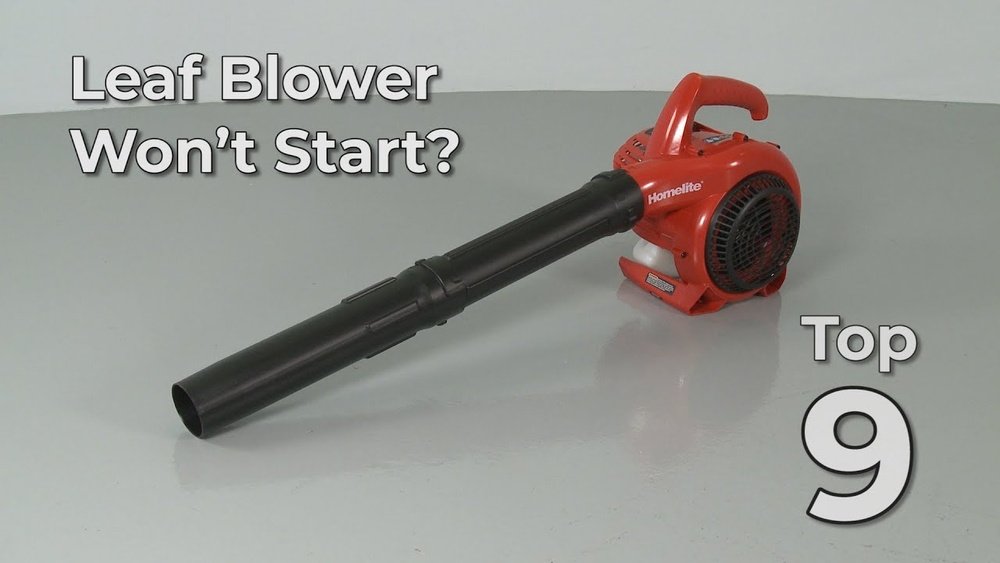
A leaf blower is one of the most useful tools for keeping your yard clean. It helps you clear leaves, grass clippings, and even light snow. But what happens when your leaf blower won’t start? Frustration can build quickly, especially if you depend on this machine for regular yard work. Before you consider buying a new one or taking it to a repair shop, it’s possible to solve the problem yourself. Most issues that prevent a leaf blower from starting are common and fixable with a bit of knowledge and the right approach.
In this guide, you’ll learn how to diagnose, troubleshoot, and fix a leaf blower that won’t start. Whether you own a gas-powered or electric model, you’ll find practical steps, real examples, and helpful tips to get your equipment running again.
You’ll also see comparison tables, expert insights, and answers to frequently asked questions, making this article your complete resource for fixing leaf blowers.
Understanding The Basics: Types Of Leaf Blowers
Before you start troubleshooting, it’s important to know what kind of leaf blower you have. The way you fix a gas-powered blower is different from fixing an electric one. Let’s look at the main types:
| Type | Power Source | Common Problems | Average Lifespan |
|---|---|---|---|
| Gas (2-stroke) | Gasoline & oil mix | Carburetor issues, spark plug, fuel line | 5-8 years |
| Gas (4-stroke) | Gasoline | Engine oil, ignition, fuel system | 7-10 years |
| Corded Electric | Wall outlet | Switch, wiring, motor | 6-10 years |
| Battery (Cordless) | Rechargeable battery | Battery, charger, switch | 3-5 years |
Gas-powered leaf blowers are common for bigger yards and professional use. They require regular maintenance. Electric leaf blowers are easier to maintain and start but can have their own problems. Identifying your model will help you follow the correct steps for fixing it.
Safety First: Preparing For Troubleshooting
Before you touch your leaf blower, always think about safety. Mistakes can lead to injury or damage to your machine. Here are key safety steps:
- Disconnect power: Unplug electric models or remove the battery.
- Let the engine cool: For gas models, wait until the engine is not hot.
- Wear protective gloves: Prevent cuts and burns.
- Work in a ventilated area: Especially with gas blowers to avoid fumes.
- Read the manual: Check your blower’s manual for warnings and diagrams.
Taking a few minutes for safety can save hours of trouble later.
Credit: www.searspartsdirect.com
Diagnosing Common Starting Problems
When your leaf blower won’t start, the cause is usually one of several common issues. Let’s break down the most frequent problems for both gas and electric models.
Gas-powered Leaf Blowers
Gas leaf blowers have more parts that can fail. The most common starting issues include:
- Old or bad fuel
- Spark plug problems
- Dirty air filter
- Clogged carburetor
- Faulty ignition coil
- Flooded engine
Electric Leaf Blowers
Electric models have fewer moving parts, but you may face:
- Dead battery (for cordless)
- Bad power connection
- Broken switch
- Motor failure
- Blown fuse
Knowing which category your blower fits will guide your troubleshooting steps.
Step-by-step Troubleshooting For Gas Leaf Blowers
Gas-powered leaf blowers often fail to start because of fuel, ignition, or air issues. Here’s how to check and fix each one.
1. Check The Fuel
Gas engines need fresh fuel to run. Old gas can cause starting problems.
- Inspect the fuel tank: Make sure it’s full and the gas is not old (older than 30 days).
- Replace stale fuel: Drain the tank and refill with fresh gas mixed with the right amount of oil (for 2-stroke).
- Check for water or debris: Clean the tank if you see any.
*Insight:* Many beginners don’t realize that old fuel can gum up the carburetor, leading to more problems. Always use fresh gas, and avoid letting fuel sit in the tank for months.
2. Examine The Spark Plug
A faulty spark plug is a common cause of no-start issues.
- Remove the spark plug: Use a socket wrench.
- Inspect for dirt or damage: Clean it or replace if the tip is black, oily, or cracked.
- Check the gap: Use a feeler gauge; set to manufacturer’s specs (usually 0.020–0.030 inches).
- Test for spark: Connect the plug wire, ground the plug, and pull the starter. Look for a blue spark.
*Non-obvious tip:* Even if a spark plug looks clean, it can still fail internally. Replacing it is cheap and often solves the issue.
3. Clean Or Replace The Air Filter
The air filter stops dirt from entering the engine. If it’s clogged, the engine won’t get enough air.
- Remove the filter cover: Usually held by clips or screws.
- Inspect the filter: If dirty or oily, wash it (foam filters) or replace it (paper filters).
- Let it dry: Never install a wet filter.
A blocked filter is easy to overlook but can make starting almost impossible.
4. Inspect The Carburetor
The carburetor mixes fuel and air. If it’s clogged, fuel won’t reach the engine.
- Check for blockages: Remove the carburetor and look for gummed-up parts.
- Clean with carb cleaner: Spray inside, focusing on jets and passages.
- Rebuild or replace: If cleaning doesn’t work, a rebuild kit can help. Severe cases may need a new carburetor.
*Practical tip:* Always clean the carburetor in a well-ventilated area. Small parts can be lost easily—work on a clean surface.
5. Inspect The Ignition Coil
If the ignition coil fails, the plug won’t spark.
- Test with a multimeter: Check resistance as per manual.
- Replace if faulty: Ignition coils are not expensive and are easy to swap.
6. Check For Engine Flooding
Sometimes, too much fuel enters the engine, causing it to flood.
- Remove the spark plug: Let excess fuel evaporate for 20–30 minutes.
- Set throttle to max: When restarting, hold the throttle open.
- Install dry plug: Try starting again.
Flooding often happens after repeated failed starts.
7. Inspect Fuel Lines And Primer Bulb
Fuel lines can crack or leak, and the primer bulb can fail.
- Look for cracks or leaks: Replace damaged lines.
- Check primer bulb: If it’s hard or cracked, swap it for a new one.
8. Check Starter Mechanism
The pull cord or starter assembly can jam or break.
- Inspect the cord: Look for fraying or snapping.
- Check recoil spring: Replace if broken.
- Lubricate moving parts: Use light oil for smoother operation.
A broken pull cord is obvious, but a jammed recoil spring is often missed.

Credit: www.youtube.com
Step-by-step Troubleshooting For Electric Leaf Blowers
Electric models are easier to diagnose but still need careful checks.
1. Test The Battery (cordless Models)
For cordless blowers, the battery is often the culprit.
- Check charge level: Try charging fully.
- Inspect for swelling or damage: Replace if needed.
- Test charger: Use another charger if possible.
A weak battery will spin the motor slowly or not at all.
2. Check Power Supply (corded Models)
For corded models, power supply issues are common.
- Try another outlet: Outlets can fail.
- Inspect the power cord: Look for cuts or broken wires.
- Check for tripped circuit breakers: Reset if necessary.
*Insight:* Many beginners miss damaged cords, which can cause intermittent power.
3. Inspect The Switch
A broken switch can prevent starting.
- Test with a multimeter: Check for continuity.
- Replace if faulty: Switches are cheap and easy to install.
4. Look For Motor Problems
If the motor fails, the blower won’t start.
- Listen for noise: Grinding or humming means motor issues.
- Check for burnt smell: Indicates electrical failure.
- Replace motor: If damaged, professional repair is often needed.
5. Examine Internal Wiring And Fuses
Some models have internal fuses or complex wiring.
- Open the housing: Look for blown fuses or loose wires.
- Replace as needed: Fuses and connectors are easy fixes.
Comparing Gas Vs Electric Troubleshooting
To help you decide which troubleshooting steps to focus on, here’s a quick comparison:
| Problem | Gas Leaf Blower | Electric Leaf Blower |
|---|---|---|
| Won’t Start | Fuel, spark plug, carburetor | Battery, switch, motor |
| Stalls After Starting | Dirty air filter, bad fuel, carburetor | Loose wiring, overheating |
| Weak Power | Clogged exhaust, old fuel, filter | Low battery, dirty fan |
Gas blowers have more parts to check, while electric models are simpler but need electrical troubleshooting.
Quick Fixes For Common Problems
Sometimes, you just need a fast solution. Here are quick fixes:
- Replace spark plug: Solves most gas blower issues.
- Drain and refill fuel: Old gas is a top culprit.
- Clean air filter: A dirty filter blocks airflow.
- Charge or replace battery: For cordless models.
- Check power cord and outlet: For corded models.
- Reset switch or breaker: Electrical faults are easy to fix.
If your blower still doesn’t start after these, move to deeper troubleshooting.
When To Seek Professional Help
While most problems are fixable at home, some require expert repair.
- Major engine damage
- Severe electrical failure
- Broken motor
- Persistent problems after all checks
A professional can diagnose issues you may miss and has tools for deeper repairs.
*Non-obvious insight:* Many people spend more on parts and time than the cost of professional service. If you feel stuck, a repair shop can often fix your blower in less than an hour.
Preventing Future Starting Problems
Prevention is easier than repair. Simple habits can keep your leaf blower running smoothly.
Maintenance Checklist
- Use fresh fuel: Don’t let gas sit for months.
- Clean air filter regularly: Every 20–30 hours of use.
- Check spark plug annually: Replace if needed.
- Store properly: Keep in a dry, protected area.
- Charge battery before storage: For cordless models.
- Inspect power cords: Look for wear and tear.
Storage Tips
- Drain fuel before winter: Prevents carburetor gumming.
- Remove battery: For cordless models, store battery separately.
- Cover blower: Protects from dust and moisture.
Following these steps can add years to your leaf blower’s life.
Real Examples: Troubleshooting In Action
Let’s look at real scenarios to illustrate the process.
Case 1: Gas Leaf Blower Won’t Start After Winter
John stored his gas leaf blower with old fuel. In spring, it wouldn’t start.
- Diagnosis: Old fuel had gummed up the carburetor.
- Fix: Drained fuel, cleaned carburetor, replaced spark plug.
- Result: Blower started and ran smoothly.
Case 2: Cordless Leaf Blower Not Starting
Maria’s battery-powered blower wouldn’t start after charging.
- Diagnosis: Battery showed full charge, but was swollen.
- Fix: Replaced battery.
- Result: Blower worked again.
Case 3: Corded Leaf Blower Dead
Sam’s electric blower wouldn’t turn on.
- Diagnosis: Power cord had a hidden break.
- Fix: Replaced cord.
- Result: Blower powered up instantly.
These examples show that simple checks can solve most problems.
Advanced Troubleshooting Tips
For stubborn cases, try these advanced steps:
- Use starter fluid: Spraying a small amount into the carburetor can help diagnose fuel delivery issues.
- Check compression: Low engine compression means internal damage. Use a compression tester.
- Inspect muffler and exhaust: Clogged exhaust can block starting. Clean out carbon deposits.
- Test safety switches: Some blowers have safety switches that stop starting if not engaged.
Many beginners miss exhaust blockages and safety switches, which can prevent starting even if everything else looks fine.
Cost Comparison: Diy Vs Professional Repair
Let’s compare costs for common fixes:
| Repair | DIY Cost | Professional Cost | Time Required |
|---|---|---|---|
| Spark Plug Replacement | $4-$10 | $25-$40 | 10 min |
| Air Filter Cleaning/Replacement | $3-$15 | $20-$35 | 10 min |
| Carburetor Cleaning | $8-$25 | $40-$70 | 30-60 min |
| Battery Replacement | $30-$80 | $40-$100 | 5 min |
| Power Cord Replacement | $10-$20 | $25-$50 | 15 min |
DIY repairs save money, but professional service is faster for complex issues.

Credit: www.appliancepartspros.com
Leaf Blower Starting Checklist
Keep this checklist handy for quick reference:
- Check fuel (gas) or battery (electric)
- Inspect spark plug
- Clean/replace air filter
- Look for carburetor issues
- Test power cord and switch (electric)
- Examine starter mechanism
- Check wiring and fuses (electric)
- Look for leaks or cracks (gas)
- Try starter fluid (advanced)
- Test safety switches
If you follow these steps, most leaf blowers can be fixed without expert help.
Frequently Asked Questions
Why Does My Leaf Blower Only Start Sometimes?
Intermittent starting is often caused by loose wires, dirty air filter, or weak spark plug. For gas models, old fuel or a clogged carburetor can cause this. Electric models may have a failing switch or battery. Tighten connections, clean filters, and replace parts as needed.
Can I Use Regular Gasoline In A 2-stroke Leaf Blower?
No, 2-stroke engines require a gasoline-oil mix. Using plain gas can damage the engine quickly. Always follow your blower’s manual for the correct ratio, usually 40:1 or 50:1. Using the wrong mix is a common beginner mistake.
How Often Should I Replace The Spark Plug?
For most leaf blowers, replace the spark plug once a year or after 100 hours of use. If you notice hard starting or poor performance, check and replace sooner. Spark plugs are inexpensive and easy to change.
What Is The Average Lifespan Of A Leaf Blower?
The typical lifespan depends on the type:
- Gas-powered: 5–10 years with regular maintenance.
- Electric: 6–10 years for corded, 3–5 years for battery-powered.
Proper care, like using fresh fuel and cleaning filters, can extend life. For more details, see Consumer Reports.
Should I Repair Or Replace My Leaf Blower?
If repairs cost more than half the price of a new blower, consider replacing it. For minor issues like spark plugs or filters, repair is better. If the motor or engine is damaged, replacement may be smarter. Compare costs using the tables above.
Final Thoughts
Fixing a leaf blower that won’t start isn’t just about saving money—it’s about understanding your equipment and keeping your yard in top shape. By following the steps above, checking key parts, and applying basic maintenance, you can solve most starting problems yourself.
Remember, gas and electric models have different troubleshooting needs, but many solutions are simple and quick. Keep your blower clean, use fresh fuel or batteries, and store it properly. If you ever feel lost, don’t hesitate to seek professional help.
With these strategies, your leaf blower will be ready for action whenever you need it.