
Planting a tree sounds simple, but doing it right is much more than digging a hole and putting a sapling in the ground. If you want your tree to grow strong, healthy, and live for decades, you need to follow several important steps.
Many people make mistakes that harm their trees without realizing it. This guide will show you exactly how to plant a tree correctly, step by step, so you avoid common problems and help your tree thrive. Whether you are planting in your yard, a city park, or a rural area, the advice here covers different environments, climates, and tree types.
Why Planting A Tree Matters
Trees are not just beautiful—they are vital for the planet. They clean the air, provide shade, reduce soil erosion, and support wildlife. According to the US Forest Service, a mature tree can absorb about 48 pounds of carbon dioxide each year. Urban trees lower temperatures by up to 5°F in city areas. Planting trees is one of the best ways to fight climate change and improve your surroundings.
Choosing The Right Tree For Your Location
Selecting the best tree is the first and most important step. The wrong tree in the wrong place can cause problems for years.
Climate And Hardiness Zone
Every tree species has a range of hardiness zones where it can survive. These zones depend on winter temperatures and overall climate. Check the USDA Hardiness Zone Map to see which trees grow well in your area. For example, maple trees do well in zones 3–9, while live oaks prefer zones 7–10.
Soil Type And Drainage
Not all trees like the same soil. Some need well-drained sandy soil, others grow best in heavy clay. You can test your soil by digging a small hole and filling it with water—if it drains in less than an hour, you have sandy soil; if it takes hours, your soil is clay-heavy. If your soil is poor, you might need to improve it with organic matter.
Size And Space
Think about how big the tree will be in 10, 20, or 50 years. Will its roots damage sidewalks? Will its branches hit power lines? Plant large trees at least 15–20 feet from buildings or other structures. For small ornamental trees, 8–10 feet is usually enough.
Native Vs. Non-native
Native trees are adapted to your region, require less care, and support local wildlife. Examples are red oak, dogwood, and eastern redbud. Non-native trees may look nice but sometimes become invasive or need more water and fertilizer.
Common Mistakes When Choosing A Tree
- Picking a tree that grows too fast—often weak wood and short lifespan.
- Choosing trees not suited for local climate—leads to disease or death.
- Ignoring mature size—crowded roots or branches cause trouble.
- Not checking sunlight needs—shade trees won’t grow well in full sun.
Preparing The Planting Site
Once you have your tree, preparing the site is key. Poor preparation is the main reason trees fail to establish.
Clearing And Marking
Remove grass, weeds, or debris in a 5–6 foot radius around your planting spot. This helps reduce competition for water and nutrients.
Checking Sunlight
Most trees need at least 6 hours of direct sunlight daily. If your site is shaded, choose a shade-tolerant species.
Testing Soil
Use a soil test kit to check pH and nutrients. Most trees prefer a pH between 6.0 and 7.5. If your soil is too acidic or alkaline, you may need to adjust it.
Improving Soil Quality
Add compost or well-rotted manure if your soil is poor. Mix it into the top 12 inches. Avoid using too much fertilizer—it can burn roots.
Planning For Drainage
Make sure water doesn’t pool where you want to plant. If drainage is poor, plant the tree slightly higher than ground level or create a mound.
How To Dig The Hole Properly
Digging the right hole is more important than most people realize.
Size And Shape Of The Hole
The hole should be 2–3 times wider than the tree’s root ball but only as deep as the root ball itself. This encourages roots to grow outward, not downward.
| Tree Type | Recommended Hole Width | Depth |
|---|---|---|
| Small (under 6 ft) | 24–36 inches | 12–18 inches |
| Medium (6–12 ft) | 36–48 inches | 18–24 inches |
| Large (over 12 ft) | 48–60 inches | 24–30 inches |
Avoiding Common Mistakes
- Digging too deep—roots suffocate and tree sinks.
- Digging too narrow—roots cannot spread.
- Leaving compacted soil—roots struggle to grow.
Checking For Underground Utilities
Call your local utility company before digging. Hitting gas, water, or electric lines can be dangerous.

Credit: blog.cwf-fcf.org
Removing The Tree From Its Container
How you handle the tree matters—a careless move can damage roots.
Bare Root, Balled And Burlapped, Or Container-grown
Trees come in three main forms:
- Bare root: Roots are exposed; soak in water for 1–2 hours before planting.
- Balled and burlapped: Wrapped in burlap; keep burlap moist.
- Container-grown: In pots; roots may be circling inside.
Handling The Tree
Lift the tree by its root ball, not the trunk. Remove packaging gently.
Loosening The Roots
If roots are circling, gently tease them apart with your fingers. Cut any thick, tangled roots. This encourages outward growth.
Positioning The Tree In The Hole
Correct placement is essential. A tree planted too deep or crooked will struggle.
Setting The Tree
Place the tree in the hole so the top of the root ball is level with the ground or slightly above. Make sure the trunk is upright.
Aligning The Tree
Face the best side of the tree toward the area you want to highlight. For windy spots, angle the tree slightly away from the wind.
Removing Burlap And Wire
If your tree is balled and burlapped, remove all twine and burlap from the top and sides. If there is wire, cut it away.
Backfilling And Watering
How you refill the hole and water the tree affects its survival.
Filling The Hole
Use the same soil you dug out. Do not add extra fertilizer or compost directly into the hole—it can cause uneven growth.
Firming The Soil
Gently tamp the soil to remove air pockets. Do not pack it too tightly.
Initial Watering
Water the tree deeply after planting. Use 10–15 gallons for most trees. This settles the soil and hydrates the roots.
Mulching
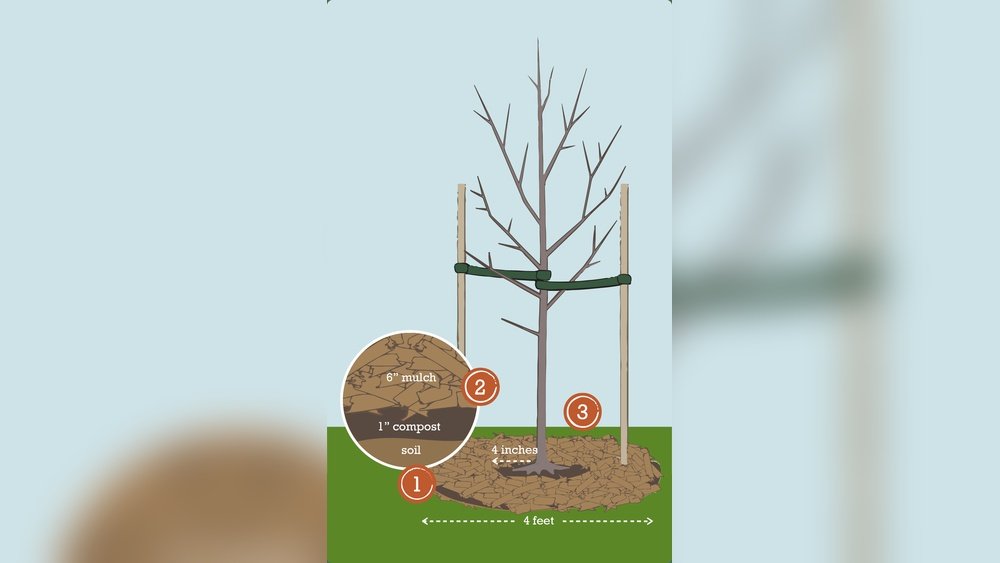
Apply 2–4 inches of mulch around the tree, but keep it 2–3 inches away from the trunk. Mulch keeps soil moist and stops weeds.
| Mulch Type | Benefits | Drawbacks |
|---|---|---|
| Wood chips | Retains moisture, breaks down slowly | Can attract fungi if piled too high |
| Straw | Lightweight, easy to apply | Blows away in wind |
| Pine needles | Acidifies soil, good for certain trees | Not suitable for all species |
Common Watering Mistakes
- Watering too often—roots rot.
- Watering too little—tree dries out.
- Not checking soil moisture—use your finger to test.
Staking The Tree (if Needed)
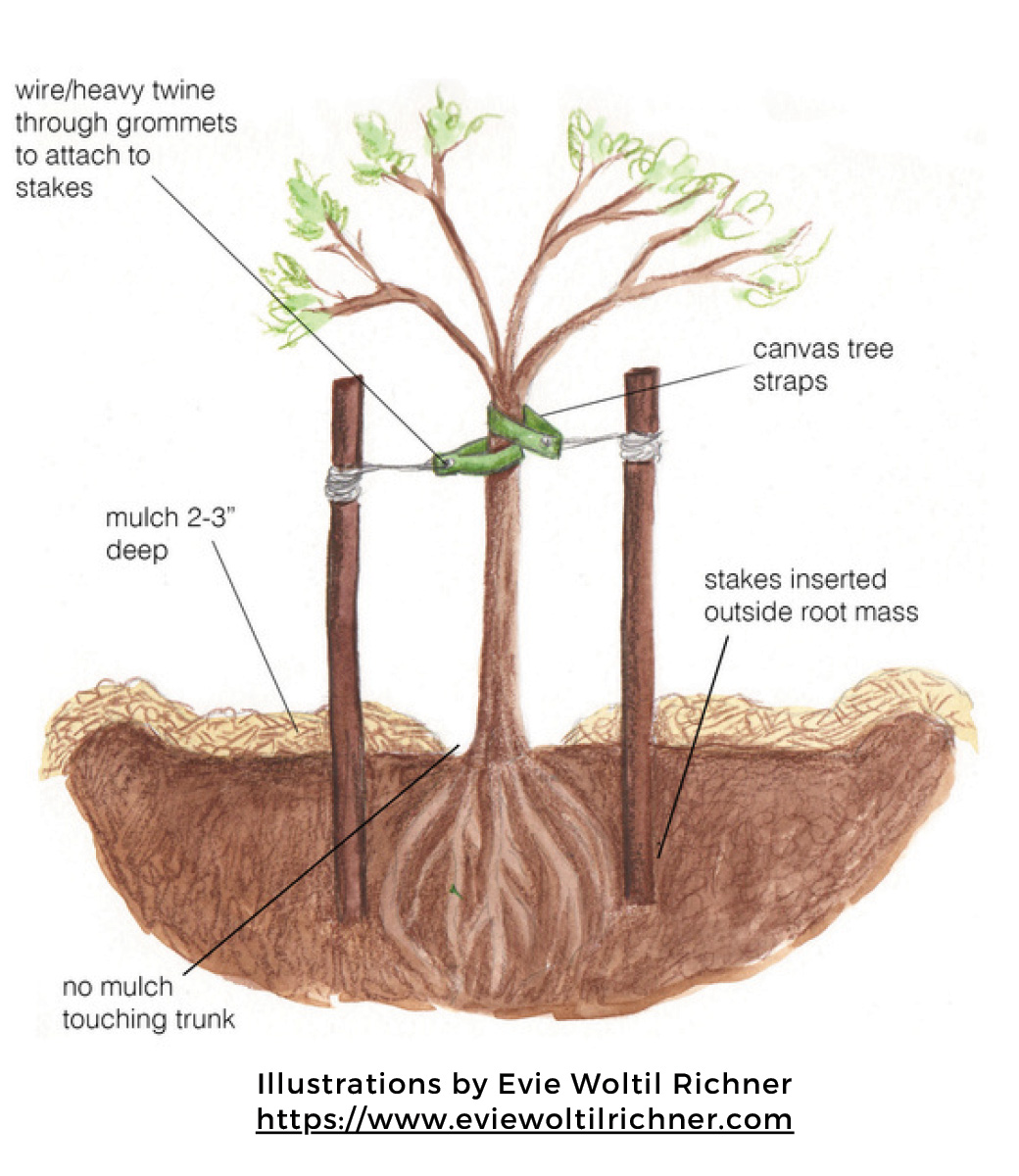
Most trees do not need staking unless they are in windy areas or have weak trunks.
When To Stake
Stake only if the tree cannot stand upright on its own. Remove stakes after 1–2 years.
How To Stake
Use two stakes, placed on opposite sides. Tie the tree with soft material (like cloth or rubber) to avoid damaging the bark.
Checking The Stakes
Check monthly. Loosen ties if they get tight. Remove stakes as soon as the tree is stable.
Credit: hort.extension.wisc.edu
Caring For Your Tree After Planting
Planting is just the beginning. A tree needs proper care to establish roots and grow.
Watering Schedule
For the first two years, water once a week in dry weather. Use 10–15 gallons each time. After two years, most trees can survive on rain.
Fertilizing
Do not fertilize for the first year. After that, use slow-release fertilizer if leaves turn yellow or growth is poor.
Pruning
Remove dead or broken branches. Do not prune too much—young trees need their leaves for energy.
Monitoring For Pests And Disease
Check the tree monthly for signs of insects or fungus. Early treatment is best.
Protecting From Animals
If deer or rodents are common, use tree guards or fencing.
| Animal | Damage | Protection |
|---|---|---|
| Deer | Eat leaves, strip bark | Fencing, repellents |
| Rabbits | Chew bark | Tree guards |
| Squirrels | Dig up roots, eat buds | Mesh covers |
Step-by-step Planting Guide
Here is a simple summary of the steps for planting a tree the right way:
- Choose the right tree for your climate, soil, and space.
- Clear the area and test soil quality.
- Dig a wide, shallow hole—2–3 times wider than the root ball.
- Remove the tree from its container gently.
- Loosen circling roots and trim damaged roots.
- Place the tree with root ball level with ground.
- Backfill with original soil and firm gently.
- Water deeply—10–15 gallons.
- Apply mulch—2–4 inches, keep away from trunk.
- Stake if needed—use soft ties, remove after 1–2 years.
- Care for your tree—water weekly, check for pests, protect from animals.

Credit: montgomerytrees.org
Practical Tips For Success
Many beginners miss these less obvious tips, but they make a big difference.
Timing Your Planting
Plant trees in early spring or fall. These seasons have mild temperatures and more rain, which helps roots grow. Avoid planting during summer heat or winter cold.
Checking Root Flare
The root flare is where the trunk widens at the base. Make sure it is visible above ground after planting. Burying the root flare can cause rot.
Planning For Future Growth
Consider how your tree will look and fit into your landscape as it matures. If planting multiple trees, space them according to their expected mature size.
Watering During Drought
Even established trees need extra water during drought. A slow drip for several hours is better than frequent light watering.
Avoiding “volcano Mulching”
Do not pile mulch against the trunk. This causes moisture build-up and decay.
Geo-friendly Planting Techniques
Different regions need different approaches. Here are a few examples:
Planting In Dry, Hot Regions
- Use drought-tolerant trees like mesquite or juniper.
- Dig holes wider but not deeper.
- Mulch heavily to retain moisture.
- Water early in the morning or late evening.
Planting In Cold, Wet Regions
- Choose trees like birch or spruce.
- Ensure good drainage—raise planting area if needed.
- Protect young trees from frost with wraps.
Urban Planting Challenges
- Soil is often compacted and poor in cities.
- Use soil amendments and mulch to improve conditions.
- Avoid planting under power lines or too close to sidewalks.
Seo And Aeo Friendly Advice
If you want your tree planting to show up in local search results or voice assistants, use phrases like “how to plant a tree step by step,”“best tree planting methods,” and “tree planting tips for beginners.” Make sure to mention the tree species, location, and any special techniques you use. For example: “How to plant an oak tree in New York City” or “Easy tree planting for sandy soil.”
Voice search is becoming popular, so keep your instructions clear and direct. People often ask, “How deep should I plant a tree? ” or “How much water does a new tree need? ” Answer these questions in your content.
For more detailed information on tree planting, visit Arbor Day Foundation, an authoritative source for tree care.
Avoiding Common Tree Planting Mistakes
Even experienced gardeners sometimes make errors. Here are a few to watch out for:
- Planting too deep—roots suffocate, tree may die.
- Using too much fertilizer—burns roots, causes uneven growth.
- Not loosening roots—tree fails to establish.
- Watering incorrectly—either too much or too little.
- Ignoring soil quality—tree gets poor nutrients.
- Mulching the trunk—causes rot and disease.
- Staking too tightly or too long—weakens tree.
- Planting at the wrong time—heat or cold stresses tree.
- Skipping pest protection—animals and insects damage tree.
- Failing to plan for mature size—tree crowds other plants or structures.
Real-life Example: Planting A Maple Tree
Let’s say you want to plant a sugar maple in your backyard in Ohio (zone 5).
- You choose a spot with full sun and well-drained loamy soil.
- You clear a 6-foot area, test soil pH (6.8), and add compost.
- You dig a hole 36 inches wide and 18 inches deep.
- You remove the container, loosen roots, and place the tree so the root flare is visible.
- Backfill with original soil, water with 15 gallons, and mulch with wood chips.
- Stake lightly because it’s windy, remove stakes after 18 months.
- Water weekly for two years, check for pests, and protect from rabbits with guards.
By following these steps, your maple tree will have the best chance to grow strong and healthy.
Frequently Asked Questions
How Deep Should I Plant A Tree?
The hole should be as deep as the root ball, but not deeper. If you plant too deep, the roots may suffocate and the tree can rot. Always keep the root flare visible above ground.
How Often Should I Water A Newly Planted Tree?
For the first two years, water once a week with 10–15 gallons. If it’s hot or dry, check soil moisture and water more often. After two years, most trees can survive on rainfall.
Do All Trees Need Staking?
No, most trees do not need staking. Stake only if the tree is unstable, in a windy area, or has a weak trunk. Remove stakes after 1–2 years to allow the tree to grow strong roots.
What Kind Of Mulch Is Best For Trees?
Wood chips are the most common mulch. They hold moisture and break down slowly. Avoid piling mulch against the trunk—leave 2–3 inches of space to prevent rot.
Can I Plant A Tree In Any Season?
The best seasons are spring and fall. Avoid planting in summer heat or winter cold. Planting during mild temperatures and wetter months helps roots establish quickly.
Final Thoughts
Planting a tree is an investment in your landscape and the environment. By following these steps, you give your tree the best chance to grow strong and healthy. Remember to choose the right tree, prepare the site carefully, dig the correct hole, and care for your tree after planting.
Avoid common mistakes and adapt your methods to your local climate and soil. Each tree you plant makes a difference, improving air quality, providing shade, and supporting wildlife. With patience and proper care, your tree will reward you for many years to come.