
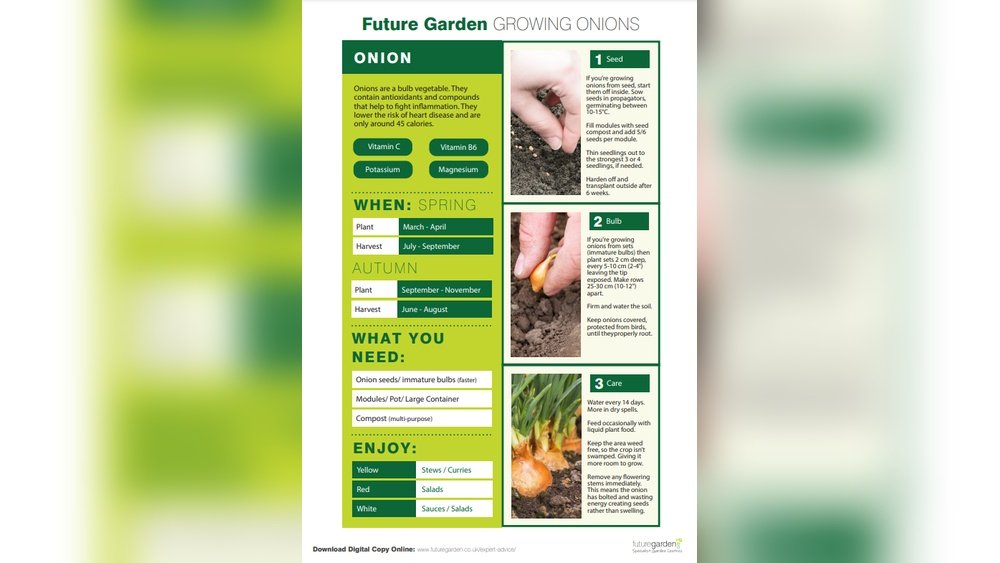
Growing onions from seed is a rewarding project for any gardener, whether you’re starting a small backyard patch or planning a large vegetable plot. Onions are a staple in kitchens around the world, but many people buy sets or transplants rather than starting from seed. While seeds take a little more patience and planning, they offer many advantages: more variety, stronger disease resistance, and better storage life. This guide will walk you through every step to grow onions from seed—covering soil preparation, sowing, transplanting, care, harvest, and storage. Along the way, you’ll find practical tips, clear tables, and insights that make a real difference for beginners and experienced growers alike.
Why Grow Onions From Seed?
Many gardeners ask: why not just plant onion sets or buy transplants? The answer is in the details. Onion seeds give you access to hundreds of varieties, including rare types not found in stores. Seeds also let you control the whole growing process, reducing the risk of disease and pests carried by sets. Onions grown from seed often store better, because they mature under your local conditions, making them hardier. And for those who enjoy the process, starting from seed can be deeply satisfying—watching tiny black seeds become full-grown bulbs is a gardening joy.
Types Of Onions: Day-length Matters
Not all onions are the same. Choosing the right onion variety for your region is crucial. Onions form bulbs based on the length of daylight they receive, so picking the wrong type can mean small bulbs or even none at all.
| Type | Daylight Hours to Bulb | Best Regions (US) | Example Varieties |
|---|---|---|---|
| Short-day | 10-12 hours | South (Zone 7 and warmer) | Yellow Granex, Texas Early Grano |
| Intermediate-day | 12-14 hours | Central (Zones 5-7) | Candy, Red Stockton |
| Long-day | 14-16 hours | North (Zone 6 and colder) | Walla Walla, Patterson |
How To Choose The Right Onion For Your Area
- Check your latitude: Northern states (above 37°N) need long-day onions. Southern states should stick with short-day types.
- Ask local gardeners: Local garden centers often carry varieties that perform well in your region.
- Try different types: If you’re unsure, plant a few of each and compare results.
Key insight: Planting the wrong day-length onion will give you small, green onions but no bulbs. Always match the type to your location.
When To Start Onion Seeds
Timing is everything with onions. These crops need a long growing season—usually 90 to 120 days from seed to harvest. For most regions, the seeds must be started indoors, weeks before the last expected frost.
General Timing Guidelines
- Northern US (Long-day onions): Start seeds indoors 10-12 weeks before the last frost (usually January or February).
- Southern US (Short-day onions): Start seeds in late summer to early fall for winter growth, or in December for spring planting.
| Region | Seed Starting (Indoors) | Transplanting Outdoors |
|---|---|---|
| North | Jan-Feb | March-April |
| South | Sept-Oct | Nov-Jan |
Practical tip: If you’re not sure when your last frost date is, check a local agricultural extension or use a frost date calculator online.
Choosing Onion Seed Varieties
Onion seeds come in many shapes, sizes, and colors. Here are some factors to consider:
- Storage vs. Fresh Use: Yellow onions like ‘Patterson’ store well for months. Sweet onions, like ‘Walla Walla’ or ‘Vidalia’, taste great but don’t last as long.
- Size and Shape: Some varieties produce very large bulbs, others are smaller or even flat-shaped.
- Color: Yellow, red, and white onions all have unique flavors and uses in the kitchen.
- Disease Resistance: Look for varieties bred for resistance to common problems like downy mildew or pink root.
Expert tip: Seed catalogs often list which varieties are best for storage, resistance, or specific climates. Take time to read the descriptions before buying.
How To Start Onion Seeds Indoors
Starting seeds indoors is the best way to get strong, healthy onion plants. Here’s how to do it step-by-step.
Supplies Needed
- Fresh onion seeds (older seeds lose germination power)
- Seed starting mix (sterile, fine-textured soil)
- Shallow trays or cell packs
- Grow lights (or a sunny window)
- Spray bottle for watering
- Plastic dome or wrap to keep humidity high at first
Sowing The Seeds
- Fill trays with moist seed starting mix. Level and gently firm the surface.
- Sow seeds about ¼ inch deep. Sprinkle them evenly—onions can be sown thickly, about ½ inch apart.
- Cover lightly with more mix and mist with water.
- Cover with plastic to keep moisture in until seeds sprout (usually 7-10 days).
- Provide light as soon as seedlings appear. Onion seedlings need 12-14 hours of light daily—grow lights work best.
- Remove cover when seedlings appear to prevent damping off (a fungal disease).
Caring For Seedlings
- Temperature: Keep seedlings at 65-75°F (18-24°C) for best growth.
- Watering: Keep the soil moist but not soggy. Water from the bottom if possible.
- Feeding: After 2 weeks, feed seedlings with a diluted liquid fertilizer every 2 weeks.
- Trimming: When seedlings reach 5 inches tall, trim tops with scissors to 3 inches. This encourages strong, stocky growth.
Non-obvious insight: Trimming onion seedlings makes them thicker and less floppy, leading to better bulbs later.
Transplanting Onion Seedlings Outdoors
After 8-10 weeks, your onion seedlings should be the thickness of a pencil and ready for the garden. Proper hardening off and transplanting is vital.
Hardening Off
Before moving seedlings outdoors, they need to adjust to sunlight and cooler temperatures.
- Start 1-2 weeks before transplanting.
- Place trays outside for a few hours each day, increasing time gradually.
- Protect from wind and direct sun at first.
- Bring inside at night if temperatures drop below 40°F (4°C).
Preparing The Garden Bed
Onions need fertile, well-drained soil, rich in organic matter. Here’s how to set up your bed:
- Loosen soil to a depth of at least 10 inches.
- Work in compost or well-rotted manure.
- Check pH: Onions prefer soil pH 6.0–7.0.
- Add fertilizer: Before planting, mix in a balanced fertilizer (10-10-10 NPK) according to package instructions.
Pro tip: Avoid planting onions where onions, garlic, or leeks grew last year to reduce disease risk.
Transplanting Steps
- Water seedlings well a few hours before transplanting.
- Space plants 4-6 inches apart in rows 12-18 inches apart.
- Plant depth: Set seedlings so the base (where roots meet stem) is just above the soil.
- Firm soil gently around roots and water well.
Non-obvious insight: Do not bury the seedling base too deeply, or bulbs will form poorly.

Credit: homesteadandchill.com
Direct Sowing Onion Seeds Outdoors
In mild climates, you can sow onion seeds directly in the garden. This works best for short-day onions in the South or overwintering types.
- Sow seeds ¼ inch deep in well-prepared soil.
- Thin seedlings to 4-6 inches apart after they sprout.
- Keep soil moist until seeds germinate.
Note: Direct sowing usually results in smaller bulbs, but it’s easier and works well in warm regions.
Caring For Onion Plants
Once your onions are growing, they need regular attention. Here are the most important points.
Watering
Onions need consistent moisture, especially in the first two months. Dry soil can stop bulb formation.
- Water deeply once or twice a week, aiming for 1 inch of water.
- Mulch with straw or grass clippings to keep soil moist.
Mistake to avoid: Overwatering can cause rot, especially in heavy soils.
Fertilizing
Onions are heavy feeders. For big bulbs, they need steady nutrients.
- Side-dress with nitrogen (like blood meal or ammonium sulfate) every 2-3 weeks until bulbs begin to form.
- Stop fertilizing once bulbs start to swell (usually when daylight increases).
Key fact: Too much nitrogen late in the season makes onions split or delays bulb growth.
Weed Control
Weeds compete for nutrients and space. Onions have shallow roots and don’t shade the soil well, so weeds can quickly take over.
- Hand-weed carefully, avoiding root damage.
- Mulch helps prevent new weeds.
Pest And Disease Management
Common onion pests include onion maggots, thrips, and cutworms. Fungal diseases like downy mildew or pink root can also appear.
| Problem | Symptoms | Prevention/Treatment |
|---|---|---|
| Onion maggot | Wilting, rotting bulbs | Crop rotation, row covers |
| Thrips | Silvery leaves, stunted growth | Neem oil, remove weeds |
| Downy mildew | Pale spots, fuzzy growth | Good air flow, avoid overhead watering |
| Pink root | Pink, shriveled roots | Rotate crops, resistant varieties |
Practical tip: Using floating row covers during early growth can prevent most insect problems.
Bulbing And Maturity: What To Expect
Onions grow leaves first, then start bulbing once the day length triggers the right response. More leaves mean bigger bulbs, as each leaf produces a layer of the onion.
- Bulb swelling begins when your onion’s day-length requirement is met.
- Leaf count: Each healthy leaf equals one ring in the bulb. Aim for at least 10-12 leaves for large onions.
Non-obvious insight: If you want big onions, focus on plant health and nutrition before bulbing starts.
Harvesting Onions
Knowing when and how to harvest onions is essential for good flavor and long storage.
Signs Onions Are Ready
- Tops fall over: When about half the tops bend at the neck, bulbs are mature.
- Bulb size: Check a few bulbs—if they’re the size you want, they’re ready.
- Necks soften: The area just above the bulb becomes soft and collapses.
How To Harvest
- Stop watering a week before harvest to help bulbs cure.
- Loosen soil with a fork or spade, then gently pull bulbs.
- Handle carefully: Bruised onions won’t store well.
Tip: Harvest on a dry, sunny day if possible.

Credit: www.youtube.com
Curing And Storing Onions
Proper curing is critical for long-term storage. Curing dries the outer layers and neck, sealing out moisture and disease.
Curing Process
- Lay onions out in a single layer in a warm, dry, well-ventilated area.
- Leave for 2-3 weeks until necks are dry and outer skins papery.
- Turn bulbs occasionally for even drying.
Expert advice: Do not remove roots or tops until onions are fully cured.
Storing Onions
- Trim tops to 1 inch and roots to ½ inch after curing.
- Store in mesh bags or open baskets at 32-40°F (0-4°C), with low humidity.
- Check regularly for soft or sprouting onions.
| Onion Type | Average Storage Life | Best Storage Method |
|---|---|---|
| Yellow (storage) | 6-12 months | Cool, dry, ventilated |
| Red | 3-6 months | Cool, dry, ventilated |
| Sweet | 1-2 months | Refrigerator or use quickly |
Common mistake: Storing onions near potatoes speeds up sprouting and spoilage.
Common Problems And Solutions
Even experienced gardeners face challenges when growing onions from seed. Here are some frequent issues and how to solve them.
Poor Germination
- Old seed: Onion seeds lose viability fast—use fresh seed every year.
- Cool soil: Seeds need 60-70°F (15-21°C) to sprout well.
- Dry soil: Keep seed-starting mix evenly moist.
Weak, Spindly Seedlings
- Not enough light: Seedlings stretch if light is weak or too far away.
- Overcrowding: Thin seedlings to avoid competition.
- No trimming: Trim tops regularly to encourage sturdy growth.
Small Bulbs
- Wrong variety: Planting the wrong day-length onion for your region leads to small bulbs.
- Late planting: Onions need a long season. Planting too late reduces bulb size.
- Poor nutrition: Feed regularly, especially with nitrogen, before bulbs form.
Bulbs Rotting In Storage
- Inadequate curing: Onions must be fully dried before storage.
- High humidity: Store in a dry, cool place with good airflow.
- Damaged bulbs: Handle gently during harvest.
Non-obvious insight: Never wash onions before storage—moisture encourages rot.

Credit: savvygardening.com
Saving Your Own Onion Seed
For gardeners who want to go a step further, you can save seed from your own onions. Onions are biennial, meaning they flower in their second year.
- Select healthy, disease-free bulbs at harvest.
- Store bulbs through winter in cool, dry conditions.
- Replant in spring: Bulbs will send up flower stalks.
- Let flowers dry and collect seeds when heads turn brown.
Tip: Onions can cross with other varieties, so isolate types if you want pure seed.
Advanced Tips For Bigger, Better Onions
- Start seeds early: The earlier you start, the bigger your onions can grow.
- Fertilize with high nitrogen until bulbs begin to swell, then stop.
- Keep weeds out: Onions compete poorly with weeds; mulching pays off.
- Rotate crops: Don’t plant onions or related crops in the same spot more than once every 3-4 years.
- Watch for bolting: If onions send up a flower stalk in the first year, harvest right away; the bulb won’t store.
Pro insight: Some gardeners start seeds as early as December under lights for extra-large bulbs.
Comparing Onions From Seed, Sets, And Transplants
Which method is best? Here’s a side-by-side look.
| Method | Pros | Cons |
|---|---|---|
| Seeds | Widest variety, disease-free, best storage | Long season, more care required |
| Sets | Easy, quick, less work | Limited varieties, may bolt, poorer storage |
| Transplants | Good variety, less time than seeds | Higher cost, may carry disease |
Practical tip: If you want the best onions for storage or unique types, start from seed. If you want speed, use sets.
Sustainable And Organic Onion Growing
Growing onions organically is very doable. Use compost, rotate crops, and choose disease-resistant varieties. Avoid chemical pesticides; instead, use row covers and encourage beneficial insects. Mulch with straw to keep weeds down, and fertilize with fish emulsion or compost tea.
Non-obvious insight: Healthy soil is your best pest and disease prevention. Onions grown in rich, living soil resist problems better than those in tired, overused beds.
Using Onions In The Kitchen And Beyond
Homegrown onions are more flavorful than store-bought. Use them fresh, caramelized, pickled, or even braided for winter storage decor. Green onions (pulled early) are a bonus, giving you tender shoots weeks before bulbs are ready.
Fact: Onions contain antioxidants and vitamins C and B6, making them a healthy addition to your diet.
Frequently Asked Questions
How Long Does It Take To Grow Onions From Seed?
It usually takes 90 to 120 days from seed to harvest, depending on variety and growing conditions. Starting seeds indoors 10-12 weeks before transplanting gives the best results.
Can I Plant Onion Seeds Directly In The Garden?
Yes, you can direct sow onion seeds in mild climates, especially with short-day varieties. However, indoor starting gives stronger, earlier bulbs in most regions.
Why Are My Onions Not Forming Bulbs?
Bulb formation depends on day length and variety. If you plant the wrong type for your region or plant too late, onions may stay small. Nutrition and spacing also affect bulb size.
How Do I Prevent Onion Diseases?
Use crop rotation, buy disease-resistant varieties, and avoid overhead watering. Good air circulation and well-drained soil help prevent most problems.
What Is The Best Way To Store Onions?
After proper curing, store onions in a cool, dry, and ventilated area. Do not store near potatoes, and check for soft or sprouting bulbs regularly.
Growing onions from seed is both an art and a science. With careful planning, attention to detail, and the practical tips in this guide, you can enjoy a bounty of homegrown onions—full of flavor, nutrition, and pride. For more in-depth onion growing advice, visit resources like the University of Minnesota Extension. Happy planting!