
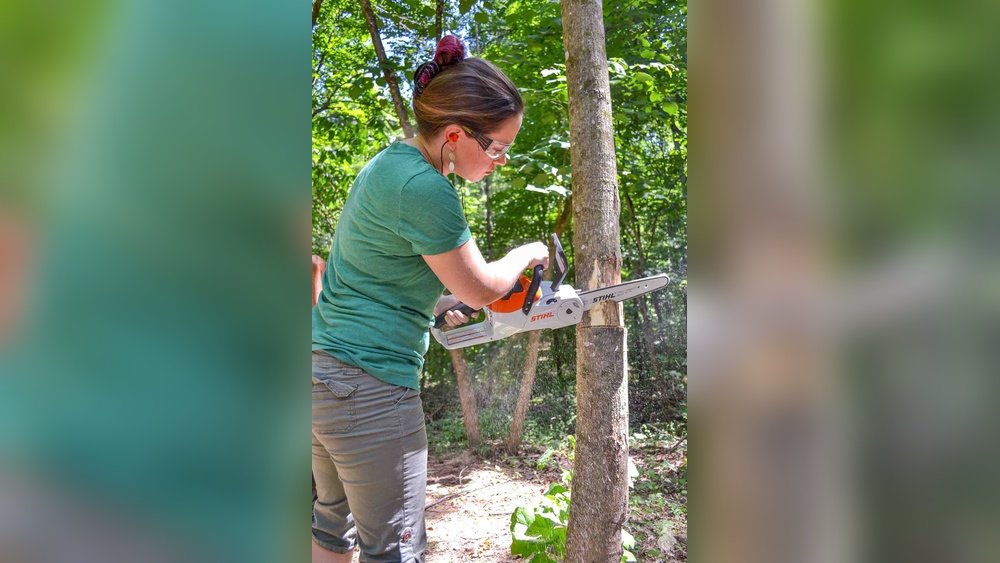
Cutting down a small tree on your property might seem simple, but there’s more to it than revving up a chainsaw and making a cut. Many homeowners want to take on this task themselves to save money, clear space, or keep their landscape healthy.
But safety, efficiency, and the right technique matter if you want good results and to avoid accidents. This guide walks you through how to cut down a small tree with a chainsaw, step by step, with practical tips, real-world examples, and expert advice.
Whether you’re a first-timer or just need a refresher, you’ll learn everything you need for a safe, successful job.
Why Cutting Down A Small Tree Is Different
Felling a small tree (usually under 12 inches in diameter) is different from removing large, mature trees. Smaller trees are lighter and more flexible, but they can still cause injuries if handled carelessly. The right approach combines safety, proper equipment, and methodical steps. Many beginners underestimate the risks, believing that “smaller means safer,” but even a small falling trunk or shifting limbs can cause serious harm or property damage. Knowing the basics helps you avoid common mistakes and work with confidence.
Is It Legal To Cut Down A Tree On Your Property?
Before starting, always check your local laws and tree removal permits. Some cities, counties, or neighborhoods require permission to remove trees, even on private land. Protected species and trees near utilities may have restrictions. In some places, fines for unauthorized tree cutting can be steep—often $500 or more. Search your city or county website or call your local arborist office to confirm you’re allowed to cut the tree. Never assume it’s legal just because the tree is small.

Credit: smallfarms.cornell.edu
Chainsaw Safety: Rules You Can’t Ignore
A chainsaw is a powerful tool and can be dangerous in inexperienced hands. Each year, over 36,000 people in the US visit the emergency room due to chainsaw injuries. Most of these accidents happen at home, during simple jobs like small tree felling. The most common injuries are deep cuts to the legs, arms, and hands, often caused by kickback or losing control. That’s why safety is your top priority.
Essential Chainsaw Safety Gear
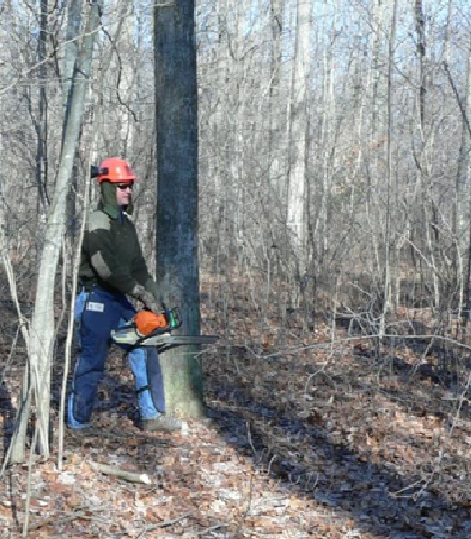
Never skip personal protective equipment (PPE). Here’s what you need:
- Chainsaw helmet with face shield and ear protection
- Safety glasses (if your helmet doesn’t have a visor)
- Cut-resistant gloves
- Chainsaw chaps or pants
- Steel-toe boots with good grip
- Long sleeves and sturdy work clothes
It’s tempting to skip some gear on hot days, but one small slip can have lifelong consequences. Chainsaw chaps, for instance, can stop the chain instantly if it touches your leg.
Chainsaw Safety Checks
- Make sure your chainsaw chain is sharp and properly tensioned.
- Fill the fuel and chain oil tanks.
- Check that chain brakes, triggers, and handles work smoothly.
- Inspect the bar and chain for cracks, damage, or loose bolts.
A dull or loose chain is harder to control and increases kickback risk. If you’re not sure how to do a safety check, consult your chainsaw’s manual or ask at your local hardware store.
Choosing The Right Chainsaw For Small Trees
Not all chainsaws are equal. For trees under 12 inches in diameter, a lightweight, easy-to-handle chainsaw works best. Gas-powered, battery, and corded electric chainsaws all have pros and cons. Here’s a quick comparison:
| Type | Best For | Pros | Cons |
|---|---|---|---|
| Gas-powered | Outdoor, frequent use | Most power, portable, fast cutting | Heavier, more maintenance, noisy |
| Battery-powered | Quick jobs, smaller trees | Light, quiet, low maintenance | Limited run-time, less power |
| Corded electric | Near outlets, light use | Very light, quiet, never runs out of power | Limited range, cord can be a hazard |
For most homeowners, a battery-powered chainsaw with a 12–16 inch bar is ideal. You get enough cutting power for small trunks without the weight or fumes of gas models.
Other Equipment You’ll Need
- Wedges (plastic or wood, to keep the cut open)
- Felling lever or crowbar (to move the tree if stuck)
- Rake and pruning saw for clearing brush and small limbs
- Measuring tape and marker for planning cuts
Site Preparation: Setting Up For Success
A tidy, organized work area makes tree felling safer and less stressful. Clear all obstacles, toys, garden furniture, and cars from the area. Remove any dead branches or undergrowth near the tree’s base.
Assess The Tree And Surroundings
- Examine the tree’s lean—which way does it naturally want to fall?
- Look for dead branches or signs of disease.
- Check for nearby structures, fences, or power lines.
- Identify a clear escape route—never stand in the direction of the fall.
Ideally, the fall zone should be at least twice the tree’s height in length, free of people and breakables. If the tree is near a house or wires, consider hiring a professional arborist.
How To Cut Down A Small Tree With A Chainsaw: Step-by-step
1. Make A Plan
Walk around the tree and choose your felling direction. The tree should fall in a space free of obstacles, with the natural lean helping guide it down. Plan two escape routes at a 45-degree angle from the expected fall line, so you can retreat quickly.
2. Clear The Base
Remove any small branches, vines, or brush around the trunk with a hand saw or pruners. Make sure you have solid footing and your chainsaw won’t hit rocks or debris.
3. Make The Notch Cut (facing Cut)
The notch cut controls the direction of the fall. It’s made on the side of the tree facing the fall zone.
- Start by making a top cut: Hold your chainsaw at about a 70-degree angle and cut down to about one-third the tree’s diameter.
- Next, make the bottom cut: Meet the top cut from below, creating a wedge-shaped notch that opens toward the fall direction.
- Remove the notch piece. The opening should be about 70 degrees wide.
Tip: Don’t cut too deep. A notch that’s one-third deep and wide enough for the tree to fall cleanly is ideal.
4. Make The Felling Cut
Move to the opposite side of the notch. This is the back cut.
- Position your saw a few inches above the notch’s point, on the tree’s backside.
- Cut horizontally, slowly, and evenly, parallel to the ground.
- Stop cutting when you’re a few inches from the notch, leaving a hinge of uncut wood (about 10% of the tree’s diameter).
The hinge acts like a steering wheel, guiding the tree’s fall. If you cut all the way through, you lose control and the tree can twist or fall backward.
Insert a wedge into the back cut if the tree doesn’t start to lean after a few inches. Tap the wedge gently—it holds the cut open and helps prevent the saw from binding.
5. Retreat Safely
As soon as the tree begins to lean and fall, turn off the chainsaw, move quickly down your escape route, and keep your eyes on the tree. Never run straight backward; move away at an angle.
6. Limbing And Bucking
Once the tree is down, let it settle for a few minutes. Watch for branches under tension—these can snap suddenly. Stand on the uphill side if the ground slopes.
- Limbing: Cut off branches from the trunk, working from base to top.
- Bucking: Cut the trunk into manageable pieces, starting at the base.
Extra caution: If the trunk is resting on the ground, cut halfway through from the top, then finish from underneath to avoid pinching your chain.
Common Mistakes And How To Avoid Them
Many first-timers make errors that can lead to injury or poor results. Here’s what to watch out for:
- Ignoring the tree’s lean: Cutting against the natural lean can cause the tree to split or fall unpredictably.
- Poor notch placement: A crooked or shallow notch leads to loss of control.
- Cutting all the way through: Skipping the hinge means the tree can “barber chair” (split vertically) or twist.
- Standing in the danger zone: Never stand in front or directly behind the tree as it falls.
- Dull chainsaw chain: A dull chain requires more force and increases kickback risk.
- Skipping safety gear: Injuries happen in seconds; always wear full PPE.
- Underestimating tree weight: Even small trunks can crush fences, cars, or feet.
Real-world Examples: Small Tree Felling Scenarios
Example 1: Backyard Maple, 8 Inches Wide
John, a homeowner in Ohio, needed to remove a small maple tree crowding his fence. He chose a battery chainsaw with a 14-inch bar, wore full PPE, and made a notch cut toward the open yard. The tree had a slight lean toward a shed, so he inserted a wedge and used a gentle push with a felling lever.
The tree fell exactly as planned, with no damage.
Example 2: Suburban Pine Near Power Lines
Sarah’s pine tree, just 10 inches wide, was close to overhead lines. She realized that even small mistakes could send the tree sideways. After assessing the risk, she called a certified arborist instead of doing it herself. The expert used ropes to control the fall.
This shows that sometimes, the best DIY is knowing when not to DIY.
Example 3: Removing Multiple Saplings
A couple in Texas cleared a row of small elms (5–7 inches wide) using a corded electric chainsaw. They worked as a team: one person made cuts, the other cleared branches and watched for hazards. This method saved them time and reduced fatigue.

Credit: www.uglyducklinghouse.com
How To Handle Tree Stumps After Felling
Cutting down the tree is only half the job. The tree stump can be a tripping hazard, attract pests, or send up new shoots. Here are your options:
| Method | Cost | Time | Best For |
|---|---|---|---|
| Stump grinder rental | $75–$150/day | 1–2 hours | Quick removal, DIY |
| Chemical stump remover | $10–$25 | 2–8 weeks | Low effort, not urgent |
| Manual digging/ax | Free (time) | Several hours | Small stumps, strong backs |
| Professional service | $100–$300 | 1 hour | Large stumps, convenience |
For small tree stumps, a manual removal with a shovel and ax is possible, but be ready for hard work. For faster results, rent a stump grinder from your local hardware store.
When To Call A Professional Arborist
DIY tree felling is fine for small, healthy trees in open spaces. But you should call a professional if:
- The tree is close to buildings, power lines, or roads
- The trunk is larger than 12 inches in diameter
- The tree is dead, diseased, or leaning dangerously
- You don’t have all safety gear or experience
Professional arborists have insurance and equipment to handle risks. The average cost for small tree removal is $150–$500, depending on location and complexity. This can save you much more in repair bills or medical costs.
Environmental And Legal Considerations
Cutting down trees affects your local environment. Small trees provide shade, absorb carbon dioxide, and support wildlife. Before removing a tree, consider if pruning or transplanting is possible instead. Some cities require you to plant a new tree for each one removed.
If you live in a protected zone or near wetlands, extra permits may be needed. Always check with your local municipality for rules. For more information on tree protection and urban forestry, see Arbor Day Foundation.
Disposal: What To Do With Tree Debris
After felling, you’ll have a pile of branches, leaves, and wood. Here’s how to manage it:
- Cut logs for firewood or woodworking projects.
- Chip branches for mulch, if you have access to a chipper.
- Compost leaves and small twigs.
- Contact your city’s yard waste program—some offer free pickup or drop-off.
Do not burn debris unless local laws allow it. Burning can cause wildfires or air quality problems.
Advanced Tips For A Cleaner, Safer Cut
- Sharpen your chain before starting; a sharp chain makes cleaner cuts with less effort.
- Mark your cuts with chalk for better accuracy.
- Use two wedges for stubborn trees—one to keep the cut open, one to steer the fall.
- Check wind conditions—strong gusts can shift the fall path.
- Rest often—chainsaw work is tiring, and fatigue increases mistakes.
Chainsaw Maintenance After Tree Felling
Chainsaw care doesn’t end when the tree is down. Clean your chainsaw after each use:
- Wipe off sawdust and sap from the bar and chain.
- Check chain tension and sharpen if needed.
- Top up bar oil and fuel.
- Store your chainsaw in a dry, safe place.
Regular maintenance extends tool life and keeps you safe for the next project.
The Hidden Dangers: What Beginners Miss
Many new chainsaw users overlook these risks:
- Kickback zone: The upper tip of the chainsaw bar can bounce back violently if it touches wood or debris. Never start a cut with this area.
- Spring poles: Bent or tensioned branches can snap with force. Cut from the safe side, and use poles to move them if unsure.
- Falling limbs: Even small trees can have loose or dead limbs that drop unexpectedly during felling. Always look up before making the final cut.
How Much Does It Cost To Cut Down A Small Tree?
DIY felling is cheaper than hiring pros, but there are some costs:
- Chainsaw purchase/rental: $75–$300
- Safety gear: $60–$200 (one-time)
- Wedges and tools: $20–$50
- Debris disposal (if not free): $20–$100
If you already own a chainsaw and gear, your only cost may be fuel. But don’t skimp on safety to save money.
Credit: stormwise.uconn.edu
Essential Chainsaw Terms Explained
- Kickback: Sudden upward motion of the chainsaw, usually from the tip contacting wood.
- Notch cut: The wedge-shaped cut facing the fall direction.
- Back cut: The cut on the opposite side of the notch, which releases the tree.
- Felling wedge: A tool inserted into the back cut to guide the fall and prevent saw pinching.
- Limbing: Removing branches from the trunk.
- Bucking: Cutting the trunk into sections.
Frequently Asked Questions
What Size Chainsaw Is Best For Small Trees?
A chainsaw with a 12–16 inch bar is ideal for most small trees (under 12 inches in diameter). Battery-powered or light gas models are easy to handle and safer for beginners.
Can I Cut Down A Tree Near My House Myself?
It’s risky to cut trees near buildings, fences, or power lines. Even a small tree can fall unpredictably if cut wrong. For trees closer than twice their height to any structure, hire a professional arborist.
How Do I Prevent Chainsaw Kickback?
Keep both hands on the saw, use a sharp chain, and never cut with the upper tip of the bar. Stand to the side, not directly behind the saw. Always use the chain brake.
Do I Need A Permit To Cut Down A Small Tree?
Many cities and counties require permits for tree removal, even for small trees on private land. Check with your local government or arborist before starting. Fines for unauthorized cutting can be high.
What Should I Do With The Stump After Felling A Tree?
Options include grinding, chemical removal, digging, or hiring a pro. For small stumps, digging them out with a shovel and ax is possible, but time-consuming. Stump grinders are fastest but cost more.
Cutting down a small tree with a chainsaw is a manageable DIY project if you prepare well, use the right equipment, and follow safety rules. Respect the power of your tools, know your limits, and you’ll clear space in your yard safely and efficiently.
When in doubt, call a certified arborist for help. Your safety—and your property—are worth it.