
Planting new grass seed feels exciting, but it’s also easy to make mistakes. Many people think grass will grow fine on its own, but the truth is — starter fertilizer makes a huge difference. If you apply the right fertilizer at the right time, your lawn will grow greener, thicker, and stronger from the start. But using the wrong method, wrong product, or wrong timing can actually harm your grass or waste your effort. This guide will help you avoid common mistakes and show exactly how to apply starter fertilizer for grass seed, step by step. Whether you’re seeding a small yard or a big field, you’ll learn proven strategies, practical examples, and expert advice to get the results you want.
Why Starter Fertilizer Matters For New Grass
When you plant grass seed, you’re creating a new life for your lawn. Most soils don’t have enough nutrients for quick seed growth. Starter fertilizer gives young grass exactly what it needs to sprout and form strong roots.
Unlike regular lawn fertilizers, starter fertilizers have higher phosphorus. Phosphorus is the key nutrient for seedling root development. Without enough phosphorus, grass roots grow weak and the blades stay thin and pale.
A study from Penn State University showed that lawns with starter fertilizer had up to 40% more root mass after 6 weeks compared to lawns without fertilizer. This means faster growth, better drought resistance, and fewer weeds.
But the benefits depend on proper application. Too much fertilizer can burn seedlings. Too little will slow growth. Choosing the right product and method is essential for success.
Understanding Starter Fertilizer
Starter fertilizers are specially designed for new grass seed. Most contain three main nutrients:
- Nitrogen (N): Promotes leaf growth and green color.
- Phosphorus (P): Supports root development and seedling strength.
- Potassium (K): Helps with overall health and disease resistance.
The typical starter fertilizer formula is 10-20-10 (N-P-K), meaning higher phosphorus compared to nitrogen and potassium. Regular lawn fertilizers, like 24-0-10, don’t have enough phosphorus for new seeds.
Comparing Starter Vs. Regular Fertilizer
Here’s a clear comparison:
| Fertilizer Type | Nitrogen (%) | Phosphorus (%) | Potassium (%) | Main Use |
|---|---|---|---|---|
| Starter Fertilizer (10-20-10) | 10 | 20 | 10 | Seedling root growth |
| Regular Lawn Fertilizer (24-0-10) | 24 | 0 | 10 | Established grass |
Starter fertilizer is best for new seed. Regular fertilizer is for mature grass.
Granular Vs. Liquid Starter Fertilizer
Starter fertilizer comes in two main forms:
- Granular: Small pellets, easy to spread with a spreader.
- Liquid: Concentrated solution, applied with a hose or sprayer.
Granular fertilizer is more common for home lawns. Liquid works faster but can be harder to apply evenly. For most beginners, granular starter fertilizer is easier and safer.
How To Prepare Your Lawn For Seeding
Before applying starter fertilizer, you need to prepare your soil. This step is often skipped, but it makes a huge difference.
Step 1: Test Your Soil
Soil testing shows the current nutrient levels and pH. Many lawns have low phosphorus or wrong pH, so fertilizer won’t work well unless you fix these problems first.
You can buy a soil test kit at garden stores or send samples to a lab. A typical soil test costs $15–$30 and takes a week. Look for these numbers:
- PH: Ideal range is 6.0–7.0 for most grasses.
- Phosphorus (P): Should be at least 25 ppm (parts per million).
- Nitrogen (N) and Potassium (K): Test results will tell you if they’re low.
If your soil is too acidic (low pH), add lime. If it’s too alkaline (high pH), add sulfur. Adjusting pH before seeding is crucial.
Step 2: Clear The Area
Remove old grass, weeds, sticks, and stones. Use a rake or garden hoe to loosen the top 2–3 inches of soil. Good seed-to-soil contact is vital for germination.
Step 3: Level And Smooth
Fill holes and flatten bumps. A smooth, even surface helps seeds spread evenly and grow straight.
Step 4: Water The Soil
Moist soil helps fertilizer dissolve and seeds settle. Water lightly a day before seeding, but avoid puddles.
Choosing The Right Starter Fertilizer
Picking the best fertilizer is not just about N-P-K numbers. You also need to consider your grass type, soil test results, and local climate.
Grass Type Matters
Cool-season grasses (like Kentucky bluegrass, fescue, ryegrass) need more phosphorus. Warm-season grasses (like Bermuda, zoysia) can tolerate less.
For example:
- Kentucky bluegrass: Needs higher phosphorus for quick root growth.
- Tall fescue: Benefits from balanced N-P-K.
- Bermuda: Grows well with moderate phosphorus.
Local Regulations
Some areas restrict phosphorus use to protect water quality. Always check local rules before buying fertilizer.
Reading Labels
Starter fertilizer bags show three numbers (N-P-K). Look for products labeled “starter” or “for new lawns. ” The second number (phosphorus) should be highest.
Organic Vs. Synthetic Starter Fertilizer
Organic starter fertilizers use natural ingredients like bone meal or compost. Synthetic fertilizers use chemical compounds.
| Type | Pros | Cons |
|---|---|---|
| Organic | Safe for environment, slow release, improves soil health | Slower results, higher cost |
| Synthetic | Fast results, lower cost, easy to apply | Can burn seedlings, may harm soil microbes |
For most home lawns, synthetic starter fertilizer is more effective. If you prefer organic, expect slower growth.

Credit: lawnlove.com
How To Apply Starter Fertilizer For Grass Seed
Applying starter fertilizer is not just spreading pellets. There’s a proven process for best results.
Step 1: Calculate The Right Amount
Too much fertilizer can harm new grass. Too little won’t help.
Most starter fertilizers recommend 1–1.5 pounds per 1000 square feet. Check your bag for exact instructions.
Example calculation:
- Your lawn is 3000 sq ft.
- The bag says 1.5 lb per 1000 sq ft.
- You need 4.5 lb of fertilizer (1.5 x 3).
Measure your lawn area carefully. Use a tape measure or online tools.
Step 2: Choose The Right Spreader
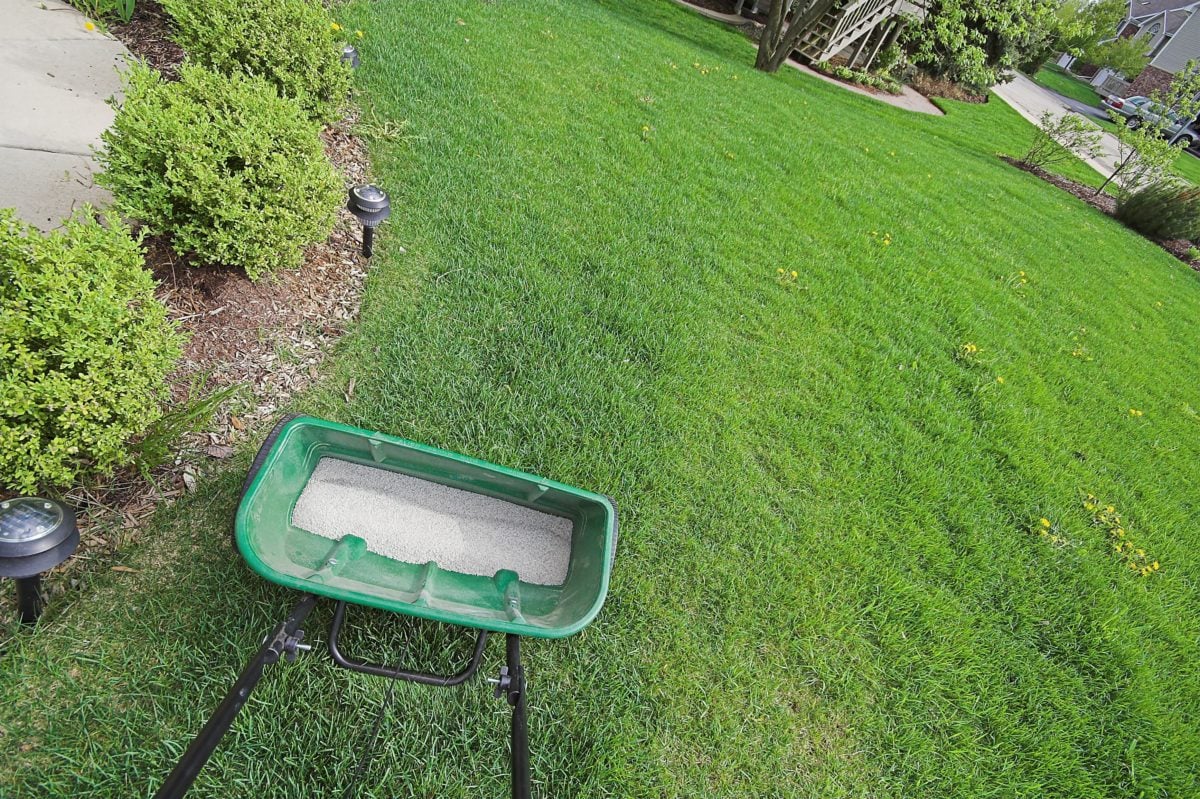
Use a broadcast spreader for large lawns or a handheld spreader for small areas. Broadcast spreaders spread pellets evenly.
Clean and calibrate your spreader before use. Calibration means adjusting the setting so the right amount comes out.
Step 3: Apply Fertilizer Before Seeding
For best results, spread starter fertilizer just before seeding. The nutrients will be available for seedlings as soon as they sprout.
Spread fertilizer evenly across the prepared soil. Walk at a steady pace and overlap slightly to avoid missed spots.
Step 4: Spread Grass Seed
After fertilizing, spread your grass seed. Use the same spreader or sprinkle by hand.
Grass seed rates vary by type:
- Kentucky bluegrass: 2–3 lb per 1000 sq ft
- Tall fescue: 6–8 lb per 1000 sq ft
- Bermuda: 1–2 lb per 1000 sq ft
Check the seed bag for specific rates.
Step 5: Rake And Water
Lightly rake the soil to mix fertilizer and seed into the top ¼ inch. This helps with seed-to-soil contact.
Water gently but thoroughly. Keep the soil moist (not wet) for the next 2–3 weeks until seeds sprout.
Step 6: Repeat Watering
Water daily or as needed. If the soil dries out, seeds may die. Avoid puddles, which can wash seeds away.
Common Mistakes To Avoid
Many beginners make simple errors that hurt grass growth. Here are the most frequent mistakes:
- Skipping Soil Test: Without a soil test, you might waste money or harm your lawn. Always test before fertilizing.
- Wrong Fertilizer Type: Using regular lawn fertilizer instead of starter can slow seed growth.
- Over-Fertilizing: Too much starter fertilizer can burn seedlings and kill young grass.
- Uneven Application: Missed spots lead to patchy growth. Use a spreader and overlap passes.
- Fertilizing After Seeding: Applying fertilizer on top of seeds can wash them away or cause uneven sprouting.
- Ignoring Watering: Dry soil prevents seeds from germinating. Consistent moisture is key.
- Wrong Timing: Fertilizer should be applied before or at seeding, not after grass is established.
- Bad Seed-to-Soil Contact: Seeds on hard soil won’t grow well. Always rake and loosen the soil.
- Using High Nitrogen Products: Too much nitrogen can cause rapid leaf growth but weak roots.
Practical Tips For Better Results
Some tricks can help you get a greener lawn faster:
- Mix Seed Types: Combining several grass types gives better coverage and disease resistance.
- Apply Fertilizer in Two Directions: Go north-south, then east-west. This ensures even coverage.
- Check Weather Forecast: Avoid fertilizing before heavy rain, which can wash fertilizer away.
- Cover Seeds Lightly: Use a thin layer of straw or mulch to protect seeds from birds and drying out.
- Don’t Mow Too Soon: Wait until grass reaches 3–4 inches before first mowing. Cutting too early can damage new seedlings.
Real-life Example: Success Story
John, a homeowner in Illinois, wanted to reseed his 2000 sq ft lawn after a drought. He tested his soil and found low phosphorus (18 ppm). He applied 3 lb of 10-20-10 starter fertilizer, raked, seeded with Kentucky bluegrass, and watered twice daily.
After 5 weeks, his lawn was lush and green. He avoided patchy spots by overlapping fertilizer passes. John also waited until the grass was 4 inches tall before mowing. His neighbors noticed the difference — his lawn grew 30% thicker than theirs, who did not use starter fertilizer.
Table: Starter Fertilizer Application Guide By Grass Type
Different grasses need different fertilizer rates. Here’s a quick guide:
| Grass Type | Seeding Rate (lb/1000 sq ft) | Starter Fertilizer Rate (lb/1000 sq ft) | Best N-P-K Ratio |
|---|---|---|---|
| Kentucky Bluegrass | 2–3 | 1.5 | 10-20-10 |
| Tall Fescue | 6–8 | 1.2 | 18-24-6 |
| Bermuda | 1–2 | 1.0 | 16-22-8 |
| Ryegrass | 5–10 | 1.3 | 12-24-12 |
| Zoysia | 1–2 | 1.0 | 10-20-10 |
Always check your seed and fertilizer bag for exact instructions.
When To Apply Starter Fertilizer
Timing is critical for fertilizer and seed success. Here’s how to plan:
- Early Spring: Best for cool-season grasses. Soil warms up, but weeds have not taken over.
- Early Fall: Also good for cool-season grasses. Temperatures are mild and rain is more common.
- Late Spring/Early Summer: Good for warm-season grasses like Bermuda.
Apply starter fertilizer just before or at the same time as seeding. Do not wait until grass is established — it’s too late for phosphorus to help roots.
Weather Considerations
Avoid applying fertilizer before heavy rain or during drought. Rain can wash fertilizer away, and drought prevents nutrients from dissolving.
Check your local forecast. If rain is expected within 24–48 hours, wait until after the storm.
How Long To Wait Before Mowing
New grass is delicate. Mowing too soon can pull seedlings out of the ground or damage roots.
Wait until grass is at least 3–4 inches tall before mowing. Use a sharp blade and mow when soil is dry. Never remove more than one-third of the blade height at a time.
How To Care For Your Lawn After Fertilizing
After applying starter fertilizer and grass seed, your job isn’t finished. Proper care helps your lawn stay healthy.
Watering
- Water daily for the first 2–3 weeks.
- After sprouting, reduce watering to every other day.
- Deep, less frequent watering encourages strong roots.
Fertilizing Again
Do not apply more fertilizer until grass is established (about 6–8 weeks). Too much phosphorus can harm mature grass.
Switch to regular lawn fertilizer after 2 months. Follow bag instructions for rates.
Weed Control
Starter fertilizer can encourage weed growth. Avoid using weed killers until new grass is at least 3 months old.
Lawn Maintenance
- Keep foot traffic off new grass for 4–6 weeks.
- Mow carefully with sharp blades.
- Remove debris, leaves, and sticks regularly.
Credit: www.jonathangreen.com
Table: Watering Schedule For New Lawns
Proper watering is key for new grass. Here’s a simple schedule:
| Week | Watering Frequency | Amount per Session |
|---|---|---|
| 1 | Daily | ¼ inch |
| 2–3 | Daily | ¼ inch |
| 4–5 | Every other day | ½ inch |
| 6+ | Twice per week | 1 inch |
Use a rain gauge or tuna can to measure water. Adjust for rain and temperature.
How To Spot Fertilizer Problems
Sometimes, things don’t go as planned. Knowing the signs of fertilizer problems helps you fix them fast.
Signs Of Over-fertilizing
- Yellow or brown patches
- Burned edges on blades
- Stunted growth
- Wilting seedlings
If you see these, water deeply to flush excess fertilizer.
Signs Of Under-fertilizing
- Slow growth
- Pale, thin blades
- Poor root formation
- Patchy lawn
Apply a small amount of starter fertilizer and monitor growth.
Non-obvious Insight: Watch For Phosphorus Deficiency
Grass seedlings with purple-tinged leaves often lack phosphorus. This is rare in mature grass but common in new seedlings. If you notice purple leaves, your soil needs more phosphorus.
Environmental Impact And Safety
Fertilizer can help your lawn, but it can also harm the environment if used incorrectly. Excess phosphorus can run off into streams and cause algae blooms.
- Sweep spilled fertilizer off sidewalks and driveways back onto the lawn.
- Avoid fertilizing before heavy rain.
- Follow all local regulations.
Many states now require “phosphorus-free” lawn fertilizers unless you’re planting new seed. Always check labels and rules.
For more guidance on fertilizer use and environmental safety, see the EPA Nutrient Pollution page.
Frequently Asked Questions
What Is Starter Fertilizer And How Is It Different From Regular Fertilizer?
Starter fertilizer is specially made for new grass seed. It contains more phosphorus, which helps young roots grow strong. Regular fertilizer has more nitrogen and is best for established lawns.
Should I Use Granular Or Liquid Starter Fertilizer?
Both work, but granular fertilizer is easier for beginners. It spreads evenly and is less likely to burn seedlings. Liquid fertilizer works faster but can be tricky to apply evenly.
Can I Use Starter Fertilizer On Established Lawns?
Starter fertilizer is not needed for mature grass. Established lawns don’t need extra phosphorus. Use regular lawn fertilizer instead.
How Soon Will I See Results After Applying Starter Fertilizer?
If you water and care for your lawn, you’ll see sprouts in 7–21 days. Starter fertilizer helps roots grow faster, so your lawn will be thicker in about 4–6 weeks.
Is Starter Fertilizer Safe For Pets And Children?
Most starter fertilizers are safe if applied correctly. Keep pets and children off the lawn until fertilizer is watered in and the grass is established (about 2–3 weeks).
Applying starter fertilizer for grass seed is simple but powerful when you follow the right steps. With soil preparation, the correct product, and careful application, your lawn will grow thick and healthy. Avoid common mistakes, watch for signs of problems, and always consider environmental safety.
If you invest a little time and effort now, you’ll enjoy a beautiful lawn for years to come.
Credit: www.lawnstarter.com