
Last updated: October 2026 · Written by the LawnVibe editorial team.
Vegetables are thirsty, and they are fussy about how they get their water. Too little and plants stall or bolt; too much and roots rot; uneven watering leads to split tomatoes and bitter cucumbers. A vegetable garden watering system keeps moisture steady at the roots, which is exactly what most crops want. The best watering systems for vegetable gardens are root-zone systems such as drip kits, raised bed grids, soaker hoses and ollas, paired with a timer. Our top pick for raised vegetable beds is the Vego Garden drip kit, while a pre-assembled grid is the fastest option for square-foot beds. Below we compare nine systems and explain how to water vegetables well.
Listings change often, so check current details on Amazon before you buy. As an Amazon Associate we earn from qualifying purchases.
Our top picks at a glance
| # | Product | Best for | Link |
|---|---|---|---|
| 1 | Vego Garden Drip Irrigation Kit for Raised Beds | Raised vegetable beds | Check price |
| 2 | Garden Grid Raised Bed Watering System | Square-foot vegetable beds | Check price |
| 3 | CARPATHEN Premium Drip Irrigation Kit | Rows of mixed vegetables | Check price |
| 4 | MIXC 230 ft Quick-Connector Drip Kit | Large in-ground vegetable gardens | Check price |
| 5 | LASSUM 50-Pack Adjustable 1/4 inch Drip Emitters | Expanding or customizing an existing drip line | Check price |
| 6 | Customizable 50 ft Rubber Soaker Hose System | Straight rows of beans, carrots and greens | Check price |
| 7 | Thirsty Earth CottaCup Automatic Olla Watering System (4-Cup Kit) | Water-wise gardens and hot climates | Check price |
| 8 | Spider Farmer Gravity-Fed Self-Watering System (4-Pack) | Plots and beds without a faucet nearby | Check price |
| 9 | RAINPOINT Programmable Hose Timer | Automating drip or soaker lines | Check price |
Best watering systems for vegetable gardens: reviews

Vego Garden Drip Irrigation Kit for Raised Beds
Best for: Raised vegetable beds
A drip irrigation kit from Vego Garden designed for raised garden beds, with tubing and emitters laid out for vegetable plantings.
- Designed for raised beds
- From a known raised bed brand
- Waters at the root zone
- Sized for beds rather than open rows
- Large gardens need extra kits

Garden Grid Raised Bed Watering System
Best for: Square-foot vegetable beds
A pre-assembled grid with built-in emitters that lies on a raised bed and waters each square evenly from a garden hose.
- Almost no assembly
- Even coverage for intensive planting
- Doubles as a square-foot planting guide
- Fixed size per grid
- Can be in the way of tall crops

CARPATHEN Premium Drip Irrigation Kit
Best for: Rows of mixed vegetables
A complete drip kit with adjustable emitters for gardens and raised beds, letting you set more water at tomatoes and less at herbs.
- Adjustable flow per plant
- Complete kit with fittings
- Good instructions for beginners
- Covers small to medium gardens
- Adjustable emitters can drift over time

MIXC 230 ft Quick-Connector Drip Kit
Best for: Large in-ground vegetable gardens
A 230 ft drip kit with quick connectors, drippers and sprayers for long vegetable rows, beds and greenhouses.
- Lots of tubing
- Quick connectors
- Mix of emitters and sprayers
- Planning needed for many parts
- Lesser-known brand

LASSUM 50-Pack Adjustable 1/4 inch Drip Emitters
Best for: Expanding or customizing an existing drip line
A pack of 50 adjustable emitters on stakes for 1/4 inch tubing, useful for adding water points at individual vegetable plants.
- Large pack
- Adjustable flow
- Staked for easy placement
- Tubing and fittings sold separately
- Adjustable heads can clog
Customizable 50 ft Rubber Soaker Hose System
Best for: Straight rows of beans, carrots and greens
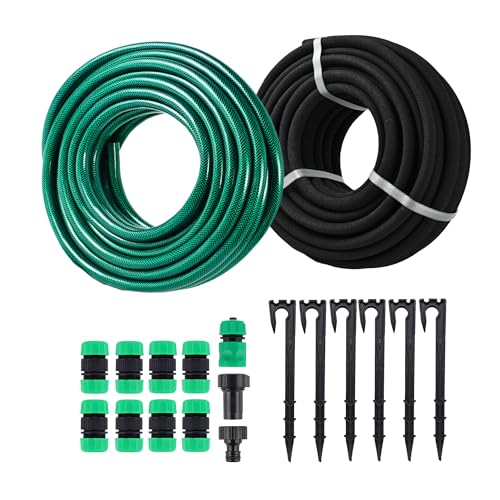
A 1/2 inch, 50 ft soaker hose sold with a 25 ft supply hose, for slow, even watering along vegetable rows.
- Simple to lay down
- Waters at soil level
- Supply hose included
- Less even on long or sloped rows
- Needs lower pressure
Thirsty Earth CottaCup Automatic Olla Watering System (4-Cup Kit)
Best for: Water-wise gardens and hot climates
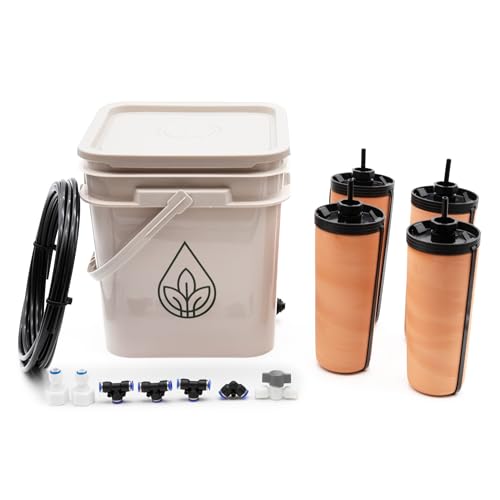
A set of terracotta ollas buried among plants and linked to refill automatically, releasing water slowly into the root zone.
- Very water-efficient
- Ollas refill automatically from a supply
- No emitters to clog
- Limited radius around each cup
- Takes time to set up and bury

Spider Farmer Gravity-Fed Self-Watering System (4-Pack)
Best for: Plots and beds without a faucet nearby
A gravity-fed self-watering system that needs no power, feeding water from a reservoir to plants as the soil dries.
- No electricity or pump
- Works from a reservoir
- Good for remote beds
- Reservoir needs refilling
- Suited to smaller plantings

RAINPOINT Programmable Hose Timer
Best for: Automating drip or soaker lines
A battery hose timer with rain delay and manual mode, for running vegetable garden drip or soaker hose lines on a schedule.
- Easy scheduling
- Rain delay
- Works with any hose-fed system
- Single outlet
- Remove before freezing
How we chose these systems
We focused on systems that water at the soil rather than spraying leaves, because wet foliage encourages many vegetable diseases. We included drip kits for raised beds and in-ground plots, a pre-assembled grid, an emitter pack for customizing, a soaker hose, an olla system, a gravity-fed system for beds without a faucet and a timer. We compared setup effort, flexibility for mixed crops and how easily each scales as the garden grows. We do not list prices because they change often.
Why vegetables need root-zone watering
Overhead sprinklers wet leaves, and leaves that stay wet for hours are more likely to develop fungal diseases such as early blight and powdery mildew. Sprinklers also lose water to wind and evaporation and wet the paths between rows, which feeds weeds. Root-zone systems put water where roots can use it, so less water does more work. If you are deciding between the two, our guide on drip irrigation vs sprinkler compares them in detail.
Types of vegetable garden watering systems
Drip tubing with emitters
A 1/2 inch main line runs along the beds, with emitters or 1/4 inch lines at each plant. It is flexible and lasts many seasons. Our guide on how to set up a drip irrigation system for vegetable gardens walks through the layout.
Drip tape
Thin-walled tape with built-in emitters suits long straight rows and large plots. It is economical but less durable. See how to install drip tape.
Raised bed grids
A grid lies on top of the bed and waters every square evenly, ideal for intensive square-foot planting.
Soaker hoses
A porous hose weeps water along rows. It is simple and cheap but less even on long runs.
Ollas and gravity-fed systems
Buried clay pots and reservoir-fed systems release water slowly and work without a faucet or power.
How to choose a system for your vegetable garden
- Raised beds or in-ground rows: grids and bed kits suit raised beds; drip line or tape suits long rows.
- Crop mix: adjustable emitters let you give tomatoes and squash more water than lettuce and herbs.
- Garden size: small gardens can use one kit; large plots need a main line and several zones.
- Water source: a nearby faucet makes drip easy; no faucet points to gravity-fed systems or ollas.
- Soil: sandy soil needs emitters closer together; clay soil needs slower, longer watering.
- Automation: add a timer so plants get steady moisture even when you are away.
Our guide on how to choose the best drip irrigation system for vegetables covers emitter spacing and flow rates in more depth.
How much water do vegetables need?
A common rule of thumb is about an inch of water per week from rain and irrigation, more in hot, dry or windy weather and in sandy soil. Fruiting crops such as tomatoes, peppers, squash and cucumbers need the most once they set fruit; leafy greens need steady but lighter watering; root crops need even moisture to avoid splitting. The best test is your finger or a trowel: if the soil is dry a few inches down, it is time to water. Our guide on how to water vegetables explains crop by crop.
When to water
Water in the early morning so plants have moisture for the heat of the day and any splashed leaves dry quickly. Avoid watering late in the evening with sprinklers. With drip, timing is less critical because leaves stay dry, but morning is still a good default.
Watering needs by crop
Tomatoes: deep, regular watering once fruit sets. Swinging between dry and soaked soil is linked to blossom end rot and cracked fruit, so a timer-driven drip line is ideal. Give each plant one or two emitters and mulch well.
Peppers and eggplant: similar to tomatoes but slightly less thirsty. Consistent moisture keeps flowers from dropping.
Cucumbers, squash and melons: large leaves lose a lot of water on hot days. Water deeply at the base and keep leaves dry to limit powdery mildew.
Lettuce, spinach and other greens: shallow roots need frequent, light watering, especially in warm weather, or they turn bitter and bolt.
Carrots, beets and radishes: even moisture produces smooth, well-shaped roots; dry spells followed by heavy watering cause splitting.
Beans and peas: need steady water when flowering and forming pods, less before that.
Herbs: most Mediterranean herbs such as rosemary, thyme and oregano prefer drier soil, so put them on a separate line or give them fewer emitters.
Setting up drip in a vegetable bed
- Measure the beds and note where each crop will go.
- Install a backflow preventer, filter and pressure regulator at the faucet.
- Run a 1/2 inch main line to the beds, using a solid hose or tubing.
- Lay drip line or 1/4 inch tubing along each row, spacing emitters closer in sandy soil.
- Add extra emitters at heavy feeders like tomatoes and squash.
- Flush the system, then cap the ends.
- Cover with mulch and set the timer.
For raised beds specifically, see how to install drip irrigation for raised beds and our picks for the best drip irrigation for raised beds. If you want a ready-made kit for a wider garden, compare our list of the best drip irrigation kit options.
Planning zones for a vegetable garden
Larger gardens work better split into zones. A practical split is one zone for heavy feeders such as tomatoes, peppers, squash and cucumbers, one for leafy greens and root crops, and one for herbs and perennials like asparagus and rhubarb. Each zone gets its own run time and frequency. If you have only one faucet, a multi-outlet timer or a manifold with valves lets you switch between zones. Keep a simple map of which line feeds which bed: when something goes wrong mid-summer, you will know exactly where to look.
Watering seeds and transplants
Seeds and seedlings need different treatment from established crops. Seeds sown directly in the bed need the top layer of soil kept evenly moist until they sprout, which usually means light watering once or twice a day with a gentle rose or mister. Drip lines alone may not keep the surface wet enough, so hand water seed rows until they are up. Transplants need a thorough soak at planting and then regular watering for the first couple of weeks while roots spread. After that, switch to the deeper, less frequent pattern. Our guide on how to water vegetable seeds covers this stage.
Mulch: the easiest water saver
A few inches of straw, shredded leaves or grass clippings over the drip line keeps soil cooler and moister, cuts evaporation and suppresses weeds. Mulch also stops soil splashing onto lower leaves, which helps reduce soil-borne disease. Pull mulch back slightly from stems to avoid rot.
Automating with a timer
Vegetables reward consistency more than almost anything else. A simple battery hose timer runs drip or soaker lines at the same time every few days, even when you are away. Start with a schedule based on your soil, then adjust as plants grow and the weather changes: young transplants need less water than mature tomato plants loaded with fruit. A dual outlet hose timer lets you run vegetables and herbs or flowers on separate schedules.
Saving water in the vegetable garden
Root-zone watering, mulch and morning schedules are the foundation. You can also group crops with similar needs, harvest rainwater for gravity-fed systems and use ollas in hot, dry beds. The EPA WaterSense program offers tips for efficient outdoor watering that apply to vegetable gardens too.
Troubleshooting
- Wilting in the afternoon: some wilting on hot days is normal; if plants are still wilted in the morning, water more.
- Yellow lower leaves and soggy soil: likely overwatering; shorten run times.
- Dry spots: check for clogged or missing emitters. Our guide to troubleshooting a clogged drip irrigation line helps.
- Split tomatoes or carrots: uneven watering; switch to a regular timed schedule.
- Weak flow at the end of a row: the run is too long; feed it from the middle or add a second line.
End-of-season care
Drain drip lines and soaker hoses before the first hard freeze, remove and store the timer indoors, and clean or replace clogged emitters. Roll up drip tape if you plan to reuse it, or recycle it if it is damaged. Make notes on what worked so next season's layout is even better.
Common mistakes
- Watering leaves instead of soil.
- Light daily sprinkles that keep roots shallow.
- One schedule for all crops, regardless of needs.
- No filter or regulator on a drip system.
- Skipping mulch, which wastes water.
Is it worth automating a vegetable garden?
For most growers, yes. A modest drip kit and timer pay for themselves in saved time, better harvests and fewer lost plants during hot spells or holidays.
The bottom line
The best watering system for most vegetable gardens is drip irrigation with a timer. For raised beds, a kit like the Vego Garden drip system or a pre-assembled grid gets you going fast; for larger plots, a long drip kit or drip tape covers more ground. Use a soaker hose for simple rows, ollas or a gravity-fed system where there is no faucet, and mulch everything to make each watering last longer.
Frequently Asked Questions
What is the best way to water a vegetable garden?
Drip irrigation or a soaker hose is usually best, because water goes straight to the soil at the roots and leaves stay dry, which helps reduce disease.
How often should I water vegetables?
It depends on soil, weather and crop. Many vegetables do best with a deep watering a few times a week rather than a little every day. Check the soil a few inches down.
Should I water vegetables in the morning or evening?
Morning is usually best. Plants have water for the hot part of the day and any wet leaves dry quickly.
Is drip tape or drip tubing better for vegetables?
Drip tape is cheap and suits long straight rows for a season or two. Tubing with emitters lasts longer and is easier to customize for mixed beds.
Can uneven watering cause problems in vegetables?
Yes. Swings between dry and wet soil are linked to problems such as blossom end rot in tomatoes and split fruit, so steady moisture helps.