
Last updated: October 2026 · Written by the LawnVibe editorial team.
Watering by hand works until the garden gets bigger, the summer gets hotter or you go away for a week. A good garden watering system puts the right amount of water at the roots, on a schedule, without you standing there with a hose. The best watering systems for gardens range from simple soaker hoses and buried clay ollas to full drip irrigation kits with timers. Our top pick for raised beds is a pre-assembled grid that waters every square evenly, and for open beds and rows we recommend a quick-connect drip kit. Below we compare nine options and explain how to choose and set up the right one.
Listings change often, so check current details on Amazon before you buy. As an Amazon Associate we earn from qualifying purchases.
Our top picks at a glance
| # | Product | Best for | Link |
|---|---|---|---|
| 1 | Garden Grid Raised Bed Watering System | Raised beds and square-foot gardens | Check price |
| 2 | CARPATHEN Quick-Connect Drip Irrigation System | Mixed gardens up to about 130 ft of tubing | Check price |
| 3 | MIXC 230 ft Quick-Connector Drip Irrigation Kit | Long beds, greenhouses and big vegetable plots | Check price |
| 4 | Rain Bird LNDDRIPKIT Landscape Drip Kit | Landscape beds and shrubs | Check price |
| 5 | Eden 98063 Flex Above-Ground Sprinkler System | Vegetable rows and shallow-rooted crops | Check price |
| 6 | Customizable 50 ft Soaker Hose System | Straight beds, hedges and rows | Check price |
| 7 | JIYANG Solar Automatic Drip Irrigation Kit | Patios, pots and spots without a timer outlet | Check price |
| 8 | Growoya OYA Large Olla Watering Pot | Small beds, drought-prone gardens | Check price |
| 9 | Hunter BTT Bluetooth 2-Zone Hose Timer | Automating any drip or soaker system | Check price |
Best watering systems for gardens: reviews
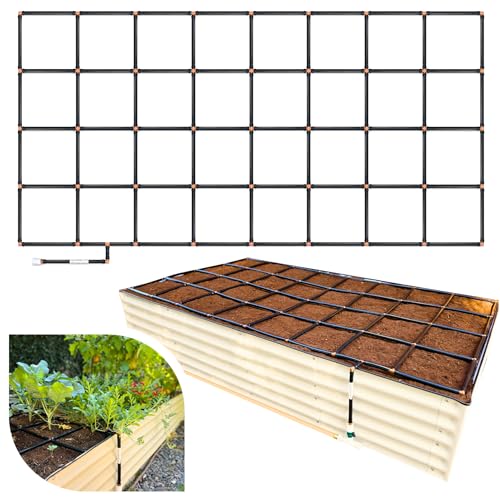
Garden Grid Raised Bed Watering System
Best for: Raised beds and square-foot gardens
A pre-assembled grid of tubing with built-in emitters that sits on top of a raised bed and connects to a garden hose, watering every square of the bed evenly.
- Pre-assembled, almost no setup
- Even coverage across a grid layout
- Works with a standard hose and timer
- Sized for beds, not open rows
- Grid can get in the way when planting

CARPATHEN Quick-Connect Drip Irrigation System
Best for: Mixed gardens up to about 130 ft of tubing
An adjustable drip kit with quick-connect fittings for gardens and raised beds, sized for runs up to around 130 ft.
- Quick-connect fittings speed up setup
- Adjustable emitters for different plants
- Suitable for beds and rows
- Covers small to medium gardens
- Tubing can shift if not staked well

MIXC 230 ft Quick-Connector Drip Irrigation Kit
Best for: Long beds, greenhouses and big vegetable plots
A large 230 ft drip kit with quick connectors, drippers and sprayers for lawns, raised beds and greenhouses.
- Lots of tubing for the money
- Mix of drippers and mist nozzles
- Expandable layout
- Many small parts to plan
- Lesser-known brand
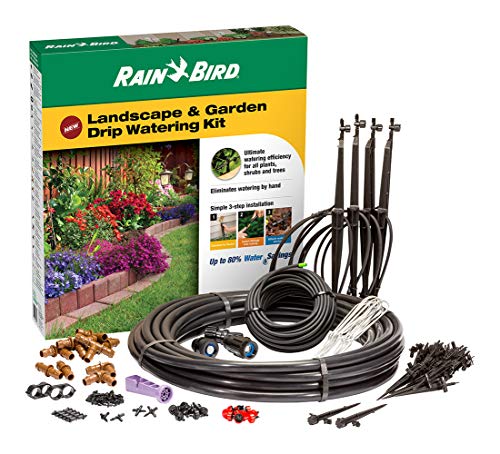
Rain Bird LNDDRIPKIT Landscape Drip Kit
Best for: Landscape beds and shrubs
A drip kit from Rain Bird with drippers, micro-bubblers and micro-sprays for landscape and garden beds.
- Established irrigation brand
- Mix of emitter types
- Good for shrubs and perennials
- Less tubing than budget kits
- May need extra fittings for big layouts

Eden 98063 Flex Above-Ground Sprinkler System
Best for: Vegetable rows and shallow-rooted crops
An above-ground system of adjustable sprinkler heads on flexible stakes linked by hose, for spraying beds and rows without digging.
- No trenching
- Heads adjust for height and direction
- Quick to move each season
- Overhead spray wastes more water than drip
- Wets foliage

Customizable 50 ft Soaker Hose System
Best for: Straight beds, hedges and rows
A 1/2 inch, 50 ft soaker hose sold with a 25 ft garden hose, so water seeps directly into the soil along a bed.
- Simple to lay out
- Waters at soil level
- Supply hose included
- Uneven flow on long or sloped runs
- Needs low pressure to work well

JIYANG Solar Automatic Drip Irrigation Kit
Best for: Patios, pots and spots without a timer outlet
A solar-powered pump kit that drips water from a reservoir into pots or small beds on a programmed schedule.
- No faucet needed
- Solar-powered timer and pump
- Good for containers and vacation watering
- Limited to small plantings
- Reservoir needs refilling

Growoya OYA Large Olla Watering Pot
Best for: Small beds, drought-prone gardens
A buried terracotta olla that slowly releases water into the surrounding soil, an old and simple way to water plants at the root.
- No moving parts
- Very water-efficient
- Works in any bed
- Must be refilled by hand
- Covers a small radius

Hunter BTT Bluetooth 2-Zone Hose Timer
Best for: Automating any drip or soaker system
A two-zone Bluetooth hose timer from Hunter controlled by phone app, for running drip, soaker or sprinkler lines on a schedule.
- Two zones from one faucet
- App scheduling
- Established irrigation brand
- Bluetooth range only, no Wi-Fi
- Battery powered
How we chose these systems
We looked for systems that cover the main ways people water gardens: drip kits, a raised bed grid, a soaker hose, an above-ground sprinkler set, a solar kit for spots without a faucet, a buried olla and a hose timer to automate the rest. We compared what comes in the box, how hard each is to install, how well it scales and whether it suits beds, rows or pots. We do not list prices because they change often. Several products come from smaller brands, so read recent reviews on each listing before buying.
Types of garden watering systems
Drip irrigation
Drip irrigation delivers water slowly through emitters placed at each plant or along a line. It is the most water-efficient method for most gardens because little water is lost to wind, runoff or evaporation, and dry leaves mean fewer fungal problems. Drip kits need a little planning but are easy to extend. If you are new to drip, our guide on how to connect drip irrigation to a hose bib walks through the faucet setup.
Raised bed grids
A pre-assembled grid sits on top of a bed and waters it evenly with almost no setup. It is the fastest route to automatic watering for raised beds, though it is sized for beds rather than open ground.
Soaker hoses
A soaker hose weeps water along its whole length. It is simple and cheap and works well for straight beds and hedges, but flow can be uneven on long or sloped runs.
Above-ground sprinkler systems
Flexible sprinkler stakes connected by hose spray water over beds. They are quick to set up and move, but overhead watering wastes more water and wets foliage.
Ollas and self-watering devices
Buried terracotta ollas and watering spikes slowly release water into the soil. They are low-tech, very efficient and need refilling by hand.
Solar and reservoir kits
Solar kits pump water from a tank on a timer, useful on balconies, patios or plots without an outdoor tap.
How to choose a watering system for your garden
- Layout: raised beds suit grids or drip; long rows suit drip line or soaker hose; scattered pots suit drip with individual emitters or a solar kit.
- Water source: a faucet nearby makes drip, soaker and sprinkler systems easy; no faucet points to solar, reservoir or ollas.
- Soil: sandy soil needs more frequent watering and closer emitters; clay soil absorbs slowly, so run longer at lower flow.
- Automation: pair any hose-fed system with a timer so it runs while you are away.
- Expandability: a quick-connect drip kit grows with the garden; a grid or soaker is more fixed.
- Budget and time: soaker hoses and ollas are the simplest; drip kits take an afternoon to plan and install.
Drip vs soaker hose vs sprinkler for gardens
Drip irrigation is the most precise and efficient, with water going only where plants grow. It takes more planning but rewards you with healthier plants and fewer weeds between rows. Soaker hoses are the easiest root-zone option and cost less, but water output varies along the hose and they wear out sooner. Sprinklers cover a large area fast and suit dense plantings and seedbeds, but they lose water to evaporation and can spread leaf diseases. Many gardeners combine them: drip for vegetables and shrubs, a sprinkler for a newly seeded bed.
Setting up a drip system step by step
- Sketch the garden with bed sizes and the distance to the faucet.
- Fit a backflow preventer, filter and pressure regulator at the faucet.
- Run the main 1/2 inch line along the beds, using stakes to hold it.
- Add 1/4 inch lines or emitters at each plant, closer together in sandy soil.
- Flush the lines before closing the ends.
- Add a timer and set a starting schedule, then check soil moisture and adjust.
Our guide on how deep drip irrigation should be explains whether to bury lines or lay them under mulch, and if you are switching from a sprinkler zone, see how to convert a sprinkler to drip.
How often to water a garden
Most vegetables do best with deep, less frequent watering that encourages roots to grow down. Check the soil a few inches deep before watering: if it is still moist, wait. Hot, windy weather, sandy soil and containers need water more often. Drip systems are often run longer than people expect because the flow is low. Our guide on whether to run drip irrigation daily covers schedules in more detail, and for beds see how to water a raised garden bed correctly.
Watering raised beds, rows and containers
Raised beds drain faster than ground soil and dry out quickly in summer, so a grid or a grid of drip line works well. Rows suit a straight drip line or soaker hose along each row. Containers dry out fastest of all; give each pot its own emitter, or use a reservoir or solar kit. For more specific picks, see our guides to the best drip irrigation for raised beds and the best drip irrigation for pots.
Adding a timer
A timer is what turns a watering system into an automatic one. A simple battery hose timer at the faucet runs drip, soaker or sprinkler lines on a schedule; multi-zone or app-controlled timers let you water different beds at different times. Our guide to the best hose bib timer compares options, and gardens with two separate zones may suit a dual outlet hose timer.
Saving water in the garden
Drip and soaker systems already use less water than overhead spraying. You can save more by mulching beds, watering early in the morning, grouping plants with similar needs and fixing leaks promptly. Harvested rainwater can feed a low-pressure drip system with a pump or gravity feed. The EPA WaterSense program has practical tips on outdoor water efficiency.
Planning zones in a mixed garden
Most gardens hold plants with very different water needs: thirsty tomatoes and squash, moderate herbs, drought-tolerant perennials and shrubs. Watering them all on one schedule means some get too much and others too little. The simple fix is to divide the garden into zones. Group vegetables together on one drip line, ornamental beds on another and pots on a third. A dual or multi-zone hose timer can then run each zone for its own length of time. Within a zone, you can fine-tune by using higher-flow emitters at hungry plants and fewer or lower-flow emitters at plants that prefer drier soil. Writing down which line feeds which bed makes troubleshooting much easier later in the season.
Mulch and drip work best together
Laying drip line or soaker hose under a few inches of mulch makes a good system even better. The mulch shields the tubing from sun, which helps it last longer, and slows evaporation from the soil surface so each watering lasts longer. It also hides the tubing for a tidier look and keeps weeds down between plants. Use straw or shredded leaves in vegetable beds and bark or wood chips around shrubs and perennials. Keep mulch a short distance away from plant stems to avoid rot.
Troubleshooting common problems
- Dry spots: check for clogged emitters or a kinked line; add an emitter near the dry plant.
- Puddling: the run time is too long for the soil; shorten it or split it into two cycles.
- Weak flow at the end of a line: the run is too long for the tubing size; feed it from both ends or add a second main line.
- Leaks at fittings: push tubing fully onto barbs and use goof plugs to seal old holes.
- Timer not starting: replace batteries and check the program and rain delay settings.
Most problems are easy to fix in a few minutes once you walk the lines while the water is running.
Seasonal care
- Spring: flush lines, check emitters for clogs and replace worn washers.
- Summer: check soil moisture weekly and lengthen run times in heat waves.
- Autumn: reduce watering as temperatures drop.
- Winter: drain lines, remove the timer and store indoors in freezing climates.
Common mistakes
- Skipping the pressure regulator, which can blow fittings apart.
- Watering little and often, which keeps roots shallow.
- Using one schedule for every plant regardless of needs.
- Leaving emitters clogged after a season.
- Burying soaker hoses too deep where flow becomes uneven.
- Forgetting to drain lines before a hard freeze.
Is a garden watering system worth it?
For most gardeners, yes. A basic drip kit and timer cost less than losing a summer of vegetables to a dry week, and they save hours of hand watering. Plants watered steadily at the roots tend to grow more evenly, with fewer split tomatoes and less blossom end rot caused by uneven moisture. Start small with one bed, learn how your soil behaves, then expand.
The bottom line
The best watering system for most raised bed gardens is a pre-assembled grid like our top pick, while a quick-connect drip kit is the most flexible choice for open beds and rows. Choose a soaker hose for simple straight beds, an above-ground sprinkler set for seedbeds and dense plantings, a solar kit or olla where there is no faucet, and add a hose timer to automate any of them.
Frequently Asked Questions
What is the best watering system for a vegetable garden?
For most vegetable gardens, drip irrigation is the most efficient choice because it waters the soil at the roots and keeps leaves dry. A pre-assembled grid works well for raised beds.
Is drip irrigation better than a sprinkler for a garden?
Usually, yes. Drip puts water where roots are and loses less to wind and evaporation. Sprinklers are quicker to set up and suit closely planted crops and lawns.
Can I automate a garden watering system without electricity?
Yes. A battery hose timer at the faucet automates drip or soaker lines, and solar kits or ollas work in spots without a faucet.
How long should I run drip irrigation in a garden?
It depends on soil, emitter flow and weather. Many gardens need a longer, less frequent run, so check moisture a few inches down and adjust.
Do I need a pressure regulator for a garden drip system?
Most drip systems are designed for lower pressure than household taps supply, so a regulator and filter at the faucet are recommended.