
Last updated: October 2026 · Written by the LawnVibe editorial team.
A mower handles the open lawn, but a string trimmer gives a yard its finished look. It cuts along fences, around trees, beside beds and up against the house, places a mower simply cannot reach. The best string trimmer for you depends on your yard size, the toughness of the weeds you face and how much maintenance you want to do.
This guide compares ten string trimmers across all three power types: gas, cordless and corded. You will also find a buying guide that explains engine size, battery voltage, cutting width, shaft style and line feed systems, plus technique and safety tips that make trimming faster and cleaner.
| # | Product | Best for | Link |
|---|---|---|---|
| 1 | DEWALT 20V MAX XR 14 inch Brushless String Trimmer | Medium to large yards | Check price |
| 2 | EGO POWER+ 15 inch Trimmer and Blower Combo | Trimming plus cleanup | Check price |
| 3 | CRAFTSMAN V20 WEEDWACKER 13 inch Cordless Trimmer | Typical suburban lawns | Check price |
| 4 | BLACK+DECKER 40V MAX 13 inch Trimmer and Edger Kit (LST140C) | More power on a budget | Check price |
| 5 | Worx GT Revolution 20V 12 inch Trimmer/Edger/Mini-Mower | Trimming, edging and tiny lawns | Check price |
| 6 | Husqvarna 130L Straight Shaft Gas String Trimmer | Large properties and tough weeds | Check price |
| 7 | Husqvarna 122L Gas String Trimmer | Homeowners who want gas power | Check price |
| 8 | WILD BADGER POWER 26cc 4-in-1 Gas Trimmer Kit | Owners who want several tools | Check price |
| 9 | BLACK+DECKER 6.5 Amp Corded String Trimmer/Edger with EASYFEED | Small yards near an outlet | Check price |
| 10 | WEN Corded Electric String Trimmer | Tight budgets | Check price |
How We Chose the Best String Trimmer
We did not run hands-on lab tests. We compared each trimmer on published specifications and features: power type, engine displacement or battery voltage, cutting swath, motor type, shaft design, line feed system, edging capability and whether a battery or attachments are included. We also considered brand ecosystems, parts availability and common owner feedback themes such as starting reliability and line feed performance.
Specifications and kit contents change, so confirm current details on the listing before you buy.

DEWALT 20V MAX XR 14 inch Brushless String Trimmer
Best for: Medium to large yards
A brushless 20V MAX XR trimmer with a 14 inch swath on DEWALT’s widely used battery platform, aimed at owners who want near-gas performance without the fuel.
- Brushless motor
- 14 inch swath
- Large DEWALT tool ecosystem
- Premium price
- Heavier than compact trimmers

EGO POWER+ 15 inch Trimmer and Blower Combo
Best for: Trimming plus cleanup
A combo kit pairing a 15 inch string trimmer with a blower on EGO’s 56V platform, so one battery handles trimming and clearing clippings.
- Wide 15 inch swath
- Blower included
- High-voltage platform
- Larger upfront spend
- More to store
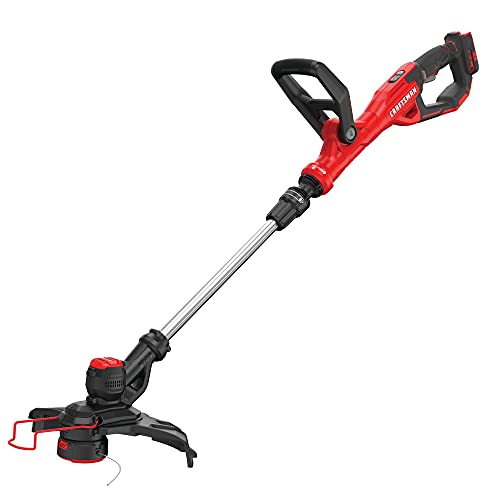
CRAFTSMAN V20 WEEDWACKER 13 inch Cordless Trimmer
Best for: Typical suburban lawns
A 13 inch cordless WEEDWACKER on the CRAFTSMAN V20 platform, sized for regular trimming around average lawns.
- 13 inch swath
- V20 batteries fit many tools
- Comfortable size
- Not for heavy brush
- Check battery inclusion

BLACK+DECKER 40V MAX 13 inch Trimmer and Edger Kit (LST140C)
Best for: More power on a budget
A 40V MAX trimmer and edger kit with a 13 inch cut, battery and charger, offering more voltage than 20V tools at a friendly price.
- 40V power
- Edging mode
- Battery and charger included
- Heavier than 20V models
- Separate 40V ecosystem
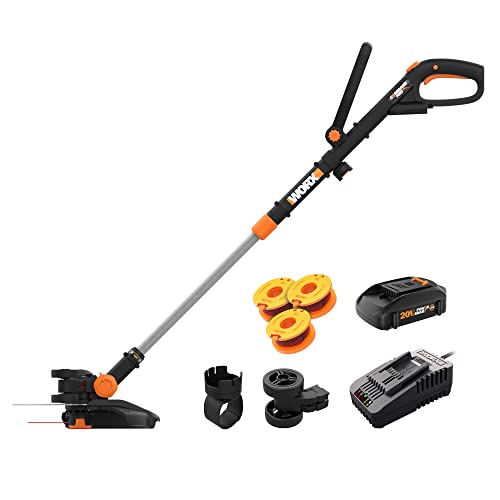
Worx GT Revolution 20V 12 inch Trimmer/Edger/Mini-Mower
Best for: Trimming, edging and tiny lawns
A 20V tool that converts from string trimmer to wheeled edger to mini-mower, with an automatic line system designed to reduce line hassle.
- Three tools in one
- Converts to wheeled edger
- Light 20V platform
- 12 inch swath
- Not for large properties

Husqvarna 130L Straight Shaft Gas String Trimmer
Best for: Large properties and tough weeds
A straight-shaft gas trimmer with a 28cc engine and 18 inch cutting width, built to reach under shrubs and power through heavy growth.
- Wide 18 inch cut
- Straight shaft reach
- Strong 28cc engine
- Two-stroke fuel mix needed
- Louder and heavier than cordless

Husqvarna 122L Gas String Trimmer
Best for: Homeowners who want gas power
A lighter Husqvarna gas trimmer with Smart Start and an air purge primer intended to make starting quicker and easier.
- Easier starting features
- Lighter gas option
- Trusted brand
- Smaller engine than 130L
- Gas maintenance required

WILD BADGER POWER 26cc 4-in-1 Gas Trimmer Kit
Best for: Owners who want several tools
A 26cc two-cycle kit with a 17 inch string trimmer/edger, pole saw, hedge trimmer and brush cutter head, covering several yard jobs in one purchase.
- Four tools included
- Brush cutter for tough growth
- Good value kit
- Less established brand
- Heavier with attachments

BLACK+DECKER 6.5 Amp Corded String Trimmer/Edger with EASYFEED
Best for: Small yards near an outlet
A 6.5 amp corded trimmer/edger with POWERDRIVE transmission and EASYFEED push-button line advance, so there is no bumping required.
- Push-button line feed
- Unlimited runtime
- Light and affordable
- Cord limits range
- Less power for heavy weeds

WEN Corded Electric String Trimmer
Best for: Tight budgets
A light corded trimmer of around 4.4 lb with an automatic feed system and cord storage hook for simple, low-cost trimming.
- Very light
- Automatic line feed
- Low cost
- Cord management needed
- Basic build
Gas vs Cordless vs Corded String Trimmers
Choosing a power type is the biggest decision, and each has a clear place.
Gas trimmers offer the most power and unlimited runtime with a quick refuel. They are the natural choice for large properties, rural lots and thick weeds along ditches and fence lines. Most homeowner gas trimmers use two-stroke engines that run on a fuel and oil mix, which means more maintenance, more noise and more vibration than electric models. Small engines in outdoor power equipment are covered by U.S. Environmental Protection Agency emission standards for small nonroad spark-ignition engines. For more gas models, see our guide to the best gas trimmer.
Cordless trimmers have become the most popular choice for suburban yards. They start with a trigger, run quietly, need almost no maintenance and share batteries with mowers, blowers and hedge trimmers on the same platform. Higher-voltage and brushless models now rival small gas trimmers for power. Runtime depends on battery capacity, so larger properties may need a spare. Our guide to the best cordless trimmer compares battery models in more depth.
Corded trimmers are the lightest and least expensive powered option. They never run out of charge, but the extension cord limits range and needs managing around obstacles. They suit small yards close to an outdoor outlet. See our picks for the best corded string trimmer for more.
| Factor | Gas | Cordless | Corded |
|---|---|---|---|
| Power | Highest | Good to very high | Moderate |
| Runtime | Unlimited with refuelling | Battery limited | Unlimited while plugged in |
| Weight | Heaviest | Moderate | Lightest |
| Noise | Loud | Quiet | Quiet |
| Maintenance | Fuel mix, plugs, filters | Very low | Very low |
| Best for | Large lots, heavy weeds | Most yards | Small yards near outlets |
String Trimmer Buying Guide
Engine size or battery voltage
Homeowner gas trimmers typically have engines between about 25cc and 30cc, which is plenty for most residential work. Larger engines help with dense brush. For cordless trimmers, 20V-class tools handle light to moderate trimming, while 40V, 56V and 60V platforms deliver more power for thicker growth. Brushless motors generally add efficiency and torque.
Cutting swath
The cutting swath is the diameter of the circle the line covers. Around 10 to 12 inches suits small yards and detail work, 13 to 15 inches is the sweet spot for most lawns, and 16 to 18 inches covers large areas quickly. Wider swaths need more power and add a little weight.
Shaft style
Straight shafts are longer, reach under shrubs and decks more easily and usually work better for tall users. Many accept attachments such as edgers, brush cutters and pole saws. Curved shafts are shorter and lighter, which some people find easier for quick trimming around small yards.
Line feed system
Bump-feed heads release line when you tap the head on the ground. Auto-feed heads advance line automatically as it wears. Push-button feed lets you release line with a button on the handle. Some heads use fixed lengths of line that you load by hand without winding a spool. If you are tired of winding, our guide to the best trimmer with automatic line feed covers convenient options.
Edging ability
Many trimmers can rotate the head to edge along sidewalks and driveways, and some include a wheel guide for steadier lines. If you edge often, a trimmer with an edging mode saves buying a separate tool. Our guide on whether a trimmer can be used as an edger explains the trade-offs, and our trimmer vs edger comparison helps you decide whether you need both.
Weight and balance
A trimmer that feels light in the store can tire you out after half an hour if the balance is wrong. Look for an adjustable auxiliary handle and consider a shoulder strap for heavier gas models.
Attachment systems
Some trimmers use split-shaft or attachment-capable designs that accept edgers, pole saws, hedge trimmers and cultivators. Multi-tool kits can be good value if you need several functions, though dedicated tools often perform better at each individual task.
Best String Trimmer by Yard Type
Small yards and townhouses
A compact cordless trimmer or a light corded trimmer with a 10 to 12 inch swath is ideal. Look for an edging mode so one tool handles both jobs.
Medium suburban lawns
A 13 to 15 inch cordless trimmer on a strong battery platform covers most needs. Brushless motors and 4.0Ah or larger batteries make a noticeable difference.
Large properties and rural lots
A gas trimmer with a straight shaft, or a high-voltage brushless cordless model with spare batteries, handles long fence lines and roadside verges. For heavy growth, our guide to the best trimmer for thick brush covers tougher machines.
Tall grass and overgrown edges
Power and line diameter matter most. Thicker line and a strong motor or engine cut faster and with less line breakage. See our guide to the best trimmer for tall grass.
How to Use a String Trimmer Like a Pro
Hold the trimmer with the head slightly tilted so the tip of the line does the cutting. The tip moves fastest and cuts most cleanly, while pushing the whole head into grass wastes power and wears line quickly. Work from the outside of an area inward and cut tall grass in stages, trimming the top first and then working lower.
Around trees, fences and posts, approach slowly and let the line just reach the base. Hitting tree bark can damage or kill young trees, so consider mulch rings around trunks to reduce trimming there entirely. Along sidewalks, rotate the head or flip the trimmer to edge with the line vertical, walking steadily so the edge stays straight. Our beginner's guide on how to use a string trimmer for the first time walks through technique step by step.
String Trimmer Maintenance
Regular care keeps a trimmer cutting well. Replace line before it becomes too short to feed properly, and wind spools neatly in the direction marked on the head. Our guide on how to wind trimmer line on a spool shows the process. Clean grass and debris from the guard and head after each use, because packed debris adds drag and drains batteries faster.
Gas trimmers need a little more attention: use fresh fuel mixed at the manufacturer's ratio, clean or replace the air filter regularly, check the spark plug and drain or stabilise fuel before long storage. Cordless trimmers need batteries stored indoors at a moderate charge, away from heat and freezing temperatures.
Common String Trimmer Problems
Most trimmer frustrations come down to the line. If the line will not advance, the spool may be wound too loosely or crossed over, or the line may have fused together after heavy use. Rewinding neatly usually fixes it. If line breaks constantly, you may be hitting hard surfaces such as concrete edges and fences too often, or using old, brittle line; soaking older line in water overnight before winding can help on some types. If a trimmer bogs down, take smaller bites, keep the head clean and, on cordless models, check the battery charge. Gas trimmers that are hard to start often have stale fuel or a dirty air filter.
String Trimmer Safety
String trimmers throw debris at high speed, so wear safety glasses, long pants and closed shoes every time. Gas trimmers are loud enough that hearing protection is a sensible habit. Keep children, pets and bystanders well away while you work, and clear stones, wire and other debris from the area first. Never remove the debris guard, and use only the line or blades the manufacturer approves. Stop the engine or remove the battery before clearing a tangled head.
Choosing a Battery Platform
If you go cordless, think of the trimmer as one part of a system. The same battery can often power a mower, leaf blower, hedge trimmer and chainsaw. Staying with one brand saves money because you can buy future tools without batteries, and it keeps your garage simpler with one charger. Check which tools each platform offers before committing.
Final Verdict: Which String Trimmer Should You Buy?
The best string trimmer matches your yard size, the toughness of your weeds and how much upkeep you want.
- Best cordless overall: the DEWALT 20V MAX XR 14 inch brushless.
- Best cordless kit with blower: the EGO POWER+ 15 inch trimmer and blower combo.
- Best mid-range cordless: the CRAFTSMAN V20 13 inch WEEDWACKER.
- Best 40V value: the BLACK+DECKER 40V MAX 13 inch trimmer and edger kit.
- Best 3-in-1 for small yards: the Worx GT Revolution 20V 12 inch.
- Best gas trimmer: the Husqvarna 130L straight shaft with an 18 inch swath.
- Best compact gas trimmer: the Husqvarna 122L.
- Best gas multi-tool kit: the WILD BADGER POWER 26cc 4-in-1.
- Best corded trimmers: the BLACK+DECKER 6.5 amp with EASYFEED and the WEN corded trimmer.
Pick the power type that fits your property first, then choose the swath and features, and your edges will look sharp all season.
Frequently Asked Questions
What is the best type of string trimmer for most homeowners?
A cordless string trimmer on a 20V to 56V battery platform suits most suburban yards. It starts instantly, runs quietly and needs little maintenance. Gas trimmers remain best for large properties and heavy weeds, while corded trimmers are the budget choice for small yards.
Is a straight or curved shaft trimmer better?
Straight shafts reach further under shrubs and fences and usually suit taller users and heavier work. Curved shafts are a little shorter, lighter and easier to balance for quick trimming around a small yard.
What size trimmer line should I use?
Use the diameter your trimmer's manual recommends. Light-duty electric trimmers commonly use around 0.065 inch line, while more powerful cordless and gas trimmers often use 0.080 to 0.095 inch line for tougher weeds.
Can a string trimmer edge a lawn?
Yes. Many trimmers have a rotating head or wheel guide for edging along sidewalks and driveways. For frequent, crisp edging, a dedicated edger gives a cleaner line.
How long do string trimmers last?
With routine care, a quality trimmer can last many seasons. On cordless models the battery is usually the first part to wear out, while gas trimmers need regular fuel, air filter and spark plug care to stay reliable.