

Last updated: October 2026 · Written by the LawnVibe editorial team.
Nothing makes a front yard look sharper than a clean, straight line where the lawn meets the sidewalk. Over a few weeks, though, grass creeps across the concrete and the line disappears. The best lawn edger for sidewalks puts a steel blade right in the joint between turf and pavement and uses a wheel riding on the concrete to keep the cut perfectly straight, foot after foot.
This guide compares nine edgers chosen specifically for sidewalks, driveways and curbs: corded and battery blade edgers with curb and guide wheels, a gas wheeled edger that rides along street curbs and a manual rotary edger for quick upkeep. You will also learn how to edge sidewalks without wavy lines, clumps or scattered debris.
| # | Product | Best for | Link |
|---|---|---|---|
| 1 | WORX WG896 12 Amp Electric Edger and Trencher | Front walks near an outlet | Check price |
| 2 | CRAFTSMAN CMEED400 12 Amp Corded Edger | Straight driveway edges | Check price |
| 3 | BLACK+DECKER 12 Amp 7.5 inch 2-in-1 Edger and Trencher | Sidewalks plus landscaping | Check price |
| 4 | Amazon Basics 12 Amp Corded Electric Lawn Edger | Budget sidewalk edging | Check price |
| 5 | Greenworks 80V 8 inch Cordless Edger (Tool Only) | Corner lots and street curbs | Check price |
| 6 | Greenworks 40V 8 inch Brushless Edger (Tool Only) | Greenworks 40V owners | Check price |
| 7 | DEWALT 60V MAX FLEXVOLT Edger Kit (DCED472X1) | Long frontages | Check price |
| 8 | McLane 101-5.50GT-7 Lawn Edger | Tall street curbs | Check price |
| 9 | Truper Dual-Wheel Rotary Lawn Edger | Quick touch-ups along concrete | Check price |
How We Chose the Best Lawn Edger for Sidewalks
We did not run hands-on tests. We focused on features that matter along concrete: guide or curb wheel design, cutting line indicators, blade size, depth adjustment, stability and power. We also considered how easily each edger tracks a straight edge and how practical it is for typical suburban sidewalks and driveways.
Specifications change, so confirm details on the listing before you buy.
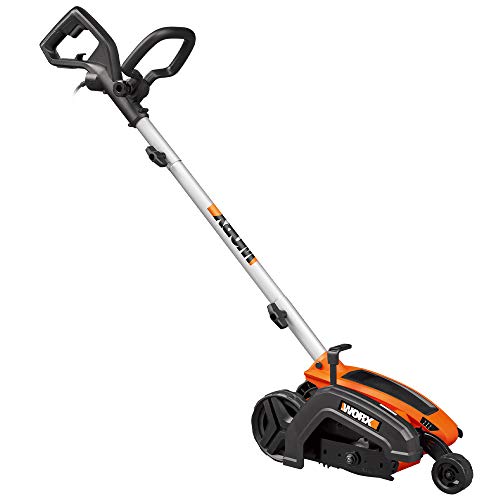
WORX WG896 12 Amp Electric Edger and Trencher
Best for: Front walks near an outlet
A 7.5 inch blade spins at up to 4,700 RPM, with a cutting line indicator to stay on the edge and three depth settings for maintenance or recutting.
- Cutting line indicator
- Three depth settings
- Strong 12 amp motor
- Corded range
- Heavier than battery edgers
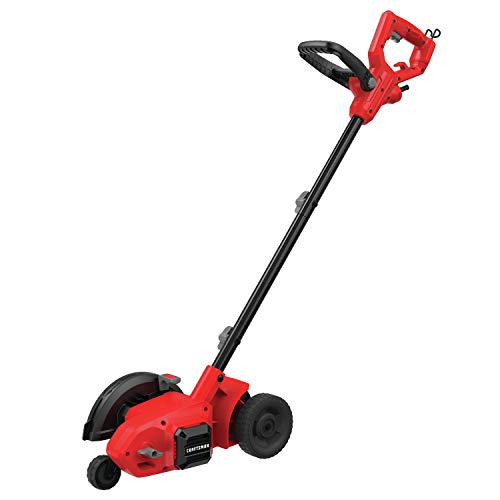
CRAFTSMAN CMEED400 12 Amp Corded Edger
Best for: Straight driveway edges
A high-torque corded edger with a line cutting guide for precision along hard surfaces and an adjustable auxiliary handle.
- Line cutting guide
- Adjustable handle
- High-torque motor
- Corded range
- No trenching emphasis

BLACK+DECKER 12 Amp 7.5 inch 2-in-1 Edger and Trencher
Best for: Sidewalks plus landscaping
A 12 amp edger with three height settings that also digs shallow trenches for cables, irrigation or edging.
- Edger and trencher
- Three heights
- Good power
- Corded range
- Call before digging trenches

Amazon Basics 12 Amp Corded Electric Lawn Edger
Best for: Budget sidewalk edging
A 12 amp corded edger with a 7.5 inch double-edge blade and adjustable height for clean edges along sidewalks and drives.
- Double-edge blade
- Adjustable height
- Good value
- Loud per listing
- Corded range
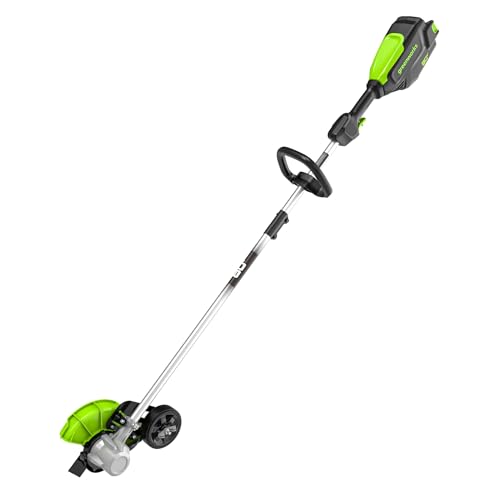
Greenworks 80V 8 inch Cordless Edger (Tool Only)
Best for: Corner lots and street curbs
An 80V edger with an 8 inch blade and curb wheel combo that helps cut through compacted soil along curbs; battery sold separately.
- Curb wheel
- High-voltage power
- Cordless
- Tool only
- 80V battery ecosystem

Greenworks 40V 8 inch Brushless Edger (Tool Only)
Best for: Greenworks 40V owners
A brushless edger with a curb wheel and tool-less depth adjustment for quick setup along sidewalks and driveways.
- Brushless motor
- Curb wheel
- Tool-less depth
- Battery not included
- Less power than 80V

DEWALT 60V MAX FLEXVOLT Edger Kit (DCED472X1)
Best for: Long frontages
A 7-1/2 inch hardened steel blade with up to 2-1/2 inch depth and a large guide wheel for easy, stable movement along concrete.
- Large guide wheel
- Deep adjustable cut
- Battery and charger included
- Premium price
- Heavier than 20V edgers
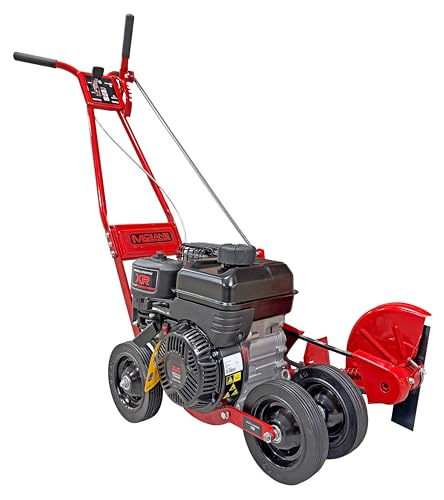
McLane 101-5.50GT-7 Lawn Edger
Best for: Tall street curbs
A wheeled gas edger whose curbside tires can drop below the pavement level for curb edging, and which also trims horizontally.
- Curb-riding design
- Edges and trims
- Stable wheeled chassis
- Heavy
- Gas maintenance
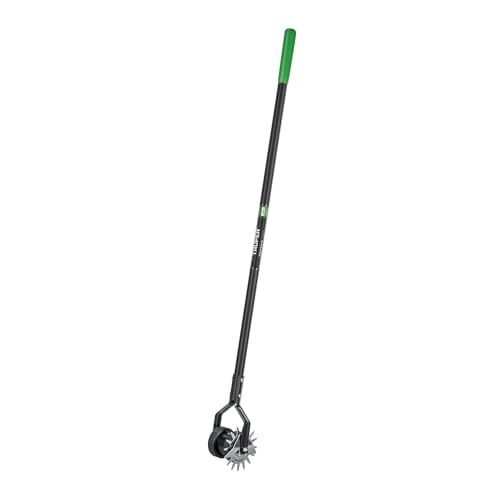
Truper Dual-Wheel Rotary Lawn Edger
Best for: Quick touch-ups along concrete
A manual rotary edger with two wheels for stable, straight lines along sidewalks and a 48 inch fibreglass handle.
- Quiet and simple
- Dual-wheel stability
- No fuel or battery
- Maintenance only
- Not for deep recuts
Why Sidewalks Need a Blade Edger
Sidewalks are straight, long and hard, which suits a blade edger perfectly. A guide wheel riding on the concrete gives the edger a fixed reference point, so the blade follows the line of the pavement precisely. The steel blade slices down into the soil, cutting the roots and runners that creep over the edge. The result is a clean, slightly recessed line that stays sharp for weeks.
A string trimmer can tidy a sidewalk edge, but its line wears quickly against concrete and the cut is shallow, so grass returns sooner. For curved beds and light touch-ups, a trimmer is fine; see our guide to the best trimmer for edging. For long sidewalks and driveways, a blade edger is faster and gives a longer-lasting result.
Sidewalk Edger Buying Guide
Guide wheel and curb wheel
The guide wheel is the most important feature for sidewalk work. It should be wide and stable enough to ride smoothly along the concrete. A curb wheel or adjustable wheel height lets you edge where the street or driveway sits lower than the lawn.
Cutting line indicator
Some edgers have an indicator or sight line that shows exactly where the blade will cut. This makes it easier to stay on the joint between lawn and concrete.
Blade size and depth
Most sidewalk edgers use blades around 7 to 9 inches. Adjustable depth lets you make a shallow maintenance cut or a deeper recut for neglected edges.
Power source
Corded edgers are great value if outlets are near the sidewalk. Battery edgers are more convenient for long frontages and corner lots. Gas wheeled edgers suit very long runs and commercial use. For a deeper look, see our guides to the best electric edger, best cordless edger and best gas-powered edger.
Weight and balance
A heavier edger can feel more stable on concrete, while a lighter one is easier to carry. Look for an adjustable auxiliary handle for comfortable control.
Best Sidewalk Edger by Property
Short front walk and single driveway
A corded blade edger is ideal if an outdoor outlet is nearby. It is affordable, delivers steady power and the guide wheel keeps every pass straight. A single extension cord usually reaches the whole front walk and driveway.
Corner lots and long frontages
Corner properties can have twice the linear feet of sidewalk, plus a long curb. A battery edger removes the cord hassle, and a second battery means you never stop halfway. If you also have a long street curb, choose a model with an adjustable curb wheel.
Properties with tall curbs
Where the street sits well below the lawn, a curb-riding wheeled edger is the easiest tool. One wheel rides at street level while the blade cuts the top edge of the lawn, giving a clean vertical line along the curb.
Light, regular upkeep
If your sidewalk edges are already well defined and you just want to keep them tidy, a manual rotary edger is quiet and quick. It trims the grass that creeps over the concrete without digging a trench.
Recutting Neglected Sidewalk Edges
When grass has spread several inches over a sidewalk, the first cut takes more work. Start by finding the true edge of the concrete, which may be hidden under turf. Push a flat spade or the edger blade down to locate it. Make a shallow first pass with the edger along the concrete, then a second, deeper pass. Remove the strip of turf and soil that sits on top of the pavement with a flat shovel, and sweep the concrete clean. Once the edge is restored, regular maintenance edging takes only a few minutes.
How to Edge a Sidewalk Perfectly
Start by clearing the sidewalk of sticks, stones and toys. Set the edger to a shallow depth for regular edging. Place the guide wheel on the concrete with the blade lined up in the joint between grass and pavement. Start the edger with the blade raised, then lower it into the soil and walk forward slowly and steadily, keeping the wheel firmly on the concrete.
Look ahead along the edge rather than down at the blade, and keep the edger upright. If the edge is overgrown, make a shallow first pass and a slightly deeper second pass. At expansion joints and driveway corners, slow down and lift the blade if needed to avoid gouging. When finished, sweep or blow soil and clippings off the sidewalk. Our guides on how to edge a driveway with a lawn edger and how to use a lawn edger to create straight edges explain technique step by step.
Avoiding Common Sidewalk Edging Problems
Wavy lines
Wavy edges usually happen when the guide wheel slips off the concrete or you walk too fast. Slow down and keep gentle sideways pressure so the wheel stays on the pavement.
Grass clumps
Clumps form when the edger throws damp clippings in bunches. Edge when the grass is dry, keep the blade sharp and clean the guard regularly. Our guide on how to stop your edger from leaving grass clumps has more tips.
Scalped or gouged edges
Cutting too deep or tilting the edger can gouge the soil and leave a trench. Use a shallow setting for upkeep and keep the edger level. Our guide on how to adjust the cutting height on a lawn edger explains depth settings.
Edging Curbs Along the Street
Curb edging is slightly different, because the street often sits several inches below the lawn. Edgers with an adjustable curb wheel can drop one wheel to street level while the blade cuts the vertical edge of the lawn at the top of the curb. Wheeled gas edgers designed for curb riding make this especially easy. Always edge facing traffic, wear high-visibility clothing if you are working near a busy street and keep cords and tools out of the roadway.
How Often to Edge Sidewalks
During the growing season, edging sidewalks every two to four weeks keeps them looking crisp. Grass grows fastest in spring and early summer, so you may need to edge more often then. In between, a quick pass with a string trimmer or rotary edger tidies any stray blades. Regular edging is far easier than letting the edge disappear and recutting it later.
Sidewalk Edger Maintenance
Clean soil and grass from the blade guard and wheels after each session. Check the blade for wear; blades used along concrete wear down and dull faster than you might expect, and a worn blade leaves ragged edges. Replace blades as needed and keep a spare. Tighten the blade bolt according to the manual. For battery edgers, store batteries indoors at a moderate charge; for gas edgers, keep up with oil, air filter and fuel care.
Sidewalk Edging Safety
Edgers throw soil and small stones along the sidewalk, so wear safety glasses, long pants and sturdy shoes. Watch for pedestrians, children and pets, and pause if anyone approaches. Keep cars parked away from the edge you are working on. Unplug or remove the battery, or stop the engine, before changing blades or clearing clogs. With corded models, use an outdoor-rated extension cord and keep it behind you; the Electrical Safety Foundation International offers helpful extension cord safety tips.
Choosing a Replacement Blade
Sidewalk edging wears blades faster than any other job, because the blade often touches concrete. Keep a spare blade that matches your edger's diameter and arbor size, and replace the blade when edges start to look ragged or cutting slows down.
Finishing the Job
After edging, sweep or blow the cut soil and clippings off the sidewalk, then step back and check the line. Trim any stray blades along the top of the edge with a string trimmer held horizontally or with grass shears. A clean sidewalk makes the new edge stand out. If you edge right after mowing, the whole front yard looks finished in one session, and clippings can be cleared together.
Final Verdict: Which Lawn Edger Is Best for Sidewalks?
The best lawn edger for sidewalks keeps a steady wheel on the concrete and a sharp blade in the joint.
- Best corded sidewalk edger: the WORX WG896 with a cutting line indicator and three depth settings.
- Best corded with line guide: the CRAFTSMAN CMEED400.
- Best corded edger and trencher: the BLACK+DECKER 12 amp 2-in-1.
- Best value corded: the Amazon Basics 12 amp edger.
- Best battery edger for curbs: the Greenworks 80V 8 inch edger with curb wheel.
- Best brushless battery edger: the Greenworks 40V 8 inch brushless.
- Best premium battery edger: the DEWALT 60V MAX FLEXVOLT edger kit.
- Best gas curb-riding edger: the McLane 101-5.50GT-7.
- Best manual upkeep tool: the Truper dual-wheel rotary edger.
Keep the wheel on the concrete and edge regularly, and your sidewalks will frame the lawn with crisp, straight lines all season.
Frequently Asked Questions
What is the best type of edger for sidewalks?
A blade edger with a guide wheel that rides on the concrete gives the straightest, cleanest sidewalk edges. Corded, battery and gas blade edgers all work well; a rotary manual edger is good for light upkeep.
How deep should I edge along a sidewalk?
For regular upkeep, a shallow cut of around an inch is usually enough. Go deeper only when recutting an overgrown edge.
Why does my sidewalk edge look wavy?
Wavy edges usually come from the guide wheel drifting off the concrete, walking too fast or a worn blade. Keep the wheel firmly on the pavement, walk steadily and replace dull blades.
How often should I edge sidewalks?
Every two to four weeks during the growing season keeps sidewalks crisp. A string trimmer can handle light touch-ups between blade edging sessions.
Can I edge a sidewalk with a string trimmer?
Yes, for light maintenance, especially with a trimmer that has an edging guide. A blade edger cuts a deeper, longer-lasting line.