
Last updated: October 2026 · Written by the LawnVibe editorial team.
A powered edger is not always the right tool. For curved flower beds, small yards and gardeners who enjoy quiet, hands-on work, a manual edger gives you complete control over the line and depth. The best manual lawn edger has a sharp, sturdy blade, a comfortable handle and a footplate that lets your body weight do the cutting, so you can create crisp borders without noise, fuel or batteries.
This guide compares nine manual edgers across the three main styles: half-moon edgers for cutting bed borders, step edgers that use foot power for deep cuts and rotary wheel edgers that roll along sidewalks. Below the picks, you will find tips on choosing a style, cutting a perfect bed edge and keeping blades sharp.
| # | Product | Best for | Link |
|---|---|---|---|
| 1 | Fiskars 38 inch Long-Handled Steel Edger | Cutting new bed borders | Check price |
| 2 | Yard Butler Step Edger | Deep cuts with foot power | Check price |
| 3 | Garden Weasel Edger Chopper | Tough sod and compacted soil | Check price |
| 4 | Colwelt 38 inch Saw-Tooth Half-Moon Edger | Root-filled turf | Check price |
| 5 | 41 inch Half-Moon Edger with Double-V Saw-Tooth Blade | Hard soil and grass roots | Check price |
| 6 | 35 inch One-Piece Lawn Edger | Seniors and petite gardeners | Check price |
| 7 | Truper Dual-Wheel Rotary Lawn Edger | Sidewalk and driveway upkeep | Check price |
| 8 | BlumWay 67 inch Rotary Wheel Edge Trimmer | Different user heights | Check price |
| 9 | Walensee 69.7 inch Wheel Rotary Edger | Tall users and long paths | Check price |
How We Chose the Best Manual Lawn Edger
We did not run hands-on tests. We compared these edgers on published specifications and features: blade shape and material, serrated or smooth edge, handle length and grip, footplate size, overall weight and, for rotary edgers, wheel design and handle adjustability. We also considered owner feedback themes such as durability of the blade-to-handle joint, a common weak point on cheaper edgers.
Specifications change, so confirm details on the listing before you buy.

Fiskars 38 inch Long-Handled Steel Edger
Best for: Cutting new bed borders
A long-handled edger with a steel pole and steel blade for cutting tough soil without stooping, plus a large step for maximum foot pressure.
- All-steel construction
- Large step platform
- Long handle reduces bending
- Heavier than aluminium tools
- Smooth blade in very rooty soil
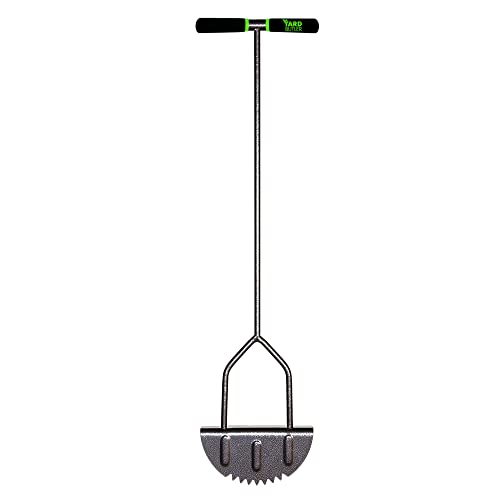
Yard Butler Step Edger
Best for: Deep cuts with foot power
A foot-operated step edger with cushioned handles and a powder-coated, rust-resistant build for sharp lines along sidewalks and beds.
- Foot-powered cutting
- Cushioned handles
- Rust-resistant finish
- Takes practice on curves
- Straight-line focus
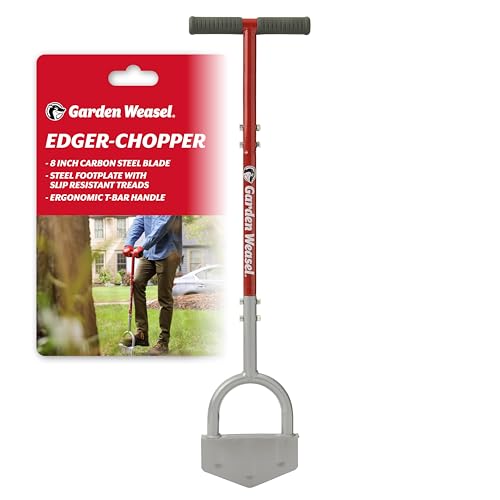
Garden Weasel Edger Chopper
Best for: Tough sod and compacted soil
A manual edger with a tempered 8 inch carbon steel blade designed to slice through sod, clay and roots for defined borders.
- Tempered 8 inch blade
- Handles tough soil
- Good for beds and walkways
- Manual effort required
- Check handle length for your height

Colwelt 38 inch Saw-Tooth Half-Moon Edger
Best for: Root-filled turf
A saw-tooth half-moon edger with a T-grip that creates deep, clean borders and is useful for installing plastic edging.
- Saw-tooth blade
- T-grip handle
- Good for edging installs
- 38 inch length suits average heights
- Budget build
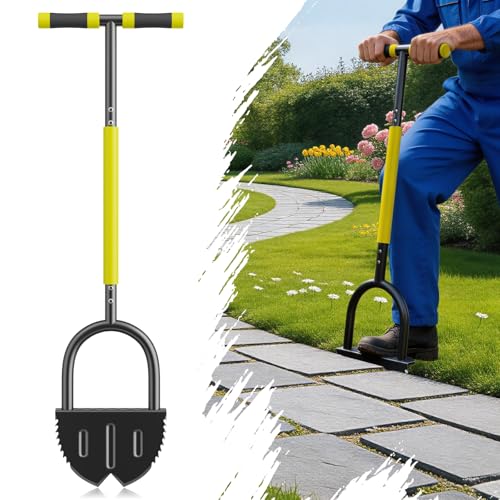
41 inch Half-Moon Edger with Double-V Saw-Tooth Blade
Best for: Hard soil and grass roots
A high-carbon stainless double V-shaped serrated blade bites into hard soil and turf more easily than a flat spade, with a rubber T-grip.
- Double-V serrated blade
- Rubber T-grip
- 41 inch length
- Generic brand
- Blade joint should be checked regularly

35 inch One-Piece Lawn Edger
Best for: Seniors and petite gardeners
A compact one-piece edger with a shorter 35 inch shaft for better leverage and control for users with smaller frames.
- Shorter, controlled length
- One-piece build
- Less back strain for smaller users
- Too short for tall users
- Generic brand
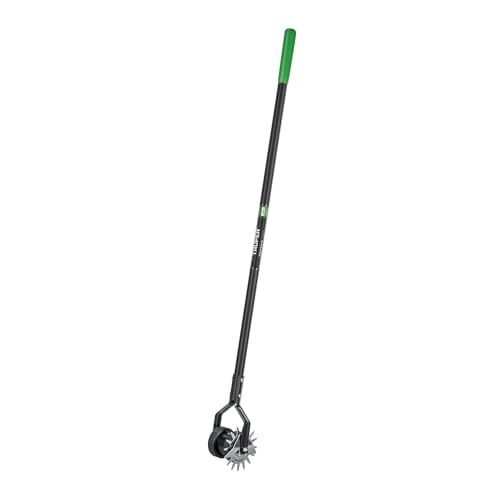
Truper Dual-Wheel Rotary Lawn Edger
Best for: Sidewalk and driveway upkeep
A rotary edger with a dual-wheel design for stable, straight lines and a 48 inch fibreglass handle with a non-slip grip.
- Dual-wheel stability
- Fibreglass handle
- Quick upkeep along concrete
- Not for cutting new bed edges
- Fixed handle length

BlumWay 67 inch Rotary Wheel Edge Trimmer
Best for: Different user heights
An adjustable rotary edger from 23.6 to 67 inches with larger wheels and serrated stainless blades for faster edging along paths.
- Wide length adjustment
- Larger wheels
- Serrated stainless blades
- Rotary trimming only
- Less suited to soft beds

Walensee 69.7 inch Wheel Rotary Edger
Best for: Tall users and long paths
A wheeled rotary edger with chrome-plated alloy steel blades for rust resistance and an adjustable stainless steel handle.
- Long adjustable handle
- Chrome-plated blades
- Light to push
- Maintenance edging only
- Generic brand
Types of Manual Lawn Edgers
Half-moon edgers
The classic edging tool. A curved, half-moon steel blade sits at the end of a long handle, with a footplate on top. You place the blade on the line, step down and rock it to cut through turf and soil. Half-moon edgers are ideal for cutting new bed edges, recutting old ones and installing landscape edging. Serrated or saw-tooth versions cut tough, root-filled turf more easily.
Step edgers
Step edgers are similar but designed around foot power, with a larger footplate or two-handled design that makes it easier to drive the blade in with your body weight. Some feature a straight blade for sidewalk edges and others a curved blade for beds.
Rotary wheel edgers
Rotary edgers have a spiked or serrated wheel that rolls along the edge of a sidewalk or driveway while cutting grass that hangs over the concrete. Some include scissor-style cutters. They are best for maintaining edges along hard surfaces, not for cutting new bed borders.
Manual Edger vs Powered Edger
A manual edger is quiet, inexpensive, light and maintenance free. It gives excellent control on curved beds and around plants, and it is the best tool for cutting precise bed borders. The trade-off is effort: long driveways and sidewalks take a lot of work by hand. A powered edger cuts long concrete edges much faster.
Many gardeners use both. A manual half-moon edger defines bed borders once or twice a year, while a powered edger or trimmer handles regular sidewalk maintenance. For powered options, see our guides to the best electric edger and the best trimmer for edging.
Manual Edger Buying Guide
Blade material and shape
Look for hardened or tempered steel blades that resist bending. A sharp, slightly curved blade cuts cleanly through turf. Saw-tooth and double-V serrated blades grip tough sod and roots better than smooth blades.
Handle and grip
A long handle reduces bending, and a T-grip or D-grip gives control when rocking the blade. Fibreglass and steel handles are stronger than wood in most budget tools. Check the joint where the blade meets the handle, which takes the most stress.
Footplate
A wide footplate spreads pressure and protects your foot, making it easier to drive the blade into hard soil. Wider plates are more comfortable in work boots.
Length and fit
Edgers range from compact 35 inch models suited to shorter users to long 40 inch and above models for taller gardeners. Rotary edgers often have adjustable telescoping handles.
How to Cut a Perfect Bed Edge by Hand
Start by marking the line you want with a garden hose, rope or spray paint, especially for curves. Place the edger blade on the line, step firmly on the footplate and push the blade down several inches. Rock the handle gently side to side, then lift and move along by about the width of the blade, overlapping slightly with the previous cut.
Once the line is cut, go back and remove the strip of turf between the cut and the bed, either by slicing it out with the edger or a spade. Angle the bed side of the trench slightly to create a neat, defined edge that holds mulch in place. Water the area the day before if the soil is very hard; moist soil cuts much more easily. Our guides on how to edge a lawn and how to edge garden beds walk through the process in detail.
Best Manual Edger by Job
Creating new flower bed borders
A half-moon or step edger with a sharp, sturdy blade is the right choice. It lets you follow any curve, control the depth and cut through established turf. Saw-tooth blades help where roots and compacted soil make cutting hard.
Recutting overgrown edges
Edges that have softened over a season or two need a strong blade and a wide footplate. Water the soil the day before, then cut along the old line with a step edger and remove the loosened turf.
Maintaining sidewalk and driveway edges
A rotary wheel edger is quick and easy for regular upkeep along concrete. It trims creeping grass without digging a trench, so it works well between deeper cuts.
Installing landscape edging
A half-moon edger is ideal for cutting the narrow slit trench needed for plastic or steel landscape edging. Our guide on how to install garden edging around beds covers the full process, and our roundup of the best landscape edging for grass helps you choose materials.
Working Comfortably With a Manual Edger
Manual edging is physical work, so technique matters. Let your body weight do the cutting by stepping firmly on the footplate rather than pushing with your arms alone. Keep your back straight and bend at the knees when removing turf. Choose an edger length that suits your height, so you are not stooping over the handle. Work in short sessions on large jobs and take breaks. Wearing sturdy boots protects your feet and gives better grip on the footplate.
Timing helps as well. Edge when the soil is moist but not waterlogged, ideally a day after rain or watering. Very dry soil is hard to cut, while saturated soil smears and leaves a messy edge.
Keeping Edges Crisp Between Cuts
Once you have a clean edge, a few habits help it last. Mow regularly at the right height so grass does not flop over the border; the University of Illinois Extension recommends removing no more than about one-third of the grass blade at a time in its guide to mowing your lawn. Trim the edge lightly with grass shears or a trimmer every couple of weeks, and top up bed mulch so it meets the edge cleanly. For hand-trimming tools, see our guide to the best manual grass trimmer.
Maintaining Sidewalk Edges With a Rotary Edger
Rotary edgers work best on edges that are already defined. Place the wheel on the sidewalk or driveway, with the blade at the boundary, and push the edger forward with steady pressure. The rotating blade trims the grass that has crept over the concrete. Several passes may be needed on thick edges. Rotary edgers are quick and quiet for regular upkeep but are not designed to cut deep trenches.
Common Manual Edging Mistakes
The most common mistake is cutting without marking a line first, which leads to wobbly, uneven borders, especially on curves. A hose laid on the ground makes an easy, adjustable guide. Another mistake is cutting too shallow, so grass roots quickly creep back over the edge. A depth of a few inches gives a cleaner, longer-lasting result. Some gardeners also lever the handle too hard against compacted soil, which can bend cheaper blades or break the handle joint. If the blade will not go in, water the soil, use a serrated blade or loosen the ground with a spade first.
Caring for a Manual Edger
Clean soil off the blade after each use and let it dry before storage to prevent rust. Sharpen the blade with a file a few times a season, following the original bevel, because a sharp edge needs far less effort. Check that bolts and rivets at the blade joint are tight. Store the edger in a dry place, hanging if possible. A light coat of oil before winter keeps the blade in good condition.
When to Edge Your Beds
Early spring, before plants fill out, is the easiest time to recut bed borders because you can see the line clearly. A second light recut in late summer or autumn keeps beds tidy into winter.
Manual Edging and the Environment
Manual edgers produce no emissions, make almost no noise and need no batteries or fuel, which makes them a good fit for small gardens, shared spaces and anyone trying to reduce their garden's environmental footprint. They also last for many years with basic care, and a good one can be passed on rather than replaced.
Final Verdict: Which Manual Lawn Edger Should You Buy?
The best manual lawn edger depends on whether you are cutting bed borders or maintaining sidewalk edges.
- Best overall half-moon edger: the Fiskars 38 inch long-handled steel edger.
- Best step edger: the Yard Butler step edger with cushioned handles.
- Best heavy-duty edger chopper: the Garden Weasel edger chopper with an 8 inch tempered blade.
- Best saw-tooth half-moon: the Colwelt 38 inch saw-tooth edger.
- Best double-V serrated blade: the 41 inch double-V half-moon edger.
- Best for shorter users: the 35 inch one-piece edger.
- Best rotary edger: the Truper dual-wheel rotary edger with fibreglass handle.
- Best adjustable rotary edgers: the BlumWay 67 inch and the Walensee 69.7 inch rotary edgers.
Pick the right style for your edges, keep the blade sharp, and you can create and keep crisp borders with nothing but a little effort.
Frequently Asked Questions
Do manual lawn edgers work?
Yes. A sharp half-moon or step edger cuts clean, deep edges along beds and sidewalks, and rotary wheel edgers maintain edges along concrete. They take more physical effort than powered edgers but are quiet, cheap and need no fuel or batteries.
What is the difference between a half-moon and a rotary edger?
A half-moon edger is a curved blade you push into the soil with your foot to cut an edge. A rotary edger rolls along a hard surface while a spiked or serrated wheel trims grass hanging over the edge.
Which manual edger is best for flower beds?
A half-moon or step edger is best for cutting and recutting bed borders, especially curved ones, because you can follow any shape and control the depth.
Are saw-tooth edgers better?
Saw-tooth or serrated blades bite into tough turf and roots more easily than smooth blades, which helps in compacted or root-filled soil.
How often should I edge by hand?
Cut a fresh bed edge once or twice a year, and maintain sidewalk edges with a rotary edger or shears every few weeks during the growing season.