

Last updated: October 2026 · Written by the LawnVibe editorial team.
Lawn aerator shoes look like a clever shortcut: strap on a pair of spiked sandals, walk around the yard, and aerate while you go. They are inexpensive and simple, and for the right job they are genuinely handy. But they are also the most limited aeration tool you can buy. The best lawn aerator shoes are sturdy, stay securely on your feet, and have spikes long enough to reach past the thatch, yet even the best pair will not replace a core aerator on compacted soil.
This guide compares eight pairs of aerator shoes with different base materials, spike lengths and strap systems, plus two inexpensive alternatives that do a better job for little extra cost. We also explain when spike shoes make sense, when they do not, and how to use them so they actually help your lawn.
| # | Product | Best for | Link |
|---|---|---|---|
| 1 | ROSGEL Lawn Aerator Shoes (26 Spikes, 2.4″) | Light soils | Check price |
| 2 | Fully Assembled Aerator Shoes with 2.2″ Spikes | Firm lawns | Check price |
| 3 | Heavy Duty Steel Spike Aerator Shoes | Frequent use | Check price |
| 4 | HFH Lawn Aerator Shoes | Longer sessions | Check price |
| 5 | Lawn Aerator Shoes with 2″ Spikes (Nylon Sole) | Easy walking | Check price |
| 6 | Pre-Assembled Grass Aerator Shoes | Occasional use | Check price |
| 7 | QWORK Lawn Aerator Shoes | Surface aeration | Check price |
| 8 | Plantnomics Lawn Aerator Shoes | Light maintenance | Check price |
| 9 | Walensee 15-Spike Manual Lawn Aerator Tool | Spot aeration | Check price |
| 10 | Yard Butler ID-6C Manual Lawn Coring Aerator | Compacted soil | Check price |
How We Chose the Best Lawn Aerator Shoes
We did not run hands-on tests. We compared aerator shoes on published specifications and design features that matter in practice: base material (metal, nylon or plastic), spike length and count, whether the shoes arrive pre-assembled, strap and buckle design, sizing range, and anti-clog features. We also weighed common owner feedback themes, which for aerator shoes often include straps loosening, spikes working free, soles flexing and the shoes being awkward to walk in.
Listings change frequently, so confirm current specifications before you buy.

ROSGEL Lawn Aerator Shoes (26 Spikes, 2.4")
Best for: Light soils
Pre-assembled shoes with 26 sharpened steel spikes about 2.4 inches long, a stainless steel base plate, and three adjustable straps with metal buckles.
- Longer 2.4 inch spikes
- Rigid stainless base
- Metal buckles
- Heavier to walk in
- Shoes do not remove soil

Fully Assembled Aerator Shoes with 2.2" Spikes
Best for: Firm lawns
Fully assembled shoes with 2-3/16 inch heat-treated, bend-resistant spikes, a 5mm metal sole with an anti-clog design and adjustable straps for US sizes 6 to 12.
- Bend-resistant spikes
- Anti-clog metal sole
- No assembly
- Still spike-only
- Metal base adds weight

Heavy Duty Steel Spike Aerator Shoes
Best for: Frequent use
Pre-assembled shoes with a thick 5mm metal bottom, 2-3/16 inch spikes secured with lock nuts and a hollow base designed to reduce mud buildup.
- Thick metal base
- Lock-nut secured spikes
- Less clogging
- Sizing US 6 to 11
- Awkward on slopes

HFH Lawn Aerator Shoes
Best for: Longer sessions
Aerator shoes with a flexible nylon sole, a covered microfiber upper, two-point quick-adjust buckles and 13 steel spikes of 1.75 inches per shoe.
- Natural walking feel
- Quick on and off
- Covered upper
- Shorter spikes
- Nylon flexes in hard soil

Lawn Aerator Shoes with 2" Spikes (Nylon Sole)
Best for: Easy walking
Shoes with 13 pre-installed 2 inch solid metal spikes each, a reinforced lightweight nylon sole and quick-release buckle straps.
- Lightweight sole
- 2 inch spikes
- Quick-release buckles
- Less rigid than metal
- Lesser-known brand

Pre-Assembled Grass Aerator Shoes
Best for: Occasional use
Pre-assembled shoes with aluminum alloy and plastic bases, three adjustable straps and heavy-duty spikes, sized roughly for women 6 to 10 and men 6 to 9.
- No installation
- Mixed alloy and plastic base
- Affordable
- Narrower size range
- Plastic parts flex

QWORK Lawn Aerator Shoes
Best for: Surface aeration
A one-size pair with a plastic base, heavy-duty buckles and 0.8 inch spikes, 13 per shoe. Comes with a small wrench for assembly.
- Low cost
- Heavy-duty buckles
- Easy to wear
- Very short spikes
- Mainly pierces thatch
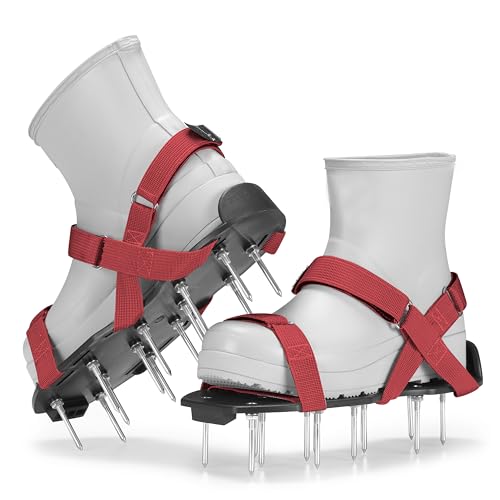
Plantnomics Lawn Aerator Shoes
Best for: Light maintenance
Pre-assembled, one-size shoes with hook-and-loop straps and 26 spikes designed to pierce small holes for air, water and nutrients.
- Hook-and-loop straps
- Pre-assembled
- Simple to use
- Hook-and-loop can loosen
- Limited depth

Walensee 15-Spike Manual Lawn Aerator Tool
Best for: Spot aeration
A step-on tool with 15 iron spikes about 2.8 inches long. It avoids strap fitting and gives deeper holes than most shoes.
- Deeper spikes than most shoes
- No straps or sizing
- Good for paths
- Still does not remove soil
- Slow for a full lawn

Yard Butler ID-6C Manual Lawn Coring Aerator
Best for: Compacted soil
A hollow tine core tool that pulls real plugs of soil, the step up when shoes are not enough for compacted or clay soil.
- True core aeration
- Long handle for leverage
- Durable steel
- More effort per hole
- Slower coverage
Do Lawn Aerator Shoes Really Work?
Aerator shoes push solid spikes into the top couple of inches of soil. That can help water, fertilizer and seed reach the surface layer, and it can break up a light surface crust. What they cannot do is remove soil. Compaction relief comes mainly from pulling plugs out, which is why most university extension services recommend core aeration for compacted turf. Kansas State University Research and Extension explains the difference in its guide to aerating your lawn.
In dense clay, solid spikes may also press soil sideways around each hole. In sandy or loamy soil this is less of a concern. So the honest answer is that aerator shoes work for light maintenance on small areas, but they are not a fix for hard, compacted lawns.
When aerator shoes make sense
Aerator shoes are a reasonable choice for a very small lawn with light, sandy or loamy soil, for a quick pass before spreading seed or fertilizer, for spot treatment of thin patches and small dry areas, and for people who want a cheap tool for occasional use.
When to choose something else
If your soil is clay, water pools after rain, or grass is thin from heavy traffic, skip the shoes. A hollow tine hand tool or a rolling core aerator removes real plugs and does far more good. Compare options in our guides to the best manual lawn aerator and the best core aerator.
Aerator Shoes vs Other Aeration Tools
| Tool | Removes soil | Best for | Effort |
|---|---|---|---|
| Aerator shoes | No | Light surface aeration | Moderate, awkward |
| Step-on spike tool | No | Spots and paths | Moderate |
| Hand core tool | Yes | Compacted patches | High |
| Rolling core aerator | Yes | Small to medium lawns | Moderate |
| Push spike aerator | No | Lighter soils, quick passes | Low to moderate |
If you like the idea of an inexpensive manual tool but want better results, a rolling or push spiker covers more ground with less awkwardness; see our guide to the best spike aerator.
Aerator Shoe Buying Guide
Base material
The base holds the spikes and takes all of your weight. Metal or aluminum alloy bases are rigid and help keep spikes upright, which improves penetration. Reinforced nylon bases are lighter and flex more naturally as you walk. Thin plastic bases are the cheapest but are most prone to flexing and spikes loosening.
Spike length and count
Longer spikes of around 2 inches or more reach past thatch into the soil. Short spikes under an inch mostly pierce thatch and surface crust. Most shoes have 13 spikes per shoe. More spikes spread your weight, which can reduce depth, so length matters more than count.
Pre-assembled vs assembly required
Many modern aerator shoes arrive fully assembled. This saves time and avoids loose nuts if the spikes were not tightened properly. If assembly is required, tighten each spike firmly and check them again after first use.
Straps and buckles
Three straps across the toe, arch and heel give the most secure fit. Metal buckles tend to hold better than thin plastic clips. Quick-release buckles make the shoes easier to put on and take off. Always wear them over sturdy boots rather than sneakers or sandals.
Sizing
Most aerator shoes are sold as one size fits most, often covering roughly US 6 to 12. Check the range on the listing, especially for very large or small boots.
Anti-clog design
Wet or sticky soil can pack between the spikes. Hollow or open bases and spikes spaced well apart reduce buildup.
How to Use Aerator Shoes for Best Results
- Water the lawn a day before. Moist soil lets spikes penetrate and reduces strain on straps.
- Mow first so the spikes reach the soil rather than grass blades.
- Strap the shoes over sturdy boots, tightening all straps evenly.
- Walk slowly in straight rows, overlapping slightly, and keep weight centered on the spikes.
- Make a second pass at an angle to increase hole density.
- Overseed and fertilize right after so material falls into the holes.
- Take breaks. Walking in spikes is tiring and can strain ankles.
For more manual methods, read our guide on how to aerate a lawn by hand, or see how to use a garden fork to aerate soil for spot work.
Safety and Comfort Tips
Spike shoes raise you off the ground and change how you walk, so take care. Avoid slopes, wet decks and patios, and never wear them on stairs. Take them off before crossing hard surfaces, which can damage spikes and cause slips. Watch for sprinkler heads and shallow cables. If you have balance or joint concerns, choose a long-handled step-on tool or a push aerator instead.
When to Aerate
Aerate when grass is actively growing so it can recover quickly. Cool-season lawns are best aerated in early fall or spring, and warm-season lawns in late spring to early summer. Avoid dry, hard soil and waterlogged ground. Light spike aeration with shoes can be done more than once a season. Our guide on how often you should aerate your lawn explains scheduling, and how to aerate a lawn without damaging the grass covers gentle technique.
Aerator Shoes and Overseeding
The best use for aerator shoes is often as a seeding helper rather than a compaction fix. When you overseed a thin lawn, seed needs good contact with soil to germinate. Walking the lawn in spike shoes before and after spreading seed creates small pockets that catch seed and hold moisture. It also presses seed lightly into the surface as you walk. Follow up with a thin layer of compost or topsoil and keep the area moist until the new grass is established. On small patches, this simple routine can noticeably improve germination compared with scattering seed on hard ground.
Who Should Skip Aerator Shoes
Aerator shoes are not ideal for everyone. If you have a large lawn, walking every square foot in spikes is slow and tiring. If your yard has slopes, the raised, spiked soles can make footing unsteady. People with knee, ankle or balance concerns are usually better served by a long-handled tool that lets them stand normally. And if your soil is heavy clay, a core aerator will deliver far better results for the time you spend.
Care and Storage
Rinse mud off the spikes after use and let the shoes dry. Check that every spike is tight and replace any that are bent. Store the shoes flat in a dry place, spikes down on a board or in their box to protect the spikes and anything nearby.
How Long Do Aerator Shoes Last?
Lifespan depends mostly on the base and how spikes are fixed. Metal bases with lock-nut secured spikes generally hold up longest. Plastic soles and hook-and-loop straps wear faster, especially in rocky or very dry soil.
Common Mistakes With Aerator Shoes
Wearing aerator shoes on dry, hard ground is the most common mistake: spikes barely penetrate and straps strain. Others expect core aeration results on clay, wear the shoes over soft sneakers, or walk too quickly and leave too few holes. Forgetting to tighten spikes on shoes that need assembly is another frequent problem, as is skipping overseeding afterward.
Final Verdict: Which Lawn Aerator Shoes Should You Buy?
The best lawn aerator shoes are sturdy, secure and realistic about what they can do.
- Best overall: the ROSGEL pre-assembled shoes with 26 steel spikes of about 2.4 inches, a stainless steel base and metal buckles.
- Best for firmer soil: the fully assembled aerator shoes with 2.2 inch bend-resistant spikes and a 5mm metal sole.
- Best heavy-duty metal base: the heavy-duty steel spike shoes with a 5mm metal bottom.
- Most comfortable: the HFH aerator shoes with a flexible nylon sole and covered upper.
- Best lightweight nylon: the 13-spike nylon shoes with quick-release buckles.
- Best budget: the QWORK or Plantnomics shoes for light, occasional use.
- Better alternatives: the Walensee step-on tool for spot work, or the Yard Butler ID-6C core tool for real compaction relief.
For a small lawn with light soil, a good pair of aerator shoes is an easy, low-cost tool. For clay or compacted ground, step up to a core aerator.
Frequently Asked Questions
Do lawn aerator shoes actually work?
They make shallow holes that can help water and fertilizer soak into the surface, but they do not remove soil. For real compaction relief, especially in clay, a core aerator works much better. Aerator shoes are best for light, occasional use and small areas.
What are the best lawn aerator shoes?
Look for pre-assembled shoes with a rigid metal base, spikes around 2 inches long, and three secure straps. Metal-base models tend to resist flexing and spike loosening better than thin plastic soles.
Can aerator shoes make compaction worse?
Solid spikes push soil aside instead of removing it, so in dense clay they may compress soil around each hole. In lighter soils the effect is usually small.
How long are the spikes on aerator shoes?
It varies widely. Some models use short spikes under an inch, while heavy-duty versions use spikes of about 2 to 2.4 inches. Longer spikes reach deeper but are harder to walk in.
How do I use aerator shoes effectively?
Strap them over sturdy boots, water the lawn a day before, then walk in slow, overlapping rows. Cover the area in two directions for more holes, and use them when grass is actively growing.
Are aerator shoes good for clay soil?
Not very. Clay benefits most from core aeration, which removes plugs. Aerator shoes may help a little on the surface, but a hollow tine core tool or a core aerator is a better choice for clay.