

Last updated: October 2026 · Written by the LawnVibe editorial team.
Aerating and overseeding are the two best things you can do for a thin, tired lawn, and they work best together. Aeration opens the soil; overseeding drops new grass seed right where it can root. The best aerator and overseeder combo does both in one trip across the lawn, or pairs two tools so the job flows from one step to the next without extra work.
This guide compares ten options: tow-behind combination aerator spreaders, spiker seeders, aerator-and-spreader bundles, and the best spreaders to pair with a separate aerator, plus a small-yard setup for people without a riding mower. You will also learn when a true combo makes sense and when separate tools give a better result.
| # | Product | Best for | Link |
|---|---|---|---|
| 1 | Brinly AS2-40BH-G 40″ Combination Aerator Spreader | Routine overseeding | Check price |
| 2 | Agri-Fab Tow Behind Spiker Seeder | Medium to large lawns | Check price |
| 3 | Brinly 485 lb Poly Lawn Roller and 40″ Aerator Spreader | Bare and new areas | Check price |
| 4 | Brinly SAT2-40 Spike Aerator + Agri-Fab 130 lb Broadcast Spreader | Large lawns | Check price |
| 5 | CRAFTSMAN 40″ Tow Plug Aerator + 110 lb Broadcast Spreader | Clay and high traffic | Check price |
| 6 | Agri-Fab 48″ Tow Behind Plug Aerator | Large compacted lawns | Check price |
| 7 | Agri-Fab 110 lb Tow Behind Broadcast Spreader | Up to about 1/3 acre per fill | Check price |
| 8 | Brinly BS26BH-A 125 lb Tow Behind Broadcast Spreader | Precise seeding | Check price |
| 9 | Yard Butler Aerator and Irrigator Bundle | Small lawns | Check price |
| 10 | Scotts Turf Builder EdgeGuard DLX Broadcast Spreader | Lawns up to about 15,000 sq ft | Check price |
How We Chose the Best Aerator and Overseeder Combo
We did not run hands-on field tests. We compared these combos and pairings on published specifications and features that matter in real use: aeration type (spike or plug), working width, hopper capacity, spread pattern (drop or broadcast), weight tray capacity, tires, hitch compatibility and whether parts that contact fertilizer resist corrosion. We also weighed common owner feedback themes, such as calibration, assembly time and how evenly seed spreads.
Specifications change between model years, so confirm the current listing before you buy.

Brinly AS2-40BH-G 40" Combination Aerator Spreader
Best for: Routine overseeding
A 40 inch tow-behind unit that spikes the lawn with 3D steel tines while a hopper drops seed or fertilizer behind them, riding on pneumatic tires.
- Aerates and spreads in one pass
- 3D steel tines resist bending
- Pneumatic tires
- Spike aeration, not plugs
- Drop pattern needs careful overlap

Agri-Fab Tow Behind Spiker Seeder
Best for: Medium to large lawns
A 32 inch tow-behind spiker with a 100 lb drop hopper for seed and fertilizer that also spreads salt and ice melt in winter.
- Two jobs in one pass
- Year-round use
- Covered by a 3-year limited warranty
- Narrower than 40 inch units
- Spikes, not cores

Brinly 485 lb Poly Lawn Roller and 40" Aerator Spreader
Best for: Bare and new areas
A set pairing a 48 inch poly roller that holds up to 485 lbs of water or sand with a 40 inch aerator spreader using 132 galvanized 3D tine tips and a 75 lb weight tray.
- Roll seed in for better contact
- Aerate and spread together
- Rust-resistant poly drum
- Two tools to store
- About 2 inch aeration depth

Brinly SAT2-40 Spike Aerator + Agri-Fab 130 lb Broadcast Spreader
Best for: Large lawns
A bundle with the Brinly 40 inch tow spike aerator (150 lb weight tray, 3D tines) and an Agri-Fab tow broadcast spreader with a 130 lb hopper rated for about half an acre per fill.
- Wide broadcast spread
- Sturdy spike aerator
- Spreader works year-round
- Two passes needed
- Spike-only aeration

CRAFTSMAN 40" Tow Plug Aerator + 110 lb Broadcast Spreader
Best for: Clay and high traffic
A bundle with a 40 inch plug aerator using 24 galvanized coring points up to 3 inches deep and a 110 lb tow broadcast spreader with up to a 10 ft spread width.
- Real core aeration
- Broadcast spreader included
- Good for fall renovation
- Two passes
- More assembly
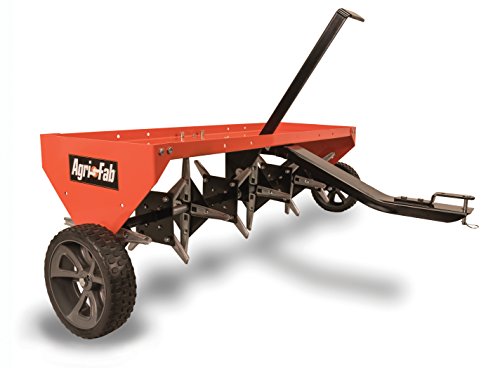
Agri-Fab 48" Tow Behind Plug Aerator
Best for: Large compacted lawns
A 48 inch plug aerator with 32 galvanized knives pulling plugs up to 3 inches deep and a 175 lb weight tray. Pair it with a tow spreader for a full renovation setup.
- Wide 48 inch coverage
- Deep plugs
- Flat-free tires
- Spreader sold separately
- Large to store

Agri-Fab 110 lb Tow Behind Broadcast Spreader
Best for: Up to about 1/3 acre per fill
A tow broadcast spreader with a 110 lb rustproof poly hopper, a spread width of up to 10 ft, seat-reachable flow control and 10 inch pneumatic tires.
- Control from the tractor seat
- Rustproof hopper
- Year-round use
- Broadcast can reach beds
- Needs calibration

Brinly BS26BH-A 125 lb Tow Behind Broadcast Spreader
Best for: Precise seeding
A 125 lb tow spreader with a rust- and dent-proof poly hopper, corrosion-resistant parts, patented autoflow with spread pattern control and easy-lock calibration.
- Spread pattern control
- Corrosion-resistant parts
- Quick assembly
- Spreader only
- Tow setup required

Yard Butler Aerator and Irrigator Bundle
Best for: Small lawns
A bundle with the Yard Butler manual lawn coring aerator and a deep root irrigator, both powder-coated steel with long, cushioned handles.
- Real core aeration by hand
- Deep root watering tool included
- No mower needed
- Manual effort
- Slow for large lawns

Scotts Turf Builder EdgeGuard DLX Broadcast Spreader
Best for: Lawns up to about 15,000 sq ft
A pre-calibrated push broadcast spreader holding product for up to 15,000 sq ft, with an EdgeGuard side shield that keeps seed and fertilizer off beds and drives.
- No assembly
- EdgeGuard side shield
- Year-round use
- Push only
- Smaller hopper
Types of Aerator and Overseeder Combos
Combination aerator spreaders
These tow-behind units place a hopper above a row of spike tines. As you drive, the tines open the soil and the hopper drops seed, fertilizer or lime behind them. The Brinly AS2-40BH-G is a good example. They save a full pass across the lawn and are excellent for routine overseeding.
Spiker seeders
Spiker seeders such as the Agri-Fab tow-behind model work the same way, with spike disks under a drop hopper. They tend to be a little narrower and simpler. Many can also spread salt or ice melt in winter, making them year-round tools.
Aerator and spreader bundles
Bundles pair a dedicated aerator with a separate tow-behind spreader. The CRAFTSMAN bundle combines a plug aerator with a broadcast spreader; the Brinly bundle pairs a spike aerator with an Agri-Fab spreader. You make two passes, but each tool does its job well, and the plug aerator option handles compaction far better than spikes.
Roller and aerator spreader sets
Some sets add a lawn roller, which presses seed into the soil after spreading. Rolling improves seed-to-soil contact, especially on new or bare areas.
Small-yard pairings
Without a riding mower, a manual core aerator plus a push broadcast spreader is the simplest combo. It costs less, stores easily and works well on small lawns.
Combo vs Separate Aerator and Spreader
| Factor | Combo aerator spreader | Separate aerator plus spreader |
|---|---|---|
| Passes needed | One | Two |
| Aeration type | Usually spikes | Spike or plug |
| Spread pattern | Usually drop | Usually broadcast |
| Best for | Routine overseeding, light compaction | Compacted soil, large-area seeding |
| Storage | One tool | Two tools |
| Year-round use | Seed, fertilizer, some ice melt | Spreader works all year |
University extension services generally recommend core aeration for compacted lawns; Kansas State University Research and Extension explains the process in its guide to aerating your lawn. If compaction is your main problem, a plug aerator followed by a spreader is the stronger choice. Compare plug options in our guide to the best core aerator and tow models in the best tow behind aerator guide.
Aerator and Overseeder Combo Buying Guide
Spike or plug aeration
Combination units almost always use spikes. That is fine for preparing a seedbed and for sandy or loamy soil. For clay or high-traffic lawns, pair a plug aerator with a spreader instead.
Drop vs broadcast spreading
Drop spreaders release seed directly below the hopper in a defined band, which is accurate but requires careful overlap. Broadcast spreaders throw seed in a wide fan, covering ground faster and blending passes more forgivingly, though they can throw seed onto beds and walks.
Hopper capacity
Larger hoppers mean fewer refills. Tow-behind hoppers on these models range from about 100 to 130 lbs, while push spreaders hold far less. Match capacity to lawn size and the products you use most.
Working width and coverage
A 32 to 40 inch aerator width suits most lawn tractors. Broadcast spreaders can cover around 10 feet per pass, which speeds up large seeding jobs.
Weight tray
A weight tray drives spikes deeper. Check the tray capacity and whether it holds blocks securely.
Corrosion resistance
Fertilizer is corrosive. Poly hoppers, stainless or coated parts and rustproof spreader plates make a big difference in lifespan.
How to Aerate and Overseed in One Session
- Choose the right time. Early fall is ideal for most cool-season lawns; late spring suits warm-season lawns.
- Mow short. Cut the grass lower than usual so seed reaches the soil.
- Dethatch if needed. If thatch is thick, remove it first so seed can contact soil; see how to dethatch a lawn.
- Water the day before so tines penetrate easily.
- Calibrate the spreader to the seed label's overseeding rate.
- Make two passes in different directions, splitting the seed between them for even coverage.
- Fertilize with a starter product if appropriate for your lawn.
- Water lightly and often until seed germinates, keeping the surface moist.
For more detail, read how to overseed a lawn after aerating and how to aerate a lawn before overseeding. If your yard has slopes or bumps, see how to use an aerator and overseeder on uneven ground.
Timing and Frequency
Most lawns benefit from aeration and overseeding once a year, usually in early fall for cool-season grasses. Thin or high-traffic lawns may benefit from a second, lighter overseeding in spring. Avoid seeding in midsummer heat or right before heavy rain that could wash seed away. Our guide on how often to aerate and overseed explains schedules by grass type, and how to aerate and overseed in the fall walks through a full fall program.
Choosing Grass Seed for Overseeding
The best equipment cannot make up for the wrong seed. Choose a variety suited to your climate, sun and traffic. Cool-season blends often include tall fescue, Kentucky bluegrass and perennial ryegrass. Warm-season lawns may use Bermuda or zoysia, though some warm-season grasses spread by runners and are more often repaired with sod or plugs. Read the seed label for the recommended overseeding rate, and calibrate your spreader to match.
Calibrating a Combo or Spreader for Seed
Calibration is the step most people skip, and it is the reason many overseeding jobs come out patchy. Start with the setting recommended in your spreader manual or on the seed bag, then test it. Mark out a measured area, such as 1,000 square feet, weigh a known amount of seed, spread it at the chosen setting and weigh what is left. Adjust the gate and repeat until the amount used matches the seed label's overseeding rate. With drop spreaders, keep passes tightly aligned so wheel tracks just overlap. With broadcast spreaders, space passes so the edges of each fan blend together. Recheck calibration whenever you switch seed types, because seed size and weight change the flow rate.
Aftercare: Watering and Mowing New Seed
Seed needs steady moisture to germinate. Water lightly once or twice a day so the top layer of soil stays damp but not soggy, and continue until most seedlings are up. Then shift gradually to deeper, less frequent watering to encourage roots to grow down. Wait to mow until new grass reaches your normal mowing height plus a little, and use a sharp blade so seedlings are cut cleanly rather than pulled. Keep foot traffic, pets and heavy equipment off the area for several weeks.
Maintenance Tips
Empty hoppers after every use, because seed and fertilizer left in a hopper can cake and corrode parts. Rinse spreaders and aerators, then dry them before storage. Check tire pressure, grease moving parts as the manual recommends, and inspect tines for bends. Store equipment under cover through winter.
Is a Combo Worth It?
If you overseed every year and already own a riding mower, a combo saves real time and storage space. If you seed only occasionally, separate tools that also serve other jobs may be the better value.
Common Mistakes
Many people spread too much seed in one pass, leaving stripes or clumps; splitting the rate across two directions fixes this. Others aerate dry soil, so spikes barely penetrate, or skip watering after seeding, which kills new seedlings. Expecting a spike combo to fix heavy clay is another mistake. Finally, seeding at the wrong time of year leads to poor germination no matter how good the equipment is.
Final Verdict: Which Aerator and Overseeder Combo Should You Buy?
The best aerator and overseeder combo depends on your lawn size, soil and how many passes you want to make.
- Best overall combo: the Brinly AS2-40BH-G tow-behind combination aerator spreader.
- Best value spiker seeder: the Agri-Fab tow-behind spiker seeder with a 100 lb hopper.
- Best for new lawns and bare areas: the Brinly lawn roller and 40 inch aerator spreader set.
- Best spike and broadcast bundle: the Brinly SAT2-40 with the Agri-Fab 130 lb broadcast spreader.
- Best for compacted soil: the CRAFTSMAN 40 inch plug aerator with a 110 lb broadcast spreader, or the Agri-Fab 48 inch plug aerator paired with a tow spreader.
- Best spreaders to pair: the Agri-Fab 110 lb and Brinly 125 lb tow-behind broadcast spreaders.
- Best small-yard setup: the Yard Butler aerator bundle with the Scotts EdgeGuard DLX push spreader.
Aerate when the soil is moist, seed right away, and keep the surface damp, and any of these combos will help you grow a thicker, healthier lawn.
Frequently Asked Questions
What is the best aerator and overseeder combo?
For a riding mower setup, a tow-behind combination aerator spreader such as the Brinly AS2-40BH-G or the Agri-Fab spiker seeder lets you spike and drop seed in one pass. For compacted soil, pairing a plug aerator with a separate broadcast spreader usually gives better results.
Do aerator spreader combos remove soil plugs?
Most combination units use spike tines, so they push holes rather than pull cores. That works well for seeding and light compaction. For heavy clay or badly compacted lawns, use a core aerator first, then spread seed.
Is it better to buy a combo or separate aerator and spreader?
A combo saves time and storage space. Separate tools give more flexibility: you can use a plug aerator for compaction and a broadcast spreader for wide, even seeding and year-round fertilizing.
When should I aerate and overseed?
For cool-season grasses, early fall is usually best, with spring as a second option. For warm-season grasses, late spring to early summer works well. Aerate and seed when soil is moist and grass is actively growing.
How soon should I overseed after aerating?
As soon as possible, ideally the same day. Fresh holes give seed good soil contact and protection, which improves germination.
Can I use a combo aerator on a small lawn?
Tow-behind combos are designed for riding mowers and large lawns. On a small lawn, a manual core aerator plus a push broadcast spreader is easier and cheaper.