
Last updated: October 2026 · Written by the LawnVibe editorial team.
Gas trimmers used to be the only serious option for keeping fence lines and flower beds tidy. That has changed. Today the best cordless trimmer starts with the push of a button, weighs less, makes far less noise and needs no fuel, no oil mix and no spark plugs. The trick is choosing one that matches your yard, because a small 20V trimmer and a high-voltage brushless model are very different tools.
This guide compares nine battery-powered string trimmers, from compact trimmer/edgers for townhouse lawns to brushless pro-style models that can handle overgrown edges. You will also find a buying guide that explains voltage, battery capacity, cutting width, line feed systems and the battery-platform decision, which matters more than most shoppers expect.
| # | Product | Best for | Link |
|---|---|---|---|
| 1 | DEWALT 20V MAX XR 14 inch Brushless String Trimmer | Large yards and tough edges | Check price |
| 2 | EGO POWER+ 15 inch Trimmer and Blower Combo | Owners who want trim and cleanup in one | Check price |
| 3 | CRAFTSMAN V20 WEEDWACKER 13 inch Cordless Trimmer | Quarter- to half-acre suburban yards | Check price |
| 4 | BLACK+DECKER 40V MAX 13 inch Trimmer/Edger Kit (LST140C) | More power without going pro | Check price |
| 5 | EGO POWER+ 16 inch Cordless Trimmer with Line IQ (ST1623T) | Hassle-free line advance | Check price |
| 6 | BLACK+DECKER 20V MAX 12 inch Trimmer/Edger (LSTE525) | Small yards and quick edging | Check price |
| 7 | BLACK+DECKER 20V MAX POWERCONNECT 10 inch 2-in-1 Trimmer/Edger + Sweeper Kit (LCC222) | Townhouses and tiny lawns | Check price |
| 8 | beyond by BLACK+DECKER 18V POWERCOMMAND Trimmer with Bed Edger | Flower bed borders | Check price |
| 9 | 20V Cordless String Trimmer With 2 x 4.0Ah Batteries | Tight budgets and light use | Check price |
How We Chose the Best Cordless Trimmer
We did not run lab tests on these trimmers. Instead, we compared each model on the details that most affect real yard work: battery voltage and platform, cutting swath, motor type, line feed system, whether a battery and charger are included, edging features and how well the overall design suits a particular kind of yard. We also looked at common owner feedback themes, such as line feed reliability and balance, and leaned toward brands with wide battery ecosystems so your batteries can power other tools.
Specifications and kit contents change, so always confirm the current listing details before you buy.

DEWALT 20V MAX XR 14 inch Brushless String Trimmer
Best for: Large yards and tough edges
A brushless 20V MAX XR trimmer with a 14 inch cutting swath, built for homeowners who want near-gas performance on DEWALT’s widely used battery platform.
- Brushless motor for efficiency and torque
- Generous 14 inch swath
- Shares batteries with many DEWALT tools
- Heavier than compact trimmers
- Premium cost, especially as a kit

EGO POWER+ 15 inch Trimmer and Blower Combo
Best for: Owners who want trim and cleanup in one
A kit that pairs a 15 inch EGO POWER+ string trimmer with a blower on EGO’s 56V platform, so one battery handles both trimming and cleanup.
- Wide 15 inch swath for bigger yards
- Blower included in the kit
- High-voltage battery platform
- Larger upfront cost
- More gear to store
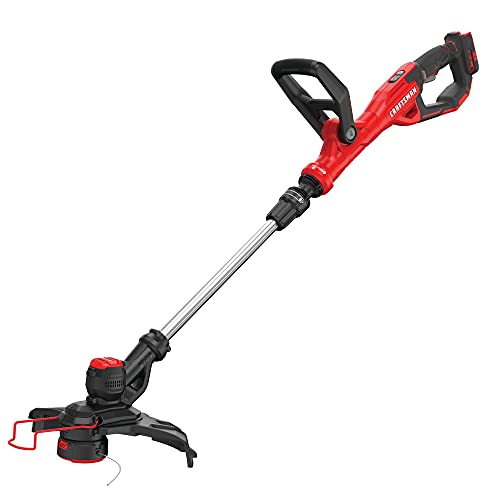
CRAFTSMAN V20 WEEDWACKER 13 inch Cordless Trimmer
Best for: Quarter- to half-acre suburban yards
A 13 inch cordless WEEDWACKER on the CRAFTSMAN V20 platform, sized for typical suburban lawns where balance and convenience matter.
- 13 inch swath suits most lawns
- V20 batteries fit many CRAFTSMAN tools
- Comfortable size for regular trimming
- Not a heavy-brush tool
- Check whether battery is included

BLACK+DECKER 40V MAX 13 inch Trimmer/Edger Kit (LST140C)
Best for: More power without going pro
A 40V MAX trimmer/edger kit with a 13 inch cutting width, giving more voltage than 20V models while staying homeowner friendly.
- 40V platform for added power
- Converts to edging
- Sold as a kit
- Heavier than 20V models
- 40V batteries are a separate ecosystem

EGO POWER+ 16 inch Cordless Trimmer with Line IQ (ST1623T)
Best for: Hassle-free line advance
A 16 inch EGO cordless trimmer with Line IQ auto-sensing line feed and POWERLOAD push-button line winding, sold with a battery and charger.
- Automatic line feed, no bumping
- Push-button line winding
- Wide 16 inch swath
- Premium price
- Heavier than compact 20V trimmers

BLACK+DECKER 20V MAX 12 inch Trimmer/Edger (LSTE525)
Best for: Small yards and quick edging
A 12 inch 20V MAX trimmer/edger that switches between trimming and edging, a practical fit for small lawns and tidy sidewalk lines.
- Easy trimmer-to-edger conversion
- Light and maneuverable
- 20V MAX battery platform
- Narrower swath
- Limited for thick weeds
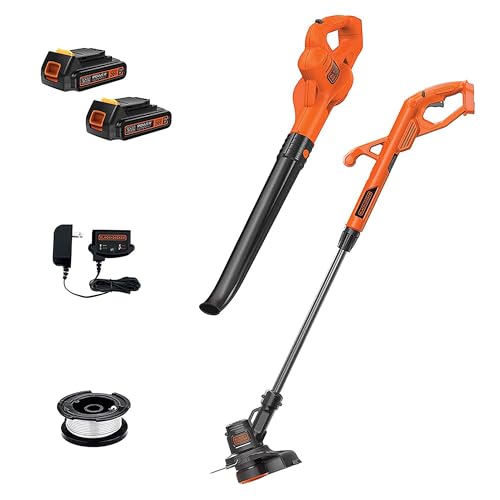
BLACK+DECKER 20V MAX POWERCONNECT 10 inch 2-in-1 Trimmer/Edger + Sweeper Kit (LCC222)
Best for: Townhouses and tiny lawns
A combo kit pairing a 10 inch 2-in-1 trimmer/edger with a sweeper on the 20V MAX POWERCONNECT platform, ideal when the yard is small and cleanup matters.
- Sweeper included for cleanup
- Very easy to handle
- One battery runs both tools
- 10 inch swath is slow on big lawns
- Light-duty power

beyond by BLACK+DECKER 18V POWERCOMMAND Trimmer with Bed Edger
Best for: Flower bed borders
An 18V trimmer that comes with a bed edger, aimed at gardeners who want neat, defined borders around flower beds as well as basic trimming.
- Bed edger accessory included
- Lightweight 18V tool
- Good for detail work
- Lower voltage
- Not meant for large properties

20V Cordless String Trimmer With 2 x 4.0Ah Batteries
Best for: Tight budgets and light use
A value-focused 20V string trimmer sold with two 4.0Ah batteries, giving plenty of runtime for small yards at a low entry cost.
- Two batteries included
- Low entry cost
- Light for small jobs
- Less established brand
- Battery platform has few other tools
Cordless Trimmer Buying Guide
Voltage and battery platform
Voltage is a rough guide to power. Most homeowner cordless trimmers fall into three groups:
- 18V to 20V class: light, affordable and fine for small to medium lawns with regular trimming.
- 36V to 40V class: more power for thicker grass and larger yards, with a little more weight.
- 56V and above, or brushless pro models: the closest to gas performance, best for big properties or overgrown growth.
The battery platform is just as important as the voltage. Batteries are usually the most expensive part of a cordless kit. If you already own a 20V MAX, V20 or similar tool system, buying a "tool only" trimmer on that platform can cost much less than a full kit. If you are starting fresh, pick a brand whose battery also runs the blower, hedge trimmer or mower you may want later.
Battery capacity (Ah) and runtime
Amp-hours (Ah) measure how much energy a battery stores. A 4.0Ah battery should run noticeably longer than a 2.0Ah battery on the same tool. Runtime also depends on what you cut: light trimming around a patio uses far less energy than chewing through tall weeds along a fence. For a yard larger than about a quarter acre, a second battery is often the easiest way to finish the job without waiting for a recharge.
Cutting width
The cutting swath is the diameter of the circle the line cuts.
- 10 to 12 inches: compact, easy to control and good for small yards and edging.
- 13 to 14 inches: the sweet spot for most suburban lawns.
- 15 to 16 inches or more: covers ground faster and suits larger properties, but adds weight and power draw.
Brushed vs brushless motors
Brushless motors are generally more efficient and durable than brushed motors because they have fewer wear parts and less friction. In a trimmer, that usually means better runtime per charge and stronger torque when the line hits dense grass. Brushed motors are cheaper and perfectly adequate for light, regular trimming.
Line feed systems
- Auto-feed: advances line automatically as it wears. Convenient, but some systems can feed too much line or jam if the spool is wound poorly.
- Bump-feed: you tap the head on the ground to release more line. Simple and reliable.
- Fixed-line or quick-load heads: pre-cut lengths of line that you swap in by hand, which avoids spool winding entirely.
Whichever system you choose, use the line diameter the manufacturer recommends. Thicker line cuts tougher weeds but needs more power. If winding is a hassle, see our step-by-step guide on how to wind trimmer line on a spool.
Weight, balance and shaft design
A trimmer that feels light in a store can become tiring after twenty minutes if the balance is off. Look for an adjustable auxiliary handle and a shaft length that matches your height. Taller users usually prefer a straight shaft, which also reaches under shrubs more easily. Curved shafts tend to be a little shorter and lighter.
Edging features
If you want crisp edges along sidewalks and driveways, look for a rotating head or a model sold as a trimmer/edger. A guide wheel helps keep the line at a consistent depth. Some trimmers also accept attachments, such as a dedicated edger head, which can be useful if you edge often.
Best Cordless Trimmer by Yard Type
Small yards and townhouses
A compact 20V trimmer/edger with a 10 to 12 inch swath is usually all you need. It will be light, easy to store and quick to switch between trimming and edging. If the battery also powers a sweeper or blower, cleanup becomes part of the same routine.
Medium suburban lawns
A 13 to 14 inch trimmer on a 20V to 40V platform covers most quarter-acre to half-acre properties. A 4.0Ah battery or a second battery makes a big difference here.
Large properties and overgrown edges
Choose a brushless, higher-voltage model with a 14 to 16 inch swath and thicker line. Brands with large-capacity batteries tend to perform best. Plan on at least two batteries if you trim long fence lines.
Thick weeds and tall grass
Power and line diameter matter most. A brushless motor with 0.080 inch or 0.095 inch line will make the job much easier. For woody stems, switch to a brush cutter blade only if your trimmer is designed for one. Our guide on how to trim thick weeds with a string trimmer covers technique.
Cordless vs Gas vs Corded Trimmers
| Feature | Cordless | Gas | Corded electric |
|---|---|---|---|
| Starting | Push button | Pull start, choke | Push button |
| Noise | Low to moderate | High | Low to moderate |
| Maintenance | Very low | Fuel mix, plugs, filters | Very low |
| Range | Unlimited (battery limited runtime) | Unlimited | Limited by cord |
| Power | Good to very good | Very good | Good |
| Best for | Most homeowners | Big lots, heavy brush | Small yards near outlets |
If you are still deciding between fuel types, our comparison on how to choose between a gas-powered and electric trimmer goes deeper. If you would rather stay with fuel, see our picks for the best gas trimmer, and if you mostly cut sharp lines along concrete, a dedicated tool from our best electric edger guide may serve you better than a trimmer alone.
How to Get the Most Out of a Cordless Trimmer
- Charge batteries fully before storage and use. Follow the manufacturer's guidance on storage charge levels for long breaks.
- Trim from the tip of the line. The tip moves fastest and cuts most efficiently. Pushing the head into grass wastes energy.
- Work in passes. For tall grass, cut the top first, then go lower, rather than forcing the line through the base.
- Use the low-speed setting when you can. Many trimmers have two speeds; low speed stretches runtime for light trimming.
- Keep the guard and head clean. Packed grass adds drag and drains batteries faster. Our guide on how to operate a cordless trimmer efficiently has more tips.
Common Cordless Trimmer Problems (and Quick Fixes)
- Line will not advance: the spool is often wound too loosely or the line has welded together from heat. Rewind it neatly in the direction marked on the spool.
- Trimmer bogs down in grass: you may be cutting too much at once, or the battery may be low. Take smaller bites and use a fully charged pack. Our guide on how to fix a string trimmer that bogs down explains more causes.
- Short runtime: batteries lose capacity with age and cold. Store them indoors and swap in a fresh pack if runtime drops sharply.
- Excessive vibration: check for uneven line lengths or a damaged head, and replace worn parts promptly.
Battery Care and Safety
Lithium-ion batteries are safe when you treat them well. Store them in a cool, dry place, away from direct sun and freezing temperatures. Use only the charger designed for your battery. Never charge a battery that is cracked, swollen or leaking.
When a battery reaches the end of its life, do not throw it in household trash. The U.S. Environmental Protection Agency explains how to handle and recycle used lithium-ion batteries safely. If a battery stops holding a charge, read our troubleshooting guide on how to fix a battery-powered trimmer that won't charge, and see how to replace the battery on a cordless trimmer when it is time for a new pack.
For personal safety, wear eye protection, long pants and closed shoes. String trimmers throw debris at high speed, so keep children and pets well away while you work.
How Long Does a Cordless Trimmer Last?
With reasonable care, the trimmer body can last many seasons. The battery is usually the first part to wear out, because lithium-ion cells slowly lose capacity with charge cycles and age. Brushless motors also tend to outlast brushed motors. Our article on battery-powered trimmer lifespan explains what affects longevity and how to extend it.
Final Verdict: Which Cordless Trimmer Should You Buy?
The best cordless trimmer for you is the one that matches your yard size and the battery platform you will grow into.
- For large yards and tough edges: a brushless pro-style trimmer such as the DEWALT 20V MAX XR 14 inch, or the EGO 15 inch kit if you also want a blower.
- For medium suburban lawns: the CRAFTSMAN V20 13 inch or the BLACK+DECKER 40V MAX 13 inch kit.
- For small yards and easy edging: a compact BLACK+DECKER 20V trimmer/edger.
- For a tight budget: a basic 20V kit with two batteries, as long as you accept a less established brand.
Choose the platform first, then the trimmer, and you will end up with a tool that keeps your edges sharp for years.
Frequently Asked Questions
What is the best cordless trimmer for most homeowners?
For a typical suburban yard, a 20V-class trimmer with a 12 to 14 inch cut and auto-feed or bump-feed line is enough. If you already own batteries from one brand, staying on that platform usually saves the most money.
Is a brushless cordless trimmer worth it?
Brushless motors generally run more efficiently and last longer than brushed motors, which tends to mean longer runtime per charge and more torque in thick grass. They cost more, so they make the most sense for larger yards or frequent use.
How long does a cordless trimmer battery last?
Runtime depends on battery capacity (Ah), voltage, the motor and how thick the growth is. Light edging may run far longer than cutting dense weeds. Check the maker's runtime figure for the exact battery you buy and consider a spare for bigger properties.
Can a cordless trimmer cut thick weeds?
Higher-voltage and brushless models with thicker line (0.080 inch or more) handle thick weeds much better than small 12V to 20V homeowner trimmers. For woody brush, a brush cutter blade or a dedicated brush cutter is safer and more effective.
Can I use my cordless trimmer as an edger?
Many cordless trimmers have a rotating head or a wheel guide that lets you edge along sidewalks and driveways. Models labeled trimmer/edger make this easiest.
Is a cordless trimmer better than a gas trimmer?
For small and medium yards, cordless trimmers are quieter, lighter and need far less maintenance. Gas trimmers still lead for very large properties and heavy brush, because refuelling is faster than recharging.