
Last updated: October 2026 · Written by the LawnVibe editorial team.
Cordless string trimmers are now the default choice for many homeowners. They start instantly, weigh less than gas models and need almost no maintenance. But before buying, it makes sense to ask how long one will actually last. The answer has three parts: how long the tool lasts, how long the battery lasts before it needs replacing, and how long each charge runs. This guide explains battery powered trimmer lifespan in all three senses, what wears trimmers and batteries out, and how to make yours last longer.
If you are comparing models, our guide to the best cordless trimmer looks at motor type, battery platform and runtime.
The Three Kinds of Trimmer Lifespan
Tool lifespan is how many years the trimmer itself keeps working: motor, shaft, switch and trimmer head.
Battery lifespan is how many years or charge cycles the battery lasts before its capacity drops so much that runtime becomes frustrating.
Runtime per charge is how long the trimmer runs on one full battery.
These are affected by different things, so it helps to look at each separately.
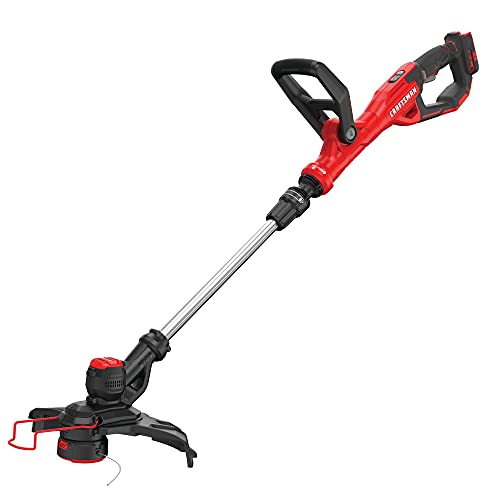
Top picks from our guide: Best Cordless Trimmer : 9 Battery String Trimmers Compared


As an Amazon Associate we earn from qualifying purchases. Prices and availability can change; check the current price on Amazon.
How Long Does the Trimmer Itself Last?
The tool part of a battery trimmer is relatively simple: an electric motor, a shaft, a switch and a trimmer head. There is no engine, carburetor, spark plug or fuel system to wear out or clog. With normal homeowner use and reasonable care, many cordless trimmers keep working for a long time, often well beyond the life of their first battery.
The biggest factor is motor type.
Brushless motors use electronic control instead of physical carbon brushes. With no brushes to wear down, less friction and less heat, they tend to last longer and run more efficiently. Most mid-range and premium trimmers now use them.
Brushed motors are found on many budget trimmers. They work well but the carbon brushes gradually wear, and they run hotter. They can still give years of light use.
Build quality matters too. Metal gear heads, solid shaft couplings and good switches outlast cheaper plastic parts. Commercial-grade and pro-series models are built for heavier daily use.
| Component | What wears it out | How to protect it |
|---|---|---|
| Motor | Heat, overload, dirt in vents | Clean vents, avoid forcing through brush |
| Battery | Heat, deep discharges, poor storage | Store cool and partly charged |
| Trimmer head | Hitting hard surfaces, wear | Avoid concrete and fences, replace when worn |
| Shaft / gearbox | Impacts, debris | Clean regularly, avoid dropping |
| Switch / trigger | Moisture, dirt | Keep dry and clean |
How Long Does a Trimmer Battery Last?
The battery is usually the part that wears out first. Lithium-ion batteries lose capacity gradually with age and charge cycles. A homeowner who trims once a week through the season uses relatively few cycles each year, so heat and storage conditions often matter more than cycle count.
With normal use and good care, many trimmer batteries last several seasons before runtime drops noticeably. Many brands offer battery warranties that commonly run around two to five years, which gives a sense of expected life. Check the warranty for your specific tool, since terms vary.
Batteries rarely fail suddenly. More often, a battery that once ran 40 minutes might run 30 minutes after a few years. Whether that is a problem depends on how much trimming you do.
How Long Does a Trimmer Run Per Charge?
Runtime varies widely. Many cordless trimmers run roughly 20 to 45 minutes per charge with a mid-size battery under typical conditions. Larger batteries can run longer, while small batteries on lightweight trimmers may manage less.
Several factors affect runtime. Speed setting is the biggest: running on high speed uses far more power than low speed. Thick weeds and tall grass increase load compared with light edging. Line diameter matters, as thicker line cuts better but takes more power. Battery capacity, measured in amp-hours, determines how much energy is available. Brushless motors usually get more runtime from the same battery than brushed ones.
Using the low-speed setting for routine trimming and saving high speed for heavy growth can extend runtime significantly.
How Usage Level Affects Lifespan
How hard you work a trimmer has a big effect on how long it lasts.
Light use means trimming edges and around a few beds on a small lot, perhaps 15 to 20 minutes a week. At this level, the motor sees little stress, and the battery's age and storage conditions matter far more than cycle count. Many homeowners in this group find the tool outlasts several batteries.
Moderate use means a medium or large lot with lots of edges, fences and beds, or trimming every few days in peak season. Batteries cycle more often, so buying a second battery spreads the wear and lets one cool while the other works.
Heavy use means clearing overgrown areas, cutting weeds along long fence lines or ditches, or semi-professional work. Here, a brushless trimmer on a high-capacity platform, or even a gas model, makes sense. Budget trimmers used this way may wear out quickly.
Smart Charging Habits
How you charge matters as much as how you store. Wait 15 to 30 minutes after trimming before putting a warm battery on the charger. Use the charger supplied by the manufacturer. Do not leave batteries on the charger for weeks at a time unless the manual says it is designed for that. Charge in a room between roughly 50 and 80 degrees Fahrenheit if possible, because many chargers will slow or pause charging when a battery is too hot or too cold. If you have two batteries, rotate them so both get similar use.
What Shortens a Trimmer Battery's Life
Heat. High temperatures are the biggest enemy of lithium-ion batteries. Leaving a battery in a hot vehicle, in direct sun, or charging it right after heavy use while it is hot all accelerate wear.
Cold storage. Storing batteries in an unheated shed or garage through freezing winters can also harm them.
Storing fully charged or empty. Lithium-ion batteries age faster when stored for long periods at full charge or completely flat. Battery University explains that cool storage at partial charge helps lithium batteries last longer.
Deep discharge. Regularly running the battery until the tool stops adds stress.
Physical damage and moisture. Dropping batteries or exposing them to rain can damage cells and electronics.
What Shortens the Trimmer's Life
Overloading the motor. Forcing a string trimmer through woody brush or thick saplings strains the motor. Use a brush cutter attachment or the right tool for heavy growth.
Blocked vents. Grass and dust clogging the motor vents cause overheating.
Impacts. Repeatedly hitting concrete, rocks, fences and walls wears the trimmer head and can damage the gearbox.
Wrong line. Using line that is too thick for the trimmer increases motor load. Use the diameter recommended in the manual.
Poor storage. Leaving the trimmer outside or in a damp shed lets moisture reach switches and electronics.
How to Extend Battery-Powered Trimmer Lifespan
These habits help both the tool and the battery last longer.
Let a hot battery cool before charging. Charge and store batteries indoors at room temperature. For off-season storage, keep batteries partly charged as your manual recommends and check them every couple of months. Use low speed for routine work. Keep the motor vents clean by brushing off grass and dust after each use. Use the recommended line size and replace the spool or line correctly; our guide on how to replace a trimmer line spool explains the process. Avoid hitting hard surfaces with the trimmer head. Store the trimmer hanging or flat in a dry place, with the battery removed.
Our full guide on how to maintain your trimmer covers cleaning, line care and storage for both cordless and gas models.
Signs It Is Time for a New Battery or Trimmer
Signs the battery is wearing out: runtime is much shorter on a full charge, the battery gets unusually hot, the charge indicator drops quickly, or the charger shows an error.
Signs the trimmer is wearing out: the motor runs weakly even with a fresh battery, the trimmer head wobbles or vibrates, the switch is unreliable, or there is a burning smell.
If the trimmer will not run at all, check the basics first: battery seated properly, battery charged, safety lock disengaged, and trimmer head free of tangled line. Our guide on how to fix a trimmer that won't start walks through these checks.
Replace the Battery or the Whole Trimmer?
If only the battery has worn out, replacing it is often the sensible choice, especially if you already use the same battery for other tools such as a blower or hedge trimmer. Battery platforms are one of the biggest advantages of cordless tools.
Compare costs, though. Sometimes a new trimmer kit including a battery and charger costs only a little more than a replacement battery on its own. If your trimmer is old, brushed, or missing features you want, upgrading may make more sense.
Always use batteries approved by the manufacturer. Third-party batteries may be cheaper but can lack proper protection circuits and may void warranties.
Battery vs Gas Trimmer Lifespan
Gas trimmers can last many years with good maintenance, but they need fuel mixing, spark plug changes, air filter cleaning and carburetor care, and stale fuel is a common cause of failure. Battery trimmers avoid all of that, so for typical homeowners they often prove more reliable over time, with the battery as the main ongoing cost. For heavy commercial use or large properties, gas trimmers still offer longer runtime without battery swaps. Our guide to the best string trimmer compares gas, corded and cordless models.
Recycling Old Trimmer Batteries
When a battery finally reaches the end of its life, do not put it in household trash. Lithium-ion batteries can cause fires in garbage trucks and landfills. Many hardware stores and home centers have battery drop-off points, and local recycling centers often accept them. Tape over the terminals before dropping it off.
Choosing a Long-Lasting Battery Trimmer
If longevity matters, look for a brushless motor, a well-established battery platform with tools you might buy later, a good battery warranty, a sturdy trimmer head that is easy to reload, variable speed, and replacement parts that are easy to find.
The Bottom Line
Battery-powered trimmer lifespan comes down to the battery more than the tool. The trimmer itself, especially a brushless model, can last many years of home use. The battery often lasts several seasons before runtime drops, and each charge commonly gives around 20 to 45 minutes. Keep batteries cool and partly charged in storage, use low speed when you can, keep the motor vents clean, and avoid forcing the trimmer through heavy brush, and your cordless trimmer will serve you well for a long time.
Frequently Asked Questions
How long does a battery-powered trimmer last?
With normal home use and reasonable care, the trimmer itself can last many years, often longer than the battery. Brushless models generally last longer than brushed ones. The battery commonly needs replacing after several seasons, depending on use and storage.
How long does a trimmer battery last per charge?
Many cordless trimmers run roughly 20 to 45 minutes per charge, depending on battery size, motor, speed setting and how heavy the growth is. High speed and thick weeds shorten runtime considerably.
Is it worth replacing a trimmer battery?
Often yes, especially if the battery is shared with other tools on the same platform. Compare the price of a replacement battery with a new kit, which sometimes includes a battery and charger at a similar price.
Do brushless trimmers last longer?
Generally yes. Brushless motors have no carbon brushes to wear out, run cooler and are more efficient, which helps both motor life and runtime.
Can I leave a trimmer battery in the shed over winter?
It is better not to. Freezing temperatures and summer heat both harm lithium-ion batteries. Store the battery indoors in a cool, dry place at partial charge.