
Last updated: October 2026 · Written by the LawnVibe editorial team.
Electric trimmers have quietly taken over from gas for most homeowners. They start instantly, weigh less, make far less noise and need almost no maintenance: no fuel mixing, no spark plugs and no pull cords. The best electric trimmer for you comes down to one key choice, battery or cord, and then to power, cutting width and handy features like automatic line feed and edging modes.
This guide compares nine electric string trimmers, including battery models from EGO, Makita, Ryobi and CRAFTSMAN, a convertible Worx tool and budget-friendly corded trimmers from BLACK+DECKER and WEN. For a deeper dive into battery models only, see our dedicated guide to the best cordless trimmer.
| # | Product | Best for | Link |
|---|---|---|---|
| 1 | EGO POWER+ 16 inch Cordless Trimmer with Line IQ (ST1623T) | Medium to large yards | Check price |
| 2 | Makita XRU23Z 18V LXT Brushless 13 inch String Trimmer (Tool Only) | Makita battery owners | Check price |
| 3 | CRAFTSMAN V20 Brushless RP Trimmer and Blower Combo Kit | Trimming plus blowing | Check price |
| 4 | Ryobi ONE+ 18V Cordless String Trimmer and Edger | Ryobi ONE+ owners | Check price |
| 5 | BLACK+DECKER 20V MAX 12 inch Trimmer/Edger (LSTE525) | Small yards | Check price |
| 6 | Worx GT Revolution 20V 12 inch Trimmer/Edger/Mini-Mower | Trimming, edging and tiny lawns | Check price |
| 7 | BLACK+DECKER 6.5 Amp 14 inch Corded Trimmer/Edger with Auto Feed | Small yards near an outlet | Check price |
| 8 | BLACK+DECKER 6.5 Amp Corded Trimmer/Edger with EASYFEED | Simple corded trimming | Check price |
| 9 | WEN Corded Electric String Trimmer | Tight budgets | Check price |
How We Chose the Best Electric Trimmer
We did not run hands-on lab tests. We compared each trimmer on published specifications and features: power source, voltage or amperage, motor type, cutting swath, line feed system, edging capability, weight class and whether a battery and charger are included. We also considered battery ecosystems and common owner feedback themes such as line feed reliability and balance.
Specifications and kit contents change, so confirm current details on the listing before you buy.

EGO POWER+ 16 inch Cordless Trimmer with Line IQ (ST1623T)
Best for: Medium to large yards
A 16 inch cordless trimmer with Line IQ auto-sensing line feed and POWERLOAD push-button line winding, sold with battery and charger.
- Automatic line feed
- Push-button line winding
- Wide 16 inch swath
- Premium price
- Heavier than compact trimmers

Makita XRU23Z 18V LXT Brushless 13 inch String Trimmer (Tool Only)
Best for: Makita battery owners
A brushless 18V LXT trimmer with a 13 inch swath, high/low power button and variable-speed trigger; battery and charger are sold separately.
- Brushless motor
- High/low power modes
- Variable-speed trigger
- Tool only
- Best if you already own Makita batteries
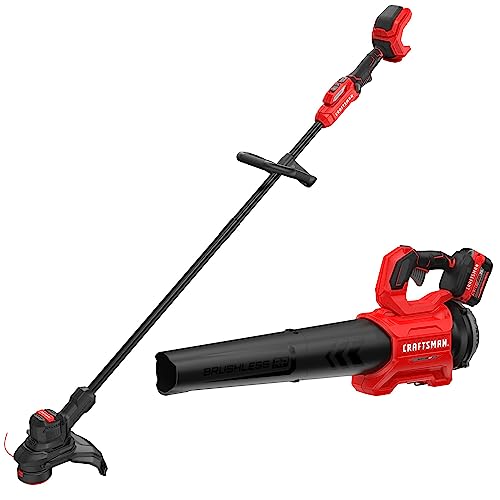
CRAFTSMAN V20 Brushless RP Trimmer and Blower Combo Kit
Best for: Trimming plus blowing
A V20 brushless kit with a compact 13 inch string trimmer, a blower and a 5.0Ah battery with charger.
- Brushless motors
- Blower included
- 5.0Ah battery
- Two tools to store
- 13 inch swath
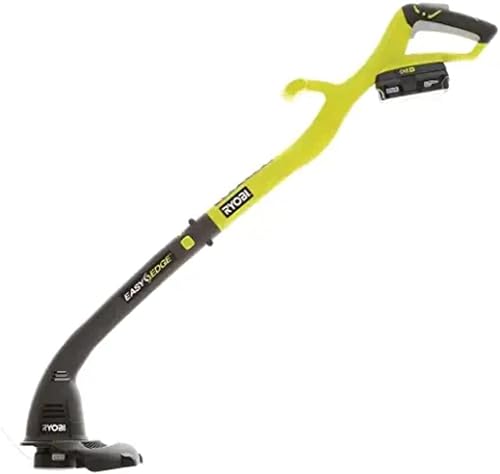
Ryobi ONE+ 18V Cordless String Trimmer and Edger
Best for: Ryobi ONE+ owners
An 18V trimmer and edger on the Ryobi ONE+ platform, one of the broadest homeowner battery tool systems available.
- Huge ONE+ tool range
- Edging capability
- Light
- Lower power than high-voltage trimmers
- Check battery inclusion

BLACK+DECKER 20V MAX 12 inch Trimmer/Edger (LSTE525)
Best for: Small yards
A 12 inch 20V MAX trimmer that converts to an edger, sized for small lawns and quick tidying.
- Converts to edger
- Light
- Affordable battery platform
- Narrow swath
- Not for heavy weeds
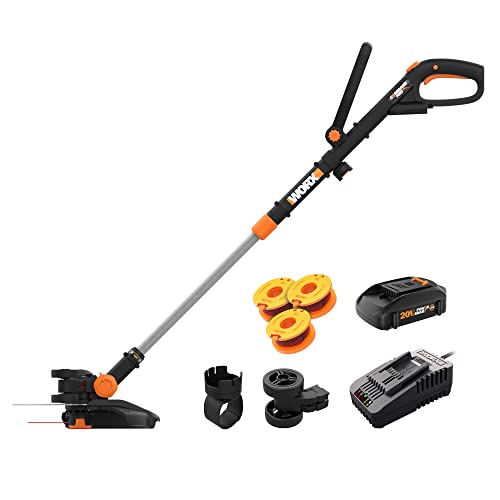
Worx GT Revolution 20V 12 inch Trimmer/Edger/Mini-Mower
Best for: Trimming, edging and tiny lawns
A 20V tool that switches between string trimmer, wheeled edger and mini-mower, with an automatic line system.
- 3-in-1 design
- Wheeled edging mode
- Automatic line feed
- 12 inch swath
- Light-duty power

BLACK+DECKER 6.5 Amp 14 inch Corded Trimmer/Edger with Auto Feed
Best for: Small yards near an outlet
A 6.5 amp corded 2-in-1 trimmer and edger with a 14 inch cut and automatic line feed, giving unlimited runtime at a low price.
- Auto line feed
- 14 inch swath
- No battery to charge
- Cord limits range
- Cord must be managed

BLACK+DECKER 6.5 Amp Corded Trimmer/Edger with EASYFEED
Best for: Simple corded trimming
A 6.5 amp corded trimmer with POWERDRIVE transmission and EASYFEED, which advances line with a button press instead of bumping.
- Push-button line feed
- Edging capability
- Affordable
- Corded range only
- Less power for thick brush

WEN Corded Electric String Trimmer
Best for: Tight budgets
A light corded trimmer of about 4.4 lb with an automatic feed system and a cord storage hook.
- Very light
- Automatic feed
- Low cost
- Basic build
- Corded range only
Battery vs Corded Electric Trimmers
The main decision with an electric trimmer is how it gets its power.
Battery (cordless) trimmers give you freedom to trim anywhere on the property, with no cord to drag around trees and beds. Higher-voltage platforms and brushless motors now deliver strong performance, and a single battery can often power a mower, blower and hedge trimmer from the same brand. The trade-offs are cost, because batteries are expensive, and runtime, which depends on battery capacity.
Corded trimmers are the lightest and most affordable electric option. They never run out of power and need no charging, which makes them ideal for small yards near an outdoor outlet. The cord limits range, and you need to manage it carefully so it does not tangle or get cut. For more corded options, see our guide to the best corded string trimmer.
| Factor | Battery | Corded |
|---|---|---|
| Range | Anywhere | Limited by cord |
| Runtime | Battery limited | Unlimited while plugged in |
| Weight | Moderate | Lightest |
| Upfront cost | Higher | Lowest |
| Tool ecosystem | Shares batteries with other tools | None |
| Best for | Most yards | Small yards near outlets |
Electric Trimmer Buying Guide
Voltage, amperage and motor type
For battery trimmers, voltage gives a rough indication of power. 18V and 20V tools suit light to moderate trimming, while 40V, 56V and 60V platforms handle thicker growth. Brushless motors are generally more efficient than brushed motors, which helps runtime and torque. For corded trimmers, amperage is the equivalent figure; around 4 to 6.5 amps is common, with higher figures giving more power.
Cutting swath
A 10 to 12 inch swath is nimble for small yards and edging. A 13 to 14 inch swath suits most suburban lawns. A 15 to 16 inch swath covers large areas faster but needs more power.
Line feed system
Automatic and push-button line feed systems save time compared with bump feed, because you do not need to stop and tap the head. Some systems sense line length and feed automatically, while others wind new line onto the spool with the push of a button. Our guide to the best trimmer with automatic line feed covers more options.
Edging capability
Many electric trimmers rotate the head for vertical edging, and some convert into wheeled edgers. If you edge regularly, look for a guide wheel or edging mode. Our article on how to use an electric trimmer to create perfect edges explains the technique.
Weight and balance
Electric trimmers are generally light, but balance varies. An adjustable auxiliary handle and a telescoping shaft help you find a comfortable working position, especially for taller or shorter users.
Battery platform
If you choose a battery trimmer, check which other tools run on the same battery. Buying into one platform saves money on future tools and keeps one charger in the garage.
Why Electric Trimmers Have Replaced Gas for Most Homeowners
A decade ago, electric trimmers were mostly light-duty tools for tidying small patios. Today the picture is very different. Lithium-ion batteries store far more energy, brushless motors convert that energy into cutting power more efficiently, and smart line feed systems remove one of the most annoying parts of trimming. As a result, many homeowners who once needed a gas trimmer can now do the same work with a battery tool.
The everyday benefits add up. There is no fuel to buy, mix or store, and no stale gasoline causing starting problems in spring. Electric trimmers start instantly with a trigger, so there is no pull cord to yank. They are much quieter, which matters if you trim early in the morning or live close to neighbours. They also vibrate less, making longer sessions more comfortable. Gas still has a place on large rural lots and in heavy brush, but for a typical suburban yard, electric is now the simpler choice.
Understanding Battery Runtime
Battery runtime is the question most buyers ask, and the honest answer is that it depends. A trimmer working lightly around a patio might run far longer than the same trimmer chewing through tall weeds along a fence. Higher-capacity batteries, measured in amp-hours, run longer than lower-capacity packs on the same tool. Using the low-speed setting for light work stretches runtime further.
If your yard is larger than about a quarter acre, or if you also mow and blow with the same battery, a second battery is often the easiest way to avoid waiting for a recharge. Keep the spare charged and stored indoors so it is ready when you need it. When a battery stops holding a charge, our guide on how to fix a battery-powered trimmer that won't charge explains what to check before buying a replacement.
Best Electric Trimmer by Yard Type
Small yards and townhouses
A light corded trimmer or a compact 18V to 20V battery trimmer with a 10 to 12 inch swath handles small spaces easily. A convertible trimmer, edger and mini-mower can even cut tiny patches of lawn.
Medium suburban lawns
A 13 to 16 inch battery trimmer with a brushless motor and a 4.0Ah or larger battery covers most needs in one charge.
Larger properties
A high-voltage brushless battery trimmer with a spare battery, or consider a gas trimmer for very large rural lots. Our guide to the best gas trimmer covers gas options.
Electric Trimmer Technique Tips
Use the tip of the line to cut, holding the head just above the ground and slightly tilted. Pushing the whole head into grass wastes energy and wears line quickly. On battery trimmers, use the low-speed setting for light trimming to stretch runtime, and switch to high speed for thicker growth. Cut tall grass in stages from the top down. With corded trimmers, start near the outlet and work away from it, always keeping the cord behind you. Our guide on how to operate a cordless trimmer efficiently has more runtime-saving tips.
Electric Trimmer Maintenance
Electric trimmers need very little care, but a few habits keep them running well. Clean grass from the guard and head after each use with the battery removed or the cord unplugged. Replace line before it becomes too short to feed, and wind spools neatly in the marked direction. Store batteries indoors in a cool, dry place at a moderate charge level, and inspect cords for cuts or damage before every use. Our guide on how to maintain an electric trimmer for long-term use covers a full maintenance routine.
When a lithium-ion battery reaches the end of its life, recycle it properly rather than throwing it away. The U.S. Environmental Protection Agency explains how to handle used lithium-ion batteries.
Common Electric Trimmer Problems
When an electric trimmer stops feeding line, the usual cause is a spool that was wound loosely, crossed over or overfilled. Rewinding neatly in the direction marked on the spool fixes most cases. If the line keeps breaking, you may be hitting concrete, fences or stones too often, or using line that is too thin for the work. A trimmer that bogs down in thick grass may simply need smaller bites, a cleaner head or a fully charged battery. Corded trimmers that lose power are sometimes using an extension cord that is too long or too light a gauge.
Electric Trimmer Safety
Wear safety glasses, long pants and closed shoes, because trimmers throw stones and debris. Keep children and pets away while you work. With corded trimmers, use an outdoor-rated extension cord and a GFCI-protected outlet, and never trim in wet conditions. Remove the battery or unplug the trimmer before clearing a jammed head or changing line.
String Trimmer or Hedge Trimmer?
Electric trimmers come in two very different kinds, and the names are easy to mix up. A string trimmer, sometimes called a weed eater or weed wacker, uses spinning nylon line to cut grass and weeds along edges. A hedge trimmer uses reciprocating steel blades to shape shrubs and hedges. This guide covers string trimmers. If you need to shape shrubs, see our guide to the best cordless hedge trimmer.
Final Verdict: Which Electric Trimmer Should You Buy?
The best electric trimmer depends on your yard size and whether you prefer the freedom of a battery or the low cost of a cord.
- Best battery trimmer overall: the EGO POWER+ 16 inch ST1623T with Line IQ automatic feed.
- Best brushless compact: the Makita XRU23Z 18V LXT 13 inch, if you already own Makita batteries.
- Best combo kit: the CRAFTSMAN V20 brushless trimmer and blower kit.
- Best value battery ecosystem: the Ryobi ONE+ 18V trimmer and edger.
- Best compact battery trimmer/edger: the BLACK+DECKER 20V MAX 12 inch LSTE525.
- Best convertible tool: the Worx GT Revolution 20V trimmer, edger and mini-mower.
- Best corded trimmers: the BLACK+DECKER 14 inch with auto feed, the BLACK+DECKER 6.5 amp with EASYFEED and the WEN corded trimmer.
Choose battery or corded power first, then match swath and features to your yard, and an electric trimmer will keep edges neat with minimal fuss.
Frequently Asked Questions
Are electric trimmers as good as gas trimmers?
For most suburban yards, yes. Modern battery trimmers, especially higher-voltage brushless models, handle regular trimming and moderate weeds well. Gas trimmers still lead for very large properties and heavy brush.
Should I buy a corded or battery electric trimmer?
Corded trimmers are cheaper, lighter and never run out of power, but the cord limits range. Battery trimmers offer freedom to move anywhere and share batteries with other tools. If your yard is small and near an outlet, corded is a strong value.
How long does an electric trimmer battery last per charge?
It depends on battery capacity, voltage, motor efficiency and what you are cutting. Manufacturers publish estimated runtimes for specific batteries, and light trimming lasts much longer than cutting thick weeds.
What extension cord do I need for a corded trimmer?
Use an outdoor-rated extension cord of the length and gauge recommended in your trimmer's manual. Longer runs generally need a heavier gauge cord to avoid power loss and overheating.
Can an electric trimmer edge a lawn?
Many electric trimmers have a rotating head or wheel guide for edging along paths and driveways. Some convert into wheeled edgers for cleaner lines.