
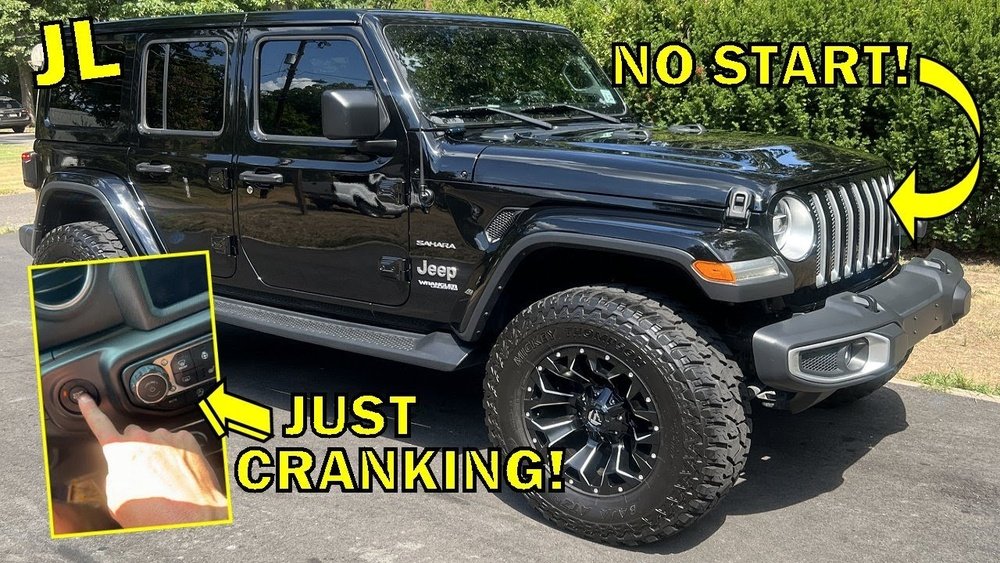
A Jeep Wrangler is known for its rugged build and adventurous spirit. But nothing kills that excitement faster than starting problems. You turn the key or push the button—and nothing happens. Maybe you hear a click, maybe not even that. If this happens, frustration sets in quickly. Many Jeep owners face this issue, and it can be caused by simple things or more complex faults.
This guide walks you through everything you need to know about fixing Jeep Wrangler starting problems, from simple checks to deeper diagnostics. Whether your Wrangler is old or new, automatic or manual, you’ll find clear steps, practical advice, and expert tips. By the end, you’ll understand what causes starting issues, how to diagnose them, and how to fix them—without spending a fortune or wasting time.
Understanding Starting Problems In Jeep Wrangler
A Jeep Wrangler’s starting system is made of several parts that must work together. If even one part fails, your Jeep won’t start. Let’s break down the main components:
- Battery: Supplies power to everything, including the starter motor. If the battery is weak or dead, nothing else will work—this is the heart of the system.
- Starter motor: Turns the engine over so it can begin running. Without this, the engine remains still.
- Ignition switch: Activates the starter and other systems. It’s the “go” button for the whole process.
- Fuses and relays: Protect circuits and help control power flow. If a fuse blows or a relay sticks, the chain is broken.
- Wiring and connectors: Carry power and signals between components. Even a small break or loose connection can stop the Jeep from starting.
- Fuel system: Supplies fuel to the engine. Without fuel, even a perfect electrical system can’t start the engine.
- Computer (ECU): Controls many functions, including starting. Modern Jeeps rely heavily on electronic controls.
Most starting problems come from one or more of these parts. Sometimes, it’s just a weak battery or a loose wire. Other times, you may need to dig deeper. For example, a failing sensor can trigger a security lockout, making diagnosis harder if you’re not familiar with electronic systems.
Symptoms Of Starting Problems
Different symptoms point to different issues:
- No sound or action: Battery, wiring, or ignition switch may be faulty. This means no power is reaching the starter at all.
- Clicking sound, no start: Starter motor or solenoid issue, or weak battery. The click is usually the solenoid trying to engage.
- Cranks but won’t start: Fuel system, spark plugs, or ECU problem. The engine turns, but doesn’t fire up.
- Intermittent starting: Loose connections, bad relays, or failing starter. Sometimes it works, sometimes it doesn’t—these can be the hardest to track down.
Knowing the symptoms helps you focus your efforts and avoid guessing. For example, if you only hear a click in cold weather, think battery or starter first.
How Common Are Jeep Wrangler Starting Problems?
According to automotive surveys, starting problems are among the top five complaints for Jeep Wranglers. Data from the National Highway Traffic Safety Administration (NHTSA) shows that about 12% of Wrangler owners report some form of starting issue within the first 5 years. Older models (pre-2012) are more likely to have issues due to age and wear.
Jeep Wranglers are also more likely to experience starting problems if they are used for off-roading. Mud, water, and vibration can accelerate wear on electrical components and wiring. Many Wrangler owners who enjoy trail driving find that regular cleaning and checks help reduce these issues.
Step-by-step Diagnosis For Starting Issues
Fixing a starting problem begins with diagnosis. Here’s how you can systematically figure out what’s wrong:
1. Check The Battery
The battery is the most common culprit. Even a new battery can drain if lights or devices are left on. Keep in mind that some batteries may show the correct voltage but still be weak under load—this is why a load test can be helpful if you have access to one.
- Inspect for corrosion on terminals. White or blue powder means poor contact. Corrosion acts like an insulator, preventing power from flowing.
- Measure voltage with a multimeter. Healthy batteries show 12.4–12.7 volts. Anything lower may not be enough to crank the engine.
- Try jump-starting. If your Jeep starts, the battery is likely the problem. But also check the alternator to make sure the battery is charging properly.
| Battery Voltage | Condition | Recommended Action |
|---|---|---|
| 12.7V+ | Fully Charged | No action needed |
| 12.4V–12.7V | Normal | Check terminals |
| 12.0V–12.3V | Low | Recharge or replace |
| <12.0V | Very Low/Dead | Replace battery |
If your Jeep sits for long periods, consider using a battery maintainer to keep it healthy.
2. Inspect Battery Cables And Connections
Loose or corroded cables stop power from reaching the starter. Tug gently on cables; they should not move. Clean terminals with a wire brush and tighten connections.
Check both the positive and negative cables. The negative cable is often ignored, but a poor ground connection can cause the same symptoms as a dead battery. Sometimes, the cable looks fine on the outside but is corroded inside—if in doubt, replace it.
3. Test The Starter Motor And Solenoid
If you hear clicking but no crank, the starter motor or solenoid could be faulty.
- Listen for a single loud click: This usually means the starter solenoid is engaging but the motor isn’t turning. Multiple clicks can mean poor battery power.
- Try tapping the starter gently with a tool while someone turns the key. If it cranks, the starter is likely failing. This is a quick test—not a permanent fix.
- Remove and bench-test the starter if possible. Most auto parts stores can test starters for free.
Also, check the starter relay and wiring. Sometimes a relay fails under heat but works when cold, making the problem hard to reproduce.
4. Examine Fuses And Relays
A blown fuse or bad relay can interrupt power. Locate your Wrangler’s fuse box (usually under the hood) and check the starter, ignition, and fuel pump fuses.
- Replace any blown fuses with the correct rating. Never use a higher-rated fuse, as this can cause wiring damage.
- Swap relays with a similar one from another circuit to see if the problem moves. For example, swap the starter relay with the horn relay if they are the same type.
If you find repeated blown fuses, this could mean a deeper wiring issue or a short circuit.
5. Check The Ignition Switch
The ignition switch can wear out, especially in older Jeeps. Wiggle the key when turning. If the Jeep starts sometimes, the switch may be bad.
Look for other signs: does the dash light up normally? If not, the ignition switch may be failing. In some Wranglers, the switch is part of an anti-theft system, so replacing it may require reprogramming keys.
6. Inspect Wiring And Ground Connections
Damaged wires or poor ground connections cause many starting issues. Look for:
- Frayed wires
- Broken insulation
- Loose ground straps (usually connected to the chassis)
Use a multimeter to check for continuity. Wires near the engine and battery get the most wear, especially after off-roading or engine work. Sometimes, rodents chew on wires, so check for bite marks if your Jeep has been parked for a while.
7. Test The Fuel System
If the engine cranks but doesn’t start, check the fuel pump and injectors.
- Listen for a humming sound when you turn the key (fuel pump priming). If you don’t hear it, the pump may not be getting power or has failed.
- Check fuel pressure with a gauge (should be 50–60 psi for most Wranglers). Low pressure can mean a weak pump or clogged filter.
- Inspect the fuel filter for clogs. Dirty filters block fuel flow and are often forgotten in maintenance.
If your Jeep has been sitting for months, old fuel can also cause hard starting—fuel stabilizer helps with storage.
8. Scan For Computer Codes
Modern Wranglers have an ECU that stores error codes. Use an OBD-II scanner to read codes. Common codes related to starting include:
- P0562: Battery voltage low
- P0335: Crankshaft position sensor
- P0615: Starter relay circuit
Reading codes gives you clues and saves time. Some codes may not trigger the check engine light, so always scan if you have persistent issues.
9. Look For Non-obvious Causes
Some issues are less obvious:
- Aftermarket electronics: Alarm systems or remote starters can interfere. Sometimes, these are poorly installed and cause random faults.
- Neutral safety switch: If your Jeep is automatic, this prevents starting unless in Park or Neutral. Try shifting between gears and see if it starts.
- Clutch safety switch: Manual Wranglers require the clutch to be pressed. If the switch fails, the engine won’t crank even if everything else is fine.
These are often overlooked by beginners. Another rare but possible problem is a faulty key fob or immobilizer chip. If your Jeep has push-button start, try the backup key.
Common Jeep Wrangler Starting Issues And Fixes
Let’s go deeper into the most frequent starting problems and how to fix each one.
Battery Issues
Weak or dead batteries cause most starting problems. Cold weather worsens this, as batteries lose power below 32°F. If your Jeep struggles in winter, consider a battery with higher cold cranking amps (CCA).
Fixes:
- Replace with a battery rated for your climate.
- Clean and tighten terminals.
- Check for parasitic drain (devices drawing power when Jeep is off).
A hidden drain, such as a glove box light that doesn’t turn off, can kill a battery in just a day or two. Regularly check for drains if your Jeep sits unused.
Starter Motor Failure
Wrangler starter motors last 80,000–120,000 miles on average. Signs of failure include slow cranking, clicking, or no sound.
Fixes:
- Replace the starter motor.
- Check and replace the solenoid if needed.
Sometimes, the starter can be rebuilt instead of replaced, which saves money. However, if the Jeep is often used in wet or muddy areas, a full replacement is safer.
Faulty Ignition Switch
Ignition switches often fail after 100,000 miles or from rough use. If your key feels loose or the Jeep starts only sometimes, replace the switch.
Fixes:
- Install a new ignition switch.
- Make sure to use the correct part number for your year/model.
Some owners install heavy keychains, which wear out the ignition switch faster. Try to keep your Jeep key alone or with a lightweight keyring.
Bad Fuses Or Relays
Jeep Wranglers use over 30 fuses and relays. A single bad relay can prevent starting.
Fixes:
- Replace blown fuses.
- Swap relays with identical ones to test.
If you find yourself replacing the same fuse repeatedly, look for a short circuit or water intrusion in the fuse box.
Wiring Problems
Jeep Wranglers are often used off-road, where mud and vibration damage wiring. Look especially near the battery, starter, and fuse box.
Fixes:
- Repair or replace damaged wires.
- Secure loose connections and ground straps.
Always use waterproof connectors if repairing wires exposed to the elements. Many Jeep owners use dielectric grease to protect contacts.
Fuel System Issues
A clogged fuel filter or weak fuel pump keeps the engine from starting. Regular maintenance is key.
Fixes:
- Replace the fuel filter every 30,000 miles.
- Change the fuel pump if pressure is low.
A dirty fuel injector can also cause hard starting, especially if you notice rough idling once it starts.
Ecu And Sensor Problems
Wrangler ECUs rarely fail, but sensors can. The crankshaft position sensor is a common source of trouble.
Fixes:
- Replace faulty sensors.
- Update ECU software if needed.
After replacing a sensor, clear the codes with an OBD-II scanner. Some Jeeps need a drive cycle for the ECU to relearn the sensor.
Diy Fixes And When To Call A Mechanic
Not all starting issues require a mechanic. Here’s what you can do yourself—and when to ask for help.
Diy Fixes
- Jump-start the battery: Always connect cables in the correct order for safety.
- Replace fuses and relays: Keep spares in your glove box.
- Clean battery terminals: Use a mixture of baking soda and water if you don’t have terminal cleaner.
- Check and repair wiring: Basic hand tools and patience can fix many problems.
- Swap sensors (if you have basic tools): Crankshaft and camshaft sensors are usually easy to reach.
Many Jeep owners fix these themselves in less than an hour. For anything involving fuel or high-voltage wiring, wear gloves and disconnect the battery first.
When To Call A Mechanic
- If the starter motor needs replacement and you lack tools or a lift
- If the ECU shows complex error codes
- If wiring is damaged deep inside the harness
- If you suspect fuel injection or pump failure
Professional help saves time and prevents further damage. Complex electronics or internal engine problems are best left to experts.
Jeep Wrangler Starting Problems: Model Comparison
Different Wrangler models have their own quirks. Here’s a comparison:
| Model Year | Common Starting Issues | Difficulty of Fix |
|---|---|---|
| 2007–2011 (JK) | Ignition switch, starter, battery drain | Moderate |
| 2012–2017 (JK) | Fuel pump, crank sensor, battery | Moderate |
| 2018–2024 (JL) | ECU, starter, relay failure | Easy to moderate |
Older models are more prone to mechanical issues. Newer models face more electronic faults. For example, the JL series has more sensors and modules, which are sensitive to low battery voltage.
Preventing Starting Problems: Maintenance Tips
Preventing issues is easier and cheaper than fixing them. Here are tips to keep your Wrangler starting reliably:
- Battery care: Check voltage monthly, keep terminals clean, and replace every 4–5 years. Also, avoid deep discharges.
- Starter check: Listen for slow cranking and replace before failure. If your Jeep sounds different when starting, investigate early.
- Fuse and relay inspection: Check every 12 months, especially after off-road trips. Dust and moisture can cause corrosion.
- Wiring protection: Use wire loom and secure loose wires. Avoid running wires near hot engine parts.
- Fuel system maintenance: Change filters and use good-quality fuel. Add a fuel system cleaner every 10,000 miles if you drive in dusty or humid areas.
- ECU update: Ask dealers about software updates, especially after recalls. Updated software can fix bugs that cause starting or stalling.
Most beginners miss regular fuse and relay checks—these are simple and prevent many problems. Another tip is to keep your key fob battery fresh if your Jeep uses push-button start.
Credit: customtruckconcepts.com
Real-life Examples: Jeep Owners Share Their Stories
Nothing beats real-world experience. Here are two examples from Jeep forums:
Case 1: 2014 Wrangler Won’t Start in Cold
Owner noticed Jeep wouldn’t start below 20°F. Battery tested fine, but starter motor was slow. Replaced starter and problem solved. Tip: Cold weather makes weak starters fail faster. Also, using a block heater or parking indoors helps prolong battery and starter life in winter.
Case 2: 2009 Wrangler Intermittent Starting
Jeep sometimes started, sometimes not. Mechanic found a loose ground strap under the hood. Tightening it fixed the problem. Lesson: Always check ground connections. In another case, a small wire behind the starter was pinched and caused random no-starts after off-road trips.
These stories show how small issues can cause big headaches. Sometimes, what seems like a major electrical problem is solved with a simple adjustment.
Jeep Wrangler Starting Problems Vs Other Suvs
Wranglers are unique, but how do their starting problems compare to other SUVs?
| Vehicle | Common Starting Problems | Average Repair Cost |
|---|---|---|
| Jeep Wrangler | Battery, starter, ignition switch | $150–$600 |
| Toyota 4Runner | Battery, starter relay | $120–$550 |
| Ford Bronco | ECU, battery, fuel pump | $180–$650 |
| Chevy Blazer | Ignition switch, starter motor | $140–$600 |
Wrangler repair costs are similar to others, but they face more issues from off-road use. The open design exposes parts to water and mud, which speeds up corrosion and connector failure. For this reason, some owners install splash guards or protective covers.
Credit: www.youtube.com
Advanced Troubleshooting: Non-obvious Insights
Some starting problems are tricky. Here are two advanced tips most beginners miss:
1. Parasitic Draw: Devices like radios or alarms can drain the battery overnight. Use a multimeter to check for current draw when everything is off. If draw is over 50 milliamps, something is draining power. Disconnect fuses one at a time to find the source.
2. PCM Reset: The Powertrain Control Module (PCM) controls starting. Sometimes, disconnecting the battery for 30 minutes resets the PCM and fixes random starting issues. This is a simple trick, but not widely known.
An extra tip: If you recently replaced a battery or starter and still have issues, check if a software update or system relearn is required—especially with newer Wranglers.
Jeep Wrangler Starting Problems: Repair Cost Breakdown
Knowing the costs helps you plan. Here’s a typical breakdown:
- Battery replacement: $120–$200
- Starter motor: $250–$450
- Ignition switch: $100–$250
- Fuel pump: $300–$600
- Sensor replacement: $50–$120
- Labor: $80–$120 per hour
Fixing yourself saves on labor. Always compare prices and get quotes. Some Jeep parts have core charges—return the old part to get money back.
How To Choose Replacement Parts
Not all parts are equal. When choosing replacement parts for your Wrangler:
- OEM vs aftermarket: OEM (Original Equipment Manufacturer) parts fit perfectly and last longer. Aftermarket parts are cheaper but may not match quality. For critical parts like starters and sensors, OEM is safer.
- Warranty: Choose parts with at least 1-year warranty. Some brands offer 2 or 3 years.
- Reviews: Read Jeep forums and websites for feedback. Look for patterns—if many people report the same aftermarket part failing, avoid it.
- Price: Cheaper isn’t always better, especially for starters and batteries.
Avoid buying used electrical parts unless you know their history. For major components, ask if the part is new, rebuilt, or remanufactured.
Where To Find Reliable Jeep Wrangler Repair Info
For more detailed instructions, diagrams, and troubleshooting tips, use official sources. The Jeep Wrangler owner’s manual and factory service manuals are best. Forums and YouTube videos are helpful but sometimes inaccurate.
A trustworthy resource is Jeep Official Owners Site, which includes recalls, diagrams, and maintenance guides.
If you’re serious about DIY, consider buying a factory service manual for your model year. These manuals have step-by-step guides for every system.

Credit: www.amazon.com
Frequently Asked Questions
Why Does My Jeep Wrangler Click But Not Start?
A clicking sound usually means the battery is weak, the starter solenoid is faulty, or the starter motor is failing. Try jump-starting first. If that works, replace the battery. If not, check the starter and solenoid.
Sometimes, a rapid clicking noise can mean a loose or corroded battery terminal. Clean and tighten the terminals before replacing parts.
Can A Bad Ground Cause Starting Problems?
Yes. A bad ground connection prevents electrical flow, causing intermittent or no start. Check ground straps and clean contact points. This is a common issue, especially after off-road use.
If you add aftermarket lights or winches, always ensure new grounds are secure and away from moving parts.
How Often Should I Replace The Battery?
Replace your Jeep Wrangler battery every 4–5 years, or sooner if it shows signs of weakness (slow cranking, dim lights). Extreme weather and off-road driving shorten battery life.
A battery load test once a year helps catch problems before they leave you stranded.
Is It Safe To Drive After Jump-starting?
If your Jeep starts after jump-starting, drive to a safe place and check the battery and charging system. A bad battery can leave you stranded again. Don’t rely on repeated jump-starts—fix the root cause.
If you need to jump-start more than once a month, something is wrong.
What Is The Average Cost To Fix Starting Problems?
The average repair cost for Jeep Wrangler starting problems ranges from $150 (battery) to $600 (fuel pump or starter motor). DIY repairs are cheaper, but complex issues may need a mechanic.
Your Jeep Wrangler is built for adventure, not for sitting in the driveway. With the right knowledge and tools, you can diagnose and fix starting problems quickly. By following these steps, checking components, and staying ahead with maintenance, you’ll keep your Jeep reliable for years.
Remember, most issues are simple if caught early. Don’t ignore the signs—deal with them before they ruin your next trip.