
Pressure washing a driveway can transform its appearance and extend its life. Over time, driveways collect dirt, oil, mold, and stains that make your home look less appealing. While cleaning a driveway might seem simple, doing it correctly takes preparation, the right tools, and proper technique.
This guide shows you how to pressure wash a driveway step-by-step, explains common mistakes, and helps you achieve professional results safely.
Why Pressure Washing Your Driveway Matters
A clean driveway improves your home’s curb appeal and can raise property value. Dirt and stains can cause permanent damage if left untreated. For example, mold and algae can make surfaces slippery and unsafe. Oil stains may weaken concrete and encourage cracks.
Regular pressure washing removes these risks.
According to the National Association of Realtors, homes with clean exteriors—including driveways—often sell faster and for more money. Pressure washing can also help spot early signs of damage, like cracks or potholes, before they become expensive repairs.
Even if you are not planning to sell your home, a clean driveway makes your house look cared for. Visitors notice driveways first, and a dirty surface can leave a bad impression. Mold and algae can grow quickly in humid climates, making the driveway unsafe for walking or driving.
Children, pets, and elderly family members are more likely to slip on dirty, slimy surfaces.
Over time, dirt and debris also attract insects and weeds. Weeds can grow through cracks and make them larger. If you pressure wash regularly, you help prevent these problems before they start. Think of pressure washing as a way to protect your investment and keep your property safe for everyone.
Understanding Pressure Washers
Before you start, you need to know about pressure washers. These machines use water at high pressure to remove dirt, grime, and stains.
Types Of Pressure Washers
There are two main types:
| Type | Power Source | Pressure (PSI) | Best For |
|---|---|---|---|
| Electric | Plug-in | 1300-2000 | Light cleaning, small driveways |
| Gas | Gasoline | 2000-4000 | Heavy-duty, large driveways |
- Electric pressure washers are quieter and lighter but less powerful.
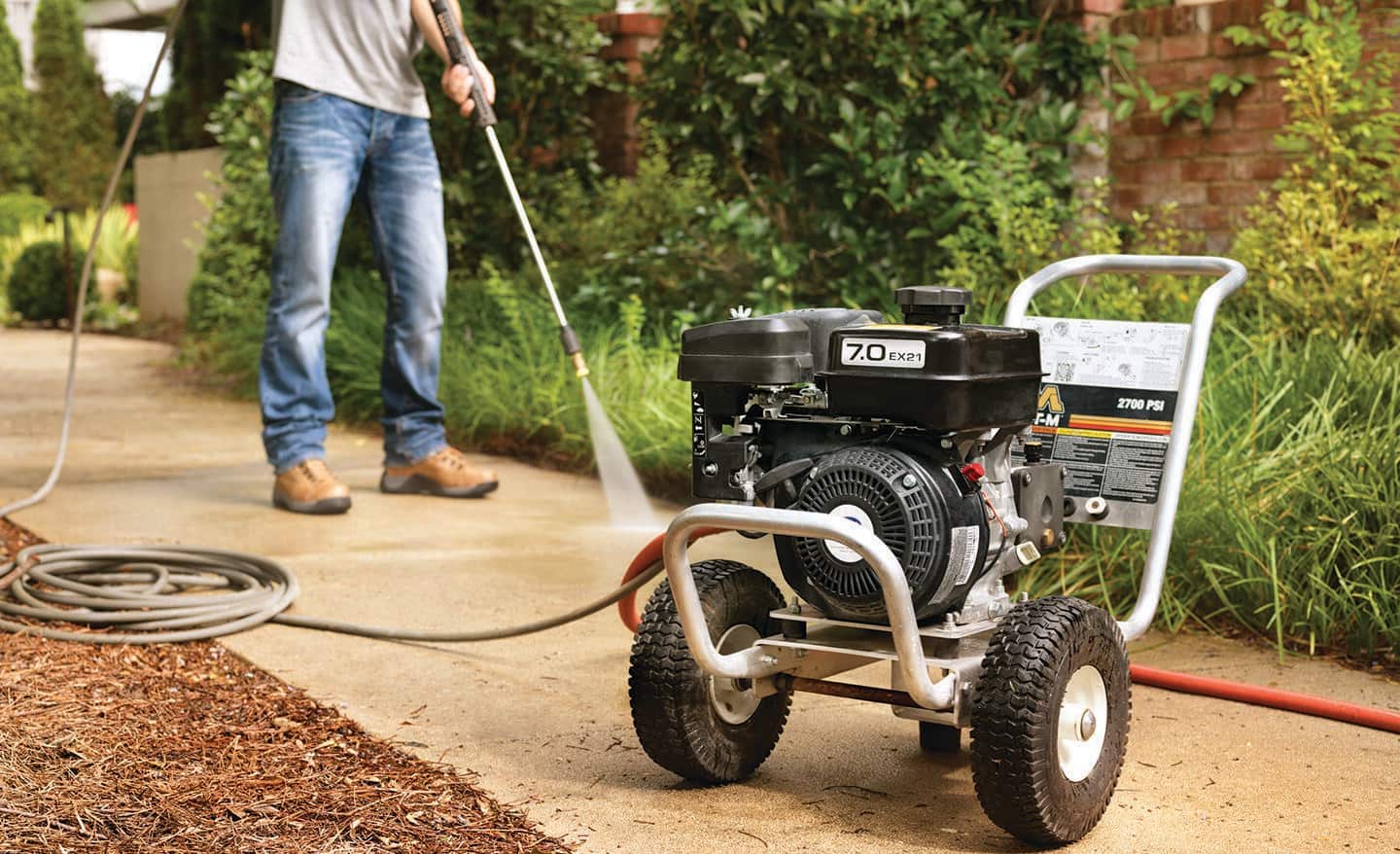
- Gas pressure washers are stronger and better for tough stains or large areas.
Gas washers are also more mobile since you don’t need a power outlet, but they require regular maintenance and fuel. Electric washers are easier for beginners, but might struggle with thick buildup or deep stains. If you have a small driveway and only light dirt, electric is usually enough.
Choosing The Right Pressure Washer
For most driveways, you need at least 2500 PSI. Lower PSI may not remove tough stains, while higher PSI can damage surfaces if not used carefully. If you don’t own a pressure washer, consider renting one from a hardware store. Many stores offer both electric and gas models.
Some newer models offer adjustable pressure settings and interchangeable tips. These features help you control the strength of the water, so you don’t damage surfaces. If you plan to use the washer for other tasks, such as cleaning patios or siding, choose a model with a range of settings.
An important detail: check the washer’s flow rate, measured in gallons per minute (GPM). Higher GPM means more water is used and cleaning is faster. For driveways, look for at least 2.0 GPM. A washer with high PSI but low GPM will remove stains slowly.
Credit: www.greenworkstools.com
What You Need To Pressure Wash A Driveway
Gather these items before you start:
- Pressure washer (2500-3500 PSI recommended for concrete)
- Garden hose (to supply water)
- Pressure washer nozzles (usually 15°, 25°, and sometimes 40° tips)
- Surface cleaner attachment (optional, but speeds up cleaning)
- Protective gear (gloves, goggles, sturdy shoes)
- Detergent or degreaser (for oil stains)
- Broom or brush
- Plastic sheeting (to protect plants or nearby surfaces)
- Extension cord (for electric washers)
Using the right nozzle is important. A 15° nozzle is good for tough stains, while a 25° nozzle works well for general cleaning.
Many people skip protective gear, but goggles and gloves are essential. Small bits of concrete, dirt, or debris can fly up and cause injury. Sturdy shoes protect your feet from water jets and slipping. If you have sensitive skin, consider wearing long sleeves.
If you plan to use detergent, check that it is made for pressure washers. Regular soap can clog the washer or damage plants. Degreasers are especially helpful for oil stains, but always read the label and follow instructions.
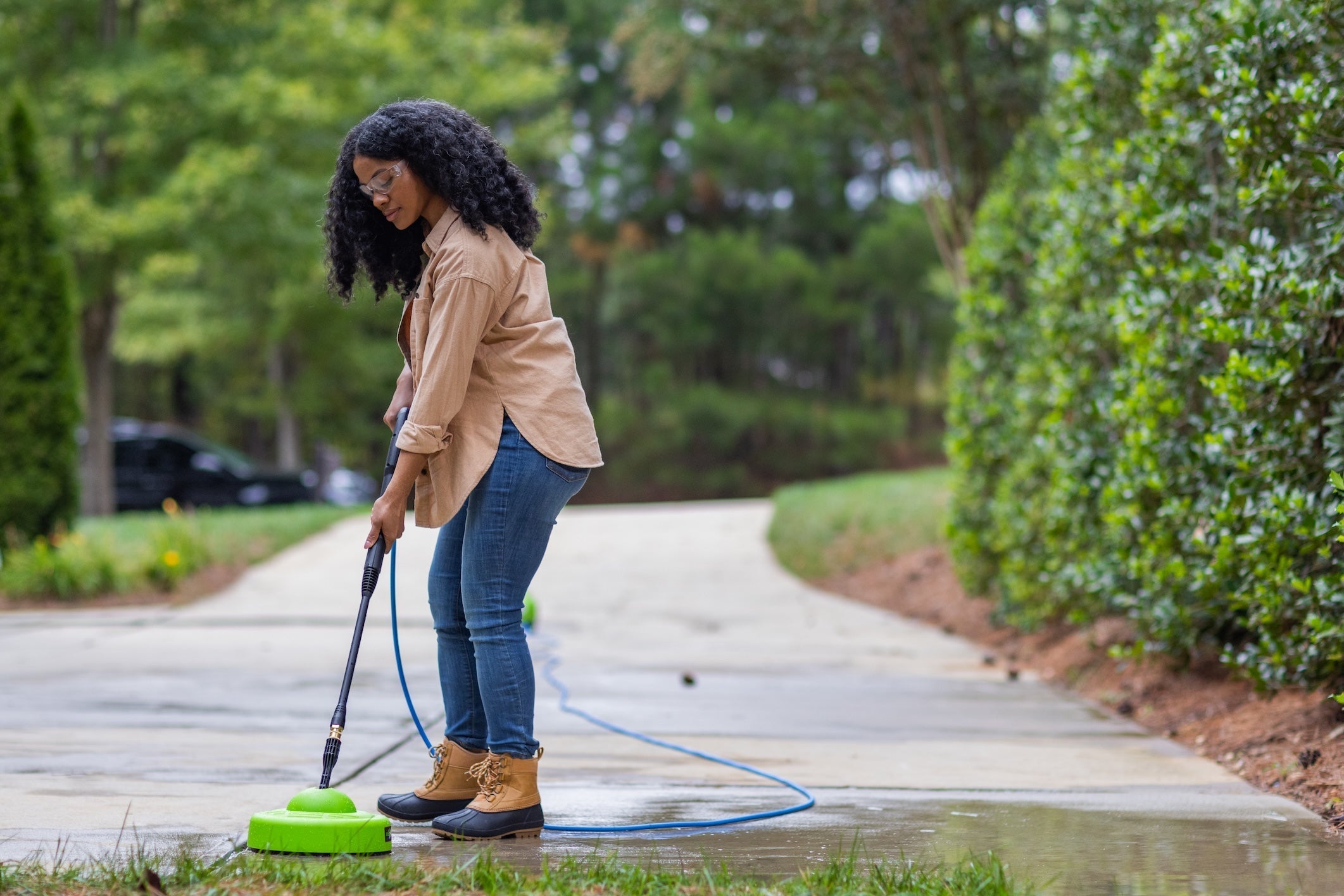
Surface cleaner attachments are not required but make cleaning easier. They look like a flat disk and connect to the wand. They spread the water evenly and clean faster, especially on large driveways.
Preparing Your Driveway
Preparation is key to a safe and effective job.
Clear The Area
Remove all vehicles, toys, and outdoor furniture from the driveway. Sweep away loose debris like leaves, gravel, or dirt.
Small stones and pebbles can become dangerous projectiles if hit by high-pressure water. If you have old leaves, remove them before starting. Even tiny bits of debris can cause streaks or block the washer nozzle.
Protect Surrounding Areas
Cover nearby plants, walls, or doors with plastic sheeting. High-pressure water can damage paint or delicate surfaces.
If you have flowerbeds or shrubs next to the driveway, anchor the plastic with rocks or stakes. For doors and windows, use painter’s tape to secure the sheeting. If you’re working near a garage, close the doors to protect items inside.
Treat Stains
If your driveway has oil stains, apply degreaser or detergent. Let it sit for 10–15 minutes before washing. For mold or algae, use a cleaner designed for outdoor surfaces.
For best results, scrub the stain lightly after applying detergent. This helps the cleaner soak in and break up the stain. Don’t rush this step; waiting gives the chemicals time to work.
Check Weather
Avoid pressure washing in heavy rain or extreme heat. Mild, dry days are best. Wind can blow debris onto your clean driveway.
If you pressure wash on a windy day, water may splash onto walls, windows, or plants. High temperatures can make water evaporate too quickly, leaving streaks. Cold weather can cause water to freeze in cracks, which may lead to damage.

Credit: puresealservices.co.uk
Step-by-step: How To Pressure Wash A Driveway
Follow these steps for the best results.
1. Connect Equipment
Attach your garden hose to the pressure washer. Make sure all connections are tight to avoid leaks. If using an electric washer, plug it into a safe outlet.
Check that the water supply is strong enough. If your hose is kinked or the water pressure is low, the washer will not work properly. For gas washers, check the oil and fuel levels before starting.
2. Select The Right Nozzle
Start with a 25° nozzle for general cleaning. Switch to a 15° nozzle for stubborn stains. The wrong nozzle can damage concrete or leave streaks.
Nozzles are color-coded for easy identification. Green (25°) and yellow (15°) are most common. Avoid red (0°), which is too strong and can etch surfaces. White (40°) is gentle and good for rinsing.
3. Test The Pressure
Before you begin, test the pressure on a small, hidden area. This helps you see if the water is too strong.
If the concrete chips or you see lines, lower the pressure or switch to a wider nozzle. Testing prevents costly mistakes and gives you confidence before tackling larger sections.
4. Start Washing
Hold the pressure washer wand about 12–18 inches from the surface. Work in sections, moving slowly and evenly. Start at the highest point and move downward. This prevents dirty water from running over cleaned areas.
If your driveway slopes, always start at the top. Overlapping strokes helps ensure no spots are missed. If you move too quickly, dirt can remain and make the driveway look patchy.
5. Use Detergent (if Needed)
Apply detergent with the washer’s soap nozzle. Let it sit for 5–10 minutes, but don’t let it dry. Then switch to the cleaning nozzle and rinse thoroughly.
If you use too much detergent or let it dry, you may need to wash again to remove residue. Always follow the instructions on the detergent label.
6. Focus On Stains
For tough spots, use a surface cleaner attachment. It covers more area and delivers even pressure. For deep oil stains, scrub with a brush after applying degreaser.
Surface cleaners are especially useful for large driveways or high-traffic areas. They prevent streaks and save time. For smaller stains, a hand brush can help loosen dirt before washing.
7. Rinse Thoroughly
After cleaning, rinse the driveway with clean water. Make sure all detergent is washed away.
If you leave soap or chemicals behind, they can attract more dirt or harm plants. Double-check that water flows evenly and no puddles remain.
8. Let Dry
Allow the driveway to dry for several hours. Avoid parking or walking on it until dry.
Drying times depend on weather, material, and thickness. Walking or driving on wet concrete can leave marks or cause new stains.
Tips For Better Results
Pressure washing seems straightforward, but small mistakes can ruin your results. Here are tips many beginners miss:
- Overlap your strokes: Cover each section slightly twice to avoid streaks.
- Keep a steady pace: Moving too fast leaves patches; too slow can damage surfaces.
- Don’t aim at cracks: High pressure can worsen small cracks.
- Mind the runoff: Water may carry dirt onto grass or flowerbeds. Use barriers if needed.
- Clean your equipment: Rinse the washer and hoses after use to prevent clogs.
One overlooked tip: avoid washing during midday when the sun is strong. Sunlight dries the water and detergent too quickly, leading to streaks. Early morning or late afternoon is better.
If you notice puddles forming, use a broom to push water toward the street or drain. Standing water can cause stains and attract bugs.
After finishing, check the driveway for any missed spots. Sometimes, dirt hides in corners or under bushes. Walk around and inspect from different angles.
Common Mistakes To Avoid
Pressure washing can cause damage if done incorrectly. Here are frequent errors:
- Using too much pressure: This can etch concrete and strip paint.
- Wrong nozzle choice: A zero-degree nozzle is too strong for driveways.
- Skipping prep: Not sweeping or protecting plants leads to poor results.
- Letting detergent dry: Dried soap leaves sticky residue.
- Ignoring safety gear: Water jets can cause injury.
- Washing in bad weather: Rain makes cleaning pointless and wind spreads debris.
Another common mistake is not checking the water supply. If the hose is blocked or the washer lacks enough pressure, cleaning takes much longer.
Some people try to wash too quickly, thinking speed will save time. In fact, rushing creates uneven results and can damage surfaces. Patience pays off.
If you see cracks, avoid blasting water directly at them. Water can seep inside and cause further damage, especially in cold climates.
How Often Should You Pressure Wash?
Most driveways need cleaning once or twice a year. If you live in a rainy or dusty area, you may need to wash more often. Oil spills, mold, or heavy traffic also mean more frequent cleaning.
If you notice stains appearing quickly, try to spot-clean with a brush and detergent between pressure washing sessions. Regular sweeping reduces the need for deep cleaning.
Driveways under trees may collect sap or leaves, which cause stains and slippery spots. In these cases, cleaning every six months is wise.
Pressure Washing Different Driveway Materials
Not all driveways are made of concrete. Each material needs a different approach.
| Material | Recommended PSI | Special Considerations |
|---|---|---|
| Concrete | 2500–3500 | Can withstand high pressure, but avoid cracks |
| Asphalt | 2000–2500 | Use lower pressure, avoid washing loose edges |
| Pavers | 2000–3000 | Protect joint sand, don’t blast corners |
| Brick | 1500–2500 | Gentle pressure, avoid washing mortar joints |
Concrete is the strongest, so you can use higher PSI. For asphalt, use less pressure to avoid breaking the surface. Pavers and brick need careful cleaning; too much pressure can loosen the sand or mortar between pieces.
For pavers, avoid spraying directly at the joints. Water can wash away the sand and make the pavers shift. You may need to re-sand joints after cleaning.
Brick driveways require gentle pressure. Mortar can crumble if hit with a strong stream. Always test a small area and use the widest nozzle.
Safety Tips For Pressure Washing
Pressure washers are powerful tools. Use them safely to avoid injury:
- Wear goggles and gloves to protect your eyes and hands.
- Keep children and pets away during cleaning.
- Never point the wand at people or animals.
- Check electrical cords for damage if using an electric washer.
- Don’t use ladders; the kickback can cause falls.
- Read the manual for your machine before starting.
Many people don’t realize that water at high pressure can cut skin or damage property. Stay alert and use common sense.
If you have allergies or sensitive lungs, avoid using harsh chemicals. Some detergents produce fumes that can cause irritation.
Always turn off the washer before changing nozzles or moving the machine. If you drop the wand, pick it up carefully and check for damage.
Handling Stubborn Stains
Some stains need extra effort. Here’s how to tackle them:
Oil Stains
Oil stains are common and tricky. Use a degreaser designed for concrete. Apply it, wait 10–15 minutes, then scrub with a brush. Rinse with high-pressure water. Repeat if needed.
For older stains, you may need to repeat the process several times. Some stains never disappear completely, but you can lighten them and prevent spreading.
Mold And Algae
Apply a mold remover or bleach solution (mix one part bleach to ten parts water). Let it sit for a few minutes, then rinse thoroughly. Avoid using bleach near plants.
For heavy mold, use a brush to loosen growth before washing. If mold returns quickly, check for drainage problems or shady spots.
Tire Marks
Use a strong detergent and scrub with a stiff brush. Pressure wash with a 15° nozzle.
Tire marks can be stubborn if left for months. For new marks, cleaning is easier. If you drive often, clean tire marks regularly to prevent buildup.
Paint Spills
If paint is fresh, use a paint remover and scrape gently. Old paint may need sandblasting, which is best left to professionals.
Some paints are easier to remove than others. Latex paint comes off with detergent and scrubbing, while oil-based paint needs special remover. Avoid scraping too hard, which can damage the driveway.
Eco-friendly Pressure Washing
Pressure washing uses a lot of water—sometimes up to 15 gallons per minute. To reduce environmental impact:
- Use biodegradable detergents.
- Collect dirty runoff if it contains chemicals.
- Wash on days when water won’t flow into storm drains.
- Sweep first to avoid washing large debris into drains.
- Maintain your pressure washer to avoid leaks.
Some cities have rules about water use and runoff. Check local guidelines before starting.
If you want to save water, wash only the dirty spots and rinse the rest with a garden hose. Install a rain barrel to collect water for rinsing.
After cleaning, dispose of dirty water safely. If you used chemicals, don’t let runoff enter storm drains. You can use sandbags or barriers to direct water away.
When To Hire A Professional
DIY pressure washing saves money, but hiring a pro has advantages:
- Professionals have high-end equipment and know how to handle tough stains.
- Large driveways or deep stains may need commercial tools.
- Hiring a pro can prevent accidental damage.
- If you’re short on time or unsure about technique, consider expert help.
Professional pressure washing typically costs $150–$300 for an average driveway. Some companies offer guarantees or eco-friendly options. Always check reviews and ask about insurance.
Hiring a pro is helpful if you have a steep driveway, lots of stains, or delicate materials. Professionals can also seal the surface after cleaning, saving you extra time.
Comparing Diy Vs Professional Pressure Washing
Here’s a quick comparison:
| Factor | DIY | Professional |
|---|---|---|
| Cost | $50–$200 (rental, supplies) | $150–$300 (service fee) |
| Time | 2–4 hours | 1–2 hours |
| Quality | Varies by skill | Consistent, high-quality |
| Risk | Possible damage if unskilled | Low; insured professionals |
DIY is cheaper but comes with risks. If you’re not confident or your driveway needs heavy cleaning, professional help might be best.
Another point: professionals often use hot-water washers, which remove grease and oil faster. If your stains are very stubborn, hot water can make a big difference.
Credit: www.homedepot.com
Troubleshooting Common Problems
Sometimes things go wrong. Here’s how to handle common issues:
Low Pressure
- Check hose connections.
- Clean the nozzle; debris can block water flow.
- Make sure the washer isn’t overloaded.
If the water supply is weak, check for kinks or leaks in the hose. For gas washers, check the engine and fuel.
Streaks
- Overlap cleaning strokes.
- Avoid washing in direct sunlight; it dries soap too fast.
- Use a surface cleaner for even results.
If streaks remain, rinse again with a wide nozzle and inspect for soap residue.
Leftover Stains
- Try a stronger detergent or repeat cleaning.
- Use a brush for tough spots.
For deep stains, patience and repeated treatment work best. If stains persist after two or three attempts, consider professional help.
Equipment Failure
- Read the manual for troubleshooting tips.
- Call for repair if the washer leaks or won’t start.
Many problems can be fixed by cleaning filters and checking for loose parts. If the washer is old, some issues may need a technician.
Aftercare And Maintenance
Once your driveway is clean, keep it looking good:
- Sweep regularly to prevent buildup.
- Treat new stains quickly.
- Consider sealing concrete to protect it from water and stains.
- Clean your pressure washer after each use.
Sealants last 2–3 years and make future cleaning easier. You can buy sealant at hardware stores and apply it with a roller or sprayer.
If you notice cracks after cleaning, fill them with concrete filler or asphalt patch. Small repairs prevent bigger problems later.
Cleaning your pressure washer is important. Flush the system with clean water, check hoses and tips for clogs, and store the machine in a dry place.
Real-life Example: Transforming A Driveway
Let’s look at a real case. Sarah, a homeowner in Atlanta, pressure washed her driveway after years of neglect. She rented a gas pressure washer (3200 PSI) and used a surface cleaner. After sweeping and applying degreaser, she cleaned her 800 square foot driveway in about 3 hours.
Sarah’s results:
- Removed 90% of oil stains
- Cleared mold and algae
- Improved curb appeal; neighbors complimented her
- Saved $200 compared to hiring a pro
Sarah learned to overlap strokes and not let soap dry. Her biggest mistake was aiming at cracks, which made them worse. She plans to fill cracks and seal her driveway next.
Sarah also found that working early in the morning helped avoid streaks from sun-dried water. She wore gloves and goggles after noticing bits of debris flying up. Her driveway now looks bright and clean, and she feels more confident doing maintenance herself.
Non-obvious Insights For Beginners
- Surface cleaners speed up the job: Many beginners waste time using only the pressure wand. Surface cleaner attachments clean more evenly and faster.
- Don’t ignore cracks and holes: High-pressure water can worsen damage. Fill cracks before washing, or avoid those spots.
- Test detergents on a small area: Some cleaners can discolor certain materials. Always test first.
- Pressure washing is noisy: Warn neighbors and use ear protection if needed.
- Dry weather is best: Moisture can make mold spread after cleaning.
Another tip: keep the washer moving at all times. Holding the wand still can create marks or damage. If you need a break, turn off the washer first.
If you have extra detergent after finishing, store it safely out of reach of children and pets.
Frequently Asked Questions
How Long Does It Take To Pressure Wash A Driveway?
Most driveways take 2–4 hours to clean, depending on size and stains. Renting a surface cleaner can cut time in half.
Can Pressure Washing Damage Concrete?
Yes, using too much pressure or the wrong nozzle can etch concrete. Always test on a small area and keep the wand moving.
What’s The Best Detergent For Driveway Cleaning?
Look for biodegradable driveway detergents. For oil stains, use a concrete degreaser. Avoid harsh chemicals near plants.
Do I Need To Seal My Driveway After Pressure Washing?
Sealing concrete protects it from water, stains, and mold. It’s recommended every 2–3 years, especially if your driveway gets heavy traffic.
How Much Water Does Pressure Washing Use?
Pressure washers use 8–15 gallons per minute. That’s up to 900 gallons for a large driveway. Use eco-friendly detergents and avoid runoff into storm drains. For more tips, check this guide from EPA.
Pressure washing your driveway is one of the easiest ways to boost your home’s appearance and safety. With the right tools and technique, you can achieve results that last. Take your time, follow each step, and avoid common mistakes. Whether you do it yourself or hire a pro, your driveway will look cleaner and brighter for months to come.