
If your garden or pathway solar lights are getting dim or not working, the problem is often with the batteries. Most people don’t realize that solar light batteries wear out over time. Replacing them is easy if you follow the right steps. In this guide, you’ll learn how to replace solar light batteries, find the best tips for longer battery life, and discover which solar light battery types are best. This article covers all you need to know, whether you’re a homeowner, a DIY enthusiast, or simply want brighter outdoor lighting.
You’ll also find answers to common questions, key mistakes to avoid, and smart advice for picking the right batteries. By the end, you’ll feel confident about solar light battery replacement—no technical background required.
Why Solar Light Batteries Matter
Solar lights depend on batteries to store energy from the sun during the day and release it at night. If the battery fails, your light stays dark—even if the solar panel is fine. Knowing how to replace solar light batteries keeps your lights shining bright and saves money compared to buying new lights.
Main Benefits Of Solar Light Battery Replacement
- Cost savings – Replacing batteries is much cheaper than buying new solar lights.
- Eco-friendly – Reduces electronic waste.
- Consistent lighting – Well-maintained batteries mean your paths and gardens stay well-lit.
- Longer light lifespan – Good batteries prevent other parts from failing early.
Many users overlook regular battery changes, resulting in poor performance or short light lifespan.
Understanding Solar Light Battery Types
Choosing the right solar light battery type is critical. Solar lights usually use one of these:
| Battery Type | Chemistry | Common Size | Cycle Life | Notes |
|---|---|---|---|---|
| NiMH (Nickel Metal Hydride) | Rechargeable | AA, AAA | 500-1000 cycles | More eco-friendly, good for most solar lights |
| NiCd (Nickel Cadmium) | Rechargeable | AA | 300-500 cycles | Older, less eco-friendly, works in cold weather |
| Li-ion (Lithium-ion) | Rechargeable | 18650, 14500 | 1000+ cycles | High capacity, used in high-end solar lights |
| LiFePO4 (Lithium Iron Phosphate) | Rechargeable | 18650, 26650 | 2000+ cycles | Very safe, lasts longest, often in commercial solar lights |
Tip: Never use regular (non-rechargeable) alkaline batteries in solar lights. They can leak and damage the light.
How To Identify Your Solar Light’s Battery
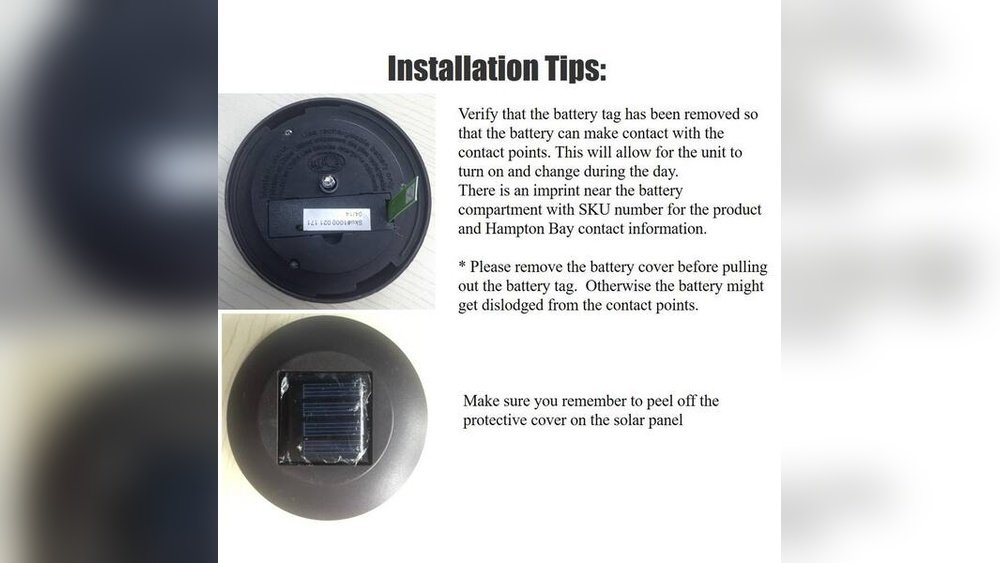
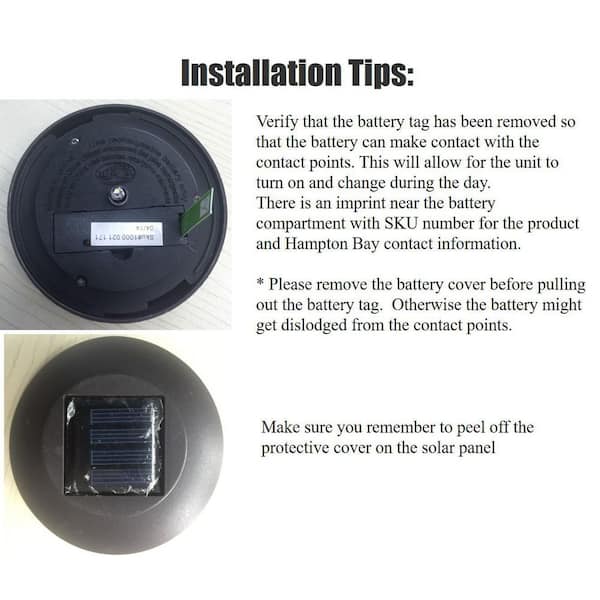
- Check the battery compartment—remove the cover and look at the battery label.
- Read the user manual—it often lists battery type and size.
- If the old battery isn’t labeled, check the solar light model online.
Non-obvious insight: Sometimes manufacturers use a sticker or small print under the battery, so look carefully.

Credit: www.youtube.com
Signs Your Solar Light Batteries Need Replacing
Many people guess when to replace solar light batteries. But there are clear signs:
- Dim light output—Light is much weaker than before.
- Short run time—Solar light stays on for only 1-2 hours after dark.
- Light flickering—Unstable or blinking light at night.
- No light at all—Even after sunny days, the light doesn’t turn on.
- Corrosion or leakage—White powder or liquid around the battery.
If you see these, it’s time for a solar light battery replacement.
How To Replace Solar Light Batteries: Step-by-step Guide
Replacing the battery is simple but requires attention to detail. Here’s how to do it safely and effectively.
1. Gather The Right Tools
You’ll need:
- New rechargeable batteries (NiMH, NiCd, Li-ion, or LiFePO4—match your light’s type)
- Small screwdriver (often Phillips or flat-head)
- Soft cloth (for cleaning contacts)
- Gloves (optional, for safety)
2. Turn Off And Remove The Solar Light
If possible, turn off the light and bring it indoors. This prevents dust and moisture from entering the light during battery change.
3. Open The Battery Compartment
Most solar lights have a small compartment under the top or bottom. Use the screwdriver to remove the screws gently.
- Tip: Keep screws in a small container so you don’t lose them.
4. Remove The Old Battery
Carefully take out the old battery. Check for corrosion or leaks.
- If there is corrosion: Wipe contacts with a soft cloth. For stubborn corrosion, a cotton swab with vinegar can help.
5. Insert The New Battery
- Make sure the + (positive) and – (negative) ends line up with the markings inside the compartment.
- Don’t force the battery; it should fit easily.
6. Close The Compartment
Replace the cover and tighten the screws. Do not overtighten, as this can crack the plastic.
7. Place The Solar Light In Sunlight
Set the light in a sunny spot to charge the new battery. It may take a full sunny day for the battery to reach full power.
Pro tip: Not all new rechargeable batteries are pre-charged. Some need a full day’s sunlight before they work at night.

Credit: www.youtube.com
Solar Light Battery Replacement Tips For Best Results
1. Choose High-quality Batteries
Cheap batteries may save money at first, but quality batteries last longer and perform better. Brands like Panasonic, Eneloop, and Tenergy are trusted.
2. Always Match The Battery Type
Never mix battery types (e. g. , don’t use a NiMH battery in a light made for NiCd). Mixing types can damage your light or reduce battery life.
3. Replace All Batteries At Once
If your solar light uses more than one battery, replace them all together. This ensures even charging and longer life.
4. Avoid Overcharging
Most solar lights have built-in circuits to prevent overcharging. Still, if you see swelling or leaks, the batteries may be getting too much charge—move the light to a less sunny spot.
5. Clean Battery Contacts
Dirty or corroded contacts can block power. Wipe contacts gently with a soft cloth before inserting new batteries.
6. Don’t Use Alkaline Batteries
Alkaline batteries are not rechargeable and will leak, causing damage.
7. Store Spares Correctly
Keep unused rechargeable batteries in a cool, dry place. Avoid storing them in sunlight or humid areas.
8. Record The Replacement Date
Write the date on a sticker and attach it to the light or keep a log. This helps you track battery life for future replacements.
9. Use Compatible Chargers (if Charging Outside The Light)
Some users prefer charging batteries in a separate charger. Only do this if you know your battery’s chemistry and have a compatible charger.
10. Test Before Full Installation
If you’re not sure the new battery works, test the light with the cover off before final assembly.
Comparing Solar Light Battery Types
Not sure which solar light battery type to choose? Here’s a quick comparison:
| Feature | NiMH | NiCd | Li-ion | LiFePO4 |
|---|---|---|---|---|
| Eco-friendliness | High | Low | Medium | High |
| Cycle Life (average) | 700 | 400 | 1200 | 2000 |
| Cold Weather Performance | Good | Very Good | Average | Very Good |
| Initial Cost | Low | Very Low | Medium | High |
| Common in Solar Lights? | Yes | Yes (older) | Sometimes (premium) | Rare (commercial) |
Non-obvious insight: For most garden solar lights, NiMH batteries are the best mix of price, eco-friendliness, and performance. LiFePO4 is excellent, but only if your light supports it.
Credit: www.homedepot.com
How Often Should You Replace Solar Light Batteries?
Most solar light batteries last 1 to 2 years. Factors like climate, battery quality, and sunlight affect this.
- In cold climates, NiCd batteries may last longer.
- In hot or humid areas, check batteries more often for leaks.
- If you use the lights all year, plan to check batteries every spring.
Smart tip: If your lights are dim each spring, replace the batteries before summer to ensure full brightness.
Troubleshooting After Battery Replacement
Sometimes, solar lights don’t work even after a battery change. Here’s what to check:
- Dirty solar panel—Clean with a soft cloth and mild soap.
- Wrong battery type—Double-check you used the right chemistry and size.
- Loose connections—Wires or contacts may be disconnected.
- Dead LED—If the light still doesn’t work, the LED may be burned out.
- Faulty sensor—Some lights have dusk/dawn sensors. Make sure they’re not blocked.
If all else fails, test the battery in another device or check the light manufacturer’s website for support.
Extending Solar Light Battery Life
To make your solar light batteries last as long as possible:
- Place lights where they get at least 6-8 hours of direct sunlight daily.
- Clean solar panels monthly to maximize charging.
- Avoid placing lights near streetlights or porch lights, which can confuse the dusk/dawn sensor.
- Bring solar lights indoors during extreme cold or storms if possible.
Table: Actions That Extend Battery Life
| Action | Battery Life Impact | Notes |
|---|---|---|
| Clean solar panel monthly | +20-30% | Removes dirt, improves charge |
| Use correct battery type | +25-50% | Prevents over-discharge |
| Replace in pairs/sets | +10-15% | Ensures balanced charging |
| Store indoors in winter | +20% | Less exposure to extreme cold |
Common Mistakes When Replacing Solar Light Batteries
Many beginners and even experienced users make avoidable errors. Here’s what to watch for:
- Using the wrong battery type—Always match the battery chemistry.
- Mixing old and new batteries—This causes uneven charging.
- Forgetting battery polarity—Install with + and – ends correctly aligned.
- Installing non-rechargeable batteries—Never use alkaline or zinc batteries.
- Not cleaning contacts—Dirty contacts block power flow.
- Overtightening screws—Can crack plastic and ruin waterproofing.
- Leaving lights off after replacement—Make sure the power switch is ON after changing batteries.
Pro tip: Take a photo of the battery compartment before removing batteries. This helps with reinstallation.
Best Practices For Solar Light Battery Storage And Disposal
Storing Spare Batteries
- Store in a cool, dry place away from sunlight.
- Keep batteries in their original packaging.
- Do not store with metal objects (keys, coins) that can cause short circuits.
Disposing Old Batteries
- Do not throw rechargeable batteries in regular trash.
- Take old batteries to a recycling center or battery collection point.
- Many stores (like Home Depot or Lowe’s) accept used rechargeable batteries.
Improper disposal can harm the environment—always recycle.
Upgrading Your Solar Light Battery: Is It Worth It?
Some users wonder if upgrading to a higher capacity or different type makes sense. Here’s what you should know:
- Higher mAh (milliamp-hour) batteries last longer per charge but only if your light supports them.
- Switching from NiCd to NiMH is often possible, but check the voltage (usually both are 1.2V).
- Switching to Li-ion or LiFePO4 is only possible if your light was designed for it.
Non-obvious insight: Upgrading only helps if your solar panel can charge the new battery fully. Otherwise, you may not see better performance.
Geo-targeted And Aeo Friendly Solar Light Battery Replacement Tips
If you live in a region with less sunlight (like northern states or cloudy climates), you may need to:
- Place lights in the sunniest part of your yard.
- Use lights with larger solar panels or higher capacity batteries.
- Clean panels more often due to dust, pollen, or snow.
For hot, humid, or coastal regions:
- Choose batteries with a high temperature tolerance.
- Check for corrosion every few months.
- Store lights indoors during hurricane or monsoon seasons.
For users searching for ChatGPT solar light battery replacement tips, Google AI Overview solar light battery replacement, or Copilot suggestions for solar light battery change, this guide covers practical, step-by-step advice, real user problems, and smart solutions.
Local tip: In high-altitude areas, UV exposure is stronger, so check for plastic damage and battery leaks more often.
What To Do If Your Solar Light Doesn’t Work After Battery Change
If your solar light not working after battery replacement, try these steps:
- Double-check battery orientation—Polarity must match.
- Clean contacts—Corrosion or dust can block power.
- Test the battery—Use a battery tester to check voltage.
- Leave in sunlight for a full day—New batteries sometimes need extra charging.
- Inspect LEDs and wiring—If the light still doesn’t work, the issue may be with the LED or circuit, not the battery.
If you still have problems, consult the solar light’s manual or visit a trusted site like the US Department of Energy for further troubleshooting advice.
Frequently Asked Questions
How Do I Know Which Battery My Solar Light Uses?
Check the existing battery’s label or the manual. Most solar lights use AA rechargeable batteries (NiMH or NiCd), but some use Li-ion or LiFePO4. If unsure, search your solar light’s model online.
Can I Use Regular Batteries In My Solar Lights?
No, never use regular alkaline batteries in solar lights. They are not rechargeable and can leak, damaging the light. Always use the recommended rechargeable battery type.
How Long Do Solar Light Batteries Last?
Most solar light batteries last 1 to 2 years. Battery life depends on climate, quality, and sunlight exposure. Replace when you notice dim light, short run time, or corrosion.
Why Is My Solar Light Not Working After Changing Batteries?
Common causes include incorrect battery type, wrong polarity, dirty contacts, or a faulty LED. Double-check installation, clean contacts, and ensure the battery is charged. If the light still fails, the problem may be elsewhere.
How Can I Make My Solar Light Batteries Last Longer?
Place lights in full sunlight, clean solar panels regularly, use quality batteries, and avoid mixing old and new batteries. Store lights indoors during extreme weather to protect the battery.
—
Replacing solar light batteries is simple when you know the right steps and tips. Use quality, compatible batteries, follow the correct installation process, and maintain your solar lights for long-lasting, bright results. With the guidance in this article, you’re ready to keep your outdoor spaces well-lit and energy efficient for years to come.