
Reading a lawn fertilizer bag label sounds simple, but most people find it confusing. There are numbers, strange terms, and small print. If you want a healthy lawn, understanding the label is essential. It’s not just about grabbing any bag from the shelf—what’s inside can make or break your lawn’s health.
In this guide, you’ll learn how to read a lawn fertilizer bag label, understand what each part means, and make smart choices for your yard. Whether you’re new to lawn care or just want better results, you’ll find clear explanations and practical advice here.
Why Lawn Fertilizer Labels Matter
Many homeowners believe all fertilizers are the same. But this isn’t true. Each fertilizer bag has unique ingredients and instructions that affect how it works. The label tells you the nutrient content, application rate, and safety information. If you ignore the label, you may use too much or too little, harm your grass, or waste money.
Understanding the label helps you:
- Select the right product for your lawn’s needs.
- Apply the fertilizer correctly.
- Avoid common mistakes like burning your grass or polluting water.
Learning to read these labels is a skill that pays off every season.
Decoding The Fertilizer Numbers: N-p-k
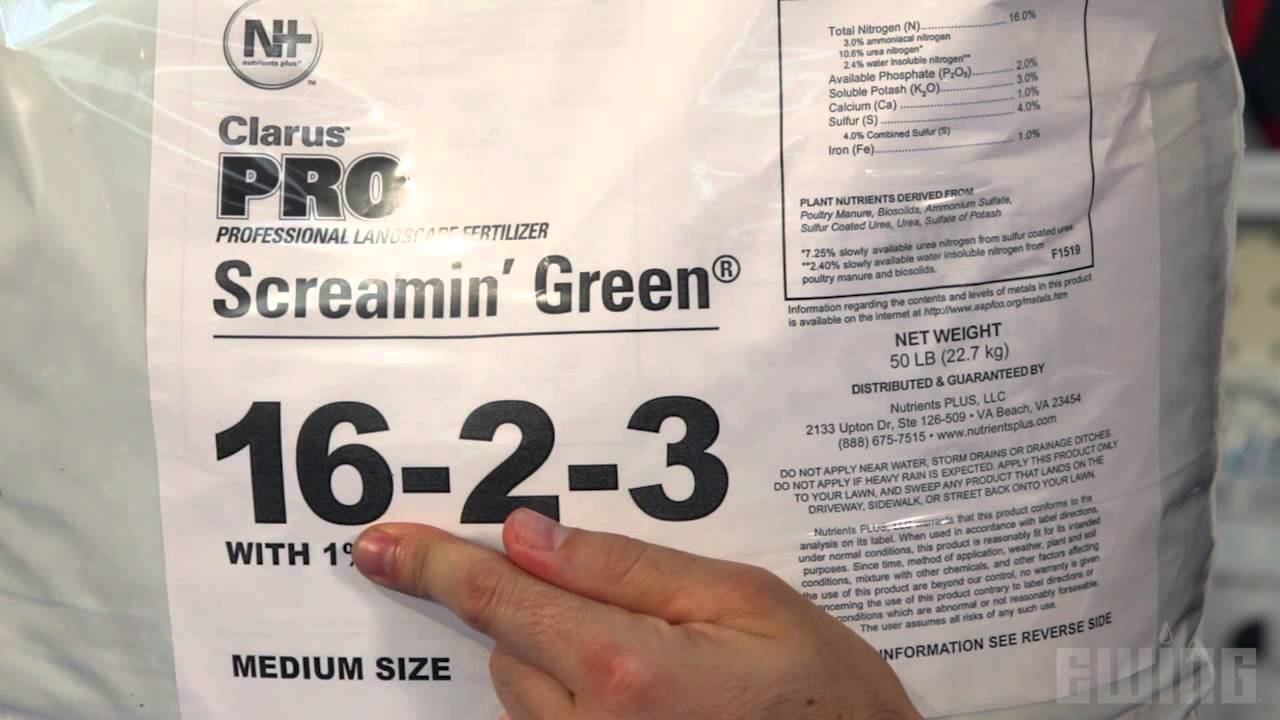
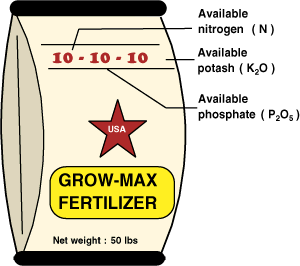
The first thing you’ll notice is a set of three numbers, such as 24-6-12 or 15-5-10. These numbers are called the N-P-K ratio. Each number shows the percentage of a major nutrient:
- N stands for Nitrogen. It helps grass grow fast and become green.
- P stands for Phosphorus. It supports root growth.
- K stands for Potassium. It helps the plant fight stress and disease.
If a bag says 20-10-5, it means:
- 20% nitrogen
- 10% phosphorus
- 5% potassium
The rest of the bag is made up of filler materials.
Example: Choosing The Right N-p-k Ratio
Suppose your lawn is yellow and slow-growing. You need more nitrogen, so choose a bag with a higher first number. If you just seeded your lawn, look for more phosphorus.
Here’s a simple table showing what each nutrient does:
| Nutrient | Main Benefit | When Needed Most |
|---|---|---|
| Nitrogen (N) | Green growth | Spring, after mowing starts |
| Phosphorus (P) | Root development | After seeding or sodding |
| Potassium (K) | Disease resistance | Before stressful weather |
Understanding Guaranteed Analysis
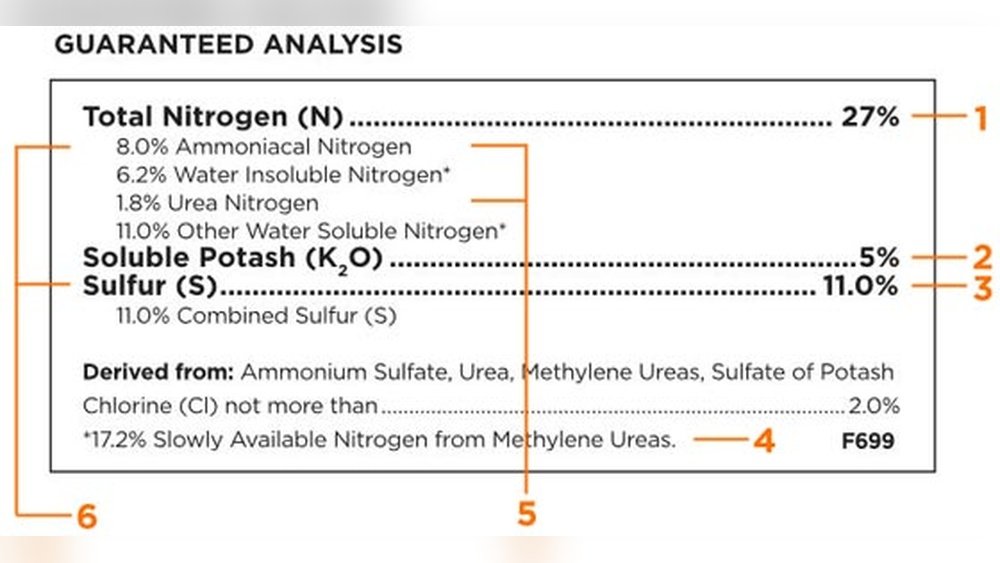
Below the N-P-K numbers, there’s a section called Guaranteed Analysis. This part shows exactly what’s in the bag. It lists nutrients, their percentages, and sometimes their source.
Typical guaranteed analysis includes:
- Total Nitrogen: May be divided into types, like slow-release or fast-release.
- Available Phosphate: The form of phosphorus plants can use.
- Soluble Potash: The form of potassium available for grass.
Some labels include secondary nutrients:
- Calcium
- Magnesium
- Sulfur
They might also list micronutrients: iron, zinc, manganese, etc.
Example Guaranteed Analysis Section
Let’s look at a sample label:
| Nutrient | Percentage | Type |
|---|---|---|
| Total Nitrogen | 20% | 15% slow-release, 5% fast-release |
| Available Phosphate | 10% | Monoammonium phosphate |
| Soluble Potash | 5% | Potassium sulfate |
| Iron | 0.5% | Ferrous sulfate |
This section helps you see how quickly nutrients will be released and what extras your lawn gets.
Types Of Fertilizer: What The Label Tells You
Fertilizer bags usually mention the type of fertilizer. There are three main categories:
1. Synthetic (chemical) Fertilizers
Made in factories, these fertilizers act fast. The label often lists ammonium nitrate, urea, or similar chemicals.
2. Organic Fertilizers
Derived from natural sources like manure, bone meal, or compost. The label may highlight natural ingredients and sometimes state “organic certified.”
3. Slow-release Fertilizers
These are designed to feed grass over time. Look for words like controlled release, coated urea, or polymer-coated. The label shows how long nutrients last (weeks or months).
Comparing Fertilizer Types
Understanding the type helps you pick what’s best for your lawn goals. Here’s a quick comparison:
| Type | Speed | Best Use | Common Label Terms |
|---|---|---|---|
| Synthetic | Fast | Quick green-up | Urea, ammonium nitrate |
| Organic | Slow | Long-term health | Manure, bone meal |
| Slow-Release | Medium to slow | Consistent growth | Polymer-coated, controlled release |
Many beginners miss that slow-release fertilizers reduce the need for frequent applications and lower risk of grass burn.
Application Instructions And Rates
Every fertilizer label includes application instructions. This part is critical for safe and effective use. It tells you:
- How much to use per square foot or per 1,000 square feet.
- When to apply (spring, summer, fall).
- How to spread it (with a drop or broadcast spreader).
Application rates are often shown in pounds or kilograms. For example, “Apply 4 lbs per 1,000 sq. ft.” If you use too much, you may damage your lawn or harm the environment. Too little, and results will be poor.
Example Application Rate Calculation
Suppose your lawn is 5,000 sq. Ft. The label says to use 4 lbs per 1,000 sq. Ft.
You need: 4 x 5 = 20 lbs.
Many beginners forget to measure their lawn, leading to overuse. Always check your yard size before applying.
Safety And Environmental Warnings
Labels include warnings about safety and environmental protection. These are important for people, pets, and local wildlife.
Common warnings:
- “Keep out of reach of children.”
- “Do not apply near water sources.”
- “Wear gloves and wash hands after use.”
Some fertilizers can pollute rivers and lakes if applied before rain. Look for phrases like “Do not apply before heavy rain” or “Sweep excess from sidewalks.”
Ignoring these warnings is a frequent beginner mistake. Always follow them to protect your family and neighborhood.
Extra Ingredients: Micronutrients And Additives
Besides the main nutrients, some bags include micronutrients and additives. These help lawns in special ways:
- Iron: Makes grass greener.
- Sulfur: Helps nutrient absorption.
- Magnesium: Strengthens cell walls.
Additives may include:
- Herbicides: Weed killers.
- Insecticides: Bug control.
If the bag says “plus iron,” it’s meant for deeper green color. If it says “with weed control,” it’s a combination product.
Be careful: combination products can harm new grass or certain species. Read the label to check compatibility.
Reading The Fine Print: Registration And Certification
Every fertilizer sold in the US must be registered and follow regulations. The label usually includes:
- EPA registration number
- State certification
- Batch or lot number
This section proves the product meets safety and quality standards. If you see “OMRI Listed,” it’s certified organic. If there’s an EPA number, it’s approved for use.
Buying unregistered products is risky. Always check for these numbers, especially when shopping online.
How To Match Fertilizer To Your Lawn Needs
Reading the label is only half the job. You must also match the product to your lawn’s needs. Here’s how:
1. Identify Your Grass Type
Cool-season grasses (like fescue and bluegrass) need different nutrients than warm-season types (like Bermuda and zoysia).
2. Test Your Soil
A soil test tells you what nutrients are missing. Many extension services offer this for a small fee.
- Choose Based on Problems
- Yellow grass: Needs nitrogen.
- Thin roots: Needs phosphorus.
- Weak against disease: Needs potassium.
- Follow Seasonal Advice
Spring: Use high-nitrogen for green-up.
Fall: Use more potassium for winter strength.
Many homeowners skip soil testing. It’s a non-obvious step that saves money and improves results.
Comparing Label Claims: Marketing Vs Reality
Fertilizer bags often have marketing claims like “Feeds up to 3 months!” or “Quick green-up!” Sometimes these claims are true, sometimes not.
To judge these claims:
- Look at the guaranteed analysis for slow-release or fast-release nitrogen.
- Check for polymer-coated granules—these last longer.
- Ignore vague phrases like “superior results.” Focus on numbers and ingredients.
Here’s a table comparing marketing claims to real-world data:
| Claim | Label Evidence | Likely Reality |
|---|---|---|
| Feeds for 3 months | Slow-release nitrogen, polymer coating | Lasts 8–12 weeks in most climates |
| Quick green-up | High % fast-release nitrogen | Visible results in 3–7 days |
| Weed & feed | Includes herbicide in ingredients | Controls common broadleaf weeds |
Don’t rely only on catchy phrases. Double-check the guaranteed analysis and ingredient list.

Credit: lawncraftsupply.com
Practical Steps: Reading A Label From Start To Finish
Let’s walk through the whole process of reading a lawn fertilizer bag label:
- Locate the N-P-K ratio. Decide if the numbers match your lawn’s needs.
- Check the guaranteed analysis. Look for slow-release vs fast-release, and any extra nutrients.
- Review the application instructions. Calculate how much you need based on your lawn size.
- Look for safety warnings. Make sure you understand risks and recommended protection.
- Scan for registration numbers. Confirm the product is official and safe.
- Consider extra ingredients. Decide if you need weed control, insect protection, or micronutrients.
- Read any marketing claims. Match them to the analysis and ingredients.
This step-by-step approach prevents mistakes and maximizes lawn health.
Common Mistakes When Reading Fertilizer Labels
Even experienced homeowners make errors. Here are some pitfalls to avoid:
1. Ignoring Application Rates
Overuse can burn your lawn. Underuse means weak results.
2. Misreading N-p-k Numbers
Some people think higher numbers are always better. But too much nitrogen can cause thatch and disease.
3. Missing Fine Print
Skipping safety warnings or registration info leads to problems.
4. Using The Wrong Fertilizer Type
For example, using a high-nitrogen fertilizer in fall stresses grass instead of strengthening it.
5. Not Measuring Lawn Size
Guessing leads to wrong amounts. Always measure your yard.
Many beginners are surprised by how precise fertilizer use must be. Take your time with the label.
Real-world Example: Reading A Popular Bag Label
Let’s look at a common US fertilizer bag label and break it down:
Brand X Lawn Fertilizer
- N-P-K: 29-3-4
- Guaranteed Analysis:
- Total Nitrogen: 29% (14% slow-release, 15% fast-release)
- Available Phosphate: 3%
- Soluble Potash: 4%
- Iron: 0.3%
- Application Rate: 3.5 lbs per 1,000 sq. Ft.
- Type: Synthetic, with slow-release
- Safety: “Keep away from pets. Wear gloves.”
- Registration: EPA #12345, State Certified
What this label tells you:
- High nitrogen, good for spring green-up.
- Some slow-release, so it feeds over time.
- Low phosphorus, not ideal for new seeding.
- Contains iron for deep green color.
- Registered and safe, if used as directed.
Non-obvious Insights For Beginners
1. Slow-release Nitrogen Reduces Mowing Frequency.
Many people don’t realize that fertilizers with more slow-release nitrogen help grass grow steadily, not fast and uncontrollable. This means you mow less often.
2. Micronutrients Matter For Color And Disease Resistance.
Even if your lawn gets enough N-P-K, missing micronutrients (like iron or magnesium) can cause pale color or weak growth. Check for these in the label—most beginners skip them.
Tips For Reading Labels In Different Regions
Fertilizer laws and label formats can change from state to state or country to country. Some states require more detailed guaranteed analysis. If you move or buy online, look for:
- Local regulations: Some nutrients are restricted in certain areas.
- Seasonal recommendations: Climate affects what you need and when.
For example, Florida restricts phosphorus to protect water quality. Always check local rules if you’re unsure.
How To Use Label Information For Better Lawn Care
Once you understand the label, use this info to plan your lawn care year:
- Spring: High-nitrogen, some slow-release. Apply when grass starts growing.
- Summer: Lower nitrogen, more potassium. Helps grass survive heat.
- Fall: High potassium, less nitrogen. Prepares lawn for winter.
Tracking what you use and when helps avoid over-fertilizing and keeps your grass healthy.
Credit: www.youtube.com
Why You Should Keep The Bag Label
After applying fertilizer, keep the bag or take a photo of the label. If you ever have problems (like brown patches), you can check what was used. Also, if you want to repeat success, you’ll know the exact product.
Many beginners throw away the bag right after use. Save it for reference.
How To Find Reliable Label Information Online
Sometimes bags get damaged, or you want to compare products before buying. Reliable sources like EPA.gov offer info on fertilizer registration and ingredients. Manufacturer websites also post label details.
Avoid random forums or unverified advice. Stick to official or expert sites for label info.
Credit: morrisonlawn.com
Frequently Asked Questions
How Do I Know Which N-p-k Ratio Is Best For My Lawn?
Check your lawn’s condition and grass type. For general green-up, use a higher nitrogen ratio (first number). For new lawns, pick more phosphorus (second number). If your lawn faces stress, use higher potassium (third number). A soil test gives the most accurate answer.
What Does “slow-release” On The Label Mean?
Slow-release means the nutrients are released over time, usually weeks or months. This prevents sudden growth and reduces risk of burning your lawn. Look for terms like polymer-coated or controlled release in the guaranteed analysis.
Can I Use The Same Fertilizer Year-round?
No. Lawns need different nutrients in each season. Spring usually calls for high nitrogen. Fall needs more potassium. Using one fertilizer all year can weaken your grass or cause disease.
Are Organic Fertilizers Better Than Synthetic?
Organic fertilizers improve soil health and are safer for the environment. They work slower and may not green up grass as quickly. Synthetic fertilizers act faster but can cause runoff if misused. Choose based on your lawn goals and local regulations.
What Should I Do If I Lose The Fertilizer Bag Label?
If you lose the label, check the manufacturer’s website for product details. Many brands post full labels online. You can also contact your local extension office or refer to EPA.gov for safety and ingredient information.
Reading a lawn fertilizer bag label gives you control over your lawn’s health. Once you know how to decode the numbers, analysis, and instructions, you’ll avoid common mistakes and get better results. Take your time with each label, match it to your lawn’s needs, and keep records for future reference.
With this knowledge, your lawn will not only look better but also stay healthy season after season.