
Weeds growing between pavers can turn a beautiful patio, walkway, or driveway into an untidy mess. These tiny invaders not only spoil the look but can also damage the structure over time. Many people turn to harsh chemical weed killers, but these often harm the environment, pets, and even nearby plants. There’s good news: you can get rid of weeds naturally, using ingredients you may already have at home. This article will walk you through effective, science-backed ways to kill weeds between pavers without chemicals, and help you keep your outdoor spaces safe, green, and looking their best.
Understanding Why Weeds Grow Between Pavers
Weeds find their way into the smallest cracks and gaps. But why are pavers such a magnet for these stubborn plants? The answer lies in the tiny spaces between the stones. Dust, organic matter, and moisture settle there, creating a perfect environment for weed seeds to germinate. Sunlight heats up the gaps, and rainwater seeps in, helping weeds sprout quickly. Some common weeds that love these conditions include dandelions, crabgrass, and chickweed.
It’s also important to note that paver surfaces often receive less traffic than driveways, so seeds have a better chance to grow undisturbed. If the area isn’t cleaned regularly, the problem can get worse year after year. Natural methods work best when you understand what you’re up against, so knowing the weeds’ life cycle helps you act at the right time.
Why Go Natural? The Case Against Chemical Weed Killers
Many commercial weed killers contain glyphosate or other strong chemicals. These can kill weeds fast, but there’s a growing concern about their safety. Studies have linked some herbicides to health risks in humans and animals. Runoff from chemicals can pollute water sources and harm beneficial insects.
Natural weed control focuses on safe, non-toxic methods. These are better for your family, your pets, and the environment. They can be just as effective as store-bought solutions if you follow the right steps. In fact, many gardeners now prefer natural methods because they allow for frequent use without long-term damage.
Credit: www.gardeningetc.com
The Best Natural Methods For Killing Weeds Between Pavers
There is no single magic solution, but several natural methods work very well. Some are quick, while others need more patience. The best approach is often a combination.
1. Boiling Water
Pouring boiling water directly onto weeds is simple and highly effective. The heat destroys the plant cells on contact, causing the weed to wilt within hours.
- Boil a kettle or large pot of water.
- Carefully pour the boiling water directly onto the weeds, aiming for the roots.
- Repeat as needed, especially for larger or tougher weeds.
This method works well for patios and walkways but should be used with care near desired plants. It’s best to boil small batches and treat only a few weeds at a time to avoid damaging surrounding areas.
2. Vinegar Solution
Vinegar contains acetic acid, which dries out weeds. Household vinegar (5% acetic acid) can be effective, but for stubborn weeds, horticultural vinegar (20%) gives stronger results.
- Mix one part vinegar with one part water.
- For extra strength, add a few drops of dish soap (this helps the solution stick to leaves).
- Spray the mixture directly onto weeds on a dry, sunny day.
Vinegar works best on young, annual weeds. Avoid spraying on grass or flowers you want to keep, as it can harm any plant it touches.
3. Salt
Table salt (sodium chloride) can kill weeds by dehydrating them and making the soil inhospitable.
- Sprinkle a small amount of salt directly at the base of the weed.
- Or, dissolve one cup of salt in two cups of hot water and pour on weeds.
Salt should be used sparingly. Overuse can damage nearby plants and make soil infertile for a long time. Reserve this method for cracks far from lawns or garden beds.
4. Baking Soda
Baking soda is a gentle, effective way to kill weeds. The sodium content dries out the plant.
- Sprinkle baking soda generously onto the weed and into the cracks.
- Sweep any excess into the cracks with a broom.
Use baking soda only in areas where you don’t plan to grow anything else, as it affects soil health.
5. Manual Removal
Good old-fashioned pulling is still one of the most reliable ways to get rid of weeds.
- Pull weeds after rain, when soil is soft.
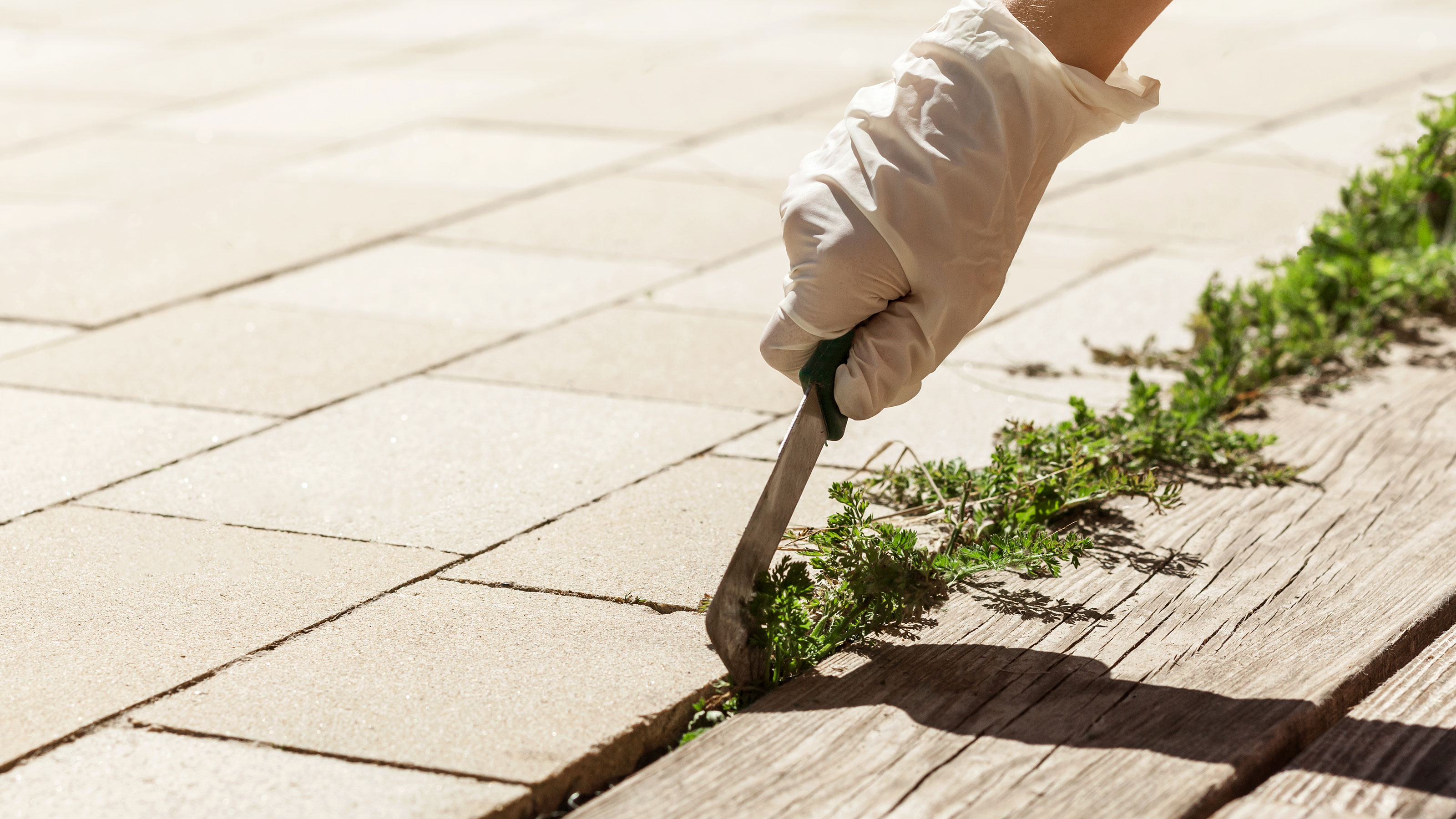
- Use a narrow tool or weeding knife to pry out the roots.
- Remove as much of the root as possible to prevent regrowth.
Manual removal is labor-intensive but gives long-lasting results, especially for deep-rooted weeds.
6. Corn Gluten Meal
Corn gluten meal acts as a pre-emergent herbicide. It stops weed seeds from sprouting but won’t harm established plants.
- Spread a thin layer of corn gluten meal between pavers in early spring.
- Water lightly to activate.
This method prevents new weeds rather than killing existing ones.
7. Flame Weeding
Flame weeders use propane to direct a brief burst of heat at weeds, causing their cells to burst. This method is fast and chemical-free.
- Sweep the flame slowly over the weeds until they wilt.
- Do not set weeds on fire; heat alone is enough.
Flame weeding is best for stone or brick pavers and should not be used near dry grass, mulch, or flammable materials.
8. Mulching The Gaps
Filling gaps with natural mulch (like wood chips or crushed shells) blocks sunlight and smothers small weeds.
- Sweep mulch into cracks after removing weeds.
- Replenish as needed.
Mulch also improves the look of your pavers and helps retain soil moisture.
9. Pressure Washing
A pressure washer can blast weeds and their seeds out of cracks.
- Use a narrow nozzle to target weeds.
- Sweep up debris after washing.
This method works best for large paved areas but may require re-sanding the joints afterward.
10. Re-sanding Or Regrouting
After cleaning out weeds, filling the gaps with polymeric sand or mortar makes it harder for weeds to return.
- Sweep sand or mortar into clean, dry joints.
- Mist with water to set.
Polymeric sand hardens and creates a barrier against new seeds, reducing future weed growth.
Comparing Natural Weed Killers: Effectiveness, Speed, And Safety
Choosing the best method depends on your priorities: speed, long-term results, or safety for pets and plants. The following table compares popular natural options.
| Method | Effectiveness | Speed | Pet/Plant Safety |
|---|---|---|---|
| Boiling Water | High (surface weeds) | Fast (hours) | Safe if targeted |
| Vinegar | Medium-High | Moderate (1-2 days) | Harmful to wanted plants |
| Salt | High (persistent) | Slow (days) | Harmful in excess |
| Baking Soda | Medium | Moderate (1-2 days) | Safe in small areas |
| Manual Pulling | High (with roots) | Varies | Very safe |
| Flame Weeding | High | Very fast (minutes) | Caution needed |
Step-by-step Guide: How To Kill Weeds Naturally Between Pavers
Every method has its process, but here’s a general workflow for best results:
- Identify the weeds. Are they annual or perennial? Deep-rooted or surface?
- Choose your method. Pick one or combine several based on the size and location of your paver area.
- Prepare the area. Sweep away debris for better access.
- Apply your chosen natural killer. For example, pour boiling water or spray vinegar.
- Remove dead weeds. Pull out wilted plants after a few days.
- Fill gaps. Use polymeric sand, mulch, or stones to block new seeds.
- Maintain regularly. Inspect every few weeks and repeat treatments as needed.
Practical Example
Imagine a patio with grass and dandelions in the cracks:
- Sweep the surface clean.
- Pour boiling water on visible weeds.
- Wait 24 hours, then pull dead plants and roots.
- Sweep polymeric sand into the cracks to fill gaps.
- Repeat boiling water every few weeks for new growth.
This process is safe, effective, and avoids chemicals completely.
Mistakes To Avoid When Killing Weeds Naturally
Natural methods are safer, but mistakes can reduce their effectiveness or cause new problems.
Overusing Salt Or Vinegar
Using too much salt or strong vinegar can damage your pavers and soil. Salt can wash into nearby lawns or gardens, killing wanted plants. Vinegar can cause paver discoloration if used repeatedly.
Ignoring Roots
Surface treatments (like boiling water or vinegar) kill leaves but may not reach deep roots. Always pull out roots after treatment to stop regrowth.
Flame Weeding In Dry Conditions
Using a flame weeder on a hot, windy day can start fires. Always wet the area first and keep a bucket of water nearby.
Delaying Maintenance
Waiting too long to remove weeds gives them time to go to seed. Early, regular action keeps the problem manageable.
Not Filling Gaps
Leaving cracks open invites new weed seeds. Filling with sand, mulch, or other materials creates a barrier and reduces future work.
How To Prevent Weeds From Returning
Killing weeds is only half the battle. Keeping them away requires smart prevention.
Keep The Area Clean
Sweep your pavers weekly to remove dirt, leaves, and seeds. Less organic matter means fewer weeds can take hold.
Re-sand Or Seal Joints
After cleaning, fill cracks with polymeric sand or mortar. This seals gaps and makes it hard for weeds to grow.
Use Landscape Fabric Under Pavers
If you’re laying new pavers, install a weed barrier fabric underneath. This adds a layer of protection that blocks roots.
Mulch Or Gravel Between Pavers
Covering gaps with mulch or fine gravel blocks sunlight and makes it harder for weeds to sprout.
Regular Spot Treatments
Keep a spray bottle of diluted vinegar handy for quick touch-ups on new growth.
Plant Ground Covers
For larger spaces, consider planting low-growing ground covers like creeping thyme or sedum. These fill gaps, crowd out weeds, and add beauty.
Data: Effectiveness And Regrowth Rates Of Natural Weed Killers
Recent studies compare regrowth rates after using different natural weed killers. The following table shows how often weeds regrow after the first treatment:
| Natural Method | Initial Kill Rate | Regrowth After 1 Month | Notes |
|---|---|---|---|
| Boiling Water | 95% | 20% | Repeat as needed |
| Vinegar (5%) | 85% | 35% | Best for young weeds |
| Salt | 90% | 15% | Limit use to cracks only |
| Baking Soda | 80% | 40% | Reapply monthly |
| Manual Removal | 100% | 10% | Most effective with roots |
As shown, manual removal and boiling water offer the best combination of initial kill and low regrowth, especially with regular follow-up.

Credit: www.youtube.com
Special Situations: Large Areas, Pets, And Kids
Different environments require different strategies. Here are some tips for unique situations.
Large Patios And Driveways
For large paved areas, spraying vinegar or boiling water is time-consuming. Instead, try these:
- Use a flame weeder or pressure washer for speed.
- Treat the area in sections to avoid fatigue.
- Ask a friend or family member to help for big jobs.
Pet And Kid Safety
If children or pets play on your patio, safety is crucial.
- Avoid using salt, which can harm paws and be tracked indoors.
- Use only plain boiling water or hand-pulling in play areas.
- Rinse the surface well after using vinegar to remove residue.
Dealing With Moss And Algae
Not all green growth is a weed. Moss and algae thrive in shade and moisture.
- Use a stiff brush and boiling water to scrub moss away.
- Improve drainage and sunlight to prevent regrowth.
Repairing Paver Damage
Some weeds can lift or crack pavers over time.
- After weed removal, reset any loose pavers.
- Fill gaps with sand or mortar to stabilize and prevent future weed entry.
Non-obvious Insights Beginners Miss
Most beginners focus only on visible weeds. However, two key things often go unnoticed:
- Weed seeds can lay dormant for years. Even after a full cleanup, seeds hidden in cracks can sprout later. Regular maintenance is essential.
- Water runoff spreads seeds. Rain can wash weed seeds from nearby lawns into paver gaps. Installing proper drainage or edging helps reduce this.
Understanding these points helps you stay ahead of the problem, not just react to it.
:max_bytes(150000):strip_icc()/ms-weeds-pavers-d5e634fb3d624606a9b89b653fe9ece6.jpg)
Credit: www.marthastewart.com
Combining Methods For Best Results
No single method works perfectly in all cases. Combining approaches gives the best long-term outcome.
For example:
- Boiling water for quick kills, followed by manual removal of roots.
- Corn gluten meal in early spring to stop new weeds, plus mulch to block sunlight.
- Pressure washing to clear big areas, then re-sanding to close gaps.
Try different methods, track your results, and adjust as needed. With patience, you’ll find the right mix for your space.
Real-world Example: A Homeowner’s Success
Sarah, a homeowner in Ohio, struggled with weeds in her brick patio for years. She wanted a solution safe for her kids and dog. Here’s what worked for her:
- She used boiling water every Saturday morning to wilt new weeds.
- After pulling the dead plants, she filled cracks with polymeric sand.
- She swept the patio weekly and used a small amount of vinegar for stubborn spots.
- Over one summer, weed growth dropped by 90%, and her patio stayed neat and safe.
Sarah’s story shows that natural methods, when used consistently, really work.
Environmental Impact: Why Natural Is Better
Natural weed control has a lower environmental footprint. Chemical herbicides can leak into storm drains and harm wildlife. Natural methods use ingredients that break down safely and don’t poison the soil or water.
Some local governments now restrict or ban chemical herbicide use in public spaces. By switching to natural solutions, you’re not just protecting your yard—you’re helping the planet.
For more on the environmental risks of herbicides, see this Wikipedia page on herbicides.
Frequently Asked Questions
What’s The Fastest Way To Kill Weeds Between Pavers Naturally?
Boiling water is the fastest natural method. It wilts weeds in hours and is safe if used carefully. For large areas, a flame weeder works quickly but requires caution.
Is Vinegar Safe For All Paver Types?
Vinegar can etch or discolor some stone, especially if used repeatedly. Test on a small, hidden area first, and avoid marble or limestone pavers. Rinse with water after application.
Can I Prevent Weeds From Coming Back Permanently?
No method guarantees permanent prevention, but regular cleaning, filling cracks with polymeric sand, and using pre-emergent products (like corn gluten meal) can greatly reduce regrowth.
Will Natural Methods Harm My Pets Or Garden Plants?
Boiling water and hand-pulling are safe for pets and nearby plants. Vinegar and salt can harm flowers, grass, and paws if misused. Always target only the weeds and avoid runoff.
How Often Should I Treat Weeds Between Pavers?
Treat as soon as you see weeds. Most natural methods need repeating every 2–4 weeks during the growing season for best results.
Natural weed control between pavers is simple, effective, and much safer for your family and the environment. With a little patience and regular care, you can enjoy a beautiful, weed-free patio or path all year round.