
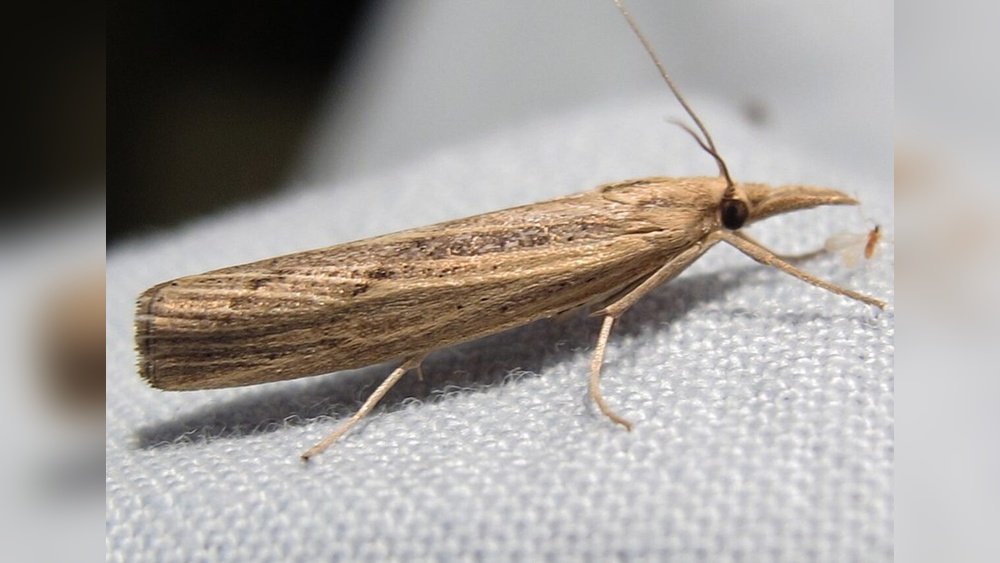
A beautiful, green lawn is something many homeowners work hard to achieve. But even the healthiest turf can fall victim to a common pest: the sod webworm. These tiny larvae may be hard to spot at first, but their damage becomes clear as brown patches spread across your grass. If you want to keep your yard looking its best, learning how to get rid of sod webworms is essential.
This guide covers everything you need to know—from identifying sod webworms, to choosing the right control method, and understanding how to keep them away for good. You’ll find practical steps, real-world tips, and even expert tricks that most beginners miss.
Whether you’re new to lawn care or a seasoned gardener, you’ll discover how to protect your lawn without guesswork.
What Are Sod Webworms?
Sod webworms are the larval stage of several species of small moths in the Crambidae family. These caterpillars feed on the grass blades, leaving uneven brown patches and thinning turf. The adult moths are harmless, but their larvae can quickly cause visible damage.
Life Cycle
Understanding the sod webworm’s life cycle helps you target them at the right time.
- Eggs: Adult moths lay eggs on grass blades, usually at dusk.
- Larvae: After hatching, larvae feed on grass at night and hide in silk-lined tunnels during the day.
- Pupae: Larvae pupate in the thatch or soil, emerging as adult moths.
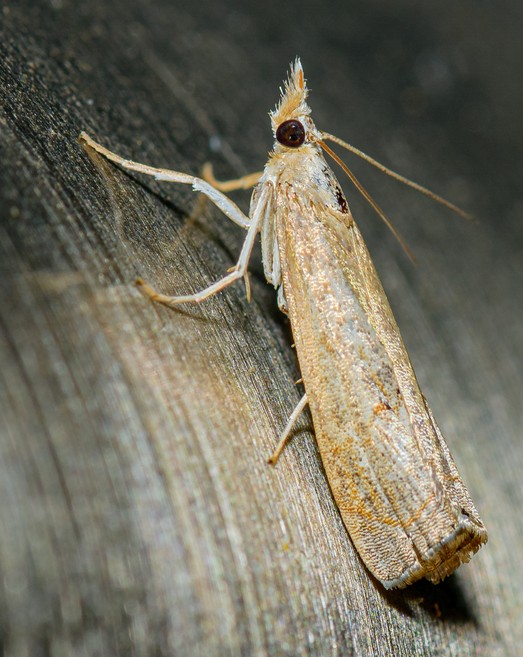
- Adults: Small, tan moths with snout-like projections. They fly low over the lawn at dusk.
Sod webworms can have two or more generations per year, depending on your region’s climate. In warmer areas, populations may build up quickly.
How To Identify Sod Webworm Damage
Spotting sod webworm damage early is key to preventing major lawn problems. Here’s what to look for:
- Brown patches: Irregular spots, often in sunny areas, that get bigger over time.
- Chewed grass blades: Look for ragged edges and shorter-than-normal grass.
- Silk tunnels: Small, silken tubes near the soil line, often hidden in the thatch.
- Active moths: Small moths flying just above the grass at dusk.
- Bird activity: Birds feeding in your lawn may signal larvae below.
If you’re unsure, a simple test can help. Mix two tablespoons of dish soap with two gallons of water and pour it over a one-square-foot patch of lawn. Sod webworm larvae will wriggle to the surface within minutes.
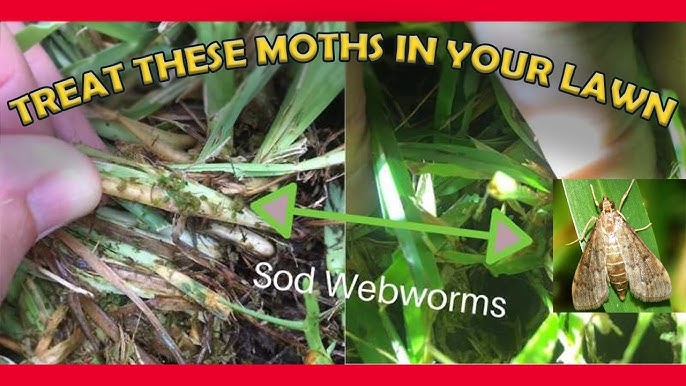
Credit: www.youtube.com
Why Sod Webworms Are A Problem
Sod webworms can turn a healthy lawn into a patchy mess in just a few weeks. They feed mainly at night, chewing off grass blades near the crown. Severe infestations can thin out large areas, making it hard for turf to recover.
Some lawns bounce back after mild damage, but repeated infestations can weaken grass, increase weed growth, and even require expensive reseeding. In southern states, sod webworms are active almost year-round, while in cooler climates, damage is usually seen in late spring or summer.
Key Factors That Attract Sod Webworms
Understanding why sod webworms choose your lawn can help you prevent future outbreaks. Here are some common factors:
- Thick thatch: Layers of dead grass provide shelter for larvae.
- Drought stress: Weakened grass is easier for larvae to chew.
- High nitrogen fertilizer: Lush, fast-growing grass attracts adult moths.
- Poor mowing practices: Cutting grass too short exposes crowns and encourages pests.
If you’ve had a sod webworm problem in the past, these factors may still be present.
How To Get Rid Of Sod Webworms: The Complete Approach
Getting rid of sod webworms is not just about spraying chemicals. The best results come from a combination of methods—cultural, biological, and, when needed, chemical controls.
Step 1: Confirm The Infestation
Before taking action, be sure sod webworms are the problem. Other pests, like grubs or chinch bugs, cause similar damage. Use the soap flush method mentioned earlier to check for larvae.
Step 2: Improve Lawn Health
A strong, healthy lawn is the best defense. Take these steps:
- Aerate compacted soil: Roots grow deeper in loose soil, making grass more resilient.
- Water deeply but infrequently: This encourages deep roots and reduces drought stress.
- Mow at the right height: Most lawns do best at 2.5 to 3 inches. Never remove more than one-third of the blade at a time.
- Remove thatch: If thatch is over 0.5 inches thick, dethatch to reduce hiding spots for larvae.
- Fertilize wisely: Use a balanced fertilizer, and avoid high-nitrogen formulas during peak moth activity.
Step 3: Use Biological Controls
Biological controls are safe for people, pets, and the environment. The most effective are:
- Bacillus thuringiensis (Bt): This natural bacteria targets caterpillars but won’t harm beneficial insects, birds, or mammals. Apply in the evening, as UV light breaks it down.
- Beneficial nematodes: These microscopic worms (especially Steinernema carpocapsae) attack sod webworm larvae in the soil. Water them in during cool, cloudy days for best results.
- Encourage natural predators: Birds, ground beetles, and parasitic wasps help keep populations low.
Step 4: Apply Chemical Controls (if Needed)
For severe infestations, you may need to use an insecticide. Choose a product labeled for sod webworms and follow all safety directions.
| Insecticide Type | How It Works | When to Apply | Safety Notes |
|---|---|---|---|
| Pyrethroids (e.g., bifenthrin, permethrin) | Disrupts nerve function in larvae | Late afternoon or evening, when larvae feed | Can harm bees—avoid spraying flowers |
| Carbaryl (Sevin) | Kills on contact and ingestion | When larvae are present and active | Avoid runoff into waterways |
| Insect growth regulators (IGRs) | Prevents larvae from maturing | Early in the season, before damage is severe | Less toxic to beneficial insects |
Spray only the affected areas, and avoid overuse. Most lawns recover with one or two treatments. Always read the label and wear protective gear.
Step 5: Monitor And Repeat As Needed
After treatment, check your lawn every few days. Repeat soap flush tests to see if larvae remain. Most biological controls take 7–10 days to work, while chemical controls act faster.
Common Mistakes When Fighting Sod Webworms
Many homeowners accidentally make the problem worse. Avoid these common errors:
- Using the wrong product: Not all insecticides work on caterpillars. Check the label.
- Applying at the wrong time: Sod webworm larvae feed at night—apply treatments late in the day.
- Ignoring lawn health: Chemicals alone won’t solve the problem if your turf is weak.
- Overwatering or underwatering: Both stress grass and can make it more vulnerable.
- Neglecting monitoring: Stopping control too soon lets populations rebound.
A little patience and careful monitoring go a long way.
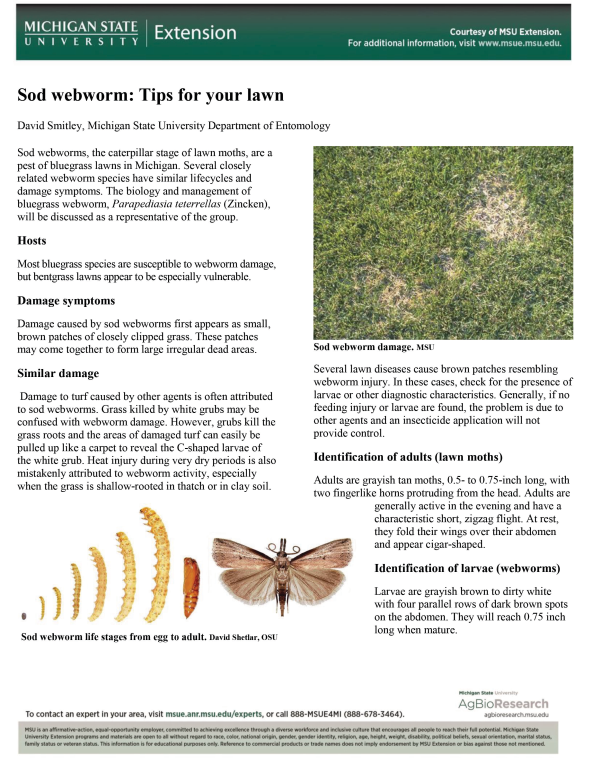
Credit: www.canr.msu.edu
Natural And Organic Methods
Many people prefer to avoid chemicals. Here are the most effective organic ways to control sod webworms:
- Neem oil: This plant-based oil disrupts the life cycle of caterpillars and is safe for pets and people.
- Diatomaceous earth: Sprinkle this powder where larvae are active. It dehydrates them but must be reapplied after rain.
- Manual removal: In small lawns, handpicking visible larvae at dusk can reduce numbers.
- Encourage birds: Install bird feeders or baths to attract natural predators.
These methods work best when combined with good cultural practices.
How To Prevent Sod Webworms In The Future
Prevention is easier than cure. Here’s what experts recommend for long-term protection:
- Mow correctly: Keep your mower blades sharp and avoid scalping the lawn.
- Reduce thatch: Dethatch annually if your grass type is prone to buildup.
- Aerate soil: Once a year is enough for most lawns.
- Water properly: Early morning watering encourages strong roots.
- Fertilize with care: Use slow-release fertilizers and avoid high-nitrogen spikes during moth season.
- Overseed bare patches: Dense lawns resist pests better.
- Watch for moths: If you see adult moths flying low at dusk, start monitoring for larvae.
Comparing Control Methods
Choosing the right control method depends on your lawn, budget, and preferences. Here’s a comparison to help you decide:
| Method | Effectiveness | Speed | Safety | Cost |
|---|---|---|---|---|
| Biological (Bt, nematodes) | High (if timed right) | Moderate (7–14 days) | Very safe | $$ |
| Chemical (pyrethroids, carbaryl) | Very high | Fast (1–3 days) | Medium (follow label) | $$ |
| Cultural (mowing, dethatching) | Moderate (prevention) | Slow (weeks to months) | Very safe | $ |
| Natural/Organic (neem, DE) | Moderate | Slow to moderate | Very safe | $–$$ |
Tip: In most cases, a combination of methods works best. Start with cultural and biological controls, and use chemicals only if needed.
When To Call A Professional
Some sod webworm problems are too big for DIY solutions. If you notice:
- Large areas (over 30% of your lawn) are affected
- Damage returns every year, despite your efforts
- You’re unable to identify the pest for sure
It may be time to consult a lawn care professional. They can diagnose the problem, recommend targeted treatments, and sometimes offer guarantees on their work.
Real-world Example: Successful Sod Webworm Control
Let’s look at a real example. In the summer of 2022, a homeowner in Houston noticed brown patches spreading in their St. Augustine lawn. After confirming sod webworm larvae with a soap flush, they followed these steps:
- Dethatched the lawn to remove hiding spots.
- Applied Bt in the evening, repeating after 7 days.
- Watered deeply twice a week to reduce stress.
- Monitored with soap flushes every 5 days.
- After two weeks, no larvae were found, and grass began to recover.
This case shows that a patient, step-by-step approach works—even in challenging climates.
Advanced Tips Most Beginners Miss
While basic steps will solve most sod webworm problems, here are a few advanced tricks:
- Rotate control methods: Don’t use the same product every season. Rotation prevents resistance.
- Monitor soil temperature: Sod webworm eggs hatch best when soil temps are between 70–90°F. Start monitoring when your soil reaches these temps.
- Use sticky traps: Place yellow sticky traps to catch adult moths and time your control measures.
- Spot-treat hot spots: Focus treatments on affected patches rather than the whole lawn. This saves product and reduces side effects.
- Reseed with resistant varieties: Some grass types, like tall fescue and perennial ryegrass, are less attractive to sod webworms.
Credit: www.owentree.com
How To Tell If Control Measures Are Working
After you’ve treated your lawn, it’s important to check for success. Signs that your efforts are working include:
- Fewer adult moths at dusk
- Green regrowth in damaged patches
- No larvae found in soap flush tests
- Reduced bird activity (as they hunt fewer larvae)
Most lawns show improvement within 2–4 weeks, depending on weather and control method. If damage continues, repeat the steps or consult a professional.
Table: Signs Of Recovery Vs. Ongoing Infestation
Here’s a quick reference to help you assess your lawn’s progress:
| Sign | Recovery | Ongoing Infestation |
|---|---|---|
| Grass color | Returning to green | Staying brown or spreading |
| Larvae in soap flush | None found | Many found |
| Adult moths at dusk | Few or none | Frequent, low-flying moths |
| Bird activity | Decreasing | Increasing or steady |
If signs of infestation persist, review your control steps or seek expert help.
Environmental Impacts And Safety
It’s important to consider the impact of your choices on the environment. Chemical insecticides can harm pollinators, aquatic life, and even pets if misapplied. Always:
- Choose the least toxic option that will work
- Apply late in the day to avoid bee activity
- Follow label directions closely
- Store products safely away from children and animals
Whenever possible, use biological or cultural controls. They’re safer and support a healthy lawn ecosystem.
Additional Resources
If you want to learn more about sod webworms and integrated pest management, the University of Florida IFAS Extension offers in-depth guides and research. For scientific details, visit the University of Florida IFAS Extension website.
Frequently Asked Questions
What Do Sod Webworms Look Like?
Sod webworm larvae are small, gray-green caterpillars about 0. 75 to 1 inch long. They have dark spots along their bodies and brown heads. Adult moths are light tan, with a wingspan of about 0. 5 to 0. 75 inches, and often fly in a zigzag pattern just above the grass at dusk.
When Is The Best Time To Treat For Sod Webworms?
The best time is in the late afternoon or evening, when larvae come out to feed. For most regions, peak activity is late spring through early fall, especially after warm, humid nights. Monitor for adult moths and fresh damage to time your treatments.
Can Sod Webworm Damage Kill My Lawn?
Severe infestations can kill patches of grass, especially if your lawn is already stressed from drought or poor soil. However, most healthy lawns recover if you act quickly. Reseeding or overseeding may be necessary in extreme cases.
Are There Grass Types That Resist Sod Webworms?
Yes, some grasses like tall fescue, perennial ryegrass, and certain varieties of zoysia are less attractive to sod webworms. Bermudagrass and St. Augustine are more commonly affected. Overseeding with resistant varieties can help prevent future problems.
How Can I Tell If Sod Webworms Are Gone?
Signs include new green growth in brown patches, fewer moths at dusk, and no larvae surfacing during soap flush tests. Keep monitoring for several weeks after treatment, as new generations may appear if conditions are right.
Taking care of sod webworms might seem overwhelming at first, but with patience and the right steps, you can restore your lawn’s health. Remember, prevention and early action are the keys to long-term success.