
Last updated: October 2026 · Written by the LawnVibe editorial team.
Zen and Japanese-inspired gardens are built on restraint: raked gravel, moss, carefully placed rocks and a few well-chosen plants. Water in these gardens is quiet and purposeful, not showy. A zen garden water feature brings gentle sound and movement that invites you to slow down. The best water features for zen gardens include bamboo spouts pouring into stone basins, pagoda-style fountains, calm pedestal fountains and minimalist bubbling spheres and jars. Our top pick is an Alpine pagoda fountain with LED lights. Below we compare nine options and explain how to place water in a zen-style garden.
Listings change often, so check current details on Amazon before you buy. As an Amazon Associate we earn from qualifying purchases.
Our top picks at a glance
| # | Product | Best for | Link |
|---|---|---|---|
| 1 | Alpine Corporation Tranquil Zen Pagoda Fountain with LED Lights | Classic Japanese-style gardens | Check price |
| 2 | Bamboo Accents Zen Garden Water Fountain Kit | Tsukubai-style basins and gravel gardens | Check price |
| 3 | foci cozi Bamboo Water Fountain Spout (No Pump) | DIY zen basins with your own pump | Check price |
| 4 | Teamson Home 36.5 inch 3-Tier Zen Pedestal Fountain | Courtyards and entry gardens | Check price |
| 5 | Tankana Tranquil Pagoda Waterfall Bowl Fountain | Smaller zen corners | Check price |
| 6 | Modern Sphere Curve Zen Floor Bubbler Fountain (39.5 inch) | Minimalist zen gardens | Check price |
| 7 | XBrand Modern Zen Ball Swirl Sphere Fountain | Contemporary zen spaces indoors or out | Check price |
| 8 | Modern Waterfalling Fountain in Cast Stone Color | Modern gardens with a stone aesthetic | Check price |
| 9 | watnature 31.4 inch Water Jar Fountain | Patios and zen-inspired seating areas | Check price |
Best water features for zen gardens: reviews
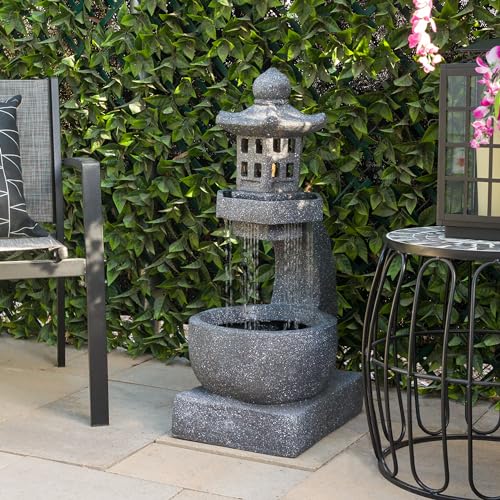
Alpine Corporation Tranquil Zen Pagoda Fountain with LED Lights
Best for: Classic Japanese-style gardens
A floor-standing pagoda-style fountain from Alpine with LED lights, pouring water through tiers inspired by Japanese garden lanterns.
- Strong zen character
- LED lights for evenings
- From a well-known fountain brand
- Resin pagoda detail varies
- Needs an outdoor outlet

Bamboo Accents Zen Garden Water Fountain Kit
Best for: Tsukubai-style basins and gravel gardens
A bamboo spout with pump and adjustable flow, for pouring into a stone basin or container in a zen setting.
- Authentic bamboo look
- Adjustable spout
- Gentle trickle
- Basin may be extra
- Bamboo weathers outdoors

foci cozi Bamboo Water Fountain Spout (No Pump)
Best for: DIY zen basins with your own pump
A bamboo spout fountain sold without a pump, for gardeners who already have a small pump and basin.
- Low-cost bamboo spout
- Simple design
- Indoor or outdoor
- Pump not included
- Needs a basin and tubing

Teamson Home 36.5 inch 3-Tier Zen Pedestal Fountain
Best for: Courtyards and entry gardens
A three-tier zen-style pedestal fountain with stone trim, pouring water calmly between wide bowls.
- Calm cascading tiers
- Stone-trim detail
- Self-contained
- Larger footprint
- Bowls need algae cleaning

Tankana Tranquil Pagoda Waterfall Bowl Fountain
Best for: Smaller zen corners
A compact pagoda-style fountain with a bowl basin, suited to smaller zen gardens and patios.
- Compact
- Pagoda styling
- Easy to place
- Lesser-known brand
- Lighter construction

Modern Sphere Curve Zen Floor Bubbler Fountain (39.5 inch)
Best for: Minimalist zen gardens
A tall curved sphere bubbler fountain where water flows smoothly over a sculpted surface, suited to minimalist gardens.
- Sculptural modern form
- Quiet, smooth water flow
- Tall focal point
- Heavier and pricier style
- Needs level ground

XBrand Modern Zen Ball Swirl Sphere Fountain
Best for: Contemporary zen spaces indoors or out
A 30 inch curved swirl sphere fountain for indoor or outdoor use, with water flowing over its surface.
- Indoor or outdoor
- Striking sphere design
- Gentle sound
- Best in sheltered spots
- Finish needs gentle cleaning

Modern Waterfalling Fountain in Cast Stone Color
Best for: Modern gardens with a stone aesthetic
A modern waterfall fountain finished in a cast-stone color, with water cascading down a smooth face.
- Natural stone tone
- Clean lines
- Suits indoors or outdoors
- Unbranded listing
- Moderate weight

watnature 31.4 inch Water Jar Fountain
Best for: Patios and zen-inspired seating areas
A modern water jar fountain where water overflows gently, giving a calm, minimal look.
- Calm overflow effect
- Minimal design
- Indoor or outdoor
- Lesser-known brand
- Needs topping up in heat
How we chose these features
We chose features that fit the calm, natural style of zen and Japanese-inspired gardens: traditional pagoda and bamboo designs alongside minimalist modern spheres and jars that suit contemporary interpretations. We compared sound level, size, finish and whether each can be used indoors or out. We do not list prices because they change often.
The role of water in a zen garden
In traditional Japanese gardens, water can be real or suggested. Dry gardens use raked gravel to represent rivers and seas, while stroll gardens and tea gardens use real water in ponds, streams and stone basins. A small water feature in a modern zen garden draws on both ideas: a single point of gentle sound and movement surrounded by stillness. The goal is not a grand display but a quiet presence that rewards close attention.
Traditional zen water features
Tsukubai stone basin
A low stone basin, traditionally used for washing hands before a tea ceremony, filled by a bamboo spout called a kakei. Water drips slowly and overflows into gravel. A bamboo spout kit with a small pump recreates this easily.
Shishi odoshi
A pivoting bamboo tube that fills, tips, empties and knocks against a stone, making a rhythmic clack. It adds sound and movement but can be too noisy for some spaces.
Pagoda and lantern fountains
Fountains inspired by stone lanterns and pagodas bring a classic Japanese look with tiers of water falling between roofs or bowls.
Ponds and koi
Larger Japanese gardens often feature koi ponds with stepping stones and bridges. These are bigger projects; see our guide to the best water features for koi ponds.
Modern zen water features
Contemporary zen spaces often use smooth spheres, curved bubblers, overflowing jars and slate-look waterfalls. These keep the calm feel but suit modern architecture, roof terraces and indoor rooms.
How to choose a zen water feature
- Sound: a soft trickle suits meditation and quiet reading; avoid loud splashing.
- Materials: natural stone, bamboo and stone-look finishes blend best.
- Scale: one modest feature usually suits a zen garden better than a large fountain.
- Placement: position it as a focal point viewed from a seat or window.
- Indoor or outdoor: check whether the model is rated for both.
- Maintenance: simple designs are easier to keep clean and calm-looking.
Designing a zen corner with water
You do not need a large garden to create a zen space. A quiet corner, a courtyard or a section of a patio is enough. Start with a simple backdrop such as a plain fence, bamboo screen or wall. Lay a base of fine gravel or crushed granite and set the water feature slightly off center, following the Japanese preference for asymmetry. Add a few rocks in odd-numbered groups, a patch of moss or low ground cover and one or two plants with strong form, such as a Japanese maple, dwarf pine, ferns or ornamental grasses. Leave plenty of empty space: in zen design, emptiness is part of the composition.
Creating a tsukubai feature
- Dig a small hole for a buried reservoir or tub.
- Place a pump in the reservoir and run tubing to a bamboo spout set behind it.
- Cover the reservoir with a strong mesh grid.
- Set a stone or ceramic basin on the grid, or use a basin with a drainage hole that lets water return to the reservoir.
- Arrange stones and gravel to hide the mesh.
- Fill the reservoir, switch on and adjust flow until water trickles gently.
This pondless setup recycles water and keeps it out of reach, which makes it practical for small gardens and homes with children. Our guide on how to set up a garden water fountain covers pump basics.
Planting around a zen water feature
Plants should frame the water, not compete with it. Good choices include mosses and mondo grass for soft ground cover, Japanese forest grass for movement, ferns for shady corners, dwarf conifers for year-round structure and a single Japanese maple for seasonal color. Around the water itself, small rushes, sweet flag or dwarf horsetail look natural. Keep planting restrained and prune regularly to maintain clean lines. For pond and marginal plants, see how to plant pond plants.
Sound and stillness
The best zen fountains produce a soft, steady sound that blends into the background. If a fountain is louder than you want, reduce the pump flow, lower the drop height or add smooth stones where water lands. A shishi odoshi adds a periodic clack that many people find meditative, but in a small courtyard close to neighbors it may be too much. Consider a timer or smart plug so the fountain runs only when you are using the space.
Lighting a zen garden
Soft, low lighting suits zen spaces. A warm uplight on the water feature or a nearby maple, a couple of stone lantern lights and path lights at ground level are usually enough. Avoid bright, colored lights that break the calm. Fountains with gentle built-in LEDs, like our top pick, add a subtle glow after dark.
Indoor zen fountains
Sphere, jar and cast stone fountains rated for indoor use bring the same calm to a living room, study or meditation space. Place them on a tray or waterproof mat to protect floors, keep them away from electronics and use distilled water to reduce mineral deposits. For more indoor options, see our picks of the best water features for indoor use.
Choosing materials for a zen look
Natural stone basins and boulders are the most authentic choice, with a weight and texture that resin cannot fully match. They last for generations but are heavy and need care in frost. Cast stone and concrete offer a similar look at lower cost and are easier to shape into lanterns and bowls. Resin and fiberglass are light and affordable, ideal for patios, balconies and renters, though finishes vary in realism. Bamboo spouts and pipes add a traditional touch but weather outdoors and need replacing every few years. Ceramic jars and bowls with dark, matte glazes suit modern interpretations. Whatever you choose, stick to a restrained palette of grays, greens, browns and black so the water and plants remain the focus.
Water features for meditation spaces
If you use your zen garden for meditation, yoga or quiet reading, place the water feature within a few steps of where you sit, so you can hear it clearly without strain. Face your seat toward the feature with a calm backdrop behind it, such as a bamboo screen or plain wall. A steady, low trickle works better than intermittent sounds, which can be distracting. A shaded spot keeps the space comfortable in summer and reduces evaporation. Some people like to start the fountain at the beginning of each session as a small ritual that marks the transition into quiet time.
Zen features in small and urban spaces
Balconies, roof terraces and tiny courtyards can all host a zen water feature. Choose a self-contained bubbler, jar or tabletop fountain, place it on a tray to catch drips and add a few potted plants such as dwarf bamboo, ferns or a small maple in a container. Use lightweight resin and keep weight in mind on balconies. Gravel in shallow trays and a single stone can complete the look. Our picks of the best water features for small gardens include more compact options.
Maintenance
- Keep the water clean by rinsing the basin and pump regularly.
- Top up water so the pump never runs dry.
- Remove leaves and debris from basins and gravel.
- Rake gravel to restore patterns after cleaning.
- Treat bamboo occasionally or replace worn spouts.
Changing or circulating water regularly also helps prevent mosquitoes, a step recommended in the EPA guidance on mosquito control.
Winter care
Drain outdoor fountains and basins before frost, store pumps indoors and cover or bring in ceramic and resin pieces. Natural stone basins can crack if water freezes inside, so tip them or keep them empty in winter. Bamboo spouts last longer if stored dry over winter.
Common mistakes
- Choosing a feature that is too ornate for a minimal space.
- Loud splashing instead of a gentle trickle.
- Overplanting around the water.
- Bright colored lights that break the calm.
- Leaving water to freeze in stone basins.
- Placing the fountain where it cannot be seen from a seat or window, which wastes its calming effect.
- Mixing too many styles, such as a pagoda next to a modern sphere, which makes the space feel cluttered instead of serene.
Is a zen water feature worth it?
If you want a garden that helps you unwind, yes. A small zen fountain is one of the most effective ways to bring calm to an outdoor or indoor space, and simple designs are inexpensive to run and easy to maintain. Water adds the one element that gravel, rocks and plants cannot: gentle sound and movement. Start with a single, well-placed feature, live with it for a season, and adjust the planting and lighting around it until the space feels right. In zen design, small refinements over time matter more than a big initial build.
The bottom line
For a classic zen garden, an Alpine pagoda fountain or a bamboo spout pouring into a stone basin gives the most authentic feel. Choose a zen pedestal for courtyards, a compact pagoda bowl for small corners and a sphere, water jar or cast stone waterfall for modern spaces indoors or out. Keep the sound gentle, the planting restrained and the water clean.
Frequently Asked Questions
What water feature suits a zen garden?
Simple, natural features work best: a bamboo spout pouring into a stone basin, a quiet bubbling bowl or a low pagoda-style fountain.
What is a tsukubai?
It is a traditional Japanese stone wash basin, often fed by a bamboo spout, found near tea houses and in Japanese-style gardens.
What is a shishi odoshi?
A pivoting bamboo tube that fills with water, tips and knocks against a stone, making a rhythmic sound. It was traditionally used to scare animals.
Should a zen fountain be loud?
Usually not. Zen gardens favor a gentle trickle that encourages calm, so choose low drops and adjust pump flow.
Can I put a zen fountain indoors?
Many sphere, jar and cast stone fountains are designed for indoor or outdoor use. Check each listing and use a tray to protect floors.