

Last updated: October 2026 · Written by the LawnVibe editorial team.
The sound of moving water is one of the simplest ways to make a room feel calmer. An indoor water feature can sit on a desk, a bedside table or a console, mount on a wall or stand in a corner as a statement piece. The best water features for indoor use are quiet, splash-free, easy to clean and attractive even when switched off. Our top pick is a compact Homedics tabletop fountain with a deep basin that needs less topping up. Below we compare nine indoor fountains, from small desk units to floor-standing waterfalls, and explain how to choose and care for one.
Listings change often, so check current details on Amazon before you buy. As an Amazon Associate we earn from qualifying purchases.
Our top picks at a glance
| # | Product | Best for | Link |
|---|---|---|---|
| 1 | Homedics Tabletop Water Fountain | Desks, bedside tables and offices | Check price |
| 2 | Homedics White Waters Relaxation Tabletop Fountain | Bedrooms and relaxation corners | Check price |
| 3 | Alpine Corporation Mirror Waterfall Fountain with Stones and Lights | Living rooms and entryways | Check price |
| 4 | Cheng Pin Staggered Stone Wall Indoor Fountain | Feature walls and reception areas | Check price |
| 5 | Alpine Corporation Tiered Tabletop Fountain with 3 Candles | Dining tables and evening ambiance | Check price |
| 6 | Spinning Orb Rock Cascading Tabletop Fountain with LED | Desks and meditation spaces | Check price |
| 7 | VOREEN Handblown Glass Tabletop Fountain | Modern interiors | Check price |
| 8 | xpiyaer 15.7 inch Rock Falls Tabletop Fountain with LED | Shelves and side tables | Check price |
| 9 | Pamopamo Tabletop Waterfall Moon Fountain | Bedrooms and sleep routines | Check price |
Best water features for indoor use: reviews

Homedics Tabletop Water Fountain
Best for: Desks, bedside tables and offices
A compact tabletop fountain from Homedics with an automatic pump and a deep basin, designed as a soothing sound source indoors.
- Deep basin needs less topping up
- Quiet, steady sound
- Known home-wellness brand
- Simple design
- Small size limits sound
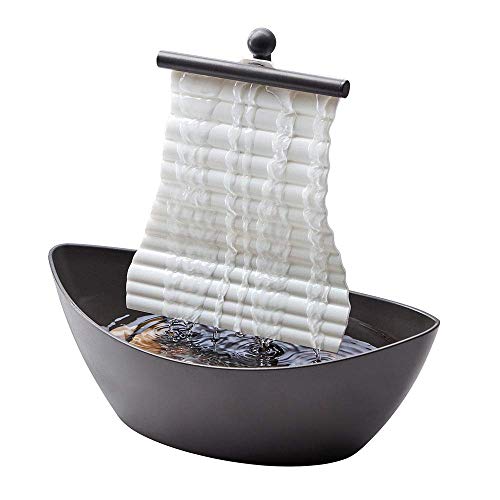
Homedics White Waters Relaxation Tabletop Fountain
Best for: Bedrooms and relaxation corners
An indoor tabletop fountain with ambient LED lighting and natural water sounds, intended for relaxation spaces.
- Ambient LED light
- Gentle water sound
- Compact
- Light color options are limited
- Needs distilled water to avoid deposits

Alpine Corporation Mirror Waterfall Fountain with Stones and Lights
Best for: Living rooms and entryways
A tall mirror waterfall fountain with stones and lights, suitable for indoor or covered outdoor spaces.
- Striking mirror waterfall
- Lights included
- Tall focal point
- Large footprint
- Splashing possible if not level

Cheng Pin Staggered Stone Wall Indoor Fountain
Best for: Feature walls and reception areas
An indoor fountain with a staggered stone wall design where water flows down the face for a relaxing ambiance.
- Statement wall look
- Calming flow
- Indoor use
- Lesser-known brand
- Heavier than tabletop units

Alpine Corporation Tiered Tabletop Fountain with 3 Candles
Best for: Dining tables and evening ambiance
A tiered tabletop fountain with space for three candles, combining moving water and candlelight.
- Candlelight and water together
- Compact tabletop
- Classic tiered look
- Keep candles away from flammable items
- Small reservoir

Spinning Orb Rock Cascading Tabletop Fountain with LED
Best for: Desks and meditation spaces
A rock-cascade tabletop fountain with a spinning orb moved by the water flow and LED lighting.
- Moving orb adds interest
- LED light
- Small footprint
- Orb can stop if flow is low
- Unbranded listing

VOREEN Handblown Glass Tabletop Fountain
Best for: Modern interiors
A handblown art glass tabletop fountain with a color-changing glow, designed as a decorative centerpiece.
- Unique art glass
- Color-changing glow
- Conversation piece
- Fragile
- Glass needs careful cleaning

xpiyaer 15.7 inch Rock Falls Tabletop Fountain with LED
Best for: Shelves and side tables
A 5-tier rock falls tabletop fountain with LED lights, giving a natural waterfall look indoors.
- Multi-tier cascade
- LED lights
- Natural rock look
- Lesser-known brand
- Needs regular topping up

Pamopamo Tabletop Waterfall Moon Fountain
Best for: Bedrooms and sleep routines
A tabletop moon-style fountain designed to create a soothing rain-like sound for relaxation and meditation.
- Rain-like sound
- Distinctive moon design
- Compact
- Lesser-known brand
- Small water capacity
How we chose these fountains
We compared indoor fountains by size, sound, splash control, lighting and how easy they are to fill and clean. We included small tabletop units, relaxation fountains with lights, a candle fountain, rock cascades, an art glass piece and two larger features: a floor-standing mirror waterfall and a stone wall-style fountain. We do not list prices because they change often.
Types of indoor water features
Tabletop fountains
Small fountains for desks, side tables and shelves. They are affordable, portable and quiet, making them the most popular indoor choice.
Floor fountains
Taller freestanding fountains for living rooms, entryways and offices. They make a bigger visual and sound impact but need more space and water.
Wall fountains
Water flows down a panel of stone, slate, glass or mirror. They become a feature wall and suit reception areas, hallways and large rooms.
Art and novelty fountains
Spinning orbs, glass sculptures and themed designs add personality and interest.
How to choose an indoor water feature
- Room and placement: measure the surface or wall and check that it can take the weight when full.
- Sound: bedrooms and offices suit a soft trickle; larger rooms can handle a livelier sound.
- Splash control: deep basins and low drops keep water where it belongs.
- Power: check cord length and whether the pump has an on/off switch.
- Lighting: LED lights add ambiance and double as a night light.
- Maintenance: larger reservoirs need topping up less often.
- Style: stone, slate, glass and resin finishes suit different interiors.
Matching a fountain to your interior style
Modern and minimalist interiors suit slate, glass and mirror fountains with clean lines and restrained lighting. A single art glass piece or a slim wall waterfall can act as sculpture. Natural and Scandinavian spaces pair well with stone, wood and pebble fountains in muted tones, surrounded by plants. Traditional rooms suit tiered bowls, ceramic urns and candle fountains. Zen and spa-inspired bathrooms or meditation rooms call for simple rock cascades and bamboo designs; our picks of the best water features for zen gardens include several that work indoors. Children's rooms may suit colorful LED fountains, but only if they are placed safely out of reach and used under supervision.
Tabletop vs floor vs wall fountains
A tabletop fountain is the easiest starting point: inexpensive, portable and quiet, though small basins need frequent topping up. A floor fountain creates more impact and sound, suits larger rooms and holds more water, but needs floor space and protection for flooring. A wall fountain is the most dramatic, turning a whole wall into a water feature with very little floor footprint, but needs secure mounting, a nearby outlet and more water management. Think about the size of the room, how much maintenance you want and whether you want the fountain to be a focal point or a background accent.
Running costs and energy
Indoor fountain pumps are small and use little electricity, so running one for several hours a day typically adds only a small amount to an electricity bill. LED lights use very little energy as well. To save power and reduce pump wear, use a timer or smart plug to run the fountain only when you are home or awake. Unplug it when you go on vacation and empty the water to prevent stagnation.
Where to place an indoor fountain
Choose a stable, level surface away from the edge of the table or shelf, where it will not be knocked. Keep fountains away from laptops, TVs, speakers and other electronics, and away from books, paper and fabrics that could be damaged by occasional splashes. A spot near an outlet avoids trailing extension cords. Avoid direct sunlight, which encourages algae, and radiators or heating vents, which speed up evaporation. Bedrooms suit very quiet units placed a little away from the bed; living rooms and offices can take slightly larger fountains. In an entryway, a fountain greets guests and sets a calm tone.
Protecting floors and furniture
Even well-designed fountains can drip or splash occasionally, and the water in a full basin is heavy. Place tabletop fountains on a waterproof tray, coaster or placemat to protect wood surfaces. Set floor fountains on a waterproof mat, especially on wood or carpet. Check the weight of wall fountains when full and mount them into studs or with anchors rated for the load. Wipe up drips promptly and check under the fountain occasionally for moisture.
Water quality and mineral deposits
Hard tap water leaves white mineral deposits on stones, bowls and the pump, which look unattractive and can reduce pump life. Using distilled water greatly reduces this. If you must use tap water, clean the fountain more often and wipe stones with a soft cloth and a little white vinegar solution, then rinse well. Avoid soaps and harsh cleaners that leave residue or foam. Some fountain owners add a product designed to prevent scale and algae; follow the instructions carefully, especially if pets might drink from the fountain.
Cleaning routine
- Every few days: top up water so the pump stays submerged.
- Every two to four weeks: unplug, empty, wipe the basin and stones and rinse the pump intake.
- Monthly or as needed: take the pump apart if the maker allows and clear any debris from the impeller.
- Replace water completely rather than only topping up, which concentrates minerals.
Moisture, mold and humidity
A small tabletop fountain adds only a modest amount of moisture to a room, so it is not a replacement for a humidifier. A large wall fountain running all day in a small room can raise humidity more noticeably. In damp homes, keep an eye on condensation and musty smells, ventilate the room and keep the fountain clean. The EPA guidance on mold explains how indoor moisture control helps prevent mold growth.
Noise: getting the sound right
Most indoor fountains produce a soft trickle, but some pumps hum, and splashing water can be louder than expected on a hard surface. To quiet a fountain, make sure the pump is fully submerged, set it on a small piece of foam or rubber to reduce vibration, top up water so it falls a shorter distance and reduce flow if adjustable. Adding pebbles where water lands softens splashing. If the sound is too quiet, increase flow or move the fountain to a smaller room where sound carries better.
Indoor fountains for offices
A desk fountain can help mask background chatter in open offices and home offices. Choose a compact unit with a deep basin, a low, steady sound and no candles. Keep it away from keyboards and paperwork, and switch it off when you leave. A timer or smart plug turns it on and off automatically.
Fountains and indoor plants
Fountains and houseplants pair naturally, creating a small indoor garden. Group plants that enjoy higher humidity, such as ferns, peace lilies and pothos, around a fountain. Do not water plants with fountain water treated with anti-algae products. For plant care, see how to fertilize indoor plants properly, and if you want automated plant care too, compare the best watering systems for indoor plants.
Safety with children and pets
Keep fountains out of reach of toddlers and curious pets, secure cords so they cannot be pulled and never leave candles unattended on candle fountains. Choose fountains with sturdy bases that will not tip easily. If pets like to drink from the fountain, use only plain water and clean it often.
Troubleshooting common problems
- Pump not running: check that it is plugged in, fully submerged and that the intake is not blocked.
- Weak flow: clean the pump and tubing, and check that the flow dial has not been turned down.
- Noisy hum: submerge the pump fully, add a vibration pad and make sure it is not touching the basin wall.
- Water disappearing fast: check for splashing, a leak at the tubing or a tilted base; evaporation is also higher in warm, dry rooms.
- Cloudy or green water: empty, clean and refill with distilled water, and move the fountain out of direct sunlight.
- Orb not spinning: increase flow and clean the orb seat.
Is an indoor water feature worth it?
If you enjoy calming background sound, yes. An indoor fountain is a small, low-cost way to make a room feel more relaxed and can double as decor and a gentle night light. Choose a size and style that suits the room, and commit to a simple maintenance routine; a clean, well-kept fountain is a pleasure, while a neglected one quickly becomes noisy and crusty.
Common mistakes
- Letting the pump run dry, which can burn it out.
- Using hard tap water without regular cleaning.
- Placing fountains near electronics or paper.
- No tray or mat under the fountain.
- Choosing a fountain too loud for a bedroom.
- Leaving the fountain running while away for days, which risks the pump running dry.
The bottom line
For most homes, a compact tabletop fountain like the Homedics model gives a soothing sound with minimal fuss. Choose a lit relaxation fountain for bedrooms, a candle fountain for evening ambiance, a rock cascade or spinning orb for desks, a glass art fountain for modern interiors and a floor-standing mirror waterfall or stone wall fountain when you want a statement piece. Use distilled water, keep it topped up and clean it every few weeks.
Frequently Asked Questions
Are indoor water fountains good for a home?
Many people enjoy them for the soothing sound and as decor. They can mask background noise, though claims about humidity or air quality benefits are usually small.
What water should I use in an indoor fountain?
Distilled water is best, because it leaves fewer mineral deposits and white crust on stones and the pump than hard tap water.
How often should I clean an indoor fountain?
Top it up every few days and give it a full clean every few weeks, rinsing the pump and wiping the basin.
Do indoor fountains make a room humid?
A small tabletop fountain adds only a little moisture to the air. Large wall fountains add more but are not a substitute for a humidifier.
Why is my indoor fountain splashing?
It may not be level, the water level may be low or the flow may be too strong. Level the base, top up water and reduce pump flow.