

Last updated: October 2026 · Written by the LawnVibe editorial team.
Few things waste more water than sprinklers running in the rain. A rain sensor fixes that cheaply: it detects rainfall and tells your controller to skip watering until the ground has had time to use it. The best rain sensor for sprinkler system controllers for most homes is the Hunter Rain-Clik Wireless, which responds quickly and installs without running a wire to the roof edge. In cold climates, a rain and freeze sensor like the Rain Bird wireless system adds protection against watering on icy mornings. Below we compare five sensors and explain how to choose, install and adjust one.
Listings change often, so check current details on Amazon before you buy. As an Amazon Associate we earn from qualifying purchases.
Our top picks at a glance
| # | Product | Best for | Link |
|---|---|---|---|
| 1 | Hunter Rain-Clik Wireless Rain Sensor (WRCLIK) | Most systems, especially where running a wire is awkward | Check price |
| 2 | Rain Bird Wireless Rain and Freeze Sensor System | Cold climates where freeze shut-off matters | Check price |
| 3 | Orbit 57069N Rain and Freeze Sensor | Budget upgrade for older controllers | Check price |
| 4 | Rain Bird CPRSDBEX Wired Rain Sensor | Fine-tuning how much rain triggers shut-off | Check price |
| 5 | Hunter Rain-Clik Wired Rain Sensor | Permanent installs with a short wire run | Check price |
Best rain sensor for sprinkler system reviews

Hunter Rain-Clik Wireless Rain Sensor (WRCLIK)
Best for: Most systems, especially where running a wire is awkward
A wireless sensor that signals the controller to shut off when rain starts. It mounts on an eave or other flat vertical surface with open exposure to rain.
- Wireless, no wire run to the eave
- Responds quickly when rain begins
- Mounts on eaves or flat surfaces
- Works with many controllers
- Receiver must be wired to the controller
- Battery in the transmitter needs eventual replacement
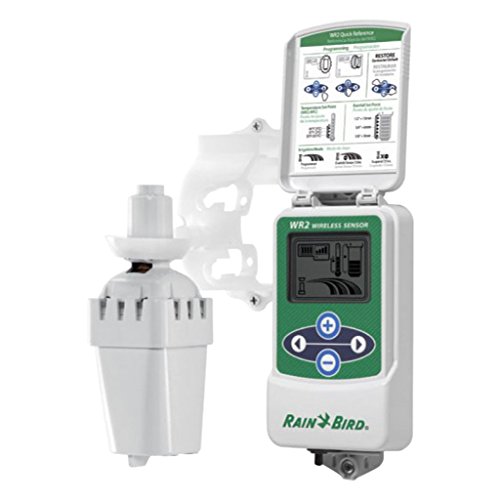
Rain Bird Wireless Rain and Freeze Sensor System
Best for: Cold climates where freeze shut-off matters
A wireless sensor that stops watering both when it rains and when temperatures drop near freezing, helping prevent icy sidewalks and frozen heads.
- Rain and freeze shut-off
- Wireless installation
- From a major irrigation brand
- More expensive than wired rain-only sensors
- Check controller compatibility
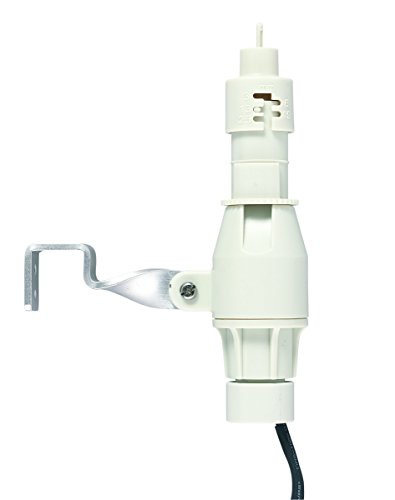
Orbit 57069N Rain and Freeze Sensor
Best for: Budget upgrade for older controllers
A wired sensor with water-absorbing disks that expand in rain to interrupt watering, plus a low-temperature shut-off. A weather-resistant wire runs to the controller.
- Rain and freeze protection
- Simple wired design
- Budget-friendly
- Requires running wire to the mounting spot
- Disks may need time to dry before watering resumes

Rain Bird CPRSDBEX Wired Rain Sensor
Best for: Fine-tuning how much rain triggers shut-off
A wired sensor that automatically shuts off and restarts the system, with a twist adjustment for rainfall settings from 1/8 inch to 3/4 inch.
- Adjustable from 1/8 to 3/4 inch of rain
- Automatic restart after drying
- No batteries
- Needs a wire run
- Rain only, no freeze function

Hunter Rain-Clik Wired Rain Sensor
Best for: Permanent installs with a short wire run
The hardwired version of Hunter’s Rain-Clik, giving a constant connection with no transmitter battery to replace.
- Hardwired constant connection
- No batteries
- Quick rain response
- Wire must be run and protected
- Rain only
How we chose these sensors
We looked at sensors from established irrigation brands that work with typical residential controllers. We compared wired and wireless designs, whether the sensor also shuts off for freezing temperatures, how adjustable the rain threshold is and how easy installation is for a homeowner. We do not list prices because they change often; each pick links to its current Amazon listing.
How rain sensors work
Most sprinkler rain sensors use small disks made of a material that swells when it absorbs water. When enough rain falls, the disks expand and press a switch that interrupts the circuit between the controller and the valves, so scheduled watering is skipped. As the disks dry, they shrink and the switch closes again, allowing the next scheduled run. Some sensors respond quickly to the first drops of rain, which is useful for stopping a run already in progress. Freeze sensors add a temperature switch that interrupts watering when the air gets close to freezing. The controller keeps its schedule the whole time; the sensor simply blocks watering while conditions are wet or cold.
Rain sensor buying guide
Wired vs wireless
Wired sensors connect to the controller with a thin two-conductor wire. They have no batteries and give a constant connection, but you need to run and protect the wire from the controller to the mounting spot. Wireless sensors have a transmitter at the mounting spot and a receiver wired into the controller. They are much easier to install where the controller is in a garage far from an open eave, though the transmitter battery will eventually need replacing.
Rain only vs rain and freeze
In mild climates, rain-only sensors are enough. In areas with frosty mornings, a combined rain and freeze sensor prevents watering when water could freeze on sidewalks, driveways or plants, and reduces the risk of frozen heads and pipes.
Adjustable rain threshold
Many sensors let you set how much rain triggers a shut-off, often from about 1/8 inch to 3/4 inch. A lower setting stops watering after light rain; a higher setting waits for a meaningful soak. Sandy soils and hot climates may suit lower settings, while clay soils and cooler weather may suit higher ones.
Controller compatibility
Check that your controller has sensor terminals, often labeled SEN or S1 and S2, and whether it supports a normally closed sensor, which is the most common type. Some older controllers require wiring the sensor into the common wire instead.
Which sensor is right for you?
- Most homes: Hunter Rain-Clik Wireless.
- Cold climates: Rain Bird wireless rain and freeze sensor.
- Budget rain and freeze protection: Orbit 57069N.
- Fine-tuning rain amount: Rain Bird CPRSDBEX.
- Permanent wired install: Hunter Rain-Clik wired.
How to install a rain sensor
- Choose the mounting spot: open to rain, away from trees, gutter overflow and sprinkler spray, and not sheltered by the roof overhang.
- Mount the sensor on an eave, fence or post with the included bracket.
- Run the wire to the controller for wired models, securing it along trim, or wire the receiver into the controller for wireless models.
- Connect to the sensor terminals and remove any jumper wire between them.
- Enable the sensor in the controller settings if required.
- Test by spraying the sensor with a hose, or pressing the test button on wireless models, while a zone is running. Watering should stop.
If you are also replacing the controller, our guide on how to replace sprinkler controller covers the wiring, and our roundup of the best irrigation controller 4 zone options lists controllers with sensor terminals.
Choosing the best mounting location
Where you put the sensor matters as much as which sensor you buy. It needs to catch rain the same way your lawn does. That means open sky above it, with no roof overhang, tree canopy or awning blocking rainfall. Keep it out of the path of gutter overflow and downspouts, which can trigger it falsely, and make sure no sprinkler hits it, or your system may shut itself off every time it runs. A common choice is the edge of a roof eave or the top of a fence post on the sunny side of the house. Avoid very sheltered corners, because the sensor may not dry out properly and could block watering for longer than needed. Mount it high enough to be out of reach of children, pets and string trimmers. For wireless sensors, check the transmitter's range to the receiver before drilling, especially through brick or metal siding.
Rain sensor vs soil moisture sensor
A rain sensor measures rainfall at one spot. A soil moisture sensor is buried in the root zone and measures how wet the soil actually is, which can be more precise because it accounts for soil type, sun and wind. Soil moisture sensors cost more and need careful placement in a representative zone, and they usually work best with controllers designed for them. For most homeowners, a rain sensor is the simplest, cheapest upgrade with the biggest payoff. If you want to go further, a smart controller with weather data plus a rain sensor covers most situations well.
Using the bypass switch
Most controllers have a sensor bypass switch or setting. Use it when you need to water even though the sensor is wet, for example to water in fertilizer or test zones after repairs. Remember to switch it back to active afterward, or the sensor will be ignored all season. If your system stops watering and you cannot find a reason, check whether the sensor is still wet or whether the bypass setting has been changed.
Rain sensors and smart controllers
Smart controllers use weather forecasts and recent weather data to skip watering. They are very effective, but forecasts are not always right for your exact yard, and a pop-up storm may not register. A physical sensor provides an on-site check that complements forecast-based skips. Many smart controllers accept a wired or wireless rain sensor through their sensor terminals. To learn how smart scheduling works, see our smart irrigation system guide.
How much water can a rain sensor save?
Savings depend on your climate and how your system is programmed. In regions with regular summer storms, a sensor can prevent many unnecessary runs over a season. In dry climates the benefit is smaller but still meaningful during storms. Some states and water utilities require rain sensors on new automatic systems, and some offer rebates. Combined with other habits, such as watering early and adjusting schedules seasonally, a sensor is one of the simplest ways to save water when watering a lawn.
Setting the right rain threshold
The threshold is how much rain must fall before the sensor shuts watering off. A setting around 1/4 inch is a sensible starting point for many lawns, because it ignores a passing sprinkle but responds to a real shower. On sandy soil, which drains quickly, a lower setting may still be appropriate because even modest rain wets the root zone, but the sensor will also dry and reset faster. On heavy clay, which holds water longer, a higher setting avoids skipping watering after very light rain that never soaks in. Watch your lawn for a few weeks after installing: if grass looks soggy after rain-skipped days, lower the threshold; if it looks dry soon after storms, raise it slightly. Some sensors also have a vent ring or dry-out adjustment that controls how quickly they reset, which you can tune in the same way.
Maintenance
- Clean the sensor each spring, removing leaves, cobwebs and dirt from the disks.
- Test it at the start of the season with a hose.
- Replace the battery in wireless transmitters when the controller or receiver indicates low battery.
- Check the wire for damage from trimmers or pests.
- Replace worn disks if the sensor no longer responds reliably.
When winterizing your system, you can leave the sensor in place; our guide to winterize sprinkler system explains the rest of the process.
Troubleshooting
If the system never waters, the sensor may be stuck in the wet position: check that the disks are dry, clean them and confirm the sensor is not in a spot that stays damp. If the system waters during rain, test the sensor with a hose while a zone runs; if watering does not stop, check the wiring, remove any leftover jumper wire and confirm the sensor setting is enabled in the controller. For wireless models, check the transmitter battery and pairing.
Common mistakes
- Mounting under an overhang or tree where rain cannot reach it.
- Placing it in sprinkler spray, so the system shuts itself off.
- Leaving the jumper wire in the sensor terminals.
- Setting the threshold too high for your soil and climate.
- Never testing it after installation.
The EPA WaterSense program recommends using sensors or weather-based controls to avoid watering during or just after rain.
The bottom line
The best rain sensor for sprinkler system controllers in most homes is the Hunter Rain-Clik Wireless, thanks to its quick response and easy install. Choose a rain and freeze sensor like the Rain Bird wireless system in cold climates, the Orbit 57069N for budget rain and freeze protection and a wired Rain Bird or Hunter sensor for permanent installs. Mount it in the open, connect it to the sensor terminals, test it and clean it every spring.
Frequently Asked Questions
What is the best rain sensor for a sprinkler system?
For most homes, the Hunter Rain-Clik Wireless is a strong choice because it responds quickly and avoids a long wire run. In cold climates, a rain and freeze sensor like the Rain Bird wireless system adds frost protection.
Do rain sensors work with any controller?
Most residential controllers have sensor terminals and work with standard rain sensors. Check your controller manual and the sensor's compatibility list.
Where should a rain sensor be mounted?
In an open spot that gets rain freely, often on an eave or fence, away from trees, gutters and sprinkler spray.
Do I need a rain sensor with a smart controller?
Smart controllers use forecasts, but a physical sensor adds an on-site check. Many people use both.
How long does a rain sensor stop watering?
Until it dries. Most sensors reset automatically once the absorbent disks dry out, which can take hours to a day or more depending on weather.