

Last updated: October 2026 · Written by the LawnVibe editorial team.
A downspout is functional but rarely beautiful. A rain chain replaces it with a series of cups or rings that guide rainwater from the gutter to the ground, turning every shower into a small water feature. The best rain chain for downspout replacement fits your gutter outlet, handles your typical rainfall and drains safely away from the house. Our top pick is the Elemental Eden 10 ft rain chain kit, which includes a gutter adapter and extension for a straightforward swap. Below we compare five options, including ring and cup styles and an adapter, and explain how to install and drain a rain chain properly.
Listings change often, so check current details on Amazon before you buy. As an Amazon Associate we earn from qualifying purchases.
Our top picks at a glance
| # | Product | Best for | Link |
|---|---|---|---|
| 1 | Elemental Eden 10 ft Rain Chain Kit with Adapter and Extension | Replacing a downspout with a complete kit | Check price |
| 2 | Monarch Rain Chains Aluminum Ring Rain Chain (8.5 ft) | A classic ring look on single-story homes | Check price |
| 3 | Monarch Rain Chains Matte Black Aluminum (8.5 ft) | Modern homes and dark trim | Check price |
| 4 | Rifachua 8.5 ft Black Lotus Cup Rain Chain | Heavier rain with less splashing | Check price |
| 5 | Monarch Rain Chains Gutter Adapter | Connecting any rain chain to your gutter | Check price |
Best rain chain for downspout reviews
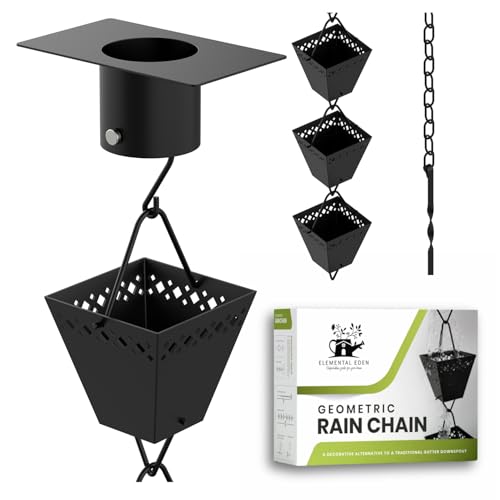
Elemental Eden 10 ft Rain Chain Kit with Adapter and Extension
Best for: Replacing a downspout with a complete kit
A 10 ft black powder-coated rain chain sold as a kit with a gutter adapter and extension, so you have the main parts needed to swap out a downspout.
- Complete kit with adapter
- 10 ft length plus extension
- Black powder coat finish
- Check gutter outlet size for adapter fit
- Powder coat can chip if knocked

Monarch Rain Chains Aluminum Ring Rain Chain (8.5 ft)
Best for: A classic ring look on single-story homes
An 8.5 ft aluminum ring rain chain where water cascades from ring to ring, from a brand that specializes in rain chains.
- Aluminum resists rust
- 8.5 ft suits single-story eaves
- Specialist rain chain brand
- Rings splash more than cups in heavy rain
- May need an extension for taller eaves

Monarch Rain Chains Matte Black Aluminum (8.5 ft)
Best for: Modern homes and dark trim
An 8.5 ft powder-coated aluminum rain chain with a modern matte black finish designed for efficient rainwater flow.
- Matte black modern finish
- Powder-coated aluminum
- Efficient flow design
- Black can show water spots
- Fixed length

Rifachua 8.5 ft Black Lotus Cup Rain Chain
Best for: Heavier rain with less splashing
An 8.5 ft rain chain with lotus-shaped cups, which hold and channel more water than open rings, reducing splash.
- Cup design handles more water
- Decorative lotus shape
- 8.5 ft length
- Plated finish may wear over time
- Heavier than ring chains

Monarch Rain Chains Gutter Adapter
Best for: Connecting any rain chain to your gutter
A gutter adapter that fits into the gutter outlet to guide water onto a rain chain and support its weight.
- Directs water onto the chain
- Supports chain weight
- Works with many rain chains
- Adapter only, chain sold separately
- Measure your gutter outlet first
How we chose these rain chains
We compared style (rings vs cups), material and finish, length, included parts and suitability for different rainfall levels. We included a complete kit, two styles from a rain chain specialist, a cup design for heavier rain and an adapter, since a good adapter is essential for any chain. We do not list prices because they change often.
Rain chain vs downspout
A downspout is an enclosed pipe that carries water quietly and handles heavy storms well. A rain chain is open and decorative, adding sound and movement, but it can splash in very heavy rain and needs good drainage at the base. Rain chains work best on roof sections with modest runoff, such as porches, entryways, garden sheds and smaller roof areas. For the main roof of a large house in a very wet climate, keep at least some downspouts.
Rain chain buying guide
Rings vs cups
Ring or link chains are simple and elegant, letting water cascade from link to link. They handle light rain well but splash more in heavy rain. Cup chains have small open-bottomed cups that catch and channel water, reducing splash and carrying more water. If you get frequent heavy storms, cups are the better choice.
Material
Aluminum is light and rust resistant. Powder-coated finishes in black or bronze add color and protection. Copper develops a natural green patina over time and is long-lasting but usually costs more. Plated finishes look like copper or brass at lower cost but may wear over the years.
Length
Measure from the bottom of the gutter to the ground or basin. Many single-story homes need about 8.5 feet. Taller eaves need a longer chain or an extension piece.
Gutter adapter
The adapter fits into the gutter outlet, supports the chain and directs water onto it. Without one, water may miss the chain. Measure your gutter outlet before buying, since outlet sizes vary.
Anchoring
A chain left free will swing in the wind. Anchor the bottom to a stake, a basin or a weight so it hangs straight.
Which rain chain is right for you?
- Easiest complete swap: Elemental Eden 10 ft kit.
- Classic look: Monarch aluminum ring chain.
- Modern homes: Monarch matte black chain.
- Heavier rain: Rifachua lotus cup chain.
- Need an adapter: Monarch gutter adapter.
How to install a rain chain
- Remove the downspout and the elbow at the gutter outlet.
- Fit the gutter adapter into the outlet.
- Hang the chain from the adapter.
- Measure and trim or extend the chain so it reaches the ground or basin.
- Anchor the bottom to a stake, basin or weight.
- Prepare the drainage area at the base so water flows away from the foundation.
Managing water at the base
The most important part of a rain chain installation is where the water goes. Never let it pool against the foundation. Common options include:
- A gravel or river rock bed sloped away from the house.
- A decorative basin with an overflow that drains away.
- A rain garden planted with species that tolerate wet and dry spells.
- A rain barrel to collect the water for the garden.
If you want to collect the water, our guide on how to connect rain barrel to downspout covers overflow and placement, and our rainwater harvesting system for garden guide explains larger setups.
Where rain chains work best
Rain chains are most successful where roof runoff is moderate and the chain is visible enough to enjoy. Front porches and entryways are popular, because the chain becomes a focal point and the porch roof sheds a manageable amount of water. Garden sheds, pergolas, gazebos and greenhouses are also ideal, often draining into a barrel or planting bed. Back patios benefit from the sound of falling water during a summer shower. Avoid placing a chain where water could splash onto a walkway people use in winter, since splashes can freeze and create slippery patches.
How much water can a rain chain handle?
There is no universal rating, because flow depends on roof area, gutter slope and rainfall intensity. As a rule of thumb, rain chains are best on smaller roof sections. If one downspout drains a very large roof area, replacing it with a single rain chain may lead to overflow and splashing in heavy storms. Options include using a cup-style chain, splitting the roof drainage between a chain and a downspout, or placing the chain on a smaller roof section such as a porch. Watch the chain during the first heavy storm and adjust if water sheets past it.
Choosing a style for your home
Copper chains suit traditional, craftsman and rustic homes, and their patina deepens over the years. Matte black and dark bronze finishes complement modern exteriors and black window frames. Lotus and bell cups add an Asian-inspired look that works well near water features and Japanese-style gardens. Simple aluminum rings are understated and fit almost any style. Consider the color of your gutters and trim, since the chain will be seen against them.
Rain chains and rain barrels
A rain chain can feed a rain barrel through a screened opening in the lid. This combines decoration with water saving. Keep the barrel covered and screened against mosquitoes, and plan overflow so excess water drains safely. Water collected this way is excellent for watering beds and pots; our guide on watering garden with rainwater explains how to use it.
Building a gravel basin at the base
A simple gravel basin is the most popular way to handle water at the bottom of a rain chain. Dig a shallow, wide hole beneath the chain, about a foot or two across, and slope the bottom away from the house. Line it with landscape fabric to keep soil from mixing with the stone, then fill it with washed gravel or river rock. A decorative stone, bowl or basin in the center can anchor the chain and catch the water before it spreads into the gravel. If your soil drains slowly, extend the basin into a shallow channel or dry creek bed that carries water several feet from the foundation to a lawn, bed or rain garden.
Rain chains in windy areas
Wind can blow a rain chain sideways, so water misses the basin and splashes onto walls. Anchoring the bottom firmly is the main fix: use a ground stake, a heavy basin with a hook or a short length of chain fixed to a weighted base. Cup-style chains are a little less affected by wind than light ring chains. In very exposed spots, consider placing the chain on a sheltered side of the house.
Winter and maintenance
- Clean gutters regularly so leaves do not clog the adapter.
- Check the chain for loose links or cups after storms.
- Watch for ice in freezing climates; heavy ice can weigh down the chain and gutter.
- Remove or secure the chain before very severe winter weather if ice buildup is common.
- Clear the base of leaves so drainage keeps working.
Our rainwater harvesting system maintenance checklist includes gutter and screen care that applies to rain chains too.
Do rain chains need maintenance?
Very little. The main tasks are keeping the gutter clean so leaves do not block the adapter, checking that the chain still hangs straight and is anchored, and clearing leaves and silt from the basin so water drains freely. Copper chains need no polishing; their patina is part of their appeal. Powder-coated chains can be wiped with a damp cloth if they get dusty. After a big storm, look for links or cups that have opened or bent and close them with pliers. In freezing climates, inspect the gutter bracket and adapter in spring, since ice can loosen fixings over the winter.
Rain chain costs and value
Rain chains range from inexpensive aluminum rings to more costly solid copper cups. Kits with an adapter and extension cost a little more but save buying parts separately and make installation smoother. Considering that a rain chain replaces a downspout and adds a decorative feature, many homeowners find even premium chains good value. The drainage area at the base, such as gravel or a basin, adds a small extra cost but is essential. Budget for a bag or two of gravel and a ground stake when planning the project, so the installation is complete on day one rather than leaving water to pool while you finish the base.
Common mistakes
- Letting water pool against the foundation.
- Skipping the gutter adapter.
- Leaving the chain unanchored, so it swings in wind.
- Using a ring chain on a roof with very heavy runoff.
- Ignoring ice buildup in winter.
- Hanging a chain too short so water splashes from mid-air.
The EPA encourages directing roof runoff into planted areas or rain barrels, which pairs well with a rain chain.
The bottom line
The best rain chain for downspout replacement for most homes is a complete kit like the Elemental Eden 10 ft with adapter. Choose Monarch ring or matte black chains for style, a cup chain like the Rifachua for heavier rain and always use a gutter adapter. Anchor the chain, direct water into gravel, a basin, a rain garden or a rain barrel, and keep gutters clean so the chain flows freely.
Frequently Asked Questions
What is the best rain chain for a downspout?
For most homes, a complete kit like the Elemental Eden 10 ft with adapter is the easiest swap. Cup-style chains handle heavier rain with less splashing than rings.
Do rain chains work as well as downspouts?
They handle light to moderate rain well. In very heavy downpours they can splash or overflow, so cup styles and good drainage at the base help.
How long should a rain chain be?
Measure from the gutter to the ground. Many single-story homes need about 8.5 ft; taller eaves need a longer chain or an extension.
What goes at the bottom of a rain chain?
Anchor it to a stake or basin, and direct water into a gravel bed, rain garden, basin or rain barrel away from the foundation.
Can I use a rain chain with a rain barrel?
Yes. Hang the chain into a screened barrel opening or a basin that drains into the barrel.