
Last updated: October 2026 · Written by the LawnVibe editorial team.
If your yard is small to medium and you have an outdoor outlet, a corded edger is one of the best-value lawn tools you can buy. It is lighter on maintenance than gas, cheaper than cordless and never stops halfway down the driveway with a flat battery. The best corded edger combines a 12-amp motor, an adjustable blade depth and a wheeled base that rolls along the path for straight lines. Our top pick is the BLACK+DECKER LE750 2-in-1 edger and trencher. Below we compare seven corded options, including blade edgers, trimmer/edgers, a 3-in-1 tool and a replacement blade, and explain how to get crisp edges with one.
Listings change often, so check current details on Amazon before you buy. As an Amazon Associate we earn from qualifying purchases.
Our top picks at a glance
| # | Product | Best for | Link |
|---|---|---|---|
| 1 | BLACK+DECKER 12-Amp 2-in-1 Edger and Trencher (LE750) | Most homeowners who want a corded blade edger | Check price |
| 2 | BLACK+DECKER 12-Amp 2-in-1 Landscape Edger and Trencher (LE760FF) | Defining beds and borders | Check price |
| 3 | CRAFTSMAN 12-Amp Corded Lawn Edger (CMEED400) | Straight sidewalks and driveways | Check price |
| 4 | BLACK+DECKER Corded Weed Wacker with Wheeled Edge Guide | Small yards that want one corded tool | Check price |
| 5 | BLACK+DECKER Corded String Trimmer/Edger with EASYFEED | Light edging on a budget | Check price |
| 6 | BLACK+DECKER 3-in-1 Corded Mower, Trimmer and Edger (BESTA512CM) | Tiny lawns that need mowing, trimming and edging | Check price |
| 7 | EZee 7.5 inch Electric Edger Replacement Blade | Keeping a corded edger cutting cleanly | Check price |
Best corded edger reviews

BLACK+DECKER 12-Amp 2-in-1 Edger and Trencher (LE750)
Best for: Most homeowners who want a corded blade edger
A 12-amp corded edger with a wheeled base that converts to a trencher, with adjustable depth for sidewalks, beds and shallow trenches.
- Edger and trencher in one
- Wheeled base rolls along paths
- Adjustable depth
- Cord limits range
- Heavier than stick edgers

BLACK+DECKER 12-Amp 2-in-1 Landscape Edger and Trencher (LE760FF)
Best for: Defining beds and borders
A 12-amp corded landscape edger and trencher aimed at keeping garden beds and lawn borders clean and defined.
- Designed for landscape edges
- Trencher mode for edging strips
- Steady corded power
- Corded range
- Check depth settings for your job
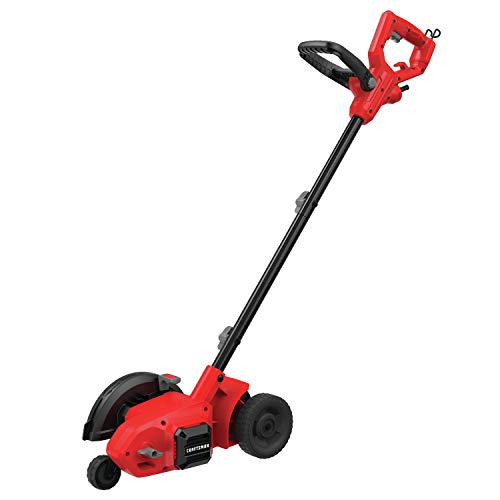
CRAFTSMAN 12-Amp Corded Lawn Edger (CMEED400)
Best for: Straight sidewalks and driveways
A 12-amp corded edger from CRAFTSMAN built to give lawn edges a clean, professional look along hard surfaces.
- 12-amp motor
- Clean sidewalk lines
- Familiar brand
- No trench mode
- Needs an extension cord

BLACK+DECKER Corded Weed Wacker with Wheeled Edge Guide
Best for: Small yards that want one corded tool
A corded trimmer that rotates into a wheeled edger, with automatic spool feed so you do not need to bump for line.
- Trims and edges
- Wheeled edge guide
- Auto feed spool
- String edge is softer than a blade
- Corded range

BLACK+DECKER Corded String Trimmer/Edger with EASYFEED
Best for: Light edging on a budget
A 6.5-amp corded trimmer/edger with push-button EASYFEED line advance and POWERDRIVE transmission.
- Push-button feed
- Light
- Affordable
- Line edging, not blade
- Less power for deep edges

BLACK+DECKER 3-in-1 Corded Mower, Trimmer and Edger (BESTA512CM)
Best for: Tiny lawns that need mowing, trimming and edging
A 12 inch corded tool that works as a string trimmer, edger and small mower deck for very small lawns.
- Three tools in one
- Saves storage space
- Corded, no batteries
- Mower mode suits only tiny lawns
- Jack-of-all-trades compromise

EZee 7.5 inch Electric Edger Replacement Blade
Best for: Keeping a corded edger cutting cleanly
A 7.5 inch alloy steel replacement blade listed as compatible with Worx WG895/WG896 and several other electric edgers.
- Restores clean cuts
- Alloy steel
- Low cost
- Check compatibility with your model
- Accessory only
How we chose these edgers
We compared corded edgers by motor power, cutting depth, edging versus trenching ability, weight and how easy each is to guide. We included three 12-amp blade edgers, two corded trimmer/edgers for small yards, a 3-in-1 tool for very small lawns and a replacement blade. We do not list prices because they change often.
Why choose a corded edger?
- Unlimited runtime: no batteries to charge or run down.
- Low cost: corded edgers usually cost less than comparable cordless or gas edgers.
- Light maintenance: no fuel, oil or spark plugs.
- Consistent power: blade speed stays steady from start to finish.
- Quiet operation compared with gas edgers.
The trade-off is the cord: you need an outdoor outlet within reach and a suitable extension cord, and you must keep the cord clear of the blade.
Blade edgers vs corded trimmer/edgers
A blade edger uses a vertical steel blade to cut a clean, deep groove along concrete and bed edges. It gives the crispest result and handles moderately overgrown edges. A corded trimmer/edger uses spinning line rotated into a vertical position. It is lighter and also trims grass, but the line edge is softer and wears quickly against concrete. For sharp sidewalk lines, choose a blade edger; for small yards that need both trimming and light edging, a trimmer/edger is a practical single tool.
Extension cords and safety
Use an outdoor-rated extension cord of the gauge and maximum length specified in your edger's manual. Longer cords need a heavier gauge to avoid voltage drop, which reduces power and can overheat the motor. Plug into a GFCI-protected outdoor outlet. Use the cord retainer on the handle so the plug does not pull loose, and keep the cord behind you and away from the blade. Inspect cords for cuts before each use, and never edge in wet conditions with a corded tool. The Electrical Safety Foundation International offers guidance on using outdoor extension cords safely.
Who a corded edger suits best
Corded edgers are ideal for homeowners with a typical suburban front walk, a driveway and a few beds, all within reach of an outdoor outlet. If you edge every few weeks during the growing season, a corded edger's steady power and simple design make the job quick, and there is no battery to remember to charge. They also suit buyers on a budget who want a blade edger rather than a string trimmer. If your edges run far from the house, or you have multiple separate areas, a cordless edger may be more convenient; for very large or neglected properties, a gas walk-behind edger is stronger.
Key features to compare
- Motor rating: 12-amp motors are common and handle routine edging well.
- Cutting depth: adjustable depth settings for light edging and deeper cuts.
- Trencher function: useful for installing edging or burying cable.
- Wheels and guide: a wheeled base and edge guide help keep lines straight.
- Weight: lighter models are easier to lift over curbs and move between areas.
- Cord retainer: keeps the plug from pulling out of the extension cord.
- Blade availability: check that replacement blades are easy to find.
Edging garden beds with a corded edger
Bed edges have no hard surface to follow, so mark the line first with a garden hose, string or marking paint. Set a deeper blade depth and, if possible, angle the blade so the cut slopes toward the bed. Walk slowly and let the wheels ride on the lawn side. After cutting, lift out the loose turf with a spade and top the bed with mulch. Refresh bed edges a few times a season so the line stays crisp.
How often to edge
During the growing season, edging every second or third mowing keeps lines tidy with very little effort. Fast-spreading grasses such as Bermuda and St. Augustine may need edging more often. A deeper edge in spring re-establishes lines after winter growth.
How to edge with a corded edger
- Plan your route so you start near the outlet and work away from it, keeping the cord behind you.
- Mow first so the edge line is easy to see.
- Set the blade depth, shallow for maintenance, deeper for overgrown edges.
- Place the wheels on the hard surface with the blade just inside the edge.
- Start the edger before the blade touches the ground, then lower it into the cut.
- Walk slowly, letting the blade cut without forcing it.
- Make a second pass on overgrown sections.
- Sweep or blow debris off the path when finished.
Our guide on how to use a lawn edger to create straight edges has more technique tips, and for driveways see how to edge a driveway with a lawn edger.
Using the trencher mode
Trenching is where edger-trenchers earn their keep, saving hours of digging by hand with a spade when installing edging or cable.
Edger-trencher models can lower the blade to cut a narrow trench, useful for installing plastic or metal landscape edging, burying low-voltage lighting cable or defining bed borders. Mark the line with a hose or paint first, call your local utility locate service before digging, and make several shallow passes rather than one deep cut. Clear the trench with a narrow spade before installing edging.
Choosing blade depth and angle
Depth and angle settings let one corded edger handle very different jobs, from a light trim along a sidewalk to a deep, beveled bed border. Getting them right is the difference between a crisp edge and a ragged one.
For routine sidewalk edging, a shallow depth keeps the line neat with minimal effort. Increase depth for overgrown edges or when you want a defined trench along beds. Some edgers also adjust the blade angle, letting you bevel bed edges so soil slopes away from the lawn and grass is less likely to creep in.
Edger maintenance
- Unplug the edger before any maintenance.
- Clean grass and soil from the blade guard after each use.
- Inspect the blade and replace it when it becomes rounded or chipped; a fresh blade makes a big difference.
- Check the cord and plug for damage.
- Store indoors in a dry place.
If your edger will not start, check the outlet, GFCI, extension cord and cord retainer first. Our guide on how to fix a lawn edger that is not turning on walks through the checks.
Safety checklist
- Wear safety glasses, long trousers and closed shoes; edgers throw stones and soil.
- Plug into a GFCI outlet and use an outdoor-rated cord.
- Keep the cord behind you and away from the blade at all times.
- Check for buried cables, irrigation lines and sprinkler heads before deep cuts or trenching.
- Unplug before clearing clogs or changing the blade.
- Keep children and pets away while edging.
- Never use a corded edger in rain or on wet grass.
Corded vs cordless vs gas edgers
Corded edgers are the best value for small and medium yards near an outlet. Cordless edgers offer freedom of movement and suit larger yards or edges far from outlets, at a higher price. Gas edgers have the most power and runtime for large or neglected properties, but they are louder and need engine maintenance. For a full comparison across power types, see our roundup of the best edger.
Common mistakes
- Using an indoor extension cord outdoors.
- Letting the cord trail in front of the blade.
- Cutting too deep in one pass.
- Edging wet grass with a corded tool.
- Ignoring a worn blade.
- Skipping eye protection.
- Edging before mowing, which hides the line you want to follow.
- Forcing the edger forward instead of letting the blade cut at its own pace.
Troubleshooting corded edgers
- Edger stops or slows: check the extension cord gauge and length; an undersized cord starves the motor.
- Wavy lines: slow down and keep the wheels firmly on the path.
- Excess vibration: the blade may be loose, bent or worn; unplug and inspect it.
- Blade not reaching depth: the blade may be worn down; replace it.
- Edger trips the GFCI: check for damaged cords or moisture and keep connections dry.
Managing the cord
Good cord management makes corded edging easy. Start nearest the outlet and work outward, so the cord trails behind you over ground you have already finished. Loop the cord through the retainer on the handle so it cannot unplug. Flip the cord over your shoulder when changing direction rather than stepping over it. Keep a dedicated outdoor cord coiled on a reel so it is ready for each session and does not kink.
Is a corded edger worth it?
If you have an outlet within reach of your edges, yes. A corded edger delivers clean, consistent lines at a low cost, with almost no maintenance. It is one of the simplest ways to give a yard a professional finish.
The bottom line
For most yards with an outdoor outlet, the BLACK+DECKER LE750 is the best corded edger thanks to its 12-amp power, wheeled base and trencher mode. Choose the LE760FF for landscape bed edging, the CRAFTSMAN CMEED400 for straightforward sidewalk lines, a BLACK+DECKER corded trimmer/edger if you want one light tool for trimming and edging, the 3-in-1 tool for tiny lawns and a replacement blade to keep any electric edger cutting cleanly. Use the right extension cord, keep it behind you, edge every few mowings and replace the blade when it wears for consistently crisp lines along every path and bed.
Frequently Asked Questions
Are corded edgers powerful enough?
Yes. 12-amp corded edgers cut cleanly along sidewalks and driveways and handle routine edging well. Very overgrown edges may need two passes.
What extension cord do I need for a corded edger?
Use an outdoor-rated cord of the gauge and length the manual recommends; longer runs need a heavier gauge to avoid power loss.
Corded or cordless edger?
Corded edgers are cheaper, lighter on maintenance and never run out of charge. Cordless edgers are more convenient for big yards and spots far from outlets.
Can a corded edger cut trenches?
Edger-trencher models adjust to cut shallow trenches for landscape edging or low-voltage wiring.
How often should I replace the edger blade?
When it becomes rounded, chipped or no longer reaches your desired depth, often once a season or two for regular use.