
Last updated: October 2026 · Written by the LawnVibe editorial team.
Some lawns fight back. Thick mats of grass roots, compacted clay, stony ground and creeping runners can stop a light edger in its tracks or bend a cheap blade. The best edger for tough roots has a sharp, sturdy blade designed to bite into dense turf, plus enough leverage or power to cut cleanly without tearing the soil.
This guide compares nine edgers for difficult ground: serrated and saw-tooth manual edgers that slice through root mats, and powerful corded, battery and trencher-style edgers with deep, adjustable cuts. You will also learn how to prepare tough soil, protect tree roots and avoid damaging your tools.
| # | Product | Best for | Link |
|---|---|---|---|
| 1 | Garden Weasel Edger Chopper | Clay, sod and roots | Check price |
| 2 | 41 inch Half-Moon Edger with Double-V Saw-Tooth Blade | Dense root mats | Check price |
| 3 | Colwelt 38 inch Saw-Tooth Half-Moon Edger | Rooty bed borders | Check price |
| 4 | Fiskars 38 inch Long-Handled Steel Edger | Strength in compacted soil | Check price |
| 5 | Yard Butler Step Edger | Using body weight | Check price |
| 6 | DEWALT 60V MAX FLEXVOLT Edger Kit (DCED472X1) | Overgrown edges with thick roots | Check price |
| 7 | Greenworks 80V 8 inch Cordless Edger (Tool Only) | Compacted curbs | Check price |
| 8 | WORX WG896 12 Amp Edger and Trencher | Recuts and edging installs | Check price |
| 9 | BLACK+DECKER 12 Amp 2-in-1 Edger and Trencher | Budget tough-soil work | Check price |
How We Chose the Best Edger for Tough Roots
We did not run hands-on tests. We compared published specifications and features that matter in hard ground: blade material and edge shape, serrations, footplate size, handle strength, cutting depth, motor power and trenching capability. We also looked at how each tool handles dense turf without bending, because blade and handle strength are common weak points on budget edgers.
Specifications change, so confirm details on the listing before you buy.
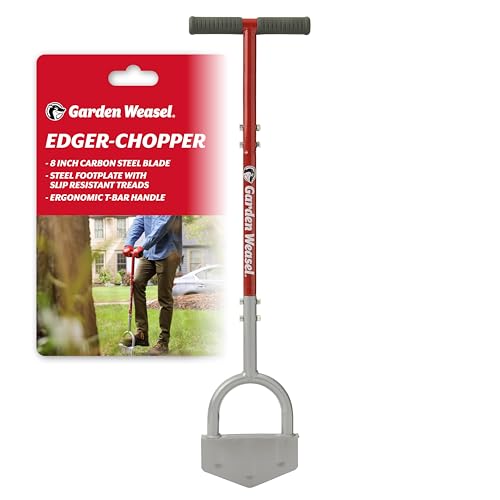
Garden Weasel Edger Chopper
Best for: Clay, sod and roots
A tempered 8 inch carbon steel blade designed to slice through sod, clay and roots for crisp borders along beds, driveways and walkways.
- Tempered carbon steel blade
- Built for tough sod
- No fuel or battery
- Manual effort
- Check length for your height
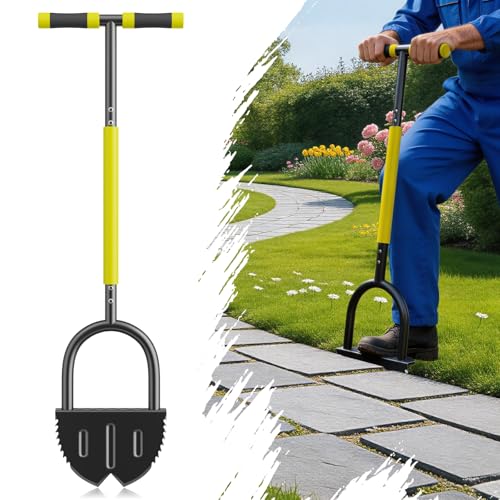
41 inch Half-Moon Edger with Double-V Saw-Tooth Blade
Best for: Dense root mats
A high-carbon stainless double V-shaped serrated blade that cuts through hard soil, grass roots and turf more easily than a flat spade.
- Double-V serrations
- Rubber T-grip
- 41 inch length
- Generic brand
- Check blade joint regularly

Colwelt 38 inch Saw-Tooth Half-Moon Edger
Best for: Rooty bed borders
A saw-tooth half-moon edger with a T-grip for deep, clean borders, also useful when installing plastic edging.
- Saw-tooth blade
- T-grip control
- Good for edging installs
- Manual effort
- Average length

Fiskars 38 inch Long-Handled Steel Edger
Best for: Strength in compacted soil
A steel pole and steel blade built for cutting tough soil, with a large step platform for maximum foot pressure.
- All-steel strength
- Large step
- Long handle
- Smooth blade
- Heavier than aluminium tools
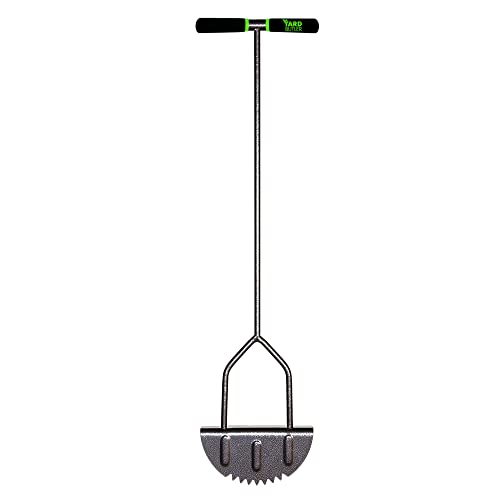
Yard Butler Step Edger
Best for: Using body weight
A foot-operated edger with cushioned handles and a rust-resistant powder-coated finish for sharp sidewalk and bed lines.
- Foot-powered cutting
- Cushioned handles
- Rust resistant
- Better on straight lines
- Physical effort

DEWALT 60V MAX FLEXVOLT Edger Kit (DCED472X1)
Best for: Overgrown edges with thick roots
A hardened 7-1/2 inch steel blade with up to 2-1/2 inch adjustable depth gives room for staged cuts through dense, rooty edges.
- Up to 2.5 inch depth
- Hardened steel blade
- Large guide wheel
- Premium price
- Heavy with battery
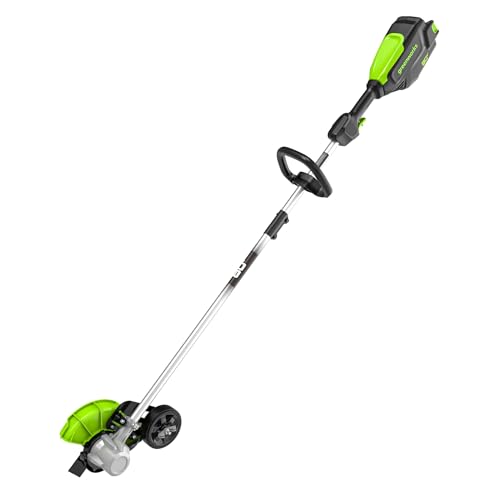
Greenworks 80V 8 inch Cordless Edger (Tool Only)
Best for: Compacted curbs
An 80V edger with an 8 inch blade and curb wheel, built for cutting through compacted soil along curbs.
- 80V power
- Curb wheel
- Strong blade
- Tool only
- 80V ecosystem
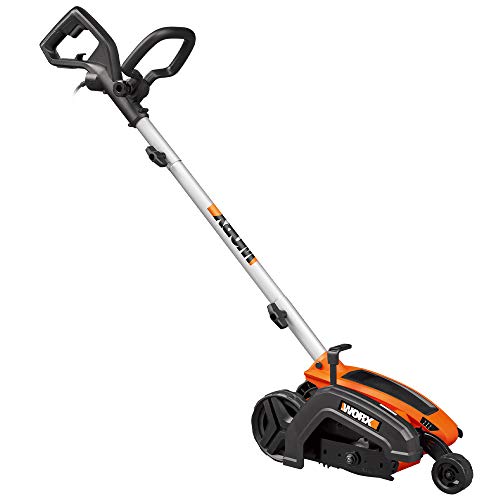
WORX WG896 12 Amp Edger and Trencher
Best for: Recuts and edging installs
A 12 amp edger with three depth settings and a cutting line indicator, useful for staged cuts and shallow trenches.
- Three depths
- Cutting line indicator
- Trencher capability
- Corded range
- Heavier to carry

BLACK+DECKER 12 Amp 2-in-1 Edger and Trencher
Best for: Budget tough-soil work
A corded 12 amp edger that also digs shallow trenches, with three height settings for working through dense edges in stages.
- Edger and trencher
- Three heights
- Good value
- Corded range
- Check for buried lines before trenching
Why Some Edges Are So Hard to Cut
Grass roots form a dense mat near the surface, especially in established lawns with spreading grasses. When grass creeps over a bed or sidewalk for a season or two, those roots knit together with the soil and become tough to slice. Clay soils compact easily, especially along driveways and paths where people walk, and dry clay can feel almost like concrete. Stony soil adds another problem, deflecting blades and dulling edges quickly.
The right edger handles these conditions in two ways. Manual edgers with serrated or saw-tooth blades grip the root mat and cut it rather than sliding over it. Powered edgers use blade speed and torque to slice through roots and soil, with adjustable depth so you can cut in stages.
Manual vs Powered Edgers for Tough Ground
Manual edgers are excellent for bed borders and shorter edges in tough soil. A serrated half-moon or edger chopper, driven in with body weight on a wide footplate, cuts through root mats with control. You can rock the blade to work through especially dense spots. The trade-off is effort over long distances. For more manual options, see our guide to the best manual lawn edger.
Powered edgers are faster on long sidewalks and driveways. A corded 12 amp edger or a high-voltage battery edger with adjustable depth can work through overgrown, root-filled edges in a couple of passes. Trencher-capable edgers cut deeper slots for installing landscape edging. For more power options, see our guides to the best electric edger and the best cordless edger.
Best Edger by Tough-Ground Situation
Overgrown sidewalks with knitted root mats
A powered blade edger with adjustable depth is fastest. Make a shallow cut to separate the turf from the concrete, then a deeper pass. Remove the loosened strip of sod with a flat spade.
Clay soil along beds
A serrated half-moon or edger chopper with a wide footplate works well, especially if the soil is watered the day before. Clay holds its shape well once cut, so a clean edge in clay can last a long time.
Stony or gravelly ground
Stones dull and chip blades quickly. A sturdy manual edger lets you feel stones and work around them. With powered edgers, remove stones along the line first and keep spare blades handy.
Installing landscape edging in hard soil
An edger with trenching capability cuts the narrow slot you need for plastic or steel edging strips. In very hard soil, make several shallow passes rather than one deep one.
Edger Buying Guide for Tough Roots
Blade shape and serrations
Serrated, saw-tooth and double-V blades bite into roots and dense turf better than smooth blades. For power edgers, sturdy, hardened steel blades hold up best.
Blade and handle strength
In tough soil, you put more force through the tool. Look for tempered or hardened steel blades and strong joints between blade and handle. Steel and fibreglass handles generally outlast cheap wooden or thin tubular handles.
Footplate
A wide footplate lets you drive the blade in with your full body weight and protects your foot. This is essential in compacted soil.
Depth control
On powered edgers, adjustable depth lets you make a shallow first pass and deepen it gradually, reducing strain on the motor and blade.
Power
For corded edgers, 12 amp motors are common and capable. For battery edgers, higher voltage and brushless motors deliver more torque.
How to Edge Through Tough Roots
Preparation makes the biggest difference. Water the edge thoroughly a day before, so the soil is moist but not muddy. Mark the line you want with a hose, string or spray paint. Remove visible stones along the line.
With a manual edger, place the blade on the line, step firmly on the footplate and rock the handle side to side to work the blade through the root mat. Move along by slightly less than a blade width each time so cuts overlap. With a powered edger, start at a shallow depth, make a full pass, then increase the depth and make a second pass. Do not force the blade; let it cut at its own pace.
Once the line is cut, slice under the strip of turf between the cut and the bed or pavement and lift it out. Our guides on how to edge garden beds and how to edge a lawn explain the full process.
Protecting Tree Roots
Edging near trees needs care. Small fibrous grass and weed roots are fine to cut, but larger tree roots near the trunk are part of the tree's support and water supply. Cutting them can damage or weaken the tree. If your edge runs into substantial tree roots, consider rerouting the edge, raising the bed slightly with mulch, or using a mulch ring around the tree instead of a cut edge. For valuable or mature trees, consult a certified arborist before cutting roots. The University of Massachusetts Urban and Community Forestry program explains how tree root damage affects tree health and why construction or digging near trees needs care.
Preventing Edges From Becoming Tough Again
Once you have recut a difficult edge, keep it from knitting back. Edge regularly so roots do not have time to spread across the border. Install physical edging such as steel or plastic strips along beds; they block creeping roots and keep a permanent line. Our guide to the best landscape edging for grass compares options, and how to install landscape timbers for edging shows another durable approach. Keeping beds mulched also discourages grass from creeping in.
Improving Tough Soil Over Time
Edging gets easier when the soil itself improves. Core aeration loosens compacted lawn soil and lets water and air reach roots, which makes future edging less of a battle. In beds, adding compost and keeping a layer of mulch improves soil structure and keeps the surface softer. Avoid walking or parking on lawn edges when they are wet, which compacts the soil further. If your whole lawn is heavy clay, our guide to the best lawn aerator for clay soil explains aeration options.
Common Mistakes in Hard Ground
Forcing a powered edger to full depth on the first pass is the most common mistake. It stalls motors, strains blades and leaves ragged edges. Another is levering a manual edger hard against compacted soil, which can bend the blade or snap the handle. Rock the blade gently instead, and water the soil first. Many people also edge right up to tree trunks, damaging important roots; keep a respectful distance and use mulch rings around trees.
Tool Care in Hard Ground
Tough soil is hard on tools. Clean blades after each use and check them for chips, bends and dull edges. File manual edger blades sharp a few times a season, and replace powered edger blades when they wear. Check handle joints and fasteners regularly. Store tools dry to prevent rust, which weakens blades over time.
Safety in Tough Soil
Hard ground increases the chance of the tool kicking or the blade bouncing off stones. Wear safety glasses, gloves, long pants and sturdy boots. Keep a firm stance and avoid overreaching. With powered edgers, keep bystanders away and stop the tool before clearing debris. Before cutting deep or trenching, check for buried utilities and irrigation lines.
Keep a Spare Blade Handy
Tough soil wears and chips blades faster than ordinary edging. Keeping a spare blade for your power edger, or a file for your manual edger, means a dull blade never slows the job.
When to Edge Tough Ground
Timing has a big effect in difficult soil. Spring and autumn, when soil is naturally moist, are the easiest seasons to recut tough edges. Midsummer droughts bake clay and harden root mats, so if you must edge then, water deeply the day before. Avoid edging when soil is saturated, because wet clay smears and sticks to blades instead of cutting cleanly. A day or two after steady rain usually gives the best conditions, with soil that is soft enough to cut but firm enough to hold a crisp, vertical edge. Planning your big recut for these windows can halve the effort.
Final Verdict: Which Edger Is Best for Tough Roots?
The best edger for tough roots pairs a strong, serrated or hardened blade with enough leverage or power to cut in controlled passes.
- Best manual edger for tough sod: the Garden Weasel edger chopper with a tempered 8 inch blade.
- Best double-V serrated edger: the 41 inch double-V half-moon edger.
- Best saw-tooth half-moon: the Colwelt saw-tooth edger.
- Best all-steel long-handled edger: the Fiskars 38 inch steel edger.
- Best foot-powered step edger: the Yard Butler step edger.
- Best deep-cutting battery edger: the DEWALT 60V MAX FLEXVOLT edger with up to 2.5 inch depth.
- Best high-voltage battery edger: the Greenworks 80V 8 inch edger.
- Best corded edger and trencher: the WORX WG896.
- Best value edger and trencher: the BLACK+DECKER 12 amp 2-in-1.
Prepare the soil, cut in stages and protect your trees, and even the toughest edges can be brought back to a clean line.
Frequently Asked Questions
What edger cuts through roots best?
Serrated or saw-tooth manual edgers grip and slice root-filled turf better than smooth blades. For long edges, a powerful blade edger with adjustable depth cuts through grass roots and compacted soil quickly.
Can an edger cut tree roots?
Edgers can cut small, shallow grass and weed roots. Avoid cutting larger tree roots near trunks, which can harm the tree. Reroute the edge or consult an arborist if major roots are in the way.
How do I edge hard, dry soil?
Water the area thoroughly a day before edging so the soil softens. Make a shallow first pass, then a deeper second pass rather than forcing one deep cut.
Is a trencher the same as an edger?
Some electric edgers double as trenchers, cutting a deeper, narrow slot for landscape edging or cable. They work like edgers but with deeper settings.
Will tough soil damage my edger blade?
Hard, stony soil wears blades faster. Remove stones where you can, keep spare blades, and replace bent or chipped blades promptly.