

Last updated: October 2026 · Written by the LawnVibe editorial team.
Koi are some of the most rewarding fish to keep, but they are also demanding. Large, active fish produce a lot of waste and need plenty of oxygen, so the water features in a koi pond are not just decoration: waterfalls, fountains and aerators keep fish healthy. The best water features for koi ponds combine beauty with function, adding movement and sound while improving circulation and oxygen levels. Our top pick is a POPOSOAP filter, pump and fountain kit that cleans and circulates water in small to medium ponds. Below we compare nine features and water care products and explain how to keep a koi pond clear and healthy.
Listings change often, so check current details on Amazon before you buy. As an Amazon Associate we earn from qualifying purchases.
Our top picks at a glance
| # | Product | Best for | Link |
|---|---|---|---|
| 1 | POPOSOAP 660 GPH Pond Filter with 40W Pump and Fountain Kit | Small to medium koi ponds needing filtration and a fountain | Check price |
| 2 | Aquascape Pond Air 2 Aeration Kit with Beneficial Bacteria | Keeping oxygen levels up for fish | Check price |
| 3 | Pond Boss 1/4 HP Floating Fountain with Lights | Larger ponds that need surface aeration | Check price |
| 4 | Algreen Tranquility Lightweight Rock Waterfall | Adding a cascade to an existing pond | Check price |
| 5 | Cobalt Aquatics Decorative Koi and Frog Pond Spitter | Decorative accents at the pond edge | Check price |
| 6 | POPOSOAP 55W Solar Fountain Pump with Pond Filter Box | Ponds far from an outlet | Check price |
| 7 | PondWorx Pond Bacteria (Gallon) | Large ponds and water features | Check price |
| 8 | Koiworx Muck Reducer Tablets | Ponds with sludge on the bottom | Check price |
| 9 | API Pond Accu-Clear Water Clarifier | Cloudy pond water | Check price |
Best water features for koi ponds: reviews

POPOSOAP 660 GPH Pond Filter with 40W Pump and Fountain Kit
Best for: Small to medium koi ponds needing filtration and a fountain
A pond filter kit combining a 660 GPH pump, filter and fountain heads, for circulating and cleaning water in garden ponds.
- Filter, pump and fountain in one kit
- Adds circulation and aeration
- Fountain heads included
- May be undersized for large koi ponds
- Filter media needs regular rinsing

Aquascape Pond Air 2 Aeration Kit with Beneficial Bacteria
Best for: Keeping oxygen levels up for fish
A double-outlet pond aeration kit from Aquascape, bundled with dry beneficial bacteria, to add oxygen to pond water.
- Adds dissolved oxygen
- Two outlets
- Known pond brand
- Air pump needs a sheltered spot
- Not a filter

Pond Boss 1/4 HP Floating Fountain with Lights
Best for: Larger ponds that need surface aeration
A floating fountain with lights and a 50 ft power cord that sprays water above the surface to aerate and decorate larger ponds.
- Aerates while it decorates
- Lights for evening
- Long power cord
- Best for larger ponds
- Spray can be loud

Algreen Tranquility Lightweight Rock Waterfall
Best for: Adding a cascade to an existing pond
A lightweight polyethylene rock-look waterfall that sits beside a pond and returns pumped water with a natural splash.
- Natural rock look
- Lightweight to position
- Adds oxygen as water falls
- Pump sold separately
- Best blended with planting

Cobalt Aquatics Decorative Koi and Frog Pond Spitter
Best for: Decorative accents at the pond edge
A decorative pond spitter in koi or frog designs that connects to a pump with a hose barb and sends a stream into the pond.
- Charming decorative touch
- Simple hose-barb connection
- Adds gentle movement
- Needs a separate pump
- Small stream only

POPOSOAP 55W Solar Fountain Pump with Pond Filter Box
Best for: Ponds far from an outlet
A 55W solar pond pump with adjustable flow up to 580 GPH and a filter box, for powering pond circulation without mains wiring.
- No mains wiring
- Filter box included
- Adjustable flow
- Output depends on sunlight
- Panel needs a sunny location

PondWorx Pond Bacteria (Gallon)
Best for: Large ponds and water features
A liquid beneficial bacteria formula for large ponds and water features, described as safe for koi.
- Large-pond formula
- Supports clearer water
- Koi-safe according to the maker
- Works alongside filtration, not instead
- Dose carefully by pond volume

Koiworx Muck Reducer Tablets
Best for: Ponds with sludge on the bottom
Tablets that the maker says treat up to 2,500 gallons for up to four months, helping reduce muck and sludge.
- Easy tablet format
- Long-lasting treatment
- Targets bottom sludge
- Results vary with pond load
- Not a substitute for removing leaves
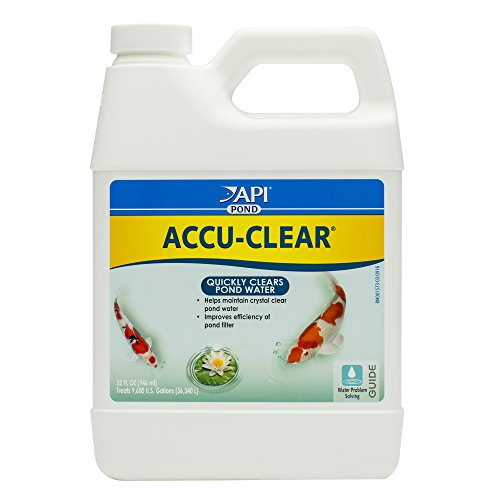
API Pond Accu-Clear Water Clarifier
Best for: Cloudy pond water
A pond water clarifier from API that clumps fine particles so the filter can remove them more easily.
- Helps clear cloudy water
- Well-known aquarium brand
- Simple dosing
- Treats symptoms, not causes
- Needs a working filter
How we chose these products
We focused on features that support koi health as well as looks: a filter and fountain kit, an aeration kit, a floating fountain, a waterfall, a decorative spitter and a solar pump, plus three widely used water care products. We compared flow, aeration, power needs and suitability for ponds with fish. We do not list prices because they change often. Large koi ponds usually need professional-grade filtration sized to the pond; the products here suit small to medium hobby ponds or add to an existing system.
Why koi need moving water
Koi grow large and eat a lot, producing ammonia-rich waste. Beneficial bacteria in filters convert that waste into less harmful compounds, but they need oxygen to work. Koi themselves need high dissolved oxygen, which drops in warm water and at night when plants stop photosynthesizing. Moving water at the surface, from waterfalls, fountains and air stones, increases gas exchange, adding oxygen and releasing carbon dioxide. Circulation also carries debris to the filter and prevents stagnant corners. That is why every koi pond benefits from at least one water feature.
Types of koi pond water features
Waterfalls and streams
Water pumped from the pond tumbles back over rocks, adding oxygen, sound and a natural look. Waterfalls are often fed by the filter return.
Fountains
Fountain heads or floating fountains spray water above the surface. They aerate and decorate, though very tall sprays can lose water to wind.
Air pumps and aerators
An air pump on land pushes air through tubing to air stones at the bottom of the pond. They add oxygen quietly and are essential in many koi ponds.
Spitters
Decorative figures that send a stream of water into the pond. They add charm and a little aeration.
Filters and UV clarifiers
Not a feature to look at, but central to a healthy pond. Mechanical and biological filtration remove waste; UV clarifiers help control green water.
How to choose water features for a koi pond
- Pond volume: calculate gallons (length x width x average depth in feet x 7.5 for rectangular ponds) and choose pumps and filters rated for it.
- Fish load: more and larger koi mean more waste and a need for stronger filtration and aeration.
- Turnover: many keepers aim to circulate the full pond volume through the filter roughly once every hour or two; check the guidance for your filter.
- Aeration: add an air pump in addition to waterfalls for reliable oxygen, especially at night and in summer.
- Power: mains pumps give reliable flow; solar pumps suit small ponds or extra features but may stop at night.
- Safety for fish: use intake guards and avoid features that create strong suction or trap fish.
- Looks and sound: waterfalls and spitters add character; floating fountains suit larger ponds.
Understanding dissolved oxygen
Oxygen dissolves into water at the surface, and warmer water holds less of it. On hot summer nights, oxygen levels in a crowded pond can fall low enough to stress or even kill fish. Signs include koi gasping at the surface or crowding near waterfalls. Running an air pump continuously, keeping waterfalls on and avoiding overstocking all help. The USGS Water Science School explains dissolved oxygen and why temperature matters.
Keeping koi pond water clear
Clear water comes from balance, not from additives alone. Start with adequate mechanical and biological filtration sized for your fish. Avoid overfeeding, because uneaten food rots and fuels algae. Shade part of the surface with water lilies or floating plants, which also give koi cover. Remove fallen leaves before they sink. Beneficial bacteria products can support the filter, and clarifiers help remove fine particles, but they work best in a pond that is already well filtered and not overstocked. A UV clarifier is often the most effective solution for persistent green water.
Water testing
Testing is the best way to know whether your features and filtration are keeping up. A basic pond test kit checks ammonia, nitrite, nitrate and pH. Ammonia and nitrite should be near zero; rising readings mean the filter is overloaded or still maturing. Test more often in a new pond, after adding fish and in hot weather. Partial water changes with dechlorinated water help keep nitrate under control.
Planting a koi pond
Koi are notorious for nibbling and uprooting plants, so choose sturdy species and protect roots. Water lilies in heavy pots topped with large stones, floating plants in ring enclosures and marginal plants on shelves out of reach all work. Plants compete with algae for nutrients and provide shade. For planting tips, see how to plant koi pond plants.
Waterfalls, fountains and fish behavior
Koi often gather near waterfalls in warm weather, where oxygen is highest. They also appreciate calm, deeper areas to rest and hide from predators like herons. Avoid making the whole pond turbulent; balance moving water with quieter zones. Fountains with very tall sprays can disturb shy fish and lose water to wind, so lower settings often suit koi ponds better.
Predator protection
Herons, raccoons and cats can take koi. Deep areas of at least several feet, steep sides, caves or covers where fish can hide and netting over the pond in vulnerable seasons all help. Some keepers use motion-activated sprinklers to deter herons. A good depth also protects koi from temperature swings.
Winter care for koi ponds
In cold climates, koi slow down and stop eating as water cools. Stop feeding when water temperature drops low, as directed by your koi food. Many keepers turn off waterfalls in deep winter, since moving water can chill the whole pond, and instead run an air pump near the surface or a pond de-icer to keep a hole in the ice for gas exchange. Never break ice by hitting it, which sends shock waves through the water. Our guides on how to keep pond fish alive in winter and how to winterize a garden pond have step-by-step advice.
Sizing a pump for a koi pond waterfall
A waterfall needs enough flow to look full. A common rule of thumb used by pond builders is to allow a certain flow per inch of waterfall width, then add for the height the pump must lift water, known as head height. Pump boxes usually show a flow chart: the higher the lift, the lower the flow. Measure from the pond surface to the top of the waterfall, add a little for tubing length and bends, and choose a pump that still delivers the flow you need at that height. If you want both filtration and a waterfall, route the filter return over the waterfall so one pump does both jobs.
Mains vs solar pumps for koi
Koi ponds need reliable circulation and aeration day and night, so mains-powered pumps and air pumps are usually the backbone of the system. Solar pumps can be a useful extra, for example to power a spitter or a small fountain, or to add daytime circulation in a small pond. If you rely on solar alone, oxygen can drop at night when the pump stops, which is risky with a heavy fish load. A battery-backup air pump is a good safeguard against power cuts in summer.
Building a pond with features in mind
If you are planning a new pond, design the features in from the start. Plan a deep zone for koi to rest and overwinter, shelves for marginal plants, a bottom drain or low pump position to collect debris and a waterfall or stream that returns filtered water. Run electrical supply safely with weatherproof, ground-fault protected outlets. For a smaller project, see how to build a raised fish pond, and for a wider range of garden features, compare our picks of the best water features for backyards.
Routine maintenance
- Daily: feed sparingly, watch fish behavior and check that pumps are running.
- Weekly: skim debris, rinse mechanical filter media in pond water (not tap water) to protect bacteria.
- Monthly: test water and top up with dechlorinated water.
- Seasonally: clean pumps and spitters, divide plants and service UV clarifiers.
Our guide on how to clean a garden pond properly covers a full clean-out.
Common mistakes
- Undersized pumps and filters for the fish load.
- Relying on waterfalls alone for oxygen.
- Overfeeding, which fouls water.
- Rinsing filter media in tap water, killing beneficial bacteria.
- Overstocking a small pond, which overwhelms filters and oxygen.
- Using untreated tap water for top-ups without dechlorinator.
Are koi pond water features worth it?
For koi keepers, yes. Waterfalls, fountains and aerators are among the most important pieces of equipment you can add, because they directly improve oxygen and circulation. They also make the pond far more enjoyable to sit beside.
The bottom line
For a small to medium koi pond, a combined filter, pump and fountain kit like the POPOSOAP 660 GPH set is a strong starting point. Add an aeration kit for reliable oxygen, a waterfall or spitter for movement and charm, a floating fountain for larger ponds and a solar pump where mains power is impractical. Support the system with beneficial bacteria and, when needed, a clarifier, and test water regularly to keep koi healthy.
Frequently Asked Questions
Do koi ponds need a waterfall or fountain?
Not strictly, but moving water adds oxygen, which koi need. Waterfalls, fountains and air pumps all help, especially in warm weather when oxygen levels drop.
Can a fountain harm koi?
A fountain itself is fine, but pumps must have intakes koi cannot get stuck in, and strong spray can disturb shy fish. Make sure filtration is adequate for the fish load.
How much aeration does a koi pond need?
It depends on pond size, depth, temperature and fish load. Many keepers run an air pump around the clock, especially in summer and at night.
Are pond clarifiers safe for koi?
Products labeled for ponds with fish are designed to be safe when dosed correctly. Always follow the label and calculate your pond volume.
Should I turn off my koi pond waterfall in winter?
In cold climates many keepers turn off waterfalls to avoid supercooling the water, while keeping an air pump or de-icer running to maintain a gap in the ice.