
Every dog owner knows the joy a pet brings to the home. But while your furry friend adds happiness, their presence can also leave visible marks on your lawn. Brown or yellow spots, bare patches, and uneven grass are common problems caused by dogs.
If you want a healthy, green yard, it’s important to understand why these problems happen and how to fix lawn after dog damage. Taking action early and using the right techniques can restore your lawn to its best condition and keep it looking beautiful, even with a dog around.
Why Dog Damage Happens To Lawns
Dog damage is often caused by urine spots and digging. Dog urine contains high levels of nitrogen, which can “burn” grass, leaving yellow or brown patches. These patches often have a dark green ring around them, where the extra nitrogen feeds the grass just enough. Digging damages grass roots and soil, making it hard for grass to regrow. Large dogs, or several dogs, can make the problem worse.
Weather, grass type, and soil health also matter. Lawns already stressed by heat, drought, or poor nutrients show more damage. Understanding these causes is the first step to repair.
Assessing Lawn Damage
Before you start fixing your lawn, check how bad the damage is. Look for:
- Yellow or brown spots: Usually from urine.
- Bare patches: May be from digging or repeated trampling.
- Uneven or compacted soil: Dogs running in the same area can press down soil, making it tough for grass to grow.
Walk through your lawn and mark damaged areas. A simple sketch or photo can help you track progress as you repair.
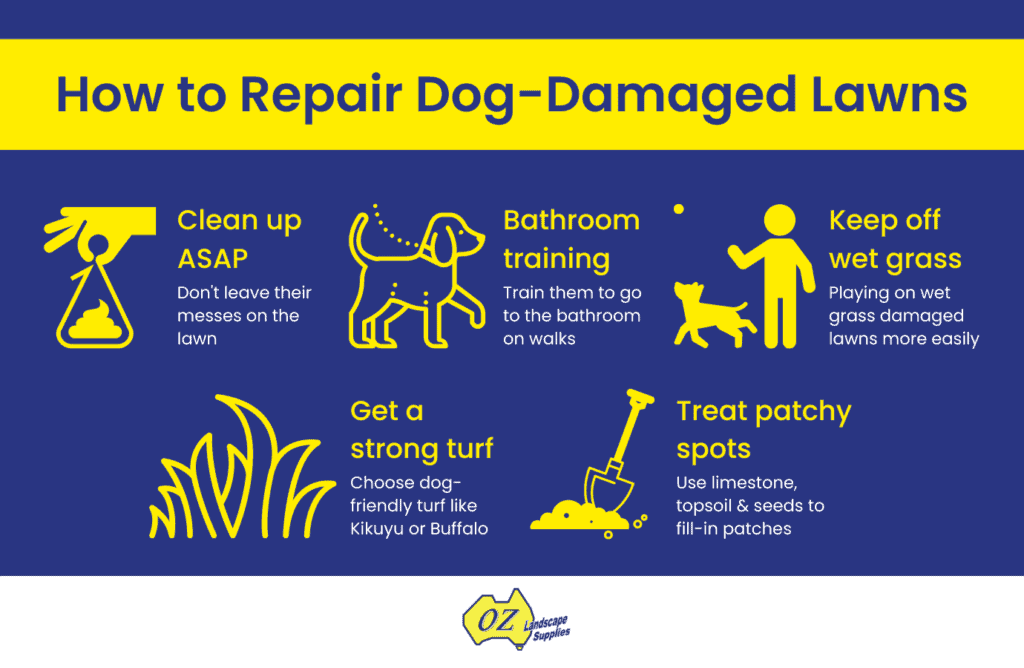
Credit: www.ozlandscapesupplies.com.au
Quick Fixes For Small Dog Spots
If you notice dog spots early, you can often fix them quickly.
- Water the area: Right after your dog urinates, pour water over the spot. This dilutes the nitrogen and reduces damage.
- Remove dead grass: Use a rake to clear away brown or yellow grass, so new seed can touch the soil.
- Add topsoil if needed: For small holes or bare areas, sprinkle a little fresh topsoil to help seed germinate.
- Reseed: Choose a grass seed that matches your lawn. Spread seed over the spot, press it in gently, and water daily.
- Block off the area: For a week or two, keep your dog off the repaired spot to give the new grass time to grow.
These steps work well for spots less than 6 inches wide. For bigger or repeated damage, more work is needed.
Repairing Large Or Repeated Damage
When damage covers a large area, or happens in the same place often, try these steps:
- Remove dead grass and loosen soil: Use a rake or garden fork to break up the top layer. This lets air and water reach new roots.
- Mix in compost: Adding compost or organic matter improves soil health and helps grass grow stronger.
- Level the area: If the soil is uneven, add topsoil and smooth it out.
- Reseed or patch with sod: For large areas, spread seed or lay sod (rolls of grass). Firm it down so roots touch the soil.
- Water deeply: Water every day for the first two weeks, then less often as grass grows.
- Keep dogs away: Block the area with fencing or garden stakes while new grass gets established.
If you repeat these steps and still see damage, it may be time to rethink your dog’s habits or try a different grass type.
Choosing The Right Grass For Dog Owners
Not all grass types handle dog traffic the same. Some are tougher and recover faster. Here’s a quick comparison:
| Grass Type | Durability | Dog Urine Tolerance | Regrowth Speed |
|---|---|---|---|
| Kentucky Bluegrass | High | Medium | Fast |
| Perennial Ryegrass | High | Medium | Very Fast |
| Tall Fescue | Very High | High | Medium |
| Bermuda | High | Low | Fast |
Tall fescue and perennial ryegrass are good choices for dog owners because they repair quickly and resist urine burn better than some other grasses. When reseeding, look for blends labeled “pet-friendly” or “high-traffic.”
Preventing Future Dog Damage
Fixing your lawn is important, but prevention is even better. Here are effective tips to keep your grass healthy:
- Train your dog: Teach your dog to use a special area for bathroom breaks. Gravel, mulch, or artificial turf are easier to clean and won’t damage grass.
- Water problem spots: After your dog urinates, water that area to dilute the nitrogen.
- Rotate play areas: Move toys and games around the yard, so no one spot gets worn out.
- Maintain healthy soil: Fertilize, mow, and water your lawn as recommended for your grass type.
- Provide shade: Dogs like to rest in cool areas. Planting trees or using shade cloth gives them a place to relax that’s not always on the grass.
Some owners try feeding their dogs supplements to change urine composition, but this is risky. Always ask your vet before changing your dog’s diet.

Credit: www.singaporepetcare.com.sg
Dealing With Compacted Soil
Dogs running in the same path can compact soil, making it hard for grass roots to grow. Compacted soil also keeps water from soaking in. To fix:
- Aerate the soil: Use a manual or machine aerator to punch small holes in the ground.
- Add compost: After aerating, sprinkle compost over the area. This feeds the soil and improves texture.
- Reseed: For best results, reseed after aerating.
- Limit traffic: Use garden edging or fencing to give compacted areas a break.
Aeration is best done once a year, in spring or fall.
Repairing Holes From Dog Digging
Dogs dig for fun, to stay cool, or to hide things. Holes can ruin your lawn and become tripping hazards. Here’s what to do:
- Fill the hole: Remove loose dirt, then fill the hole with soil, pressing firmly to avoid air pockets.
- Add compost or fertilizer: This helps grass regrow faster.
- Reseed or sod: Cover the area with seed or a small piece of sod.
- Water well: Keep the area moist until new grass appears.
- Discourage digging: Give your dog a sandbox or digging area, and reward them for using it.
Some dogs dig to escape heat. Providing a shaded spot may reduce this behavior.
Seasonal Lawn Recovery Tips
Dog damage can look worse in some seasons. During hot, dry summers, grass recovers slowly. In spring and fall, grass grows faster. Adjust your repair plan based on the season.
| Season | Best Actions | Notes |
|---|---|---|
| Spring | Seed, fertilize, aerate | Great for new grass growth |
| Summer | Water, spot treat | Grass may struggle in heat |
| Fall | Seed, fertilize, aerate | Good for root growth |
| Winter | Limit traffic, repair holes | Grass is dormant, avoid big repairs |
Plan repairs for spring or fall, when grass grows best.
Common Mistakes To Avoid
Many homeowners make these mistakes when repairing lawn after dog damage:
- Using too much fertilizer: Grass burned by urine already has too much nitrogen. Adding more can make it worse.
- Not watering enough: New grass seed needs daily moisture until established.
- Skipping soil repair: Healthy grass starts with healthy soil. Always loosen and enrich soil before reseeding.
- Letting dogs back too soon: If dogs walk on new grass before it’s rooted, it may not survive.
One non-obvious tip: For large lawns, rotating your dog’s potty area every few weeks gives grass time to recover. Mark temporary potty zones with stakes or flags.
Another overlooked insight: Urine from female dogs often causes more damage because they tend to squat and release more in one place, while males spread urine by lifting their leg. Understanding this can help you target repairs where they’re most needed.
Credit: duda-sod.com
Products And Tools That Help
Certain products can make repair and prevention easier:
- Lawn repair mixes: These combine grass seed, mulch, and fertilizer. They’re easy to use for small patches.
- Dog urine neutralizers: Some products claim to neutralize urine damage. Results vary, so read reviews and use with caution.
- Pet-safe mulch: In dog potty areas, use mulch that is safe if chewed or swallowed. Avoid cocoa mulch, which is toxic to dogs.
- Temporary fencing: Lightweight garden fencing helps protect new grass while it grows.
For more tips and research, the ASPCA offers practical advice on keeping pets and lawns healthy.
Long-term Strategies For A Dog-friendly Lawn
To enjoy both a green lawn and a happy dog, balance is key. Consider these long-term strategies:
- Create a designated potty area: Train your dog to use a small gravel or mulch area. Reward them for using it.
- Landscape for durability: Use stepping stones, mulch paths, or artificial turf in high-traffic zones.
- Plant tough ground covers: Clover, creeping thyme, or certain ornamental grasses can handle more wear and tear.
- Regular maintenance: Aerate, overseed, and fertilize as recommended for your grass type.
- Work with your dog: Training and supervision are just as important as lawn care.
By combining these strategies, you can reduce future damage and make repairs faster and easier.
Frequently Asked Questions
Why Does My Dog’s Urine Kill The Grass?
Dog urine is high in nitrogen and salts. In small amounts, nitrogen helps grass grow, but too much burns the roots, causing yellow or brown patches.
How Long Does It Take For Grass To Recover After Dog Damage?
Depending on the grass type and repair method, recovery can take 2 to 6 weeks. Fast-growing grasses like ryegrass may recover in two weeks with proper care.
Is It Safe To Use Lime Or Chemicals To Fix Dog Spots?
Lime can help if your soil is too acidic, but it’s not always needed. Test your soil first. Avoid harsh chemicals, as they can harm pets and grass.
What Grass Is Best For Lawns With Dogs?
Tall fescue and perennial ryegrass are durable and recover quickly. Choose blends marked as “high-traffic” or “pet-friendly.”
Can I Stop Dog Damage Completely?
You can reduce damage with training, lawn care, and smart landscaping, but it’s hard to stop all damage if you have an active dog. Prevent and repair as needed for best results.
Keeping a green lawn with dogs is possible. With the right knowledge and a few smart changes, you can enjoy a beautiful yard and a happy, active pet. Consistent care makes all the difference—your lawn can recover and stay healthy for years to come.