
Centipede grass is a popular lawn choice in the southeastern United States. People like it because it is tough, grows slowly, and needs less care than many other grasses. But even though it is low-maintenance, centipede grass still needs the right fertilizer at the right time.
This guide will show you how to fertilize centipede grass, so you get a healthy, green lawn without wasting money or hurting the environment.
You will learn what centipede grass needs, how to pick the best fertilizer, when to apply it, and common mistakes to avoid. You will also see real examples and data, so you can make smart choices. Whether you are a first-time homeowner or have years of lawn care experience, you will find clear steps and non-obvious tips here.
Understanding Centipede Grass: The Basics
Centipede grass (Eremochloa ophiuroides) is sometimes called “lazy man’s grass. ” It grows well in sandy, acidic soils, especially in the warm, humid areas of the Southeast. This grass is light green, has a coarse texture, and forms a thick mat that crowds out many weeds.
Unique Needs Of Centipede Grass
Unlike other turfgrasses, centipede grass is sensitive to high fertilizer rates, especially nitrogen. Over-fertilizing can turn your lawn yellow, cause disease, or even kill the grass. Centipede grass also prefers soil with a pH of 5.0 to 6.0—more acidic than most other grasses.
Some key facts:
- Grows best in USDA zones 7–9
- Needs 4–6 hours of sun daily
- Tolerates drought, but not deep shade or heavy foot traffic
- Spreads slowly by above-ground stems (stolons), not underground rhizomes
How Centipede Grass Differs From Other Lawns
To understand why centipede grass has special fertilizer needs, compare it to other grasses:
| Grass Type | Preferred pH | Nitrogen Needs (lbs/1000 sq ft/year) | Growth Rate |
|---|---|---|---|
| Centipede | 5.0–6.0 | 0.5–2 | Slow |
| Bermuda | 6.0–7.0 | 3–6 | Fast |
| St. Augustine | 6.0–7.5 | 2–4 | Moderate |
| Zoysia | 6.0–6.5 | 2–3 | Moderate |
As you see, centipede grass needs less nitrogen and a lower pH than most common lawn grasses. This means you must be careful with fertilizer choices and amounts.
Why Fertilizing Centipede Grass Matters
Healthy centipede grass is a pleasure to walk on and looks beautiful. But if you skip or misuse fertilizer, your lawn may become thin, yellow, or full of weeds.
The right fertilizer:
- Fuels growth so grass covers bare spots
- Improves color for a richer green (without the “neon” look)
- Helps resist stress from drought, pests, or traffic
- Reduces weeds by encouraging thick, healthy turf
However, too much fertilizer can lead to:
- Nutrient runoff that pollutes water
- Excess thatch buildup (a layer of dead grass)
- Increased disease risk
A smart fertilizing plan gives your centipede grass what it needs—no more, no less.
Credit: www.fertilome.com
Soil Testing: The First Step To Success
If you guess what your lawn needs, you may be wrong. Soil testing is the only way to know the real nutrient levels and pH in your yard. This is especially important for centipede grass, which is sensitive to nutrient and pH changes.
How To Test Your Soil
- Collect soil samples from 8–10 spots in your lawn, down to about 4 inches deep.
- Mix the samples together in a clean bucket.
- Send the sample to a local extension service or a trusted soil lab.
- Read the report for pH, phosphorus (P), potassium (K), and other nutrients.
Most soil tests cost $10–$20 and give you a detailed report in 1–2 weeks.
What To Look For In Soil Test Results
The main things to check:
- PH: Centipede grass does best at 5.0–6.0. If your pH is too high (over 6.5), the grass will suffer. Do not add lime unless your pH is below 5.0.
- Phosphorus and Potassium: These are often already high in southern soils. Only add if the test says your soil is low.
- Nitrogen: Soil tests rarely show available nitrogen, so this is applied based on grass type and need.
Non-obvious tip: Many homeowners skip soil tests for years. Doing one every 2–3 years can save you money and prevent major lawn problems.
Choosing The Right Fertilizer
There are hundreds of fertilizers in stores, but most are not made for centipede grass. The best fertilizer is one that matches your soil’s needs and does not overload the grass.
What Do The Numbers Mean?
Every fertilizer bag has three numbers, like 15-0-15. These show the percentage of nitrogen (N), phosphorus (P), and potassium (K).
- First number (N): For leaf growth and green color
- Second number (P): For root growth (rarely needed for centipede grass)
- Third number (K): For stress resistance and disease prevention
Centipede grass often needs little or no phosphorus and a moderate amount of potassium.
Ideal Fertilizer Analysis For Centipede Grass
The most common choices:
- 15-0-15: Balanced for established lawns with no phosphorus need
- 16-4-8: Use only if a soil test shows a phosphorus shortage
- 6-0-6: For low-nitrogen, low-potassium needs
For new lawns, a starter fertilizer with a small amount of phosphorus (like 10-10-10) can be used—only at planting.
Slow-release Vs. Quick-release Fertilizers
- Slow-release fertilizers feed grass over 6–12 weeks. They reduce the risk of burning and keep color steady.
- Quick-release fertilizers give a fast green-up but can burn the grass if over-applied.
For centipede grass, slow-release is usually safer and more effective.
Organic Vs. Synthetic Fertilizers
Organic options (like composted manure or cottonseed meal) release nutrients slowly and improve soil health. Synthetic fertilizers are more predictable and often cheaper.
A mix of both can work well, but always match the amount to the grass’s need.
Comparison Of Fertilizer Types
Here’s a quick look at how different fertilizer types stack up for centipede grass:
| Type | Release Speed | Burn Risk | Cost | Best Use |
|---|---|---|---|---|
| Synthetic (Slow-Release) | Slow | Low | Medium | General use |
| Synthetic (Quick-Release) | Fast | High | Low | Green-up, emergencies |
| Organic | Slow | Very Low | High | Soil health, long-term care |
Insider tip: Some “weed and feed” products are not safe for centipede grass. Always check the label before using.
When And How Often To Fertilize Centipede Grass
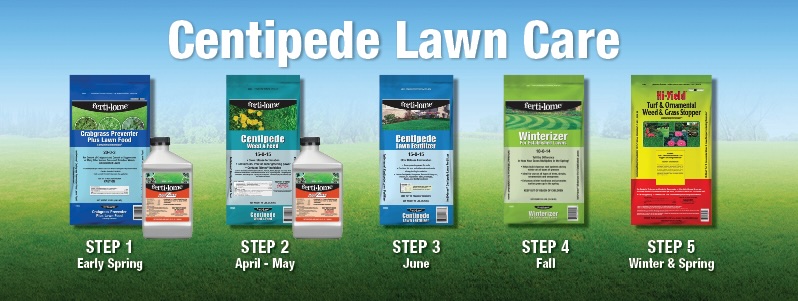
Centipede grass has a unique growth cycle. It wakes up late in spring and goes to sleep early in fall. Fertilizing at the wrong time is a common mistake.
Best Time To Fertilize
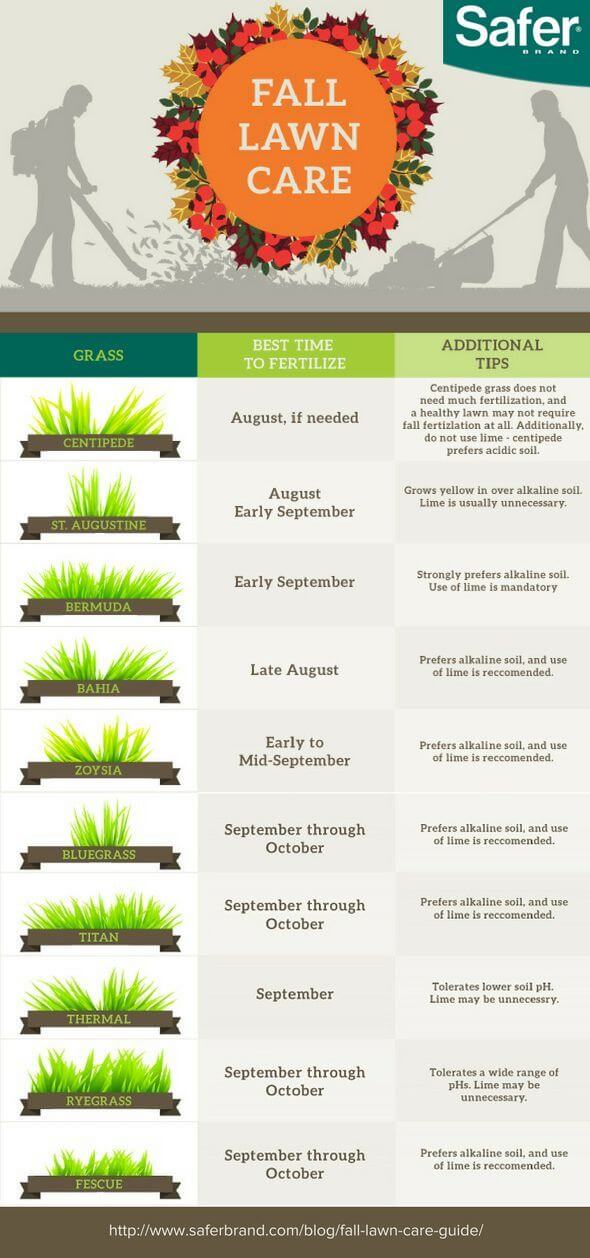
- First application: When soil temperature at 4 inches deep is about 65°F—usually late April or early May in the Southeast.
- Second application (if needed): 2–3 months later (late June to early July).
Do not fertilize centipede grass in early spring. If you feed it before it is fully green, you can cause yellowing (iron chlorosis) or disease.
How Often?
Most established centipede lawns only need one light feeding per year. Two are okay if your lawn is thin, heavily used, or if your soil is sandy and nutrients wash away fast.
Do not fertilize after early August. Late fertilizing can push new growth that winter freezes may kill.
Monthly Fertilizing Calendar Example
Here’s a simple schedule for a typical centipede grass lawn in the Southeast:
| Month | Fertilizer Action |
|---|---|
| March | Wait; do not fertilize |
| April | Apply first fertilizer when fully green |
| June | Optional second feeding if needed |
| August | Last chance for light feeding (early August only) |
| September–February | Do not fertilize |
How Much Fertilizer To Apply
Using too much fertilizer is a top mistake for centipede grass owners. You want just enough for steady growth—never a “lush” look like Bermuda or fescue.
General Rate Guidelines
- Established lawns: 0.5 to 1 pound of actual nitrogen per 1,000 square feet per year.
- New lawns: Up to 2 pounds of nitrogen per 1,000 square feet, but split into 2–3 feedings.
To find how much fertilizer to use, check the bag’s first number (N). For example, if your fertilizer is 15-0-15, it is 15% nitrogen.
Example:
You want to apply 0. 5 pounds of nitrogen per 1,000 square feet. Your fertilizer is 15-0-15.
- 5 ÷ 0.15 = 3.33 pounds of fertilizer per 1,000 square feet
Step-by-step Application Guide
- Measure your lawn to know the square footage.
- Read the fertilizer bag for N-P-K numbers.
- Calculate the needed amount (see example above).
- Apply evenly using a broadcast spreader for large lawns or a handheld spreader for small areas.
- Water lightly after application to help nutrients soak in (unless the product says otherwise).
Pro tip: Never fertilize before heavy rain is expected. Nutrients can wash away, wasting money and polluting streams.
Spot Fertilizing
If only some areas look yellow or thin, you can “spot fertilize” just those patches. Use a half-strength rate to avoid burning.

Credit: www.lsuagcenter.com
Dealing With Special Lawn Problems
Sometimes your centipede grass lawn needs more than just basic fertilizer. Here are some common issues and how to handle them.
Iron Chlorosis (yellowing)
Centipede grass can turn yellow if soil pH is too high or if iron is missing. This happens most often after over-fertilizing or using lime by mistake.
- Quick fix: Spray with iron sulfate or chelated iron products. These green up the lawn without pushing growth.
- Long-term fix: Lower the soil pH if it is above 6.0, using products like elemental sulfur.
Thatch Buildup
Thatch is a thick layer of stems and roots above the soil. Too much thatch blocks water and fertilizer.
- Prevention: Do not over-fertilize or overwater.
- Solution: If thatch is over ½ inch thick, dethatch in late spring.
Compacted Soil
Heavy clay or compacted sandy soils block roots from getting nutrients.
- Solution: Aerate the lawn in late spring to open up the soil.
Weeds
A thick, healthy centipede lawn resists weeds. But if weeds appear, use a pre-emergent herbicide in early spring. Avoid mixing weed killers and fertilizer unless the label says it is safe for centipede grass.
Disease
Most centipede lawns resist disease. But over-fertilizing, overwatering, or mowing too low can trigger problems like large patch or dollar spot.
- Prevention: Use the right fertilizer amount, water deeply but not often, and mow at 1.5–2 inches high.
Hidden insight: Some products marketed as “centipede food” are still too strong. Always check the actual N-P-K numbers and the label instructions.
Environmental Safety And Best Practices
Fertilizer runoff is a real problem in many states. It can pollute lakes, rivers, and drinking water. Centipede grass lawns, when cared for properly, are among the least likely to cause runoff—but only if you use fertilizer correctly.
Tips For Safe Fertilizing
- Apply fertilizer only to grass, not sidewalks or driveways. Sweep up any spills.
- Water lightly after fertilizing to help nutrients soak in, but avoid runoff.
- Do not fertilize before rain or on frozen ground.
- Follow your state’s fertilizer laws. Some areas ban phosphorus or set rules for fertilizer timing.
Using Grass Clippings
Leaving grass clippings on the lawn returns some nutrients to the soil. This can reduce your fertilizer needs by up to 25%.
Organic Alternatives
If you want to go fully organic, use compost, aged manure, or organic lawn fertilizers. These release nutrients slowly and improve soil structure. However, you may need to apply more often, and results can be slower.
Credit: www.yourgreenpal.com
Cost Of Fertilizing Centipede Grass
Many people worry about cost. The good news is that centipede grass is one of the cheapest lawns to fertilize.
- Average annual fertilizer cost: $10–$30 per 1,000 sq ft (using synthetic slow-release)
- Organic options: $20–$60 per 1,000 sq ft per year
Compared to Bermuda or St. Augustine, you will spend 50–80% less per year.
Non-obvious tip: Sometimes, skipping one year of fertilizing (if your lawn looks good and soil test is normal) will not harm centipede grass. This saves money and prevents over-application.
Common Fertilizing Mistakes (and How To Avoid Them)
Centipede grass is forgiving in many ways, but it does not tolerate some common errors.
Top Mistakes
- Using high-nitrogen fertilizer: Never use products like 30-0-5. They are too strong for centipede grass.
- Applying fertilizer too early: Wait until the grass is fully green in spring.
- Adding lime without testing: Centipede grass rarely needs lime. High pH causes yellowing.
- Fertilizing in late summer or fall: This can lead to winter kill.
- Not reading the label: Many “weed and feed” or “all-purpose” fertilizers can harm centipede grass.
Smart Practices
- Always check your soil test before buying fertilizer.
- Use a spreader for even application.
- Water in fertilizer with ¼ to ½ inch of water if rain is not expected.
- Record your fertilizer dates and rates each year to track what works.
Real-world Example: Fertilizing A 5,000 Square Foot Lawn
Let’s say you have a 5,000 sq ft centipede lawn in Georgia. Your soil test says pH is 5. 8, phosphorus is high, and potassium is medium.
- Choose a 15-0-15 slow-release fertilizer.
- Apply 0.5 pounds of nitrogen per 1,000 sq ft (total 2.5 pounds N for whole lawn).
- 0.5 ÷ 0.15 = 3.33 pounds of fertilizer per 1,000 sq ft. For 5,000 sq ft: 3.33 × 5 = 16.65 pounds total.
- Apply in late April when lawn is green.
- Water in with ½ inch of water.
- Skip second feeding unless lawn looks pale by June.
By following these steps, you avoid waste and keep your lawn healthy all season.
Centipede Grass Fertilizing: Key Takeaways
- Test your soil before applying any fertilizer.
- Use a low-nitrogen, low-phosphorus fertilizer (like 15-0-15).
- Fertilize once per year after the grass turns fully green in spring.
- Never over-fertilize—more is not better for centipede grass.
- Avoid lime unless your soil pH is below 5.0.
- Water in fertilizer, but avoid runoff.
With these tips, you can enjoy a healthy, simple, and affordable centipede lawn.
Frequently Asked Questions
How Do I Know If My Centipede Grass Needs Fertilizer?
Look for signs like pale green color, thin growth, or slow recovery from mowing. The best way to know is with a soil test. If your soil has enough nutrients and your lawn looks good, you may not need fertilizer every year.
What Happens If I Over-fertilize My Centipede Lawn?
Over-fertilizing can cause yellowing, burned spots, or even kill patches of grass. It can also increase thatch and make the lawn more likely to get diseases. Always use the recommended rates for centipede grass.
Can I Use “weed And Feed” Products On Centipede Grass?
Some “weed and feed” products are safe, but many are not. Ingredients like atrazine or certain herbicides can damage centipede grass. Always read the label and only use products labeled for centipede grass.
Why Is My Centipede Grass Turning Yellow After Fertilizing?
Yellowing is often caused by high pH, iron deficiency, or too much nitrogen. Try using a chelated iron spray and check your soil pH. Avoid high-nitrogen fertilizers and never lime centipede grass unless your pH is below 5.0.
Where Can I Learn More About Centipede Grass Care?
For more detailed guides and research, check the University of Florida IFAS Extension website. It offers science-based advice for homeowners.
A healthy centipede grass lawn is not hard to achieve, but it does require the right approach. By understanding your soil, choosing the correct fertilizer, and following smart timing, you will enjoy a lawn that looks great year after year—without extra work or worry.