
Felling a tree is a serious task. If you do it wrong, you risk injury, property damage, or worse. But with the right knowledge and careful steps, you can safely cut down a tree using a chainsaw. This guide will walk you through everything you need to know — from preparation to execution — so you can handle the job confidently and minimize risks.
Whether you are a homeowner, landscaper, or forestry worker, following these instructions will help you stay safe and get the job done right.
Understanding Tree Felling Safety
Tree felling is dangerous work. Every year, many accidents happen because people underestimate the risks or skip safety steps. According to the Occupational Safety and Health Administration (OSHA), chainsaw-related injuries cause thousands of emergency room visits annually in the US. Most of these accidents involve improper planning or lack of safety gear. The good news is that careful preparation and clear technique make tree felling much safer.
Why Chainsaw Safety Matters
A chainsaw is a powerful tool. It can cut through thick wood quickly, but it can also cause severe injuries in seconds. Chainsaw kickback, falling branches, and unpredictable tree movement are just a few dangers. Knowing how to handle a chainsaw, where to cut, and how to read the tree’s lean and surroundings is essential.
Common Safety Mistakes
Beginners often miss these important points:
- Failing to check surroundings: Many people forget to look for power lines, buildings, vehicles, or other trees nearby.
- Wearing improper gear: Not using chainsaw chaps, helmets, or eye protection increases risk.
- Ignoring tree defects: Dead or rotten wood can change how a tree falls.
- Misjudging tree lean: Trees rarely fall exactly where you want unless you plan the cuts properly.
Essential Safety Equipment
Before you even start your chainsaw, make sure you have the right gear. Personal protective equipment (PPE) is not optional — it’s the best line of defense against injury.
Required Safety Gear
- Helmet: Protects your head from falling branches.
- Eye protection: Safety glasses or goggles guard against chips and dust.
- Ear protection: Chainsaws are loud; earmuffs or earplugs help prevent hearing loss.
- Chainsaw chaps or pants: Special fabric stops the chainsaw if it contacts your leg.
- Work boots: Preferably with steel toes for foot protection.
- Gloves: Good grip and protection from vibration.
Chainsaw Checklist
Make sure your chainsaw is in perfect condition:
- Sharp chain: A dull chain increases risk and makes cutting harder.
- Chain brake: Test it before every use.
- Bar oil: Keeps the chain running smoothly.
- Proper tension: The chain should be snug but not too tight.
- Fuel: Use the correct mix for your chainsaw.

Credit: smallfarms.cornell.edu
Evaluating The Tree And Site
Every tree is different. Some are tall, some lean, some have hidden rot. Before you cut, take time to study your tree and the area around it.
Inspecting The Tree
Look for these details:
- Lean direction: Which way does the tree naturally lean?
- Dead branches: These can fall unexpectedly and cause injury.
- Rot or disease: Rotten trees may fall unpredictably.
- Height and diameter: Know what you are working with.
- Species: Some trees have tough or brittle wood.
Checking The Surroundings
Make sure your work area is safe:
- Clear escape paths: Plan at least two escape routes at a 45-degree angle from the direction of the fall.
- No obstacles: Remove brush, rocks, or anything that could trip you.
- No people or pets nearby: Keep everyone at least twice the tree’s height away.
- Power lines: Never fell a tree near wires. Call professionals if there is any risk.
Weather Conditions
Bad weather increases danger. Avoid felling trees when:
- Wind is strong (can change fall direction)
- Rain or snow makes ground slippery
- Lightning or storms are nearby
Planning The Felling Direction
Choosing where your tree will fall is critical. If you get this wrong, you can damage property or injure someone.
How To Choose The Fall Direction
- The tree’s natural lean usually decides where it wants to fall.
- Look for open space — avoid aiming at buildings, fences, or other trees.
- Consider wind direction. A strong wind can push the tree off course.
- If the tree is healthy and straight, you have more control. If it’s leaning, you may need to work with the lean.
Marking The Drop Zone
Use spray paint or flagging to mark the area where the tree should land. This helps you and others stay clear.
Preparing Your Chainsaw
A well-prepared chainsaw makes the job easier and safer. Spend a few minutes checking your tool before you start.
Chainsaw Preparation Steps
- Sharpen the chain: Dull chains cause kickback and slow cutting.
- Check chain tension: Too loose or too tight is dangerous.
- Fill bar oil and fuel: Running out mid-cut is risky.
- Inspect chain brake: This safety feature stops the chain quickly.
- Test throttle and controls: Everything should respond smoothly.
Chainsaw Size For Tree Felling
Not every chainsaw is suitable for felling large trees. Here’s a quick comparison of common chainsaw sizes:
| Chainsaw Bar Length | Tree Diameter | Recommended Use |
|---|---|---|
| 12–16 inches | Up to 12 inches | Small trees, pruning |
| 18–20 inches | 12–18 inches | Medium trees |
| 22–24 inches | 18–24 inches | Large trees |
| 26+ inches | 24+ inches | Professional/forestry |
If your tree is thicker than your saw’s bar, you need special techniques — not recommended for beginners.
Step-by-step Guide: Felling A Tree With A Chainsaw
Now, let’s walk through the actual process. These steps are used by professionals and help ensure the tree falls safely.
Step 1: Clear Your Work Area
Remove obstacles, debris, and brush from around the tree. Make sure your escape paths are open and visible.
Step 2: Plan Your Escape Routes
Choose two paths that lead away from the tree at about a 45-degree angle to the fall direction. These routes must be clear and easy to run.
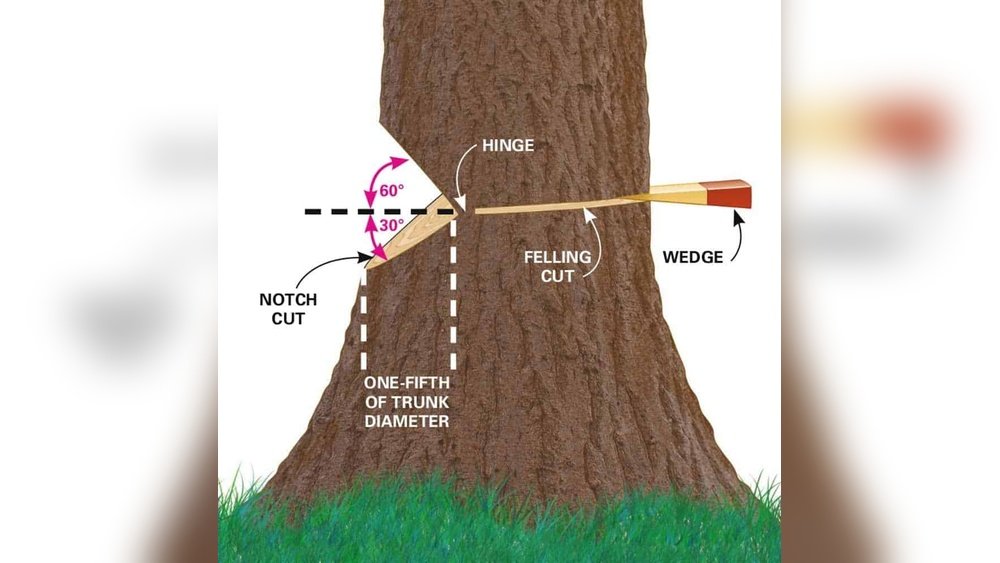
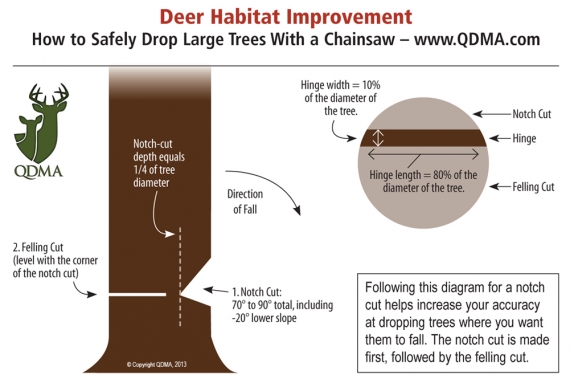
Step 3: Make The Notch Cut
The notch cut controls the direction of the fall. It’s made on the side facing where you want the tree to fall.
- Start about one-third of the way through the trunk
- Make a horizontal cut
- Make a second cut above or below at a 45-degree angle, meeting the first to remove a wedge
The notch should be about 70 degrees wide and one-third deep.
Step 4: Make The Felling Cut
Go to the opposite side of the tree and start the felling cut.
- Cut slightly above the notch (about 1–2 inches higher)
- Leave a thin strip of wood called the hinge (do not cut through this)
- The hinge guides the tree as it falls
Stop cutting as soon as you see the tree start to move. Move quickly to your escape route.
Step 5: Retreat Safely
As soon as the tree begins to fall, shut off the chainsaw and move quickly down your escape path. Never turn your back on the falling tree.
Step 6: Watch For The “kickback Zone”
The back side of the tree can push out or bounce as it falls. Stay clear and keep your eyes on the tree until it’s down.
Special Techniques For Difficult Trees
Not every tree is simple. Some have heavy lean, multiple trunks, or are dead and dangerous. Here are some methods and warnings:
Leaning Trees
If the tree leans heavily, adjust your notch so it faces the lean direction. Never try to force a tree against its lean — it rarely works and can be deadly.
Rotten Or Dead Trees
Rotten wood can crumble, causing the tree to fall unpredictably. If the tree is dead, consider hiring a professional. These trees often require special rigging.
Double-trunk Trees
Trees with two main trunks (forked) are risky. Sometimes, one trunk will fall while the other stays standing. Notch and fell each trunk separately, if possible.
Dealing With Tree Felling Complications
Even with careful planning, problems can happen. Here’s how to handle common issues.
Tree Gets Hung Up
Sometimes, a tree falls but gets caught in another tree.
- Stop immediately
- Never try to pull the tree down manually
- Use ropes or wedges, or call professionals
Chainsaw Kickback
Kickback happens when the tip of the chainsaw bar hits something and jumps back toward you. Avoid this by:
- Never cutting with the tip
- Always keeping both hands on the saw
- Standing to the side, not directly behind the saw
The Tree Doesn’t Fall
If the tree won’t move after the felling cut:
- Double-check your hinge
- Tap wedges into the back cut to force the tree over
- Never try to push the tree by hand
Limbing And Bucking After Felling
Once the tree is on the ground, you need to remove branches (limbing) and cut it into pieces (bucking).
Limbing Safely
- Always work from the opposite side of the trunk
- Never stand on the log or branches
- Keep the chainsaw chain sharp for easy cuts
- Use slow, careful movements — limbs can snap back
Bucking Safely
- Cut the trunk into manageable sections
- Watch out for log tension — some logs roll or jump when cut
- Use a chainsaw with enough bar length for the trunk’s diameter
- Secure logs if on a slope
Comparing Chainsaw Types For Tree Felling
There are several chainsaw types: gas, battery, and electric. Each has pros and cons for felling trees.
| Chainsaw Type | Power | Mobility | Best For |
|---|---|---|---|
| Gas | High | Excellent | Large trees, remote areas |
| Battery | Medium | Good | Small/medium trees, home use |
| Electric | Low–Medium | Limited (cord) | Small trees, close to power source |
Gas chainsaws are most common for felling large trees, but battery models are improving quickly.
Environmental And Legal Considerations
Cutting down a tree is not just about safety — it’s also about following local laws and respecting the environment.
Permits And Regulations
Many cities and counties require permits to fell trees, especially large or protected species. Always check local laws before cutting.
Protecting Wildlife
Before felling a tree, look for birds’ nests or animal homes. Some species are protected by law. You may need to delay or avoid cutting if wildlife is present.
Responsible Disposal
After felling, dispose of wood responsibly. Consider chipping, firewood, or recycling. Never leave large logs or branches blocking roads or paths.
Practical Tips For Beginners
Felling a tree is not the same as cutting firewood or trimming branches. Here are some real-world tips to help you succeed:
- Practice on smaller trees first: Learn the basics before tackling large jobs.
- Work with a partner: Someone else can help watch for danger.
- Avoid fatigue: Tired workers make mistakes. Take breaks.
- Stay alert: Watch for changes in wind, tree movement, or surroundings.
- Double-check everything: Safety gear, saw, escape paths, and cuts.
Credit: deerassociation.com
Real-life Example: Safe Tree Felling
Let’s look at a typical scenario. Imagine you have a 20-inch diameter oak tree in your backyard, leaning slightly away from your house. The nearest power line is 30 feet away, and there are no pets or people nearby.
Steps you would take:
- Put on helmet, gloves, chaps, eye and ear protection.
- Check chainsaw: Sharp chain, full fuel, working brakes.
- Plan escape routes at 45-degree angles away from the house.
- Clear the area of brush and obstacles.
- Make a notch facing away from the house.
- Make the felling cut from the opposite side, leaving the hinge.
- Retreat as soon as the tree starts to move.
- Limb and buck the tree once it’s safely on the ground.
By following this plan, you minimize risk and make sure the tree falls safely, away from your home and power lines.
Comparing Felling With Chainsaw Vs. Other Methods
Chainsaws are the most common tool for felling trees, but there are alternatives like hand saws, axes, or professional equipment.
| Method | Speed | Safety | Skill Needed |
|---|---|---|---|
| Chainsaw | Fast | Medium | Moderate |
| Axe | Slow | Low | High |
| Hand Saw | Very Slow | Medium | Low |
| Professional Service | Fast | High | None |
Chainsaws offer speed and efficiency, but require proper training and safety precautions.

Credit: www.youtube.com
Advanced Felling Techniques
Some trees require special skills. Advanced methods include:
- Directional felling: Using wedges and ropes to guide the tree.
- Sectional cutting: Cutting the tree in pieces, often used for trees near structures.
- Rigging: Lowering sections with ropes to control movement.
These methods are best left to professionals or experienced users.
Chainsaw Maintenance After Felling
After the job, your chainsaw needs attention. A well-maintained chainsaw lasts longer and stays safer.
Maintenance Steps
- Clean chain and bar with brush and oil
- Sharpen chain if needed
- Check chain tension and adjust
- Inspect for damage or wear
- Store in dry, safe place
Ignoring maintenance leads to faster wear and more dangerous operation.
Tree Felling And Insurance
Homeowners often wonder if insurance covers tree felling accidents. In most cases, insurance may cover damage if the tree fell naturally, but not if you cut it down yourself and cause damage. Always check your policy and consider professional help for risky jobs.
When To Call A Professional Arborist
Some trees are simply too dangerous or complex to handle alone. Call a professional if:
- The tree is near power lines or structures
- It has heavy lean or dead wood
- You are unsure about your skills
- Local laws require it
Professional arborists have specialized tools and training to handle difficult situations safely.
Frequently Asked Questions
How Do I Know Which Way A Tree Will Fall?
Look at the tree’s natural lean, the weight of branches, and the ground slope. Make your notch cut facing the desired direction. The hinge guides the fall, but wind or hidden defects can change the path.
What Should I Do If The Tree Gets Stuck In Another Tree?
Stop work immediately. Do not try to pull it down by hand. Use wedges or ropes, or call a professional. Hung-up trees are extremely dangerous and require special techniques.
Can I Use An Electric Chainsaw To Fell Large Trees?
Electric chainsaws are best for small to medium trees. For larger trees, gas-powered saws offer more power and mobility. Always check your saw’s bar length against the tree’s diameter.
How Can I Avoid Chainsaw Kickback?
Kickback occurs when the tip of the chainsaw bar hits something. Always cut with the middle of the bar, keep both hands on the saw, and use the chain brake. Stand to the side of the saw, not directly behind it.
Do I Need A Permit To Fell A Tree In My Yard?
Many cities and counties require permits, especially for large or protected trees. Always check your local regulations before felling. Fines for unauthorized tree removal can be high.
Felling a tree safely with a chainsaw requires planning, skill, and respect for the risks involved. By following these steps, wearing proper gear, and knowing your limits, you can protect yourself and others. If in doubt, seek help from a professional arborist or local experts. For more in-depth safety tips and regulations, visit OSHA Tree Care Operations. Always put safety first — the right preparation makes all the difference.