
Mastering temperature control on your charcoal grill can transform your cooking from good to unforgettable. If you’ve ever struggled with uneven heat or burning your food, you’re not alone.
The secret isn’t just in the amount of charcoal you use—it’s all about managing airflow and understanding your grill’s vents. In this guide, you’ll learn simple, practical tips to take full control of your grill’s temperature. Whether you want a perfect sear or slow, smoky cooking, you’ll discover how to adjust your charcoal grill like a pro.
Ready to impress your friends and family with perfectly grilled meals every time? Let’s dive in!
Charcoal Types And Heat Output
Choosing the right charcoal affects your grill’s temperature control. Different charcoal types burn with varying heat. Understanding these differences helps you cook your food perfectly. Heat output depends on the charcoal’s material and size. The type of charcoal impacts how long it burns and how hot it gets.
Natural Lump Vs Briquettes
Natural lump charcoal comes from charred wood chunks. It lights quickly and burns hotter. Lump charcoal produces less ash and gives a smoky flavor. Briquettes are made from compressed charcoal dust and additives. They burn evenly and last longer than lump charcoal. Briquettes create steady heat, good for slow cooking. Lump charcoal suits high-heat grilling and quick searing. Choosing between lump and briquettes depends on cooking style.
Choosing Quality Charcoal
High-quality charcoal burns cleaner and lasts longer. Look for charcoal with minimal additives and fillers. Avoid cheap charcoal that produces excess ash and odor. Hardwood charcoal is a good choice for flavor and heat. Properly sized pieces ensure even burning and easy temperature control. Store charcoal in a dry place to keep it dry. Quality charcoal gives you better control over grill heat.

Credit: bbqchamps.com
Airflow And Temperature Control
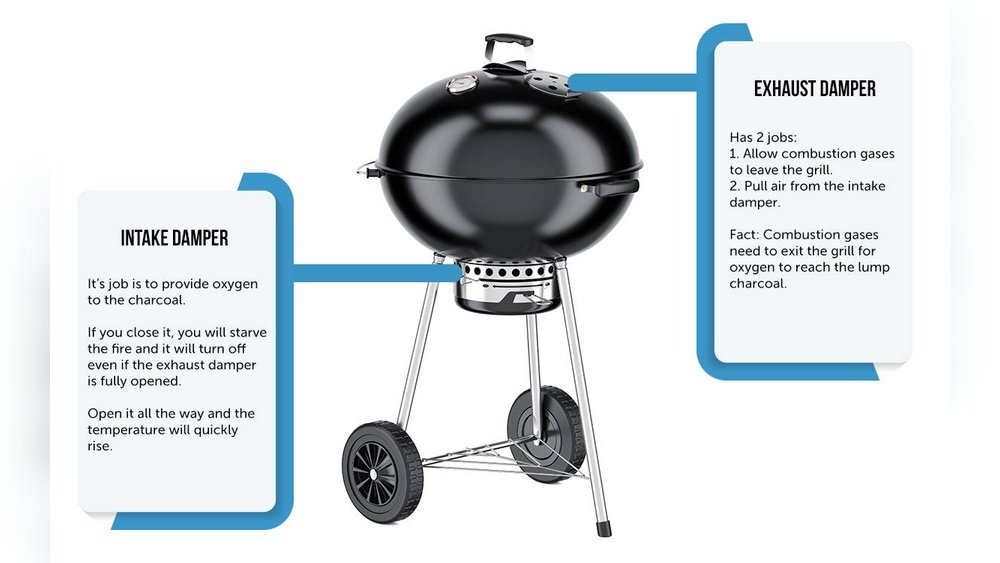
Controlling temperature on a charcoal grill depends largely on airflow. Airflow feeds oxygen to the charcoal, which controls the heat. Adjusting vents changes the amount of air entering and exiting the grill. This simple action helps manage cooking temperature precisely. Understanding how each vent works is key to better heat control.
Role Of Bottom Intake Vent
The bottom intake vent lets fresh air enter the grill. More open vents allow more oxygen to reach the charcoal. This causes the charcoal to burn hotter and faster. Closing the intake vent reduces oxygen flow. This slows down the burning process and lowers the temperature. It acts like a throttle for your grill’s heat.
Function Of Top Exhaust Vent
The top exhaust vent lets hot air and smoke escape. It controls the airflow through the grill. Opening the exhaust vent increases airflow, which feeds the fire more oxygen. Closing it traps heat and smoke inside. This can lower temperature but also adds smoky flavor to food. Proper use of the top vent balances heat and smoke flow.
Balancing Both Vents
Both vents work together to control temperature. Opening both vents fully creates high heat by increasing airflow. Closing both vents lowers heat by limiting oxygen. For medium heat, open the bottom vent halfway and the top vent slightly more. Adjust vents slowly and wait a few minutes to see changes. This balance keeps the grill temperature steady for better cooking results.
Setting Up Heat Zones
Setting up heat zones on your charcoal grill helps you cook food perfectly. You create areas with different temperatures. One area is very hot for quick cooking. Another area stays cooler for slow cooking. This method gives you control and flexibility. It lets you sear and cook without burning or undercooking.
Direct Heat Zone For Searing
The direct heat zone is right above the hot coals. It is very hot and perfect for searing meat. Searing locks in juices and adds flavor. Place food directly over the coals here. Use this zone for burgers, steaks, or vegetables. Keep food moving to avoid burning. This zone cooks food fast with high heat.
Indirect Heat Zone For Slow Cooking
The indirect heat zone is away from the coals. It stays cooler and cooks food slowly. Place food on this side to avoid direct flames. This zone is good for ribs, chicken, or large cuts of meat. Slow cooking breaks down tough fibers and adds tenderness. Cover the grill to keep heat even. Indirect heat helps cook food thoroughly without drying it out.
Fuel Management Techniques
Managing fuel on a charcoal grill is key to controlling cooking temperature. Proper fuel techniques help keep heat steady and avoid flare-ups. This section covers simple methods for handling charcoal effectively.
Using A Chimney Starter
A chimney starter lights charcoal evenly without lighter fluid. Place charcoal inside the chimney and light paper underneath. Hot air rises, igniting coals quickly and uniformly. This method produces steady heat for grilling. It also prevents chemical taste from lighter fluid. Using a chimney starter saves time and effort.
Adjusting Charcoal Amount
The amount of charcoal controls grill temperature directly. More charcoal means higher heat and longer cooking. Less charcoal lowers the temperature for slow cooking. Spread coals evenly for balanced heat. Pile them on one side for indirect cooking zones. Adjust charcoal quantity based on the food and time needed.
Adding Charcoal During Cooking
Adding charcoal during cooking keeps the fire hot for long sessions. Use fresh charcoal and add it to hot coals carefully. Spread new coals to avoid sudden hot spots. Wait a few minutes for new charcoal to ignite fully. This technique maintains temperature without cooling the grill. It works well for slow grilling or smoking.
Maintaining Consistent Temperature
Maintaining a steady temperature on a charcoal grill is key for perfect grilling. Consistent heat ensures even cooking and great flavor. It requires managing airflow and monitoring heat closely. Small adjustments keep the fire just right.
Clearing Ash For Airflow
Ash buildup blocks air from reaching the coals. This lowers the temperature quickly. Clear ash from the grill bottom often. Use a small shovel or brush to remove it. Good airflow feeds the fire and keeps heat steady.
Monitoring Temperature With Thermometers
Use a thermometer to track grill heat accurately. Built-in lid thermometers give a general idea. For precise control, use a digital probe thermometer. Check the temperature regularly during cooking. This helps catch drops or spikes early.
Adjusting Vents During Cooking
Vents control oxygen flow to the coals. Open vents increase heat by letting in more air. Close vents to reduce oxygen and lower temperature. Adjust both top and bottom vents slowly. Small changes make a big difference in heat control.
Credit: www.fogocharcoal.com

Credit: www.grillmastersclub.com
Frequently Asked Questions
Can You Control The Temperature On A Charcoal Grill?
You control charcoal grill temperature by adjusting air vents. Opening vents increases heat; closing them lowers it. Use bottom vents to feed oxygen and top vents to regulate smoke. Manage charcoal amount and clear ash for better airflow and consistent temperatures.
How To Get A Charcoal Grill To Stay At 250?
Control your charcoal grill at 250°F by adjusting air vents. Open bottom vent halfway and slightly open top vent. Use fewer coals and remove ash for steady airflow. Monitor temperature and fine-tune vents to maintain consistent heat.
Is A Charcoal Grill Hotter With The Vents Open Or Closed?
A charcoal grill gets hotter with vents open because more oxygen fuels the fire. Closing vents reduces oxygen, lowering heat.
How To Get A Charcoal Grill To Cool Down?
Close the bottom and top vents gradually to reduce oxygen flow. This lowers the charcoal’s heat and cools the grill quickly.
Conclusion
Controlling temperature on a charcoal grill takes practice and patience. Adjust the top and bottom vents to manage airflow. More air means higher heat; less air cools the fire. Arrange charcoal carefully for even heat distribution. Check the temperature often with a grill thermometer.
Small changes to vent openings create big temperature shifts. With time, you will cook food perfectly every time. Enjoy the process and the delicious results from your grill.